Home · Landmarks · Boston Common and the Public Garden
What you are looking atI
Boston Common and the Public Garden
Greater Boston · Beacon Hill
- The CommonFifty acres bounded by Tremont, Park, Beacon, Charles and Boylston Streets, bought for the town in 1634.
- The Frog PondA skating rink in winter, a reflecting pool in spring and fall, a spray pool in summer.
- The Shaw MemorialOpposite the State House, for Robert Gould Shaw and the Black 54th Massachusetts Volunteer Infantry.
- The Public GardenTwenty-four acres laid out from 1859, the first public botanical garden in the United States.
- The lagoon and its bridgeA pond with an island, crossed by a footbridge that opened on June 1, 1867.
- The Swan BoatsPedal boats with a swan at the stern, crossing the lagoon since 1877.
- Make Way for DucklingsNancy Schön's bronze mother duck and her ducklings of 1987, near the Charles Street gate.
The place in fullII
Reading the place
Why it matters
Boston Common is the oldest city park in the United States, fifty acres in the middle of downtown bounded by five of the city's main streets: Tremont, Park, Beacon, Charles and Boylston. Immediately to the west, across Charles Street, lies the Public Garden, established in 1837 as the first public botanical garden in the country. Together they make one long green space from the foot of Beacon Hill to the edge of the Back Bay, and the Common is also the first link in the Emerald Necklace, the chain of parks and parkways that runs south to Franklin Park.
They are two different kinds of place. The Common is broad, open ground with a long public history: pasture, training field, execution ground, army camp, the city's place for speeches and gatherings. The Garden is a Victorian flower garden, fenced, planted and laid out for strolling. Most visits cross both, and the Freedom Trail begins on the Common at the visitor center on the Tremont Street side.
How the town got its common
The land's first European owner was William Blaxton, a clergyman who lived alone on the Shawmut Peninsula for five years. In 1630 he invited the Puritans of the failing Charlestown settlement to join him, pointing to the peninsula's springs, and they crossed over that September. Blaxton was granted fifty acres around his house, but he soon tired of his neighbors, and in 1634 he sold all but six acres back to Governor John Winthrop. The governor raised the money with a one-time tax on the residents, and those forty-four acres became the town's common land.
Families grazed cows there in the 1630s until overgrazing ruined the pasture; in 1646 the number was limited to seventy at a time, and cows were finally banned in 1830 under Mayor Harrison Gray Otis. By 1836 an ornamental iron fence enclosed the Common and its perimeter promenades, the malls, the oldest of them the Tremont Mall, in place since 1728.
A public ground
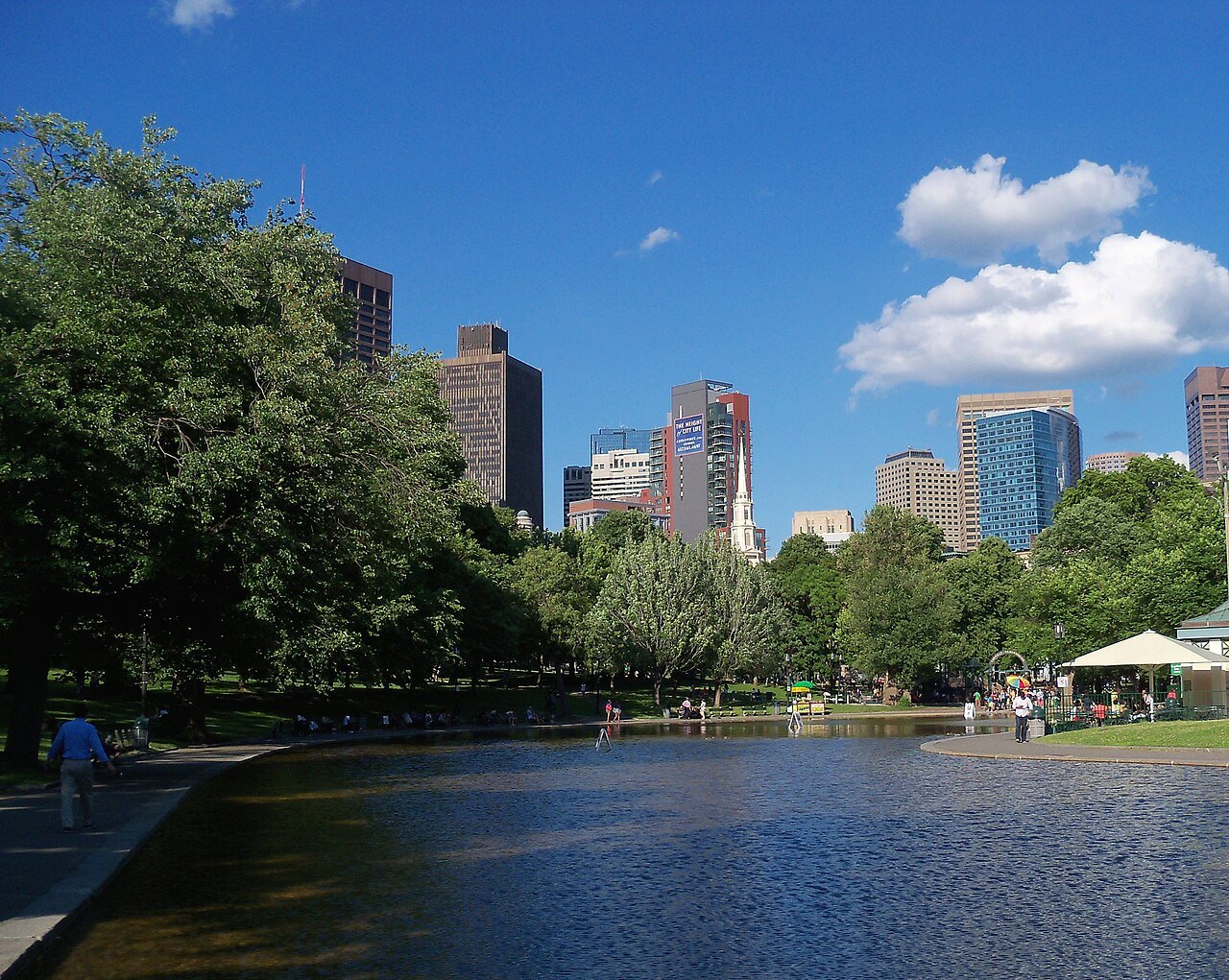
The Common has been used for almost every kind of public purpose. It was the town's execution ground until 1817, and the Quaker Mary Dyer, one of the group remembered as the Boston Martyrs, was hanged there on June 1, 1660. Evangelists such as George Whitefield preached on it, and in 1713 some two hundred people rioted there over a shortage of bread.
Before the Revolution the British army camped on the Common, and it was from the Common that the troops set off for Lexington and Concord in April 1775. Fireworks lit it as early as 1745, for the fall of Louisbourg, and again for the repeal of the Stamp Act in 1766 and the first anniversary of independence in 1777.
What stands on the Common now
At the northeast corner, at Beacon and Park Streets and facing the State House, is the Robert Gould Shaw Memorial, honoring Shaw and the Black soldiers of the 54th Massachusetts Volunteer Infantry. On Flag Staff Hill in the middle of the Common a victory column, the Soldiers and Sailors Monument, commemorates the Civil War dead, and the Parkman Bandstand in the eastern part of the park is used for music and theater.
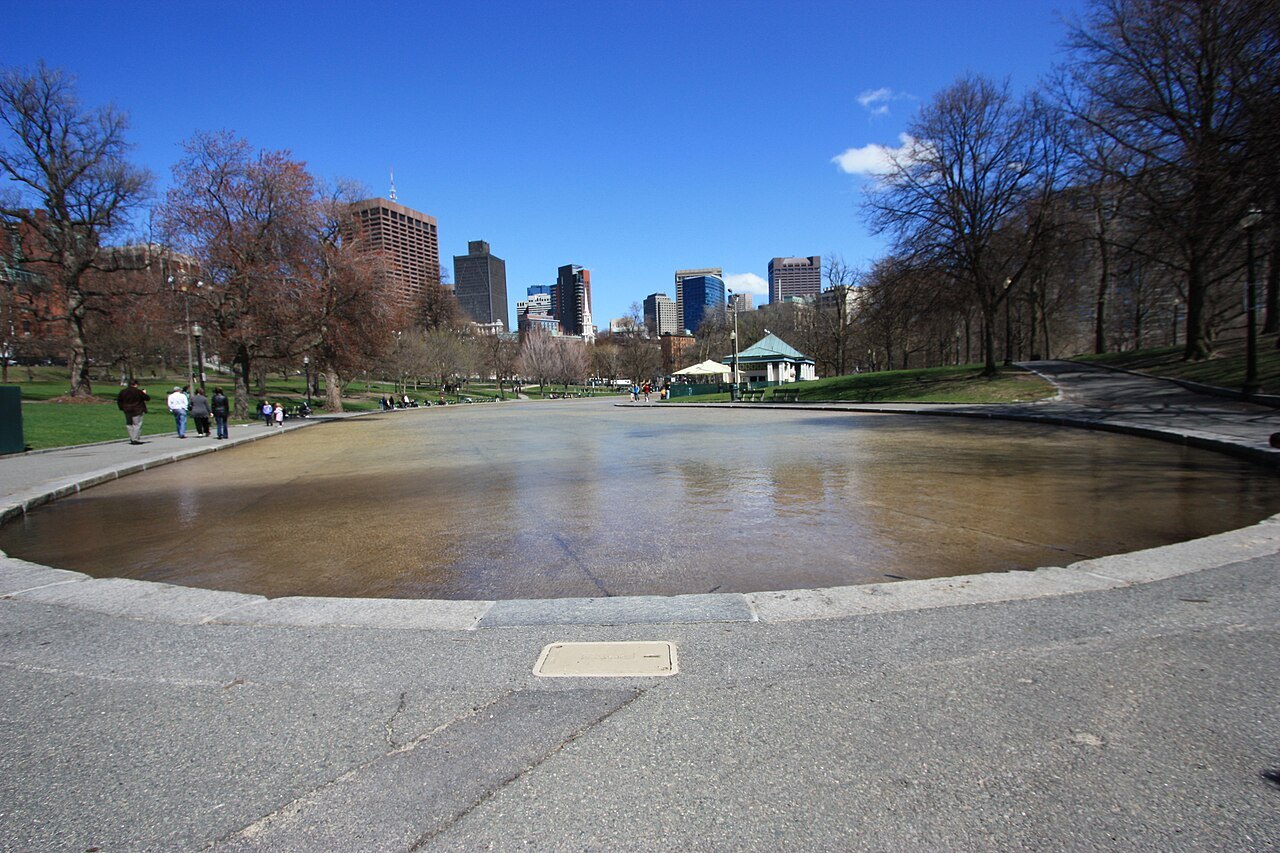
The Frog Pond at the heart of the Common changes with the seasons: an ice rink with a learn-to-skate school in winter, a reflecting pool in spring and fall, and a spray pool with a children's carousel in summer. It is managed by the Skating Club of Boston with the city. The Central Burying Ground on the Boylston Street side holds the graves of the painter Gilbert Stuart and the composer William Billings.
The Public Garden
The Garden stands on what was salt marsh at the edge of the Back Bay. The city bought the land back from the ropemakers in 1824, and in 1837 the philanthropist Horace Gray petitioned for its use as a botanical garden. Pressure to sell it for building went on for two decades, until an agreement of 1856 between the city and the Commonwealth, approved by a vote of 6,287 to 99, barred building on it for good.
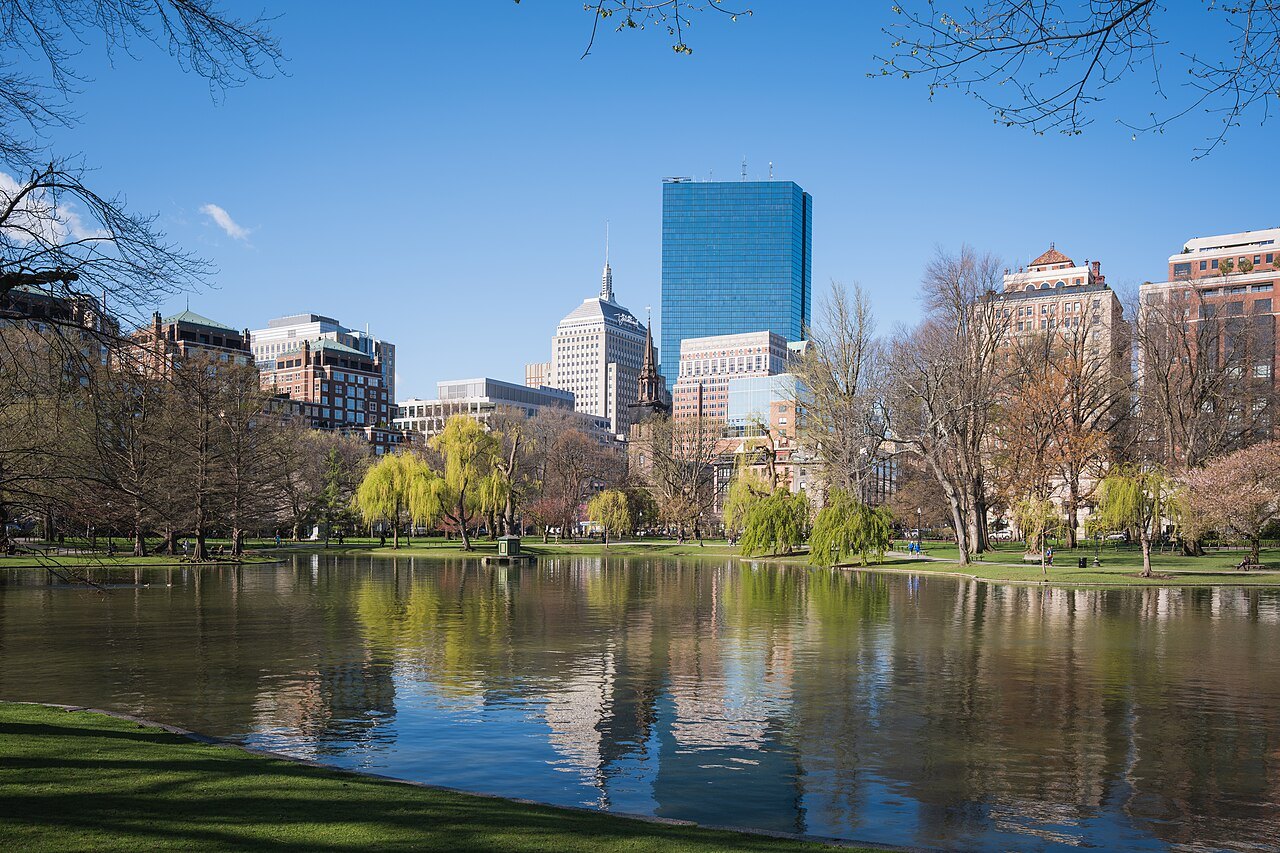
The plan approved in 1859 was designed by George F. Meacham, with paths and flower beds laid out by the city engineer James Slade and the city forester John Galvin. The pond was finished that year and the iron fence went up in 1862. The Garden covers twenty-four acres; a straight path crosses it between the Charles Street and Arlington Street entrances, and every other path winds.
The lagoon, the bridge and the boats
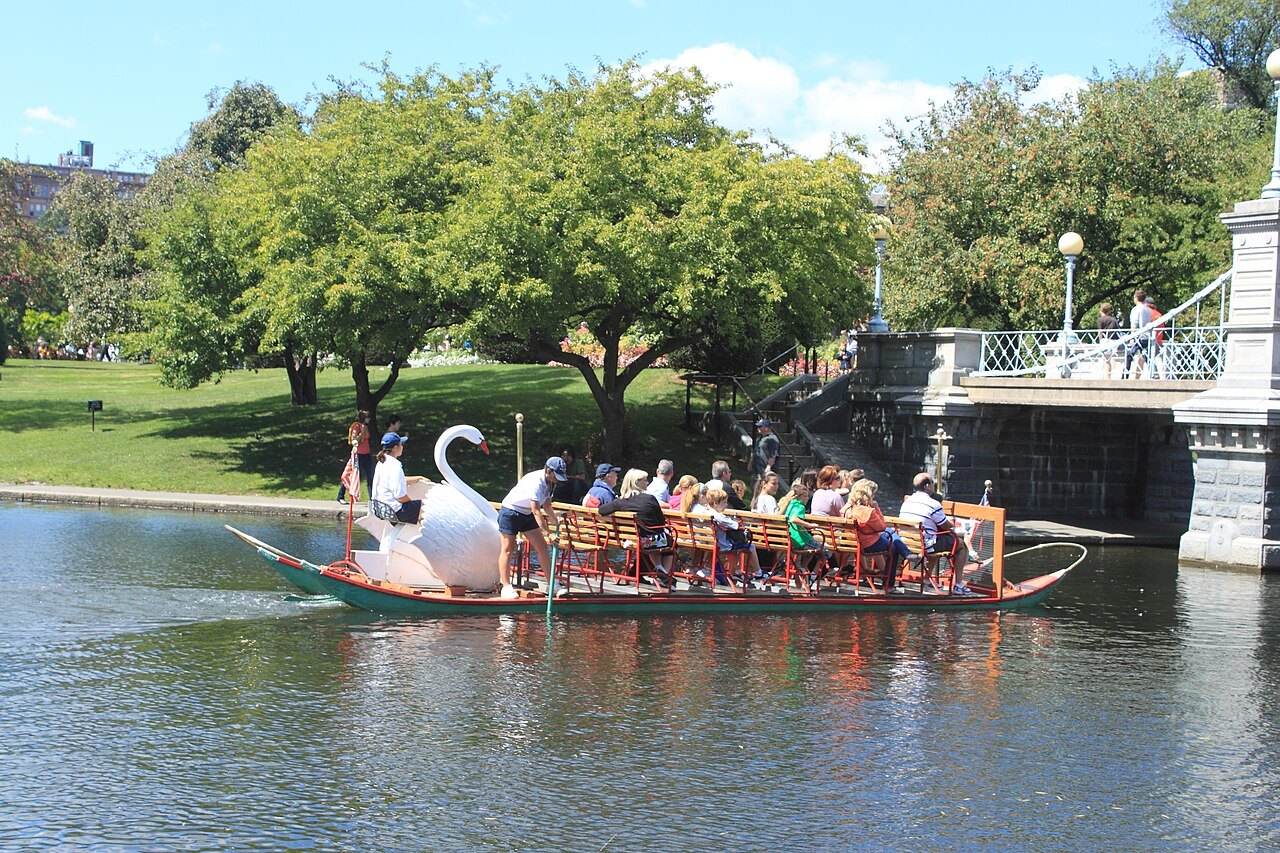
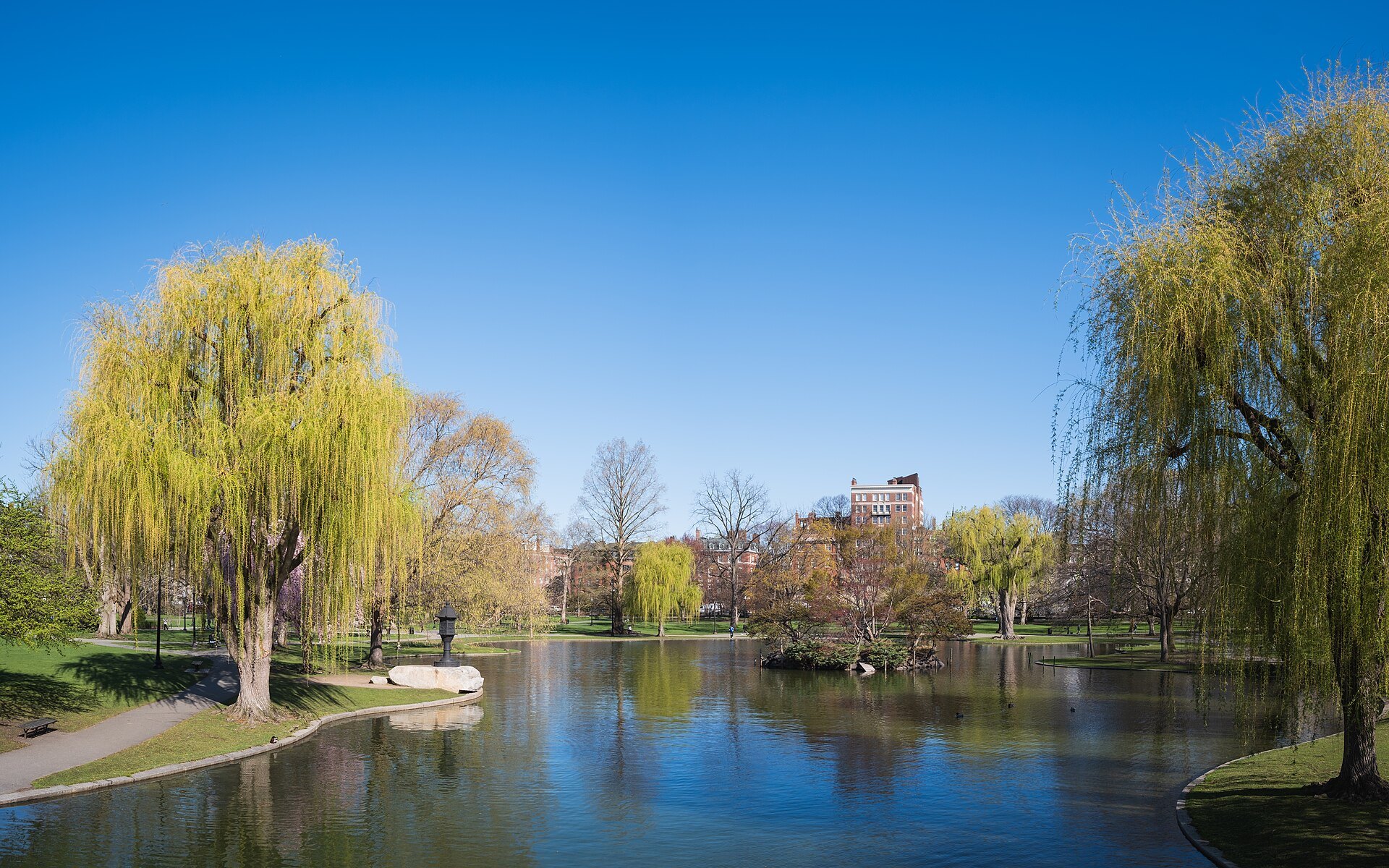
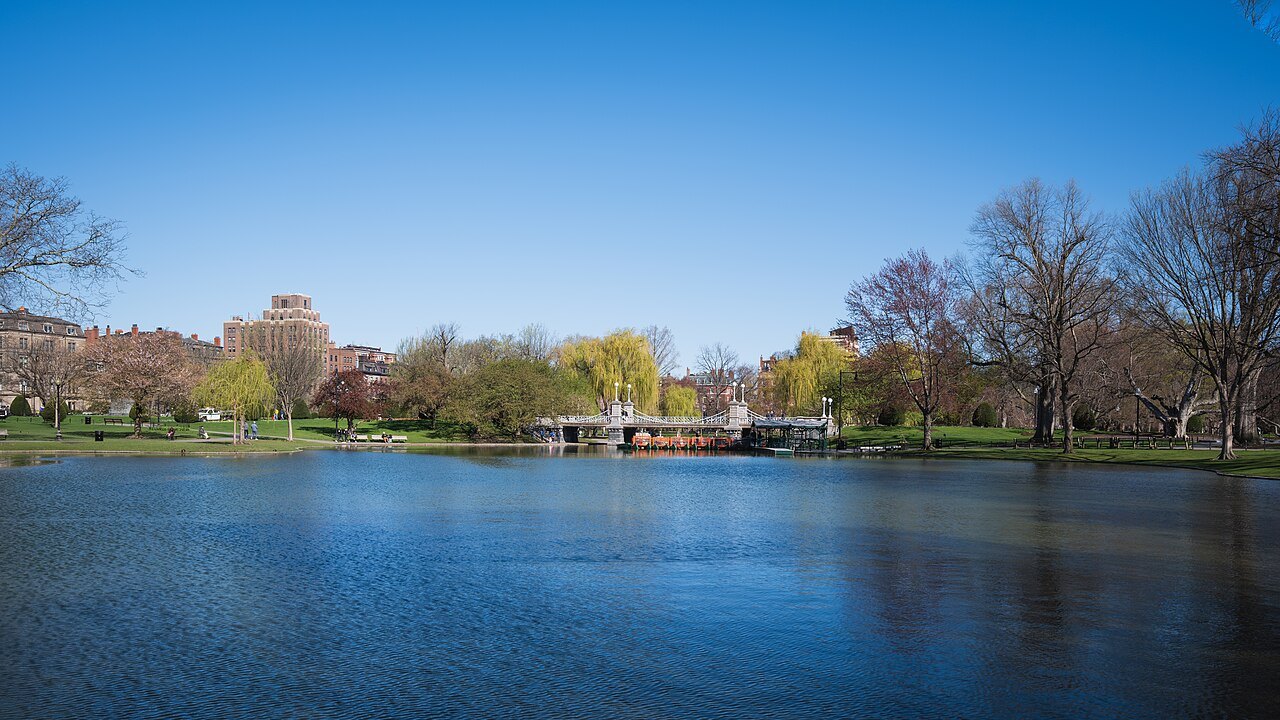
The pond, usually called the lagoon, is ringed by weeping willows, and the Garden's paths are lined with European and American elms, horse chestnuts, dawn redwoods, beeches and ginkgos. The island on its north side was once a peninsula; the forester cut it off from the shore because it had become so popular with courting couples.
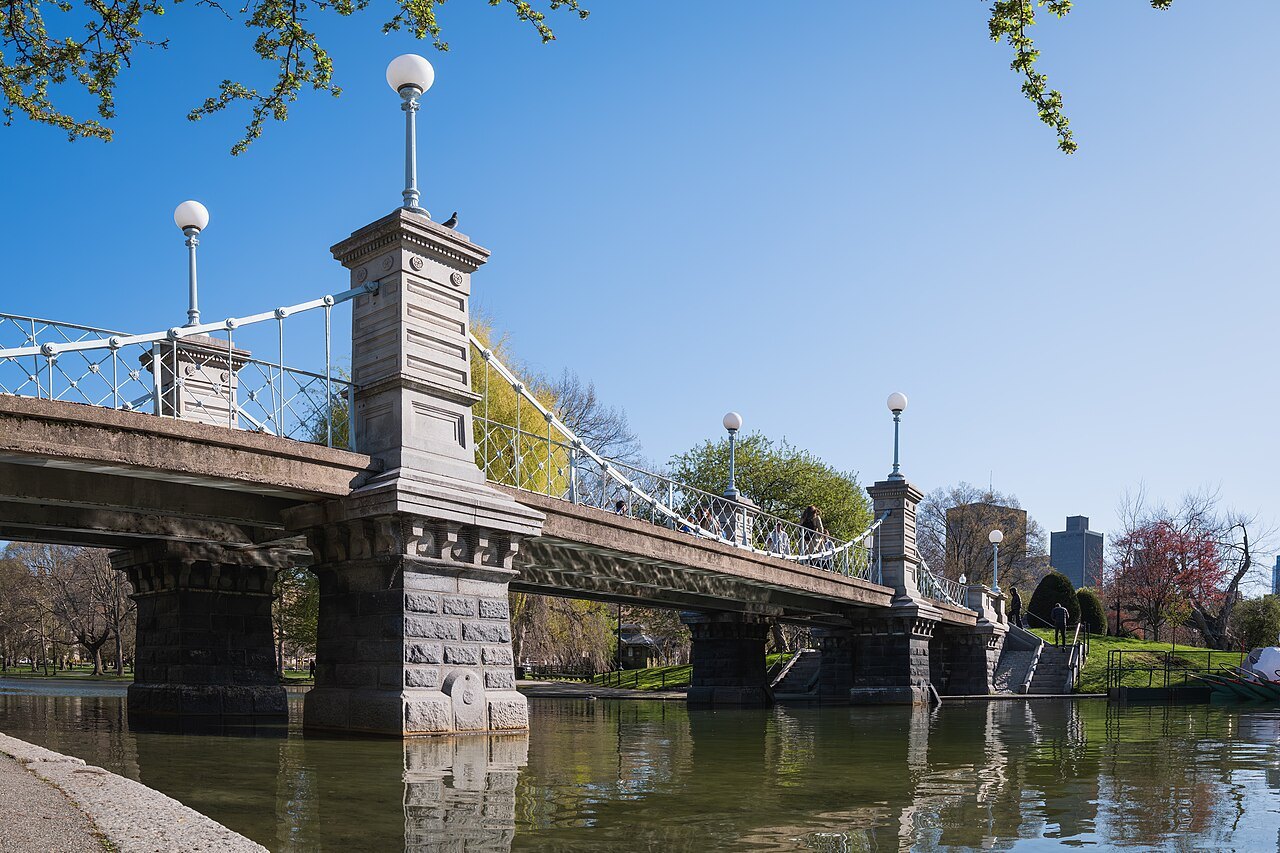
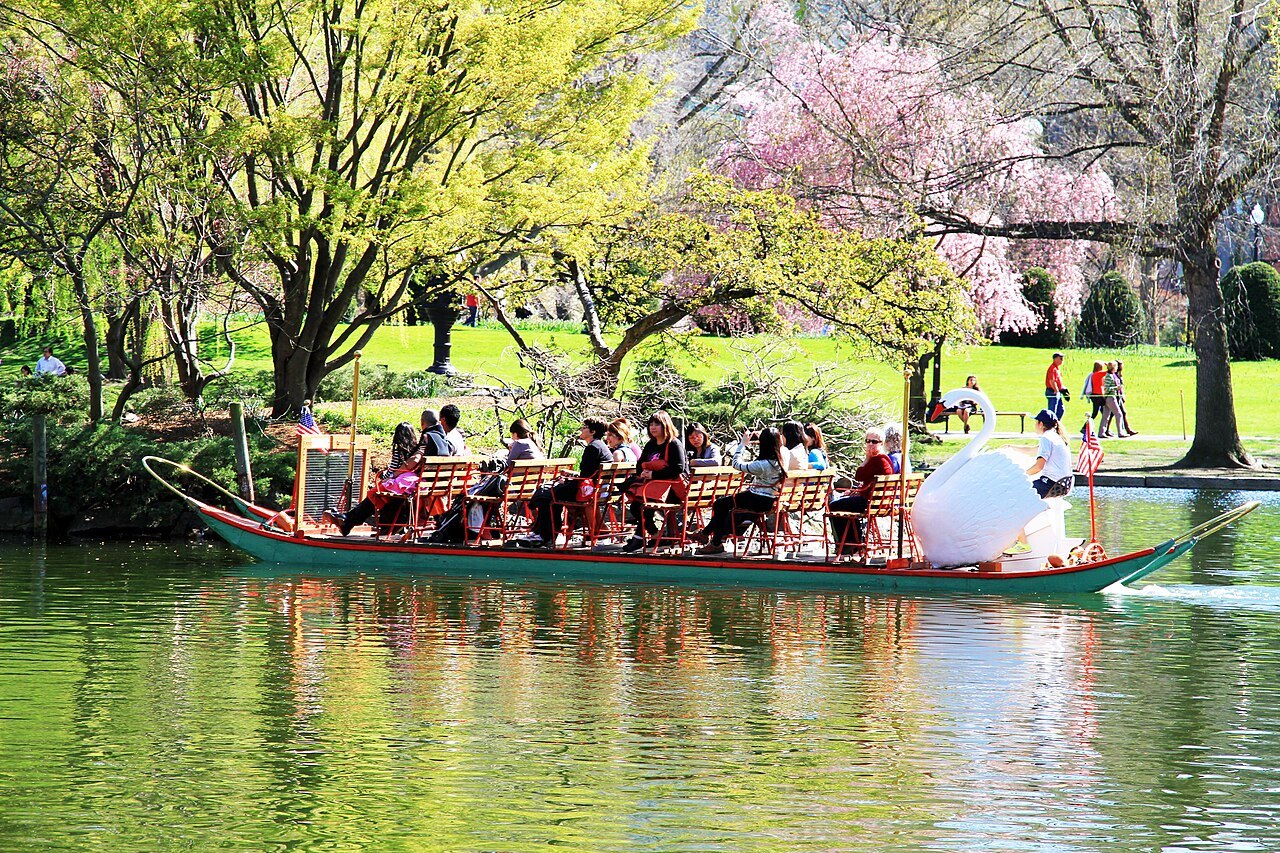
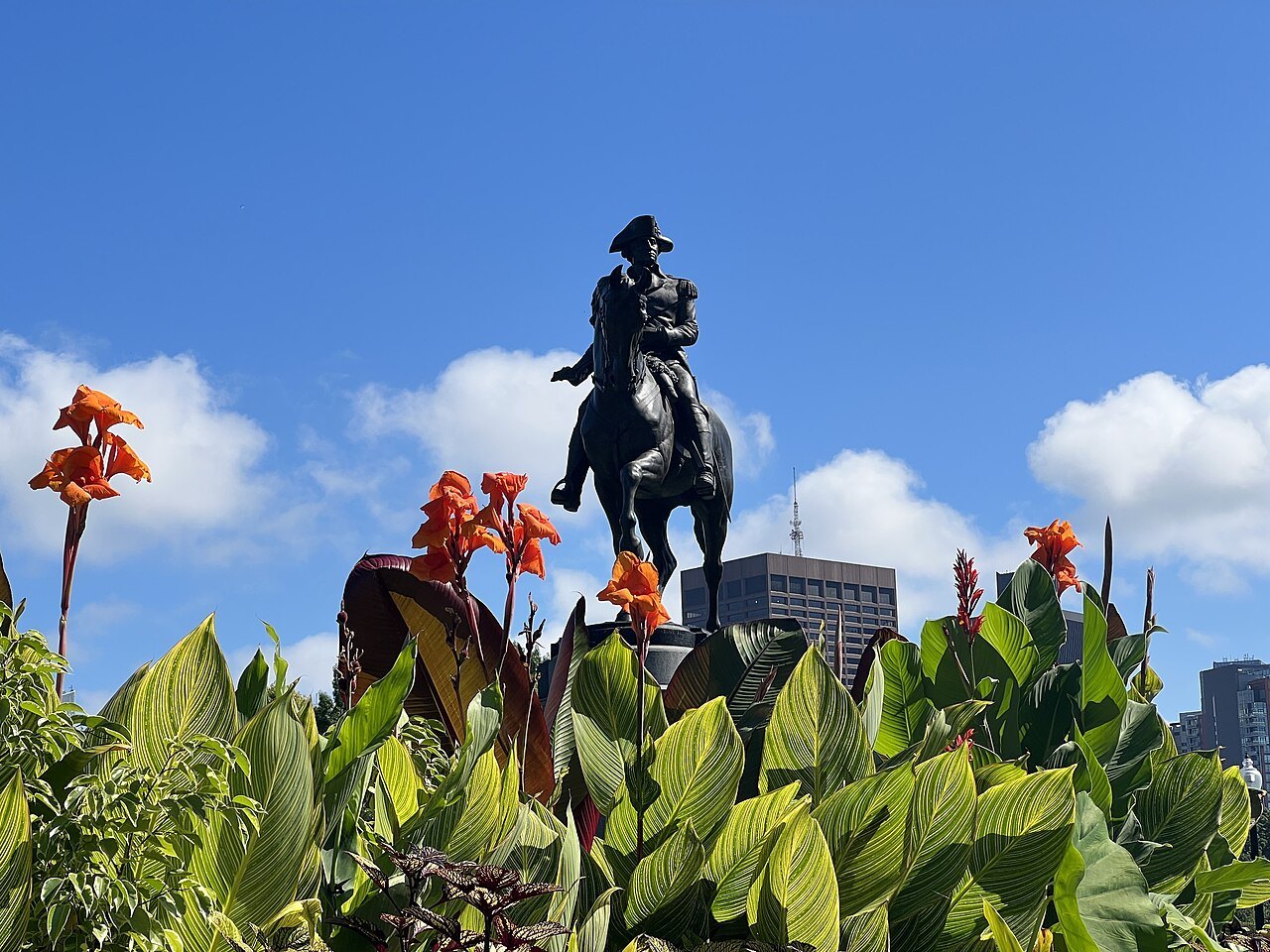
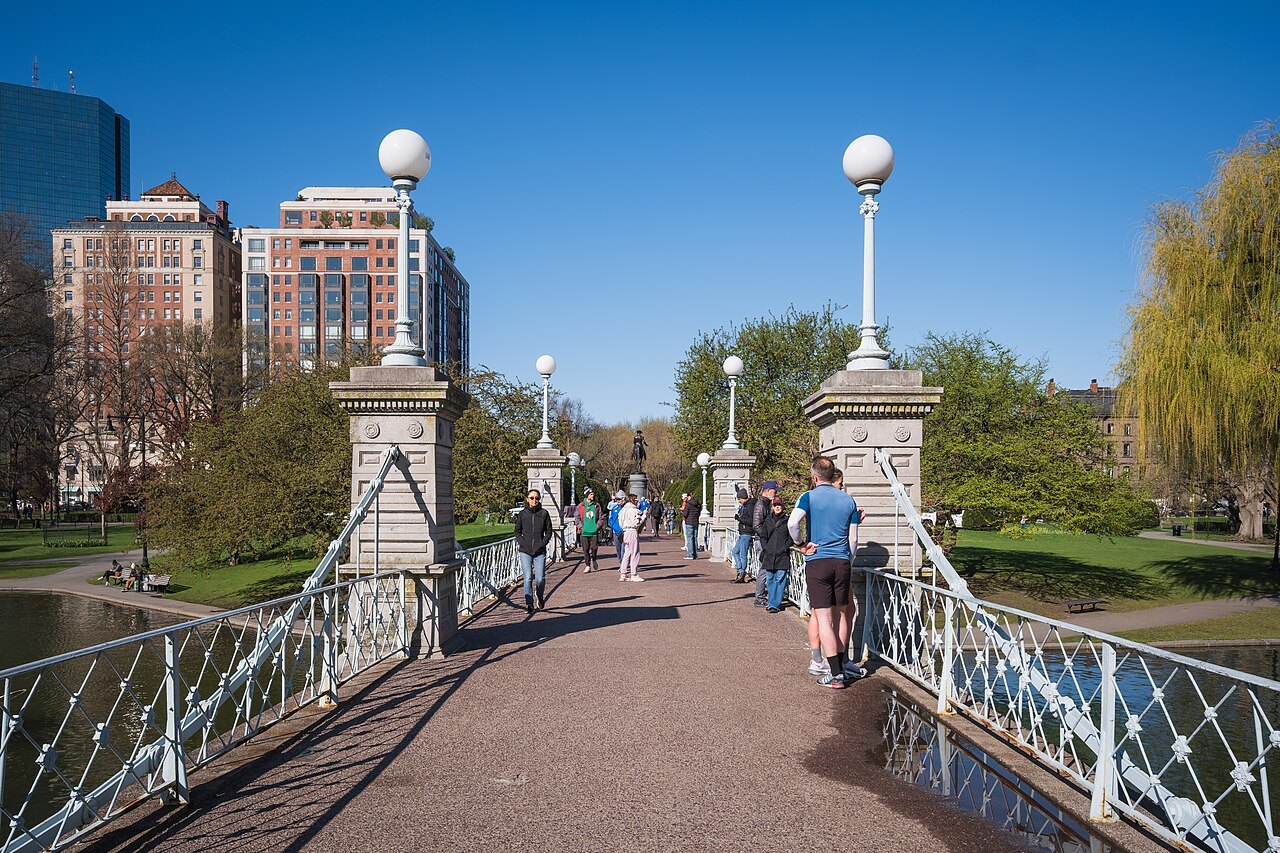
Across the middle runs the footbridge designed by William G. Preston, opened on June 1, 1867 and once the world's shortest working suspension bridge, until it was converted to a girder bridge in 1921. Below it the Swan Boats, pedaled from the stern behind a large white swan, have carried passengers around the lagoon since 1877. The equestrian statue of George Washington by Thomas Ball, of 1869, faces Commonwealth Avenue at the western entrance, and near the Charles and Beacon Streets gate are Nancy Schön's bronzes of 1987 from Robert McCloskey's children's book Make Way for Ducklings.
How to visit
Both parks are public ground with no gate to pass. The Common is the place to start the Freedom Trail or to cut between Beacon Hill, downtown and the Back Bay; the Garden is best walked slowly, entering from Charles Street and leaving by the Arlington Street gate toward Commonwealth Avenue. Sitting on the grass is allowed except where a posted sign forbids it. The Frog Pond's use follows the season, rink in winter and spray pool in summer, so check which one is set up before planning around it.
Where to go nextIII
Nearby
- Nearby · Greater Boston · Downtown to CharlestownThe Freedom TrailA walking path of two and a half miles through Boston that links sixteen places from the years before and during the Revolution, from the Common to the Old North Church and the Bunker Hill Monument.Read the page →
- Nearby · Greater Boston · DowntownFaneuil Hall and Quincy MarketThe red-brick market and meeting hall of 1742 that Boston calls the Cradle of Liberty, and behind it the three granite market buildings of 1826 that became the Faneuil Hall Marketplace.Read the page →
- Nearby · Greater Boston · the FenwayThe Museum of Fine Arts, BostonOne of the most comprehensive art collections in the Americas, more than 450,000 works behind a granite front on Huntington Avenue, with a rotunda painted by John Singer Sargent and a wing for the art of the Americas.Read the page →