Home · Landmarks · The Museum of Fine Arts, Boston
What you are looking atI
The Museum of Fine Arts, Boston
Greater Boston · the Fenway
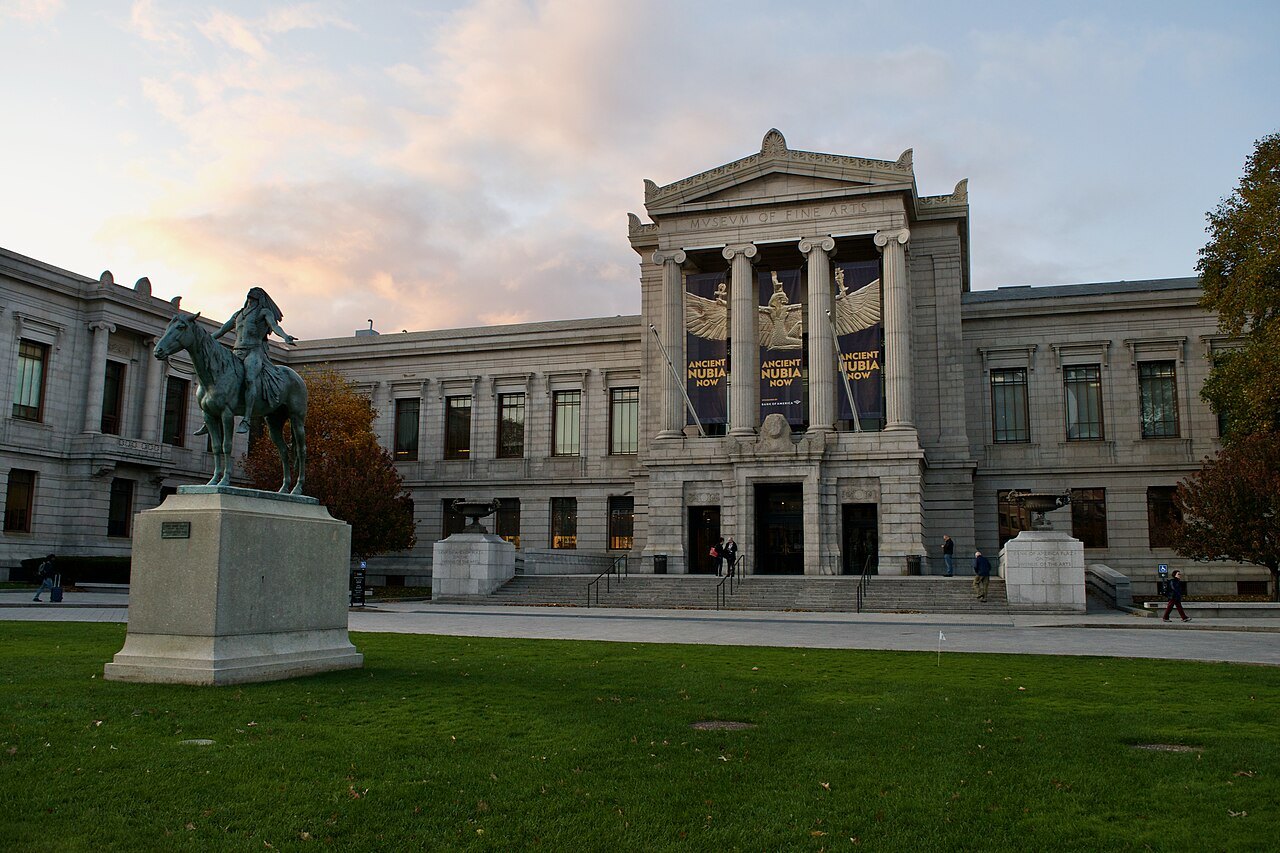
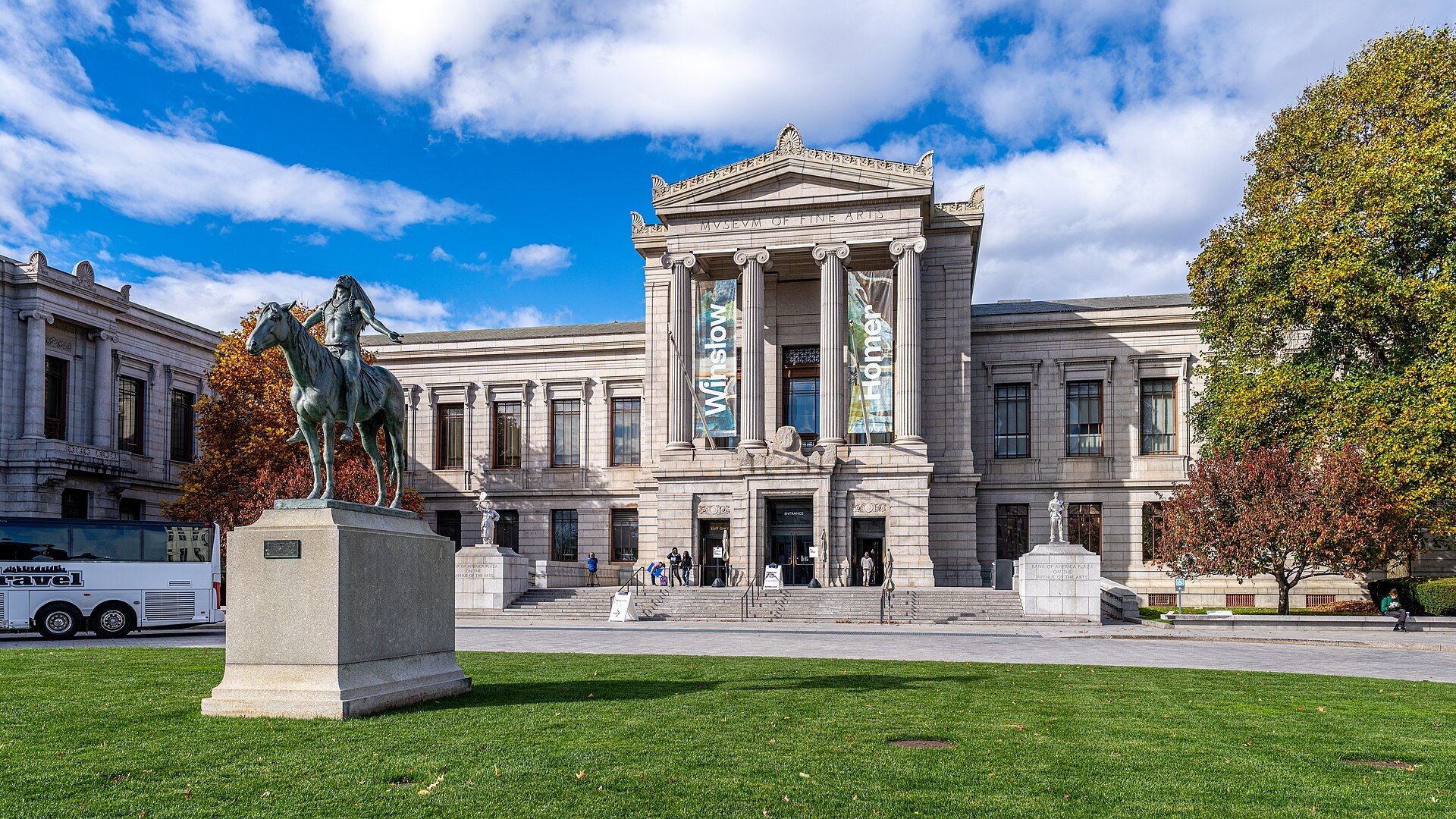
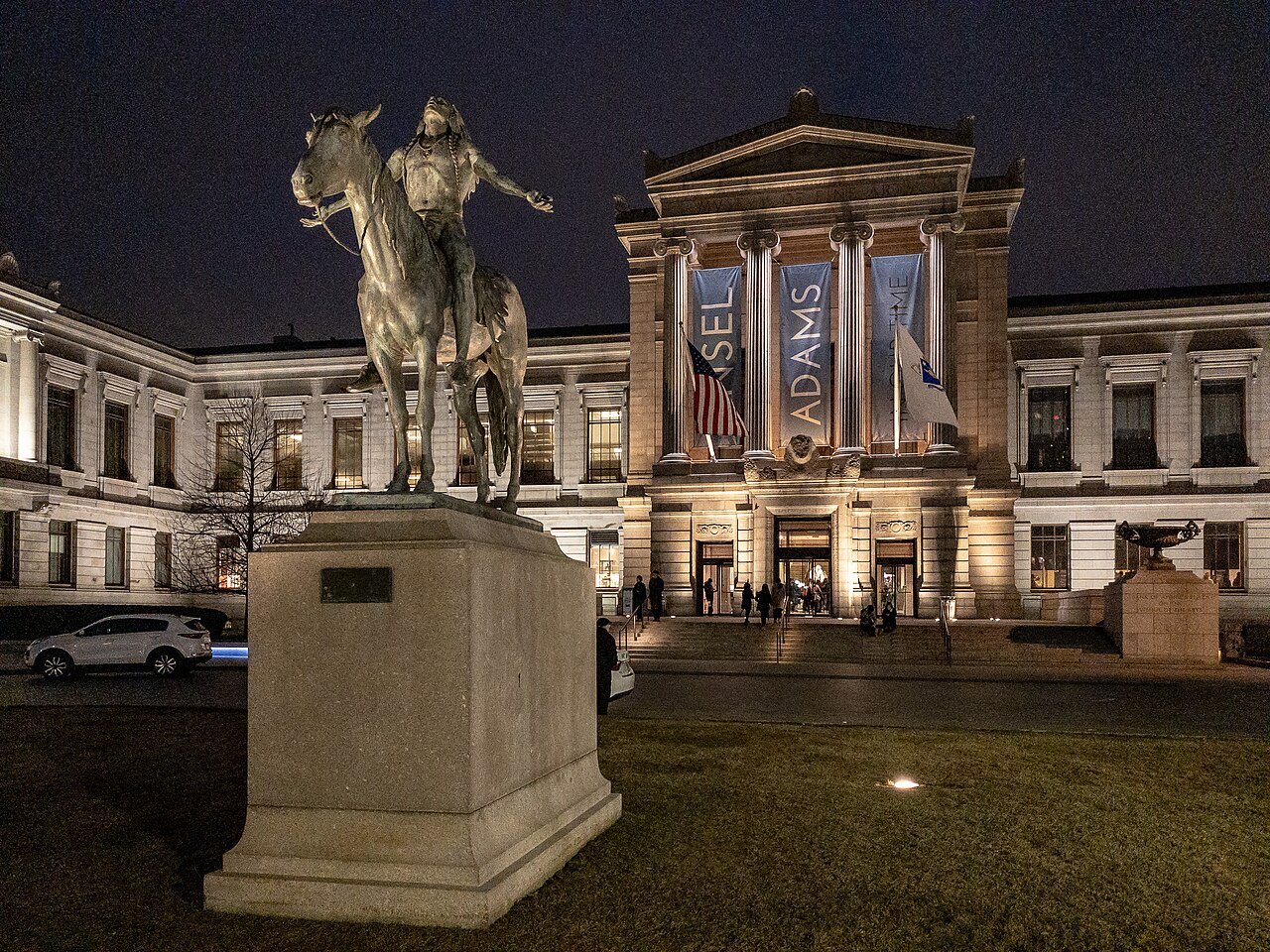
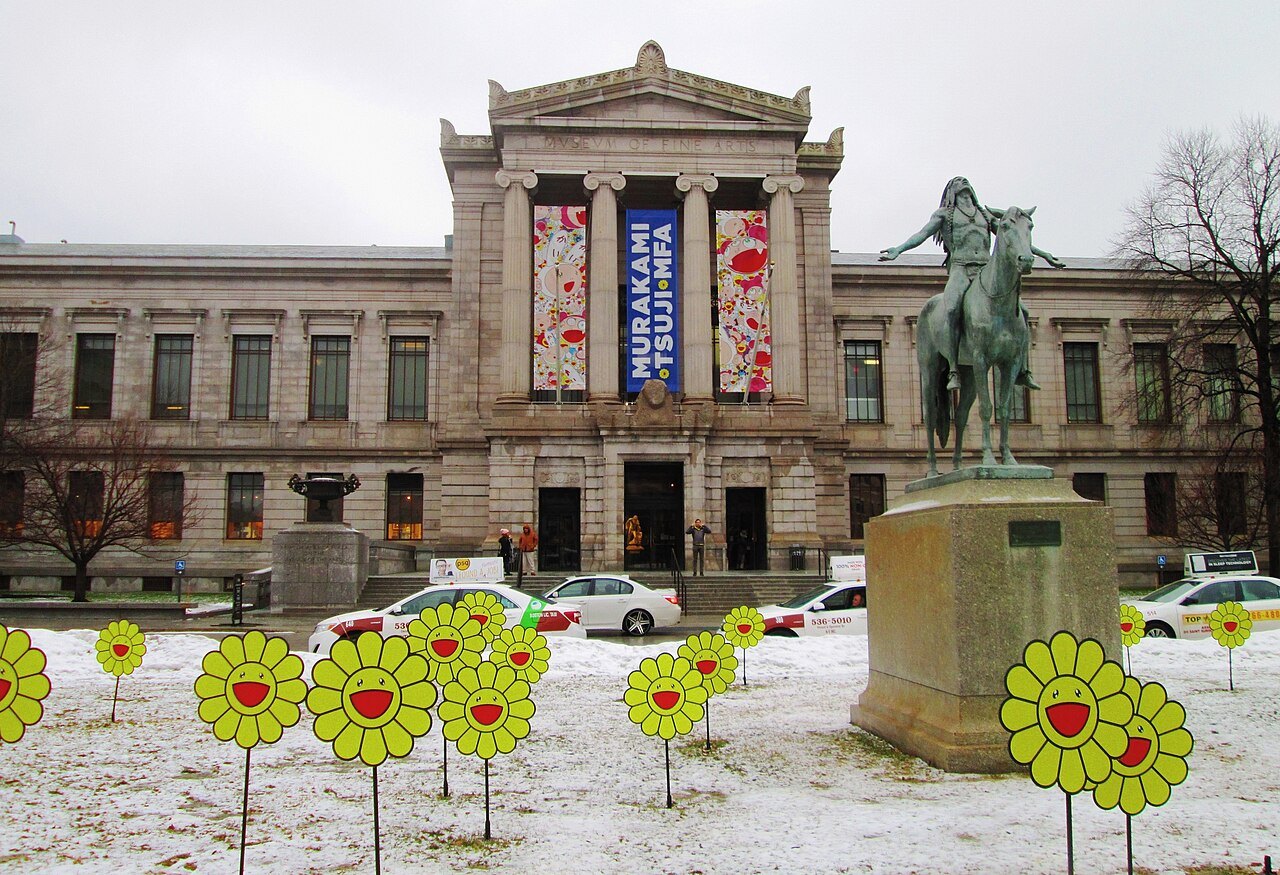
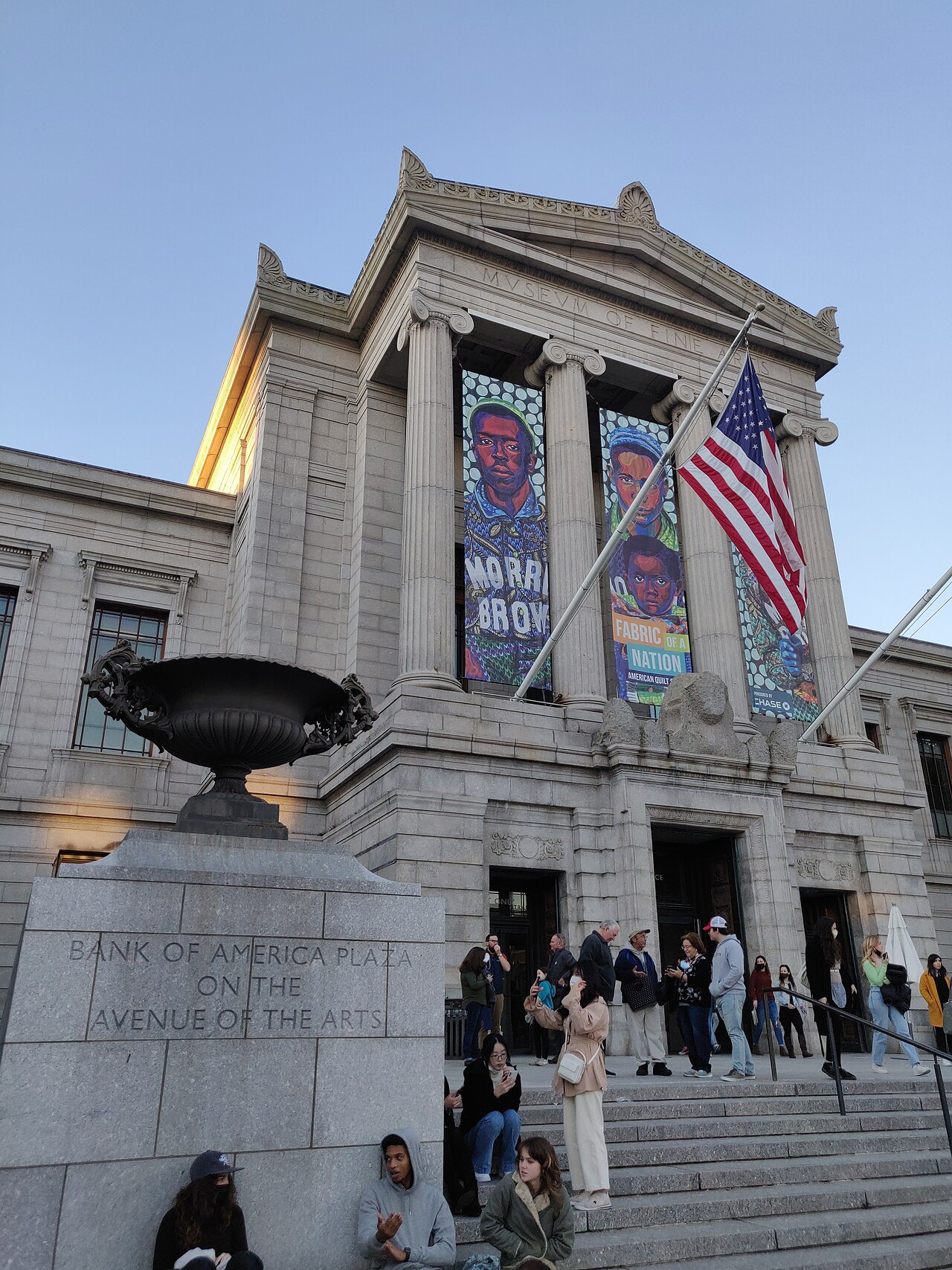
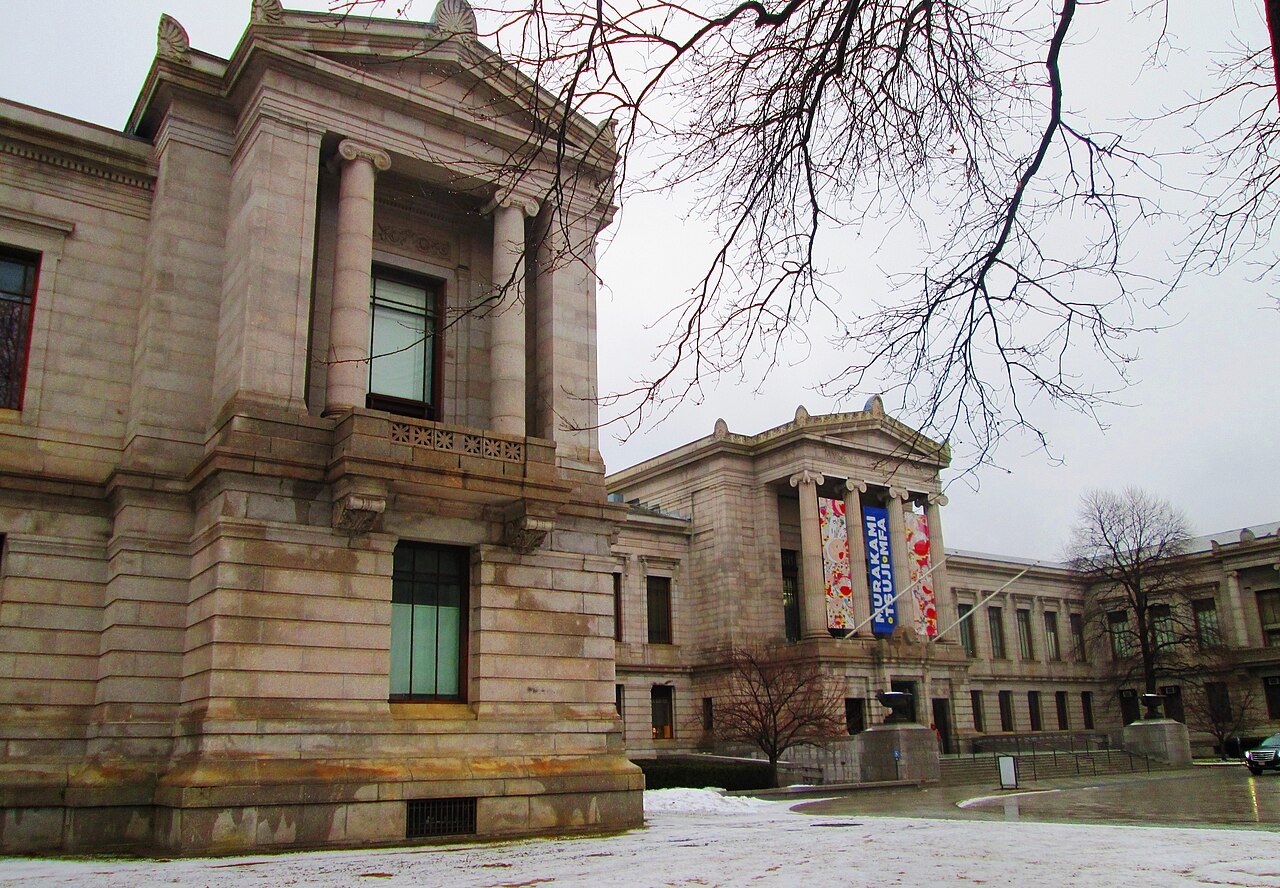
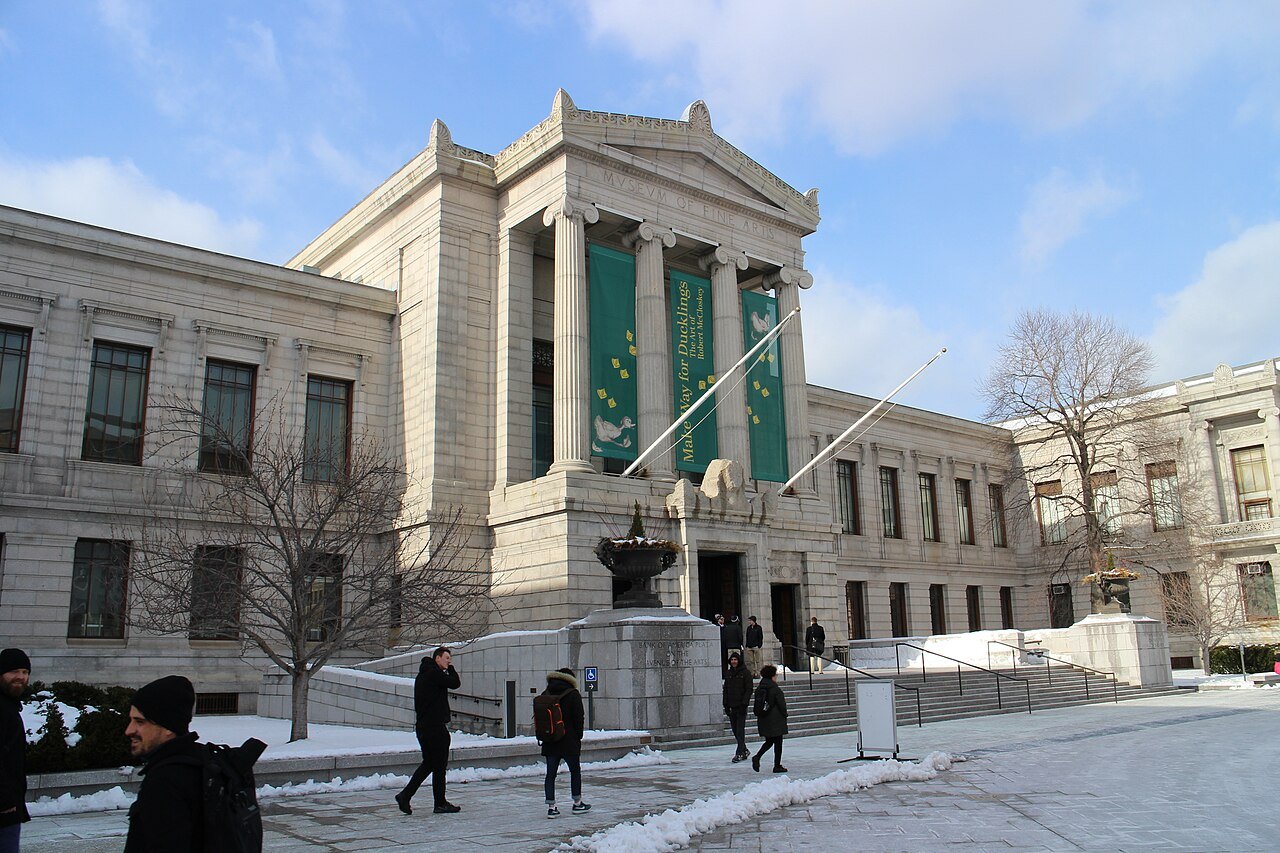
- The Huntington Avenue frontGuy Lowell's granite facade, five hundred feet long, with Cyrus Dallin's horseman on the lawn.
- The rotundaFrescoes by John Singer Sargent, painted from 1916 to 1925 above the grand stair.
- Art of the AmericasThe wing by Foster and Partners, opened in November 2010, for North, South and Central America.
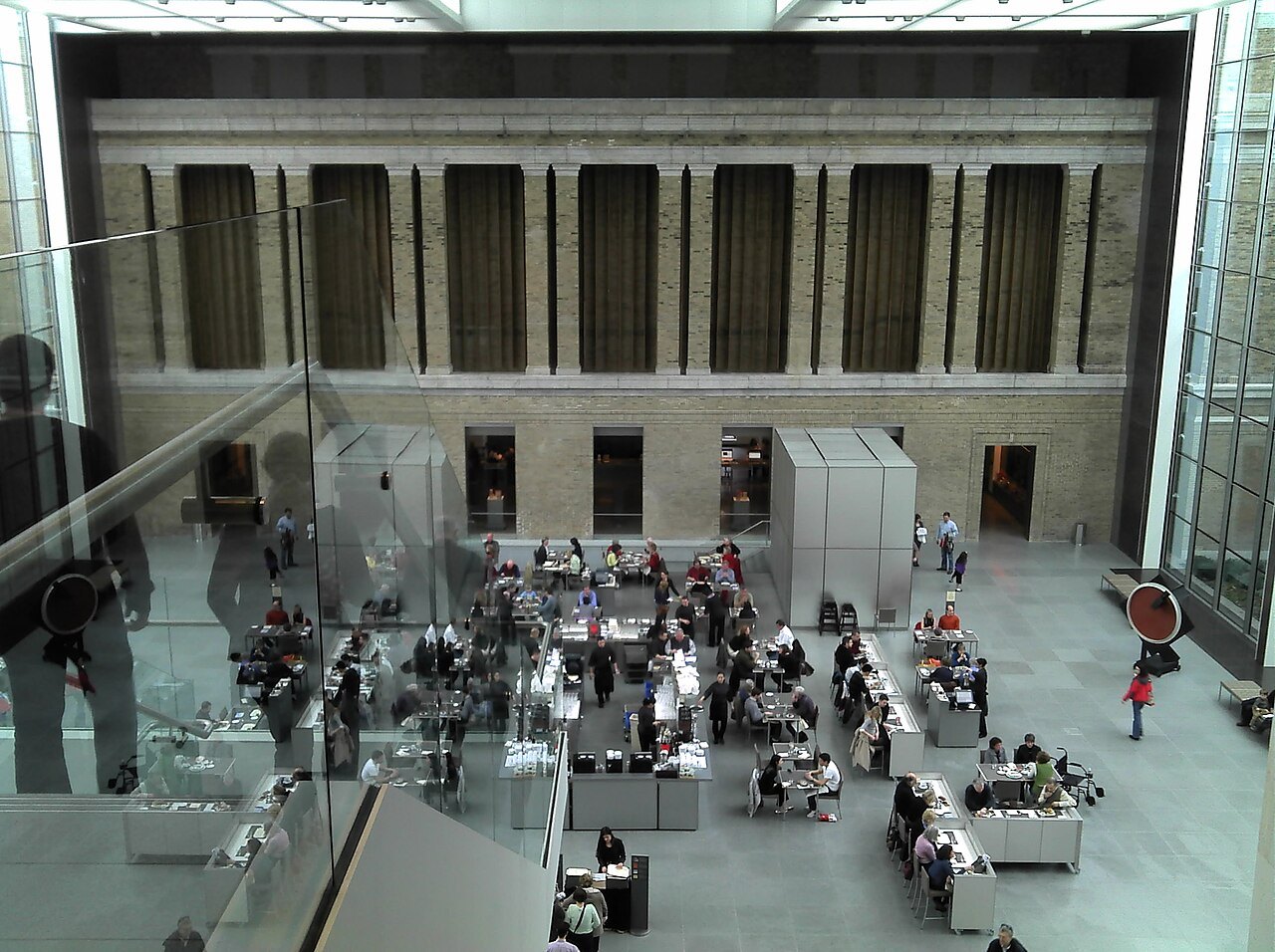
- The Shapiro Family CourtyardA bright, glass-roofed court at the heart of the museum, by the same architects.
- Japanese artThe largest collection of Japanese art in the world outside Japan, begun in the 1880s.
- Tenshin-enA Japanese garden by Kinsaku Nakane, opened in 1988 and renovated in 2015.
The place in fullII
Reading the place
Why it matters
The Museum of Fine Arts, usually called the MFA, is the twentieth-largest art museum in the world by gallery area, and one of the most comprehensive collections in the Americas. Its collection runs to more than 450,000 works of art, including more than eight thousand paintings, and spans ancient Egypt, Greece and Rome, the art of Asia, Europe from the Middle Ages on, and the art of the Americas from before contact to the present. More than a million people visit each year, and it is affiliated with the School of the Museum of Fine Arts at Tufts University.
It stands on Huntington Avenue in the Fenway, a short walk from the Isabella Stewart Gardner Museum, and the two make a natural pair: one a public museum built to grow in stages, the other a single collector's house kept exactly as she left it.
From Copley Square to the Fenway
The museum was founded in 1870 and first opened in Copley Square, in a building at Dartmouth and St. James Streets that it soon outgrew; the Fairmont Copley Plaza hotel stands on its site now. In 1907 the trustees laid plans for a new home on Huntington Avenue, near the recently opened Gardner museum, and hired the architect Guy Lowell to design a building that could be built in stages as money came in.
The museum moved there in 1909. Lowell's design gave it a granite front some five hundred feet long and a grand rotunda; the Copley Square building was demolished and replaced by the Copley Plaza Hotel in 1912. The Evans Wing for paintings followed, and further wings through the century, among them the West Wing by I. M. Pei, opened in 1981 and now the Linde Family Wing for Contemporary Art.
Sargent's rotunda
From 1916 to 1925 John Singer Sargent painted the murals and reliefs that decorate the rotunda and its colonnades, above the grand staircase. His subjects are the gods and heroes of Greek myth, and his model for Apollo and many of the other figures was a young Black man, Thomas McKeller, a fact the museum now tells alongside the paintings.
The rotunda is the building's ceremonial center, and it is worth climbing the stair even on a visit aimed elsewhere: Sargent's paintings are part of the architecture, not hung on it, and they are best seen from below and from the colonnade around them.
The Art of the Americas wing
The largest change to the building in a century came with a master plan by Foster and Partners. Its centerpiece, the Art of the Americas Wing, opened on November 20, 2010, with free admission that day, and holds art from North, South and Central America. Beside it the glass-roofed Shapiro Family Courtyard became the museum's bright central hall, and the landscape architects Gustafson Guthrie Nichol redesigned the entrances on Huntington Avenue and the Fenway and the gardens around them.
The wing won the Harleston Parker Medal of the Boston Society of Architects in 2014, an award for architectural achievement in the city. Earlier projects had already reshaped the building: the Asiatic Wing reopened in 1982 after the new climate-control system that came with the West Wing, and the Norma Jean Calderwood Garden Court and Terrace opened in 1997.
The collections of Asia
The MFA holds the largest collection of Japanese art in the world outside Japan. Its core was gathered in the late nineteenth century by four Bostonians who had lived in Japan, Ernest Fenollosa, Kakuzo Okakura, William Sturgis Bigelow and Edward Sylvester Morse, and in 1890 the MFA became the first museum in the United States to establish a Japanese collection with its own curator. It has continued to collect contemporary Japanese work.
The Chinese collections cover nearly every era, from Neolithic tomb objects through imperial ceramics, bronzes and large Buddhist sculpture to contemporary work. Outside, the Japanese garden Tenshin-en, designed by Kinsaku Nakane, opened in 1988 and was renovated in 2015, with a gate built by a Massachusetts carpenter using traditional Japanese joinery.
Why the Gardner is next door
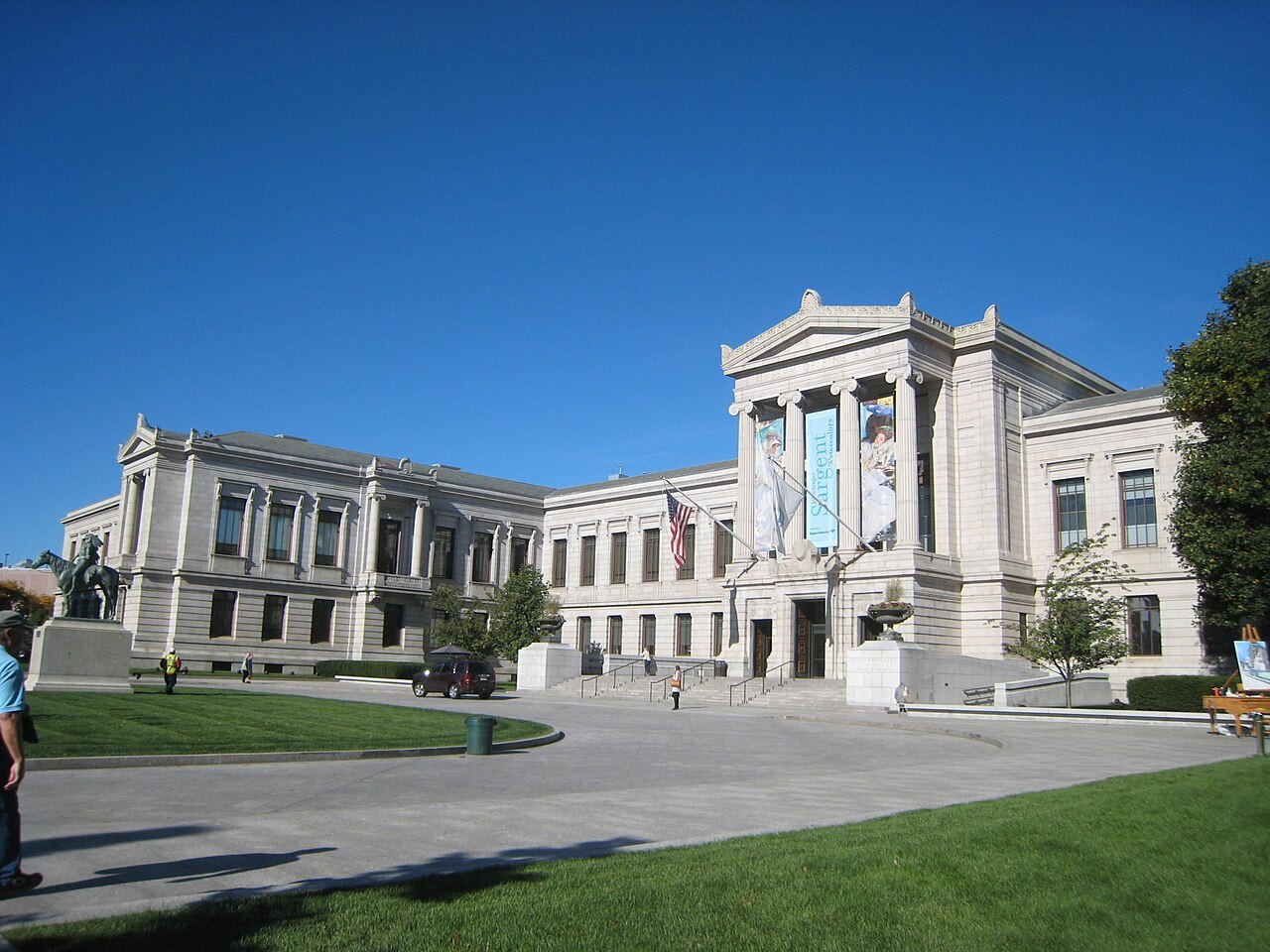
When the trustees chose the Fenway in 1907, Isabella Stewart Gardner's museum had just opened a few streets away, and the two institutions have grown up as neighbors ever since. They are very different to visit. The MFA is built to change: galleries are rehung, wings added, loans and exhibitions come and go. The Gardner, under the terms of its founder's will, keeps its rooms as she arranged them. Seeing both in a day shows the two ways a city can hold art, the public encyclopedia and the private house.
Egypt and the ancient world
The Egyptian galleries hold sculpture, sarcophagi and jewelry spanning thousands of years, much of it gathered through excavations the museum took part in, from about 6500 BCE to 600 CE. The classical collections of Greece and Rome sit nearby. On the lawn outside the Huntington Avenue entrance stands Cyrus Dallin's bronze of 1908, Appeal to the Great Spirit, a mounted Native American figure with arms spread.
How to visit
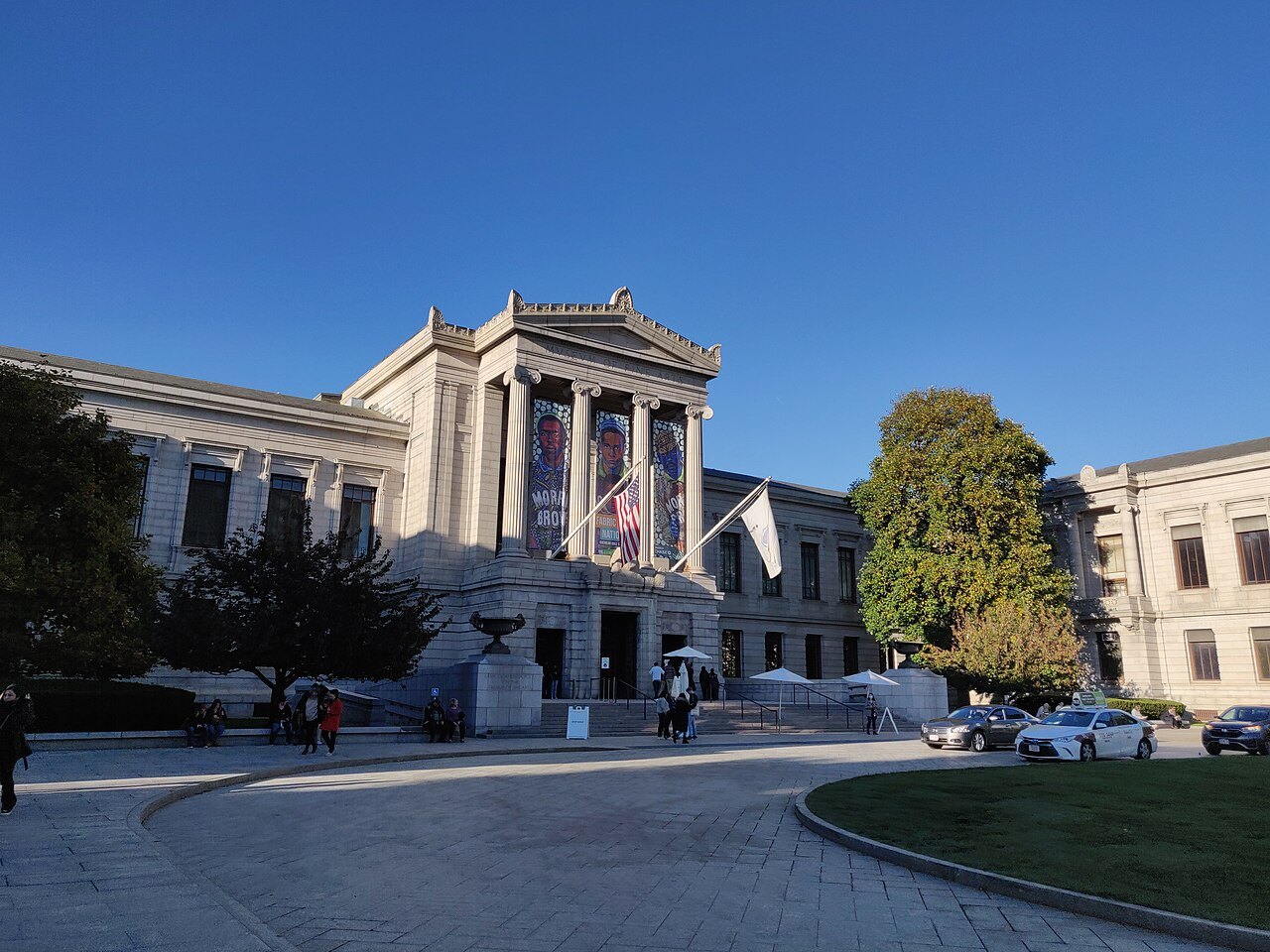
The museum is large enough that a first visit works best with a plan: the Art of the Americas wing and the rotunda for one half of a day, one of the Asian or ancient collections for the other. Enter from Huntington Avenue past the Dallin statue or from the Fenway side; both lead to the central courtyard, which is the easiest place to get your bearings and to meet. Tickets are sold by the museum itself; check its own site for what is on and what needs a timed entry. The Gardner museum is a few minutes' walk away, and the two together fill a day.
Where to go nextIII
Nearby
- Nearby · Greater Boston · the FenwayThe Isabella Stewart Gardner MuseumA Venetian palace built in the Fenway by one collector, opened in 1903 and kept as she arranged it, with a glass-roofed garden court at its heart and a new wing by Renzo Piano beside it.Read the page →
- Nearby · Greater Boston · Beacon HillBoston Common and the Public GardenThe oldest city park in the United States, fifty acres of lawn and hill below the State House, and beside it the Public Garden of 1837, with its lagoon, its little bridge and the Swan Boats.Read the page →
- Nearby · Greater Boston · CambridgeHarvard YardThe oldest part of Harvard, grown around a parcel bought in 1637: a lawn of elms and brick halls behind a fence with twenty-seven gates, with the university's great library and its church facing each other across the middle.Read the page →