Home · Landmarks · Faneuil Hall and Quincy Market
What you are looking atI
Faneuil Hall and Quincy Market
Greater Boston · Downtown
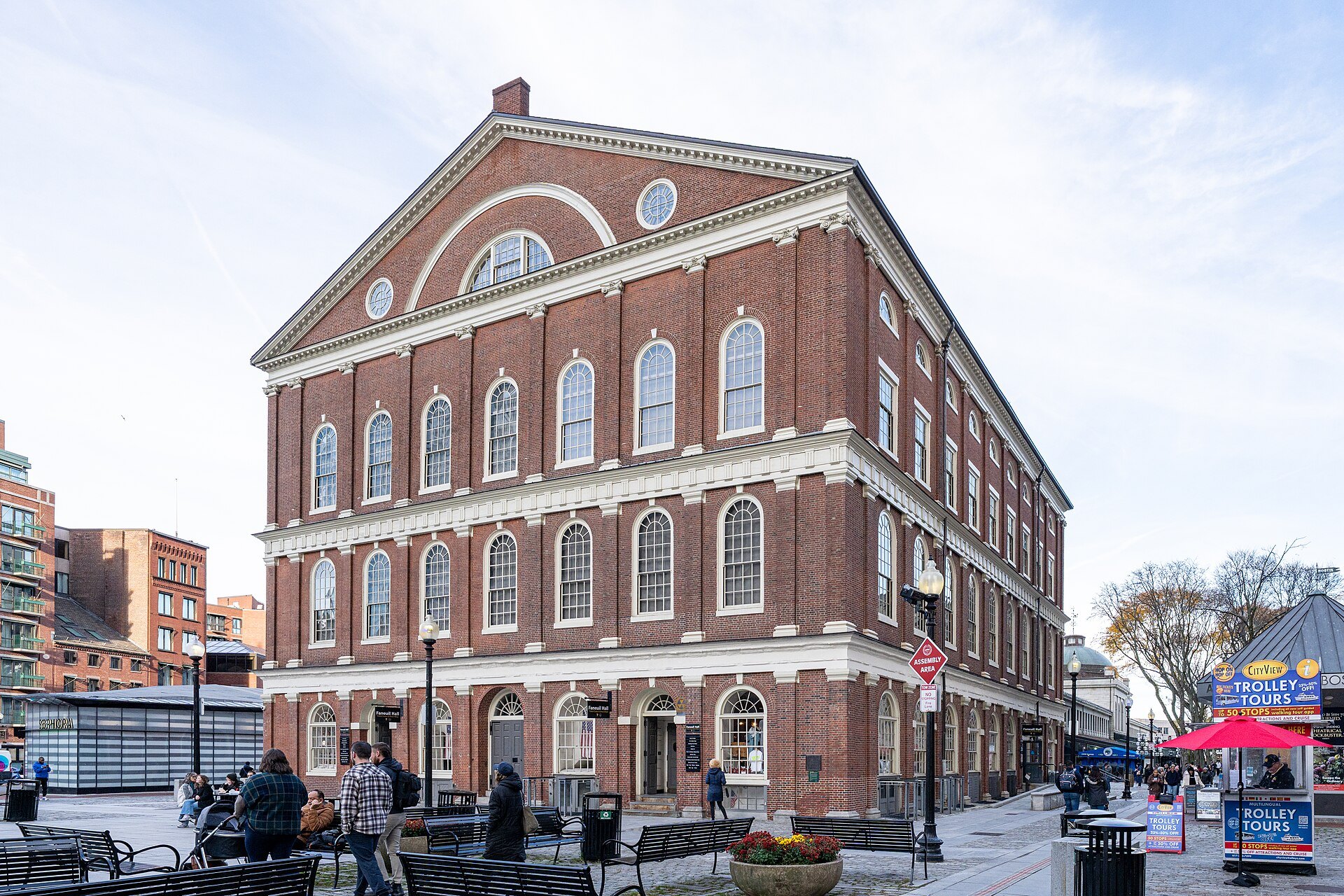
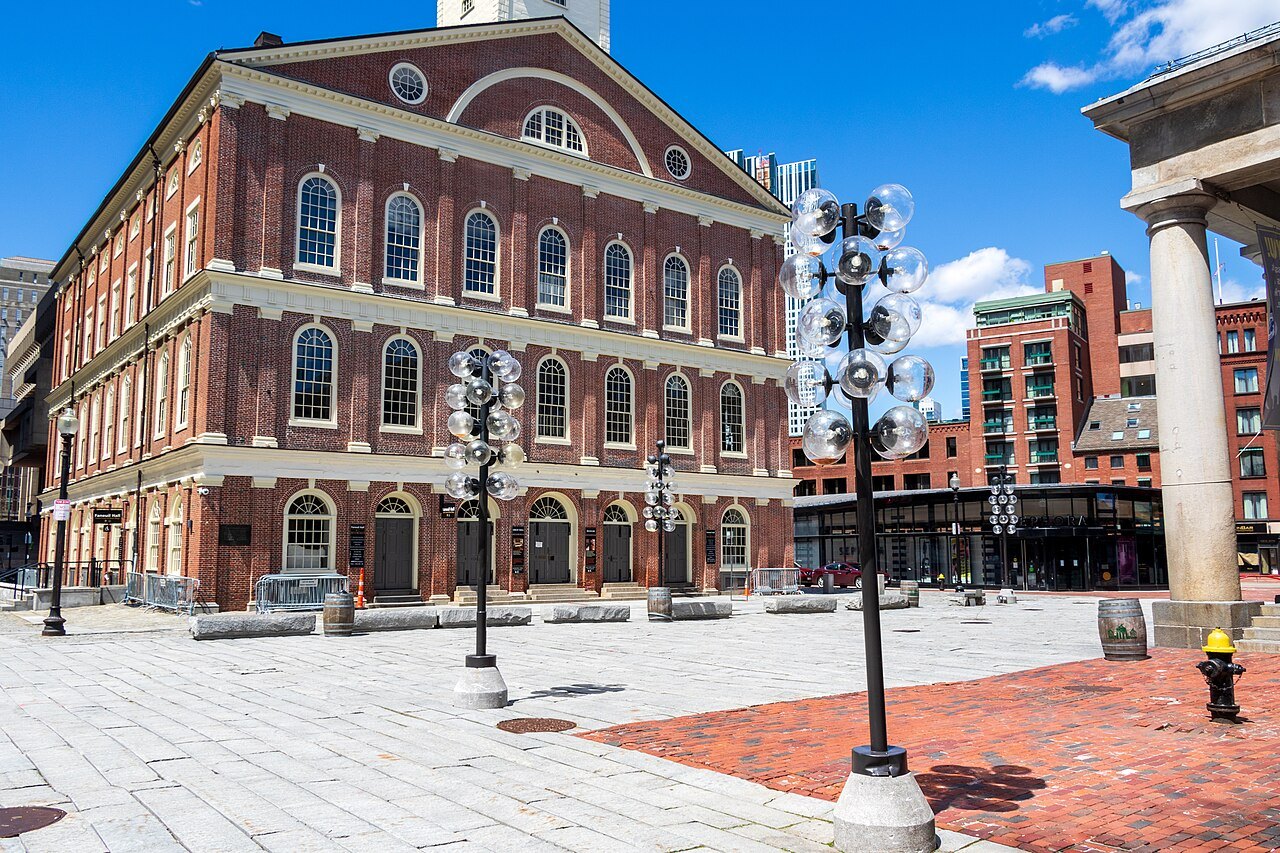
- The market floorThe ground floor has been a market since 1742, a room seventy-six feet by one hundred.
- The Great HallThe meeting room upstairs, twenty-eight feet high, where Patriots and abolitionists spoke.
- The grasshopperA grasshopper-shaped weathervane on the cupola above the slate roof.
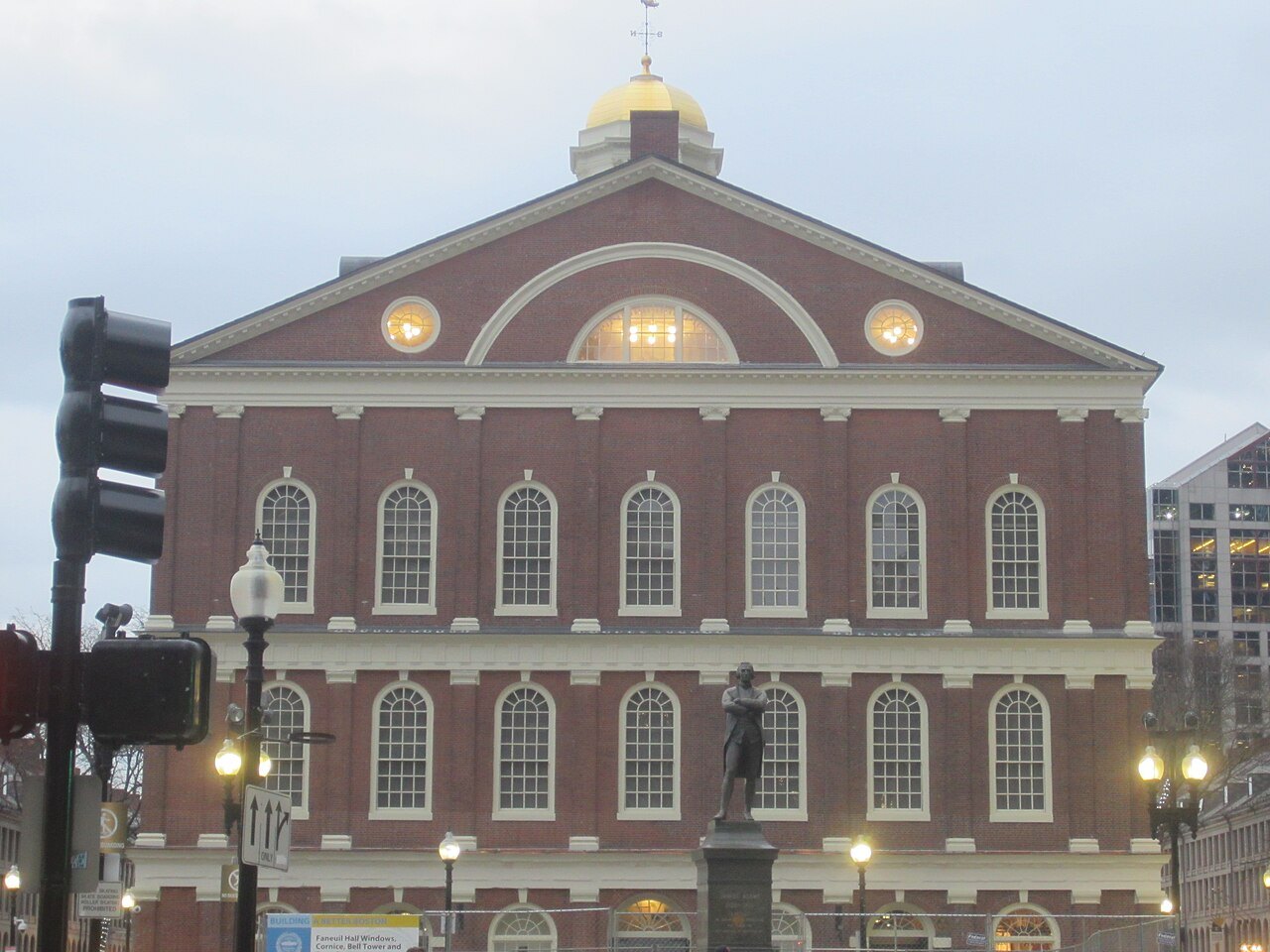
- Samuel AdamsAnne Whitney's statue of 1880 stands on the west side of the building.
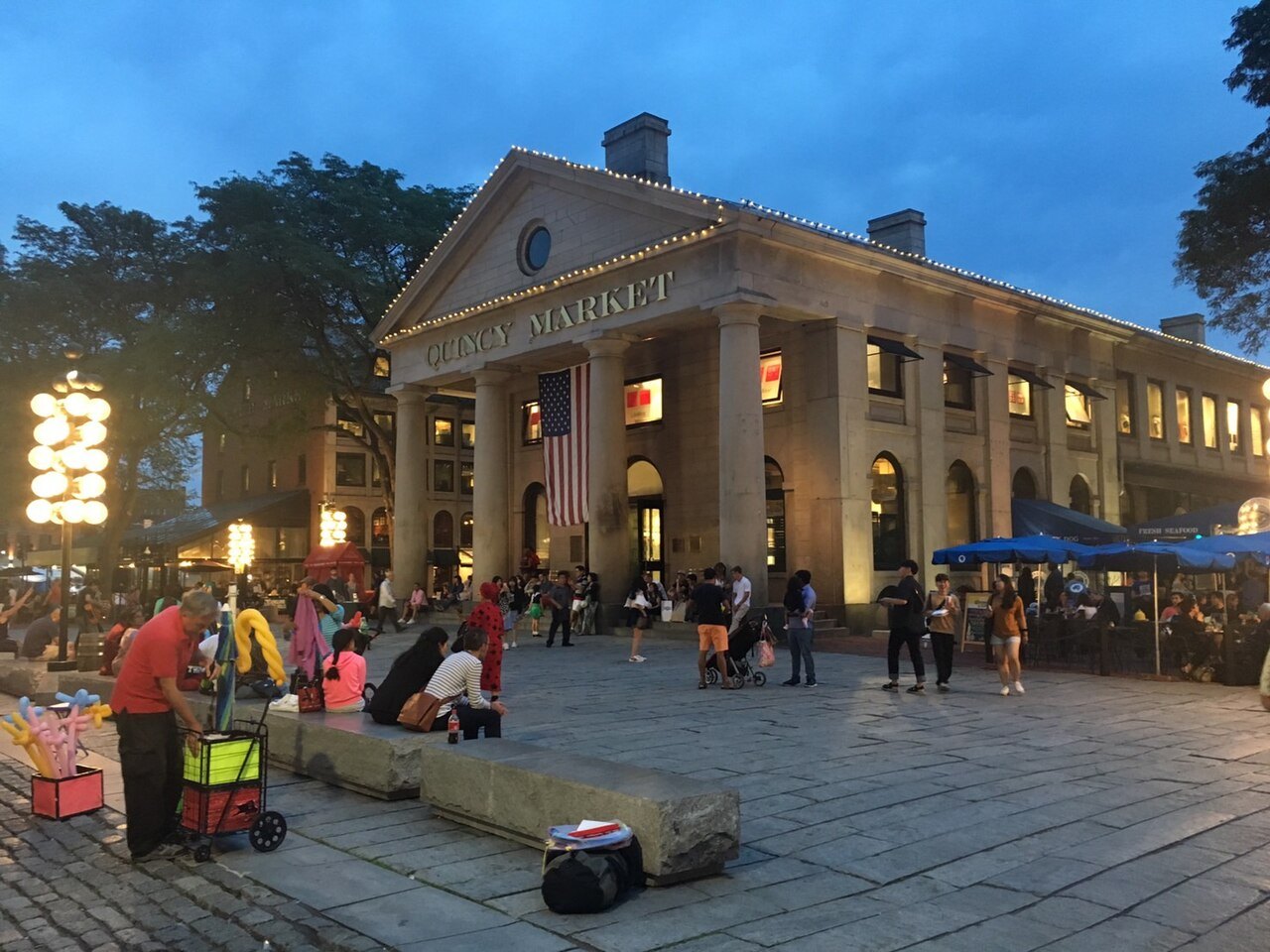
- Quincy MarketAlexander Parris's long granite hall with a domed center and a portico at each end.
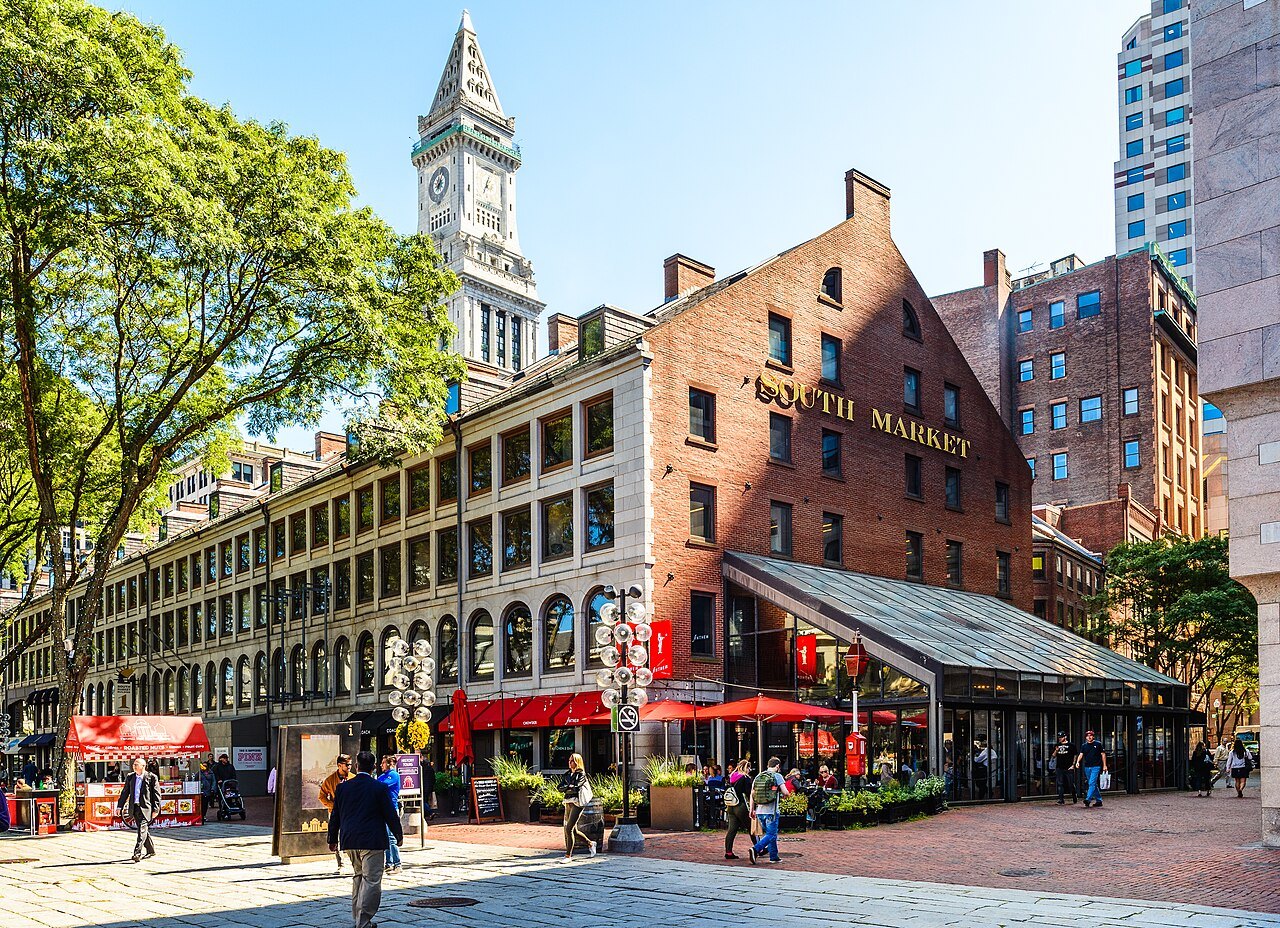
- North and South MarketsTwo brick and granite blocks that flank the central hall, shops on every floor.
The place in fullII
Reading the place
Why it matters
Faneuil Hall opened in 1742 as a market on the ground floor and a meeting hall above it, the gift of the merchant Peter Faneuil. In the years before the Revolution it hosted speech after speech by Patriots such as James Otis and Samuel Adams, and it became known as the Cradle of Liberty. It is part of Boston National Historical Park, a National Historic Landmark, and a stop on the Freedom Trail, and it still does both of its first jobs: there are stalls on the ground floor and public meetings in the hall.
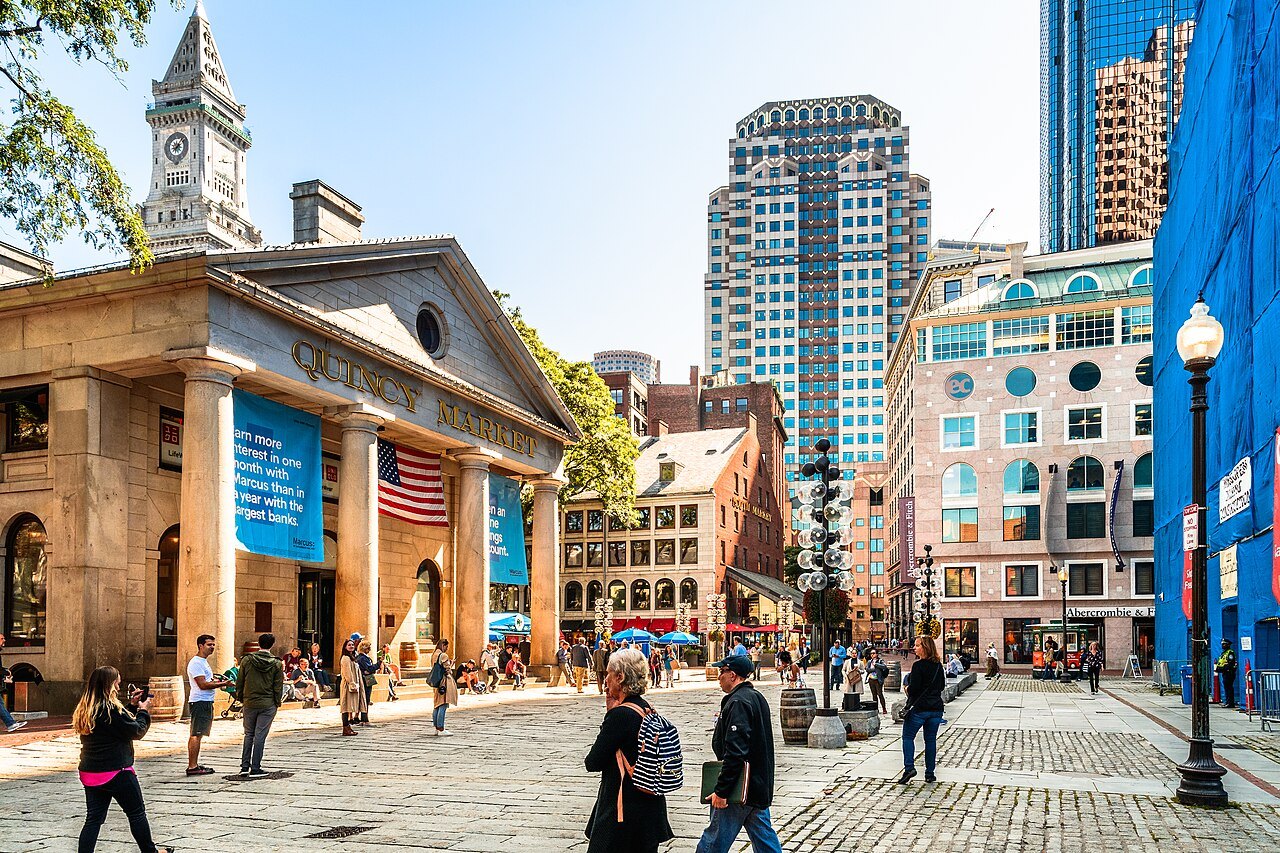
Behind it stand the three buildings of Quincy Market, built in 1826 to relieve the hall of a trade it had outgrown. Since 1976 they have been run together as the Faneuil Hall Marketplace, a festival marketplace of food stalls and shops, and the whole block, paved in granite and cobbles, is one of the busiest public places in the city.
Peter Faneuil's gift
In 1740 Peter Faneuil, a colonial merchant and slave trader, offered to give the town a building for a market, provided the Board of Selectmen voted in favor. The artist John Smibert designed it, and it opened in 1742. Faneuil's fortune came partly from the slave trade, a fact the building's history now states openly.
The first hall burned in 1761 and was rebuilt over the following decade. The Ancient and Honorable Artillery Company of Massachusetts moved into the attic in 1746, and it is still there, in rooms under the cupola; in 1747, when the town house burned, the Governor's Council briefly met in the hall. In 1806 Charles Bulfinch remodeled and enlarged the building, and it was renovated again in 1827, after Quincy Market opened, and again in 1898 and 1899, when the interiors were rebuilt in materials that would not burn. Cram and Ferguson oversaw a further renovation between 1923 and 1925, and the building has been renovated again in this century.
The building
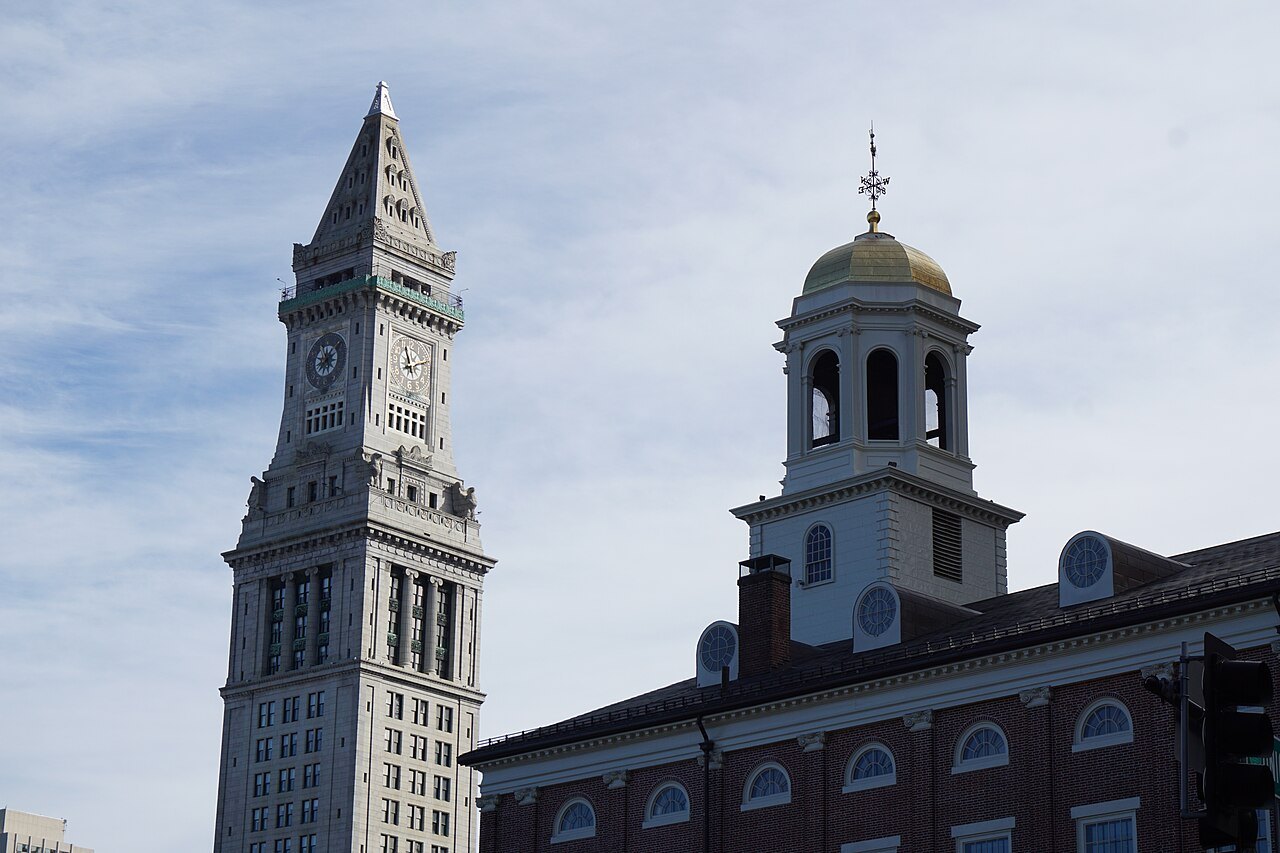
Faneuil Hall is four stories of red brick, including the attic, divided into bays by pilasters, with arched windows on the ground floor. The slate gable roof carries a cupola, and on the cupola turns a weathervane in the shape of a grasshopper. West of the building stands the sculpture of Samuel Adams by Anne Whitney, from 1880.
Inside, the ground floor is a market room seventy-six feet by one hundred. A stair rises from the main eastern entrance to the Great Hall on the second and third floors, a room twenty-eight feet high and seventy-six feet square, hung with portraits and with George Healy's large painting of the Webster–Hayne debate in the Senate, mounted there around the time a clock was added in 1850. The National Park Service runs a visitor center on the first floor, with free maps of the Freedom Trail.
The Cradle of Liberty
After it was rebuilt, the hall regularly hosted pro-independence speakers, and the name Cradle of Liberty followed. The meetings began with local matters and widened over time; in the middle of the nineteenth century speeches against slavery were especially prominent. John Quincy Adams, Jefferson Davis, Frederick Douglass and William Lloyd Garrison all spoke in the Great Hall.
The hall is still used for public events, from debates to naturalization ceremonies, and it keeps its symbolism: commentators have long written about what it means for a market and a meeting hall to share one roof, trade below and argument above.
Quincy Market
By the 1820s the town had outgrown the market under the hall. Mayor Josiah Quincy began work to replace it in 1823, and the architect Alexander Parris designed three buildings on Merchants Row, opened on August 26, 1826. The granite for them came down the Middlesex Canal, shipped by Gridley Bryant, one of the three granite contractors. The city built the central building; the North and South Markets on either side were owned and developed by individual merchants, with stores in each unit.
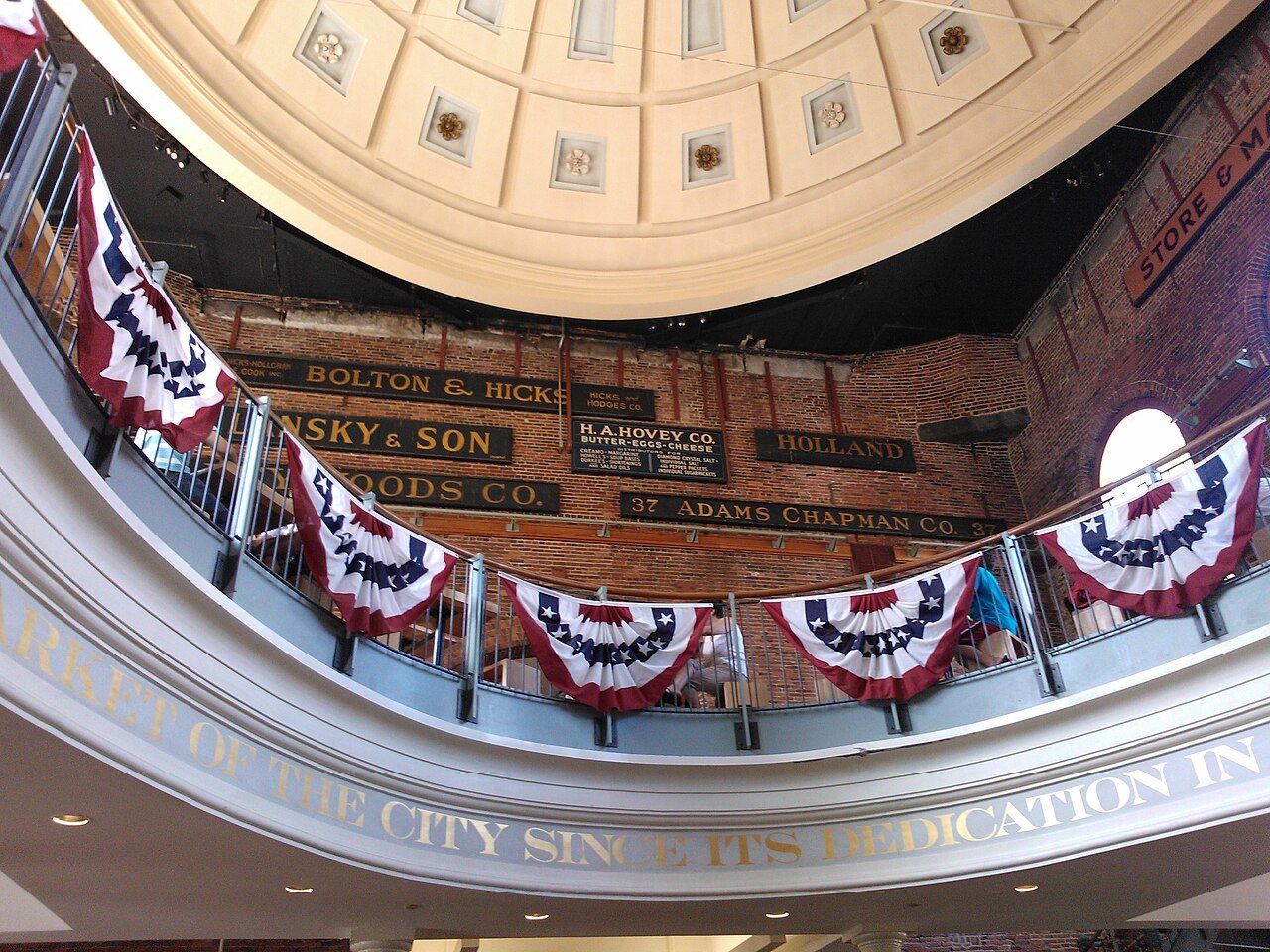
The central building, usually called Quincy Market itself, is granite, with a domed middle, two long wings and a portico at each end. Inside a passage runs its whole length between the porticoes, lined with stalls, and at the center is a double-height rotunda under the dome. The North and South Markets are four and a half stories of brick and granite, simpler, their windows set in plain granite frames.
A marketplace again
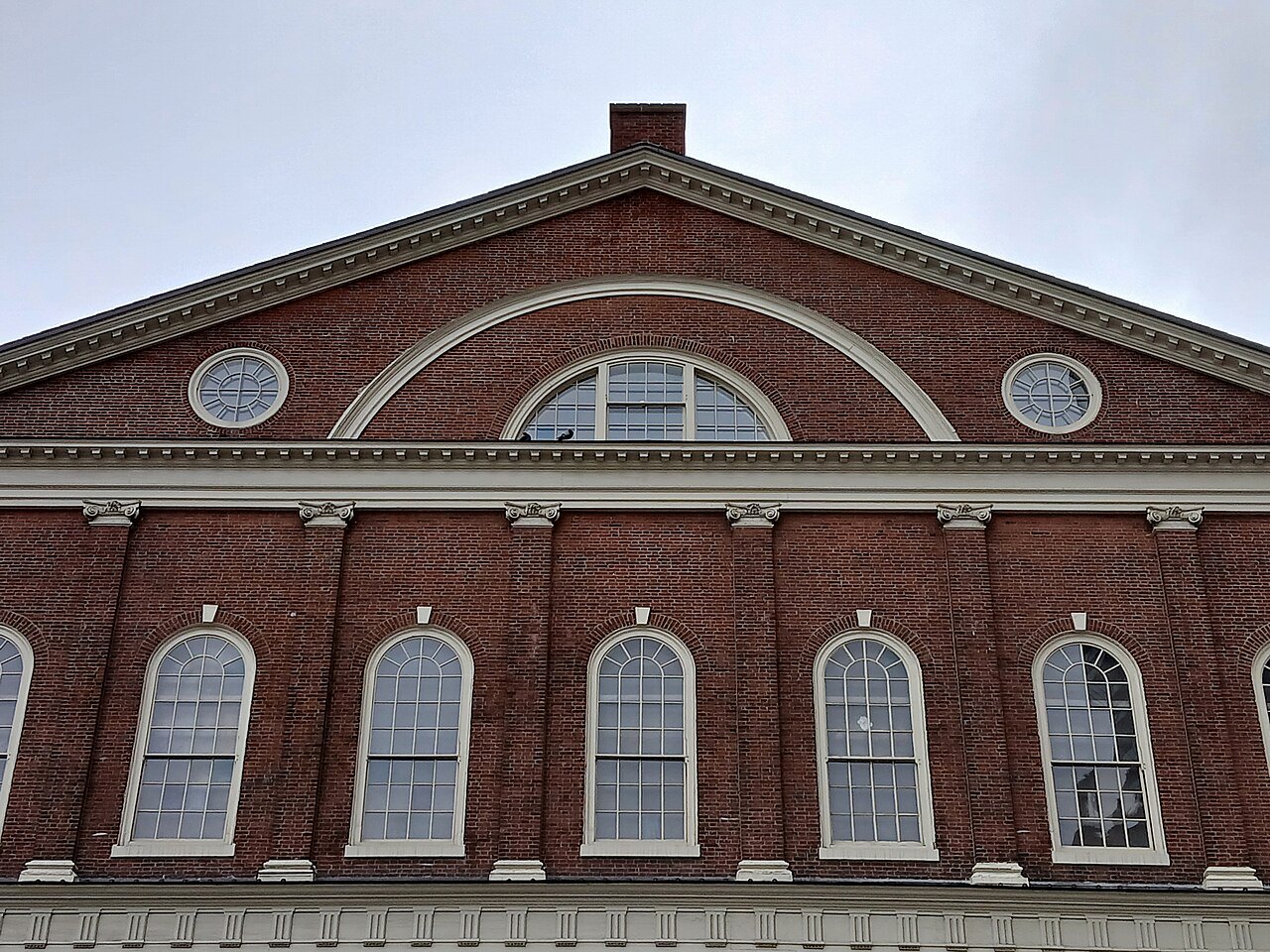
By the middle of the twentieth century the market was run down, and the Boston Redevelopment Authority acquired most of the complex in the 1960s. After an earlier plan fell through, the Rouse Company leased it, and James Rouse and the architect Benjamin Thompson began renovating it in 1972. The marketplace reopened in stages between 1976 and 1978 and was both profitable and popular.
Larger brands replaced smaller shops in the 1980s, and the buildings were renovated again in the 1990s and 2000s. The streets around them are paved in granite and Belgian blocks, with honey locusts, benches and circular granite seats.
How to visit
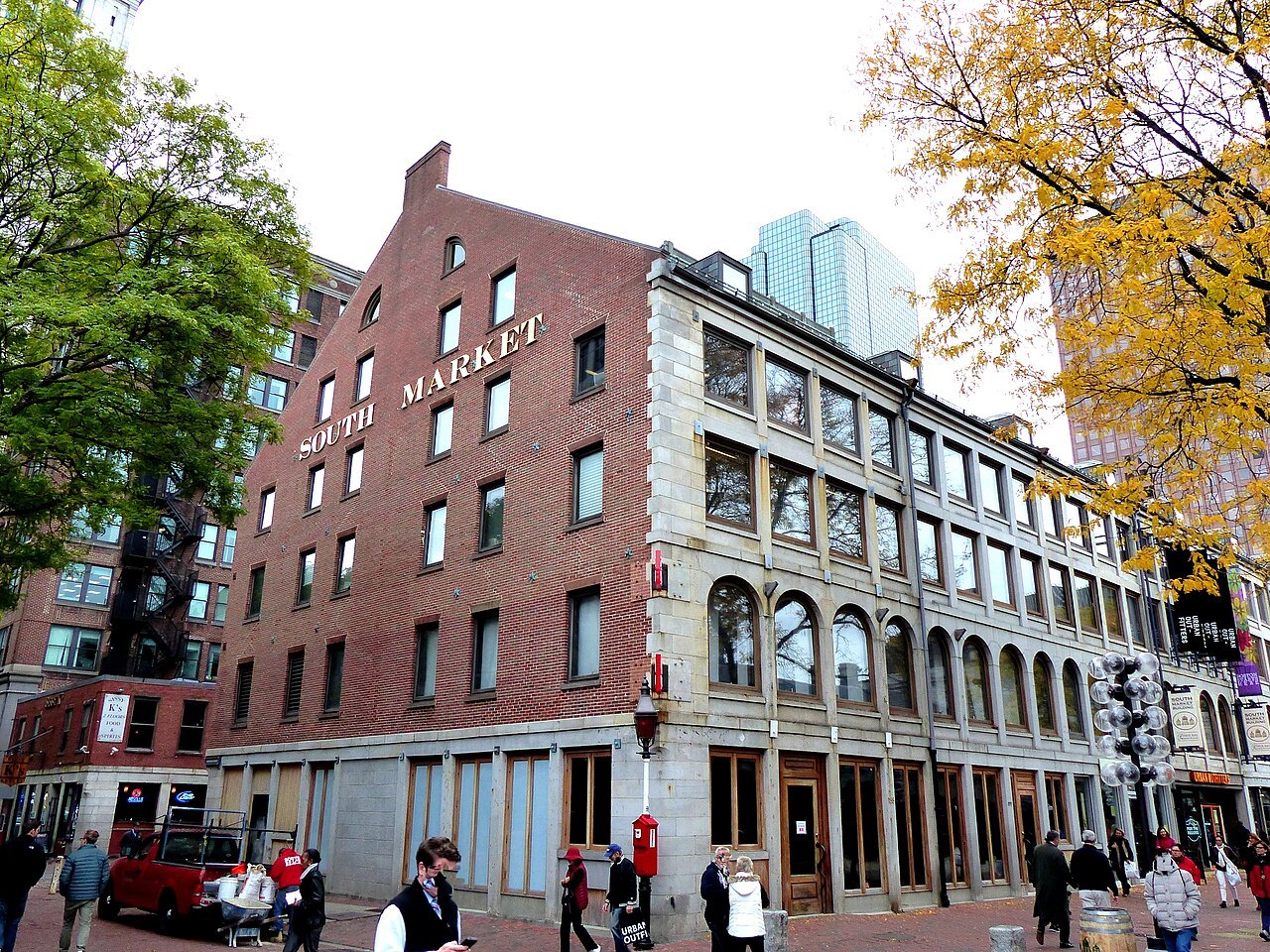
Faneuil Hall and the marketplace are free to walk into. The Great Hall is also used for public events, so ask at the Park Service visitor center on the first floor whether it can be seen on the day. The central building of Quincy Market is a food hall, busiest at lunch; the shops of the North and South Markets are quieter. Combine it with the Freedom Trail, which passes the door, with the Old State House a block away, or with the North End and the Paul Revere House, the next stops north.
Where to go nextIII
Nearby
- Nearby · Greater Boston · Downtown to CharlestownThe Freedom TrailA walking path of two and a half miles through Boston that links sixteen places from the years before and during the Revolution, from the Common to the Old North Church and the Bunker Hill Monument.Read the page →
- Nearby · Greater Boston · Beacon HillBoston Common and the Public GardenThe oldest city park in the United States, fifty acres of lawn and hill below the State House, and beside it the Public Garden of 1837, with its lagoon, its little bridge and the Swan Boats.Read the page →
- Nearby · Greater Boston · CharlestownUSS Constitution and Bunker HillOld Ironsides, launched in 1797 and the oldest commissioned warship still afloat, moored at the navy yard in Charlestown, and on the hill above it the 221-foot granite obelisk of the Bunker Hill Monument.Read the page →