Home · Landmarks · USS Constitution and Bunker Hill
What you are looking atI
USS Constitution and Bunker Hill
Greater Boston · Charlestown
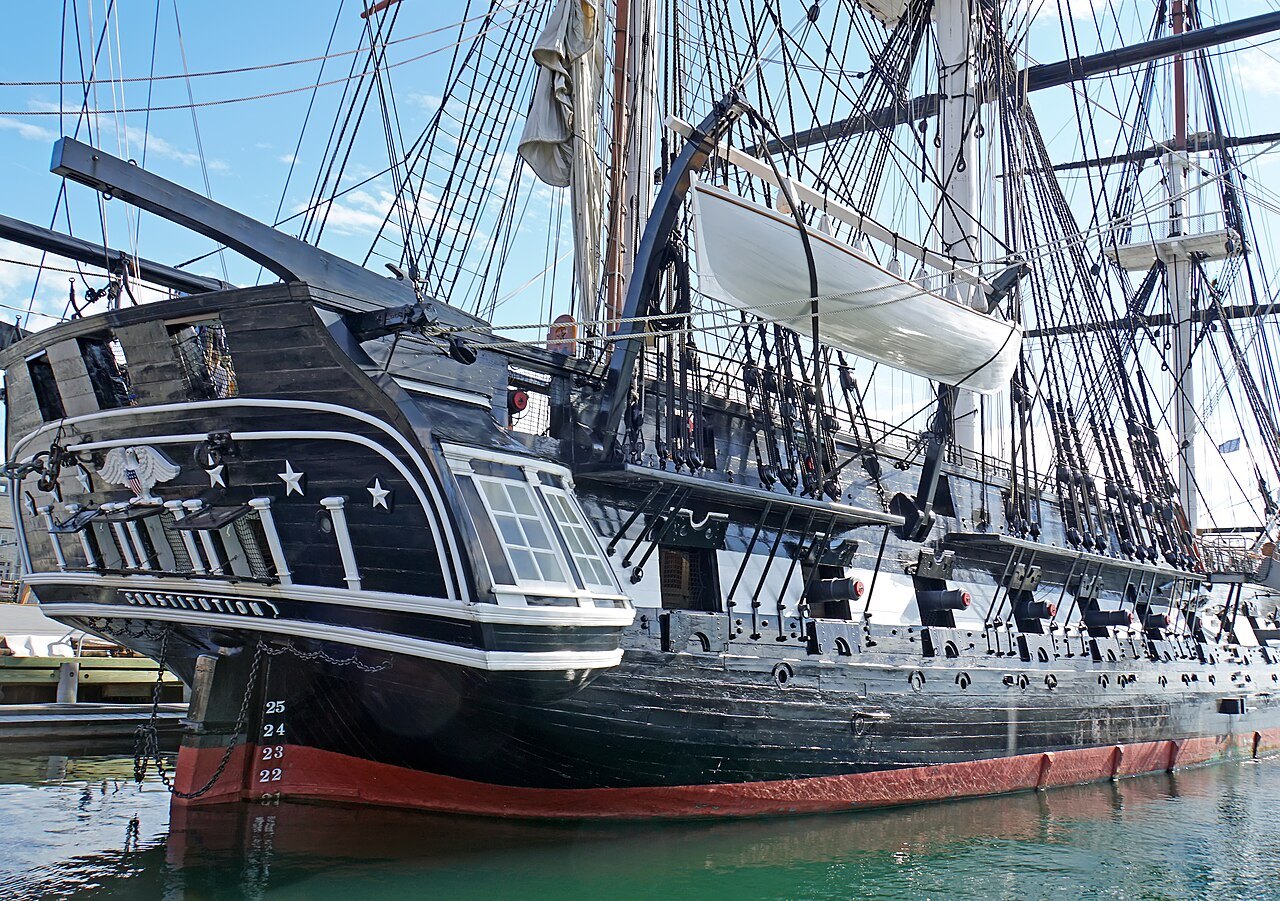
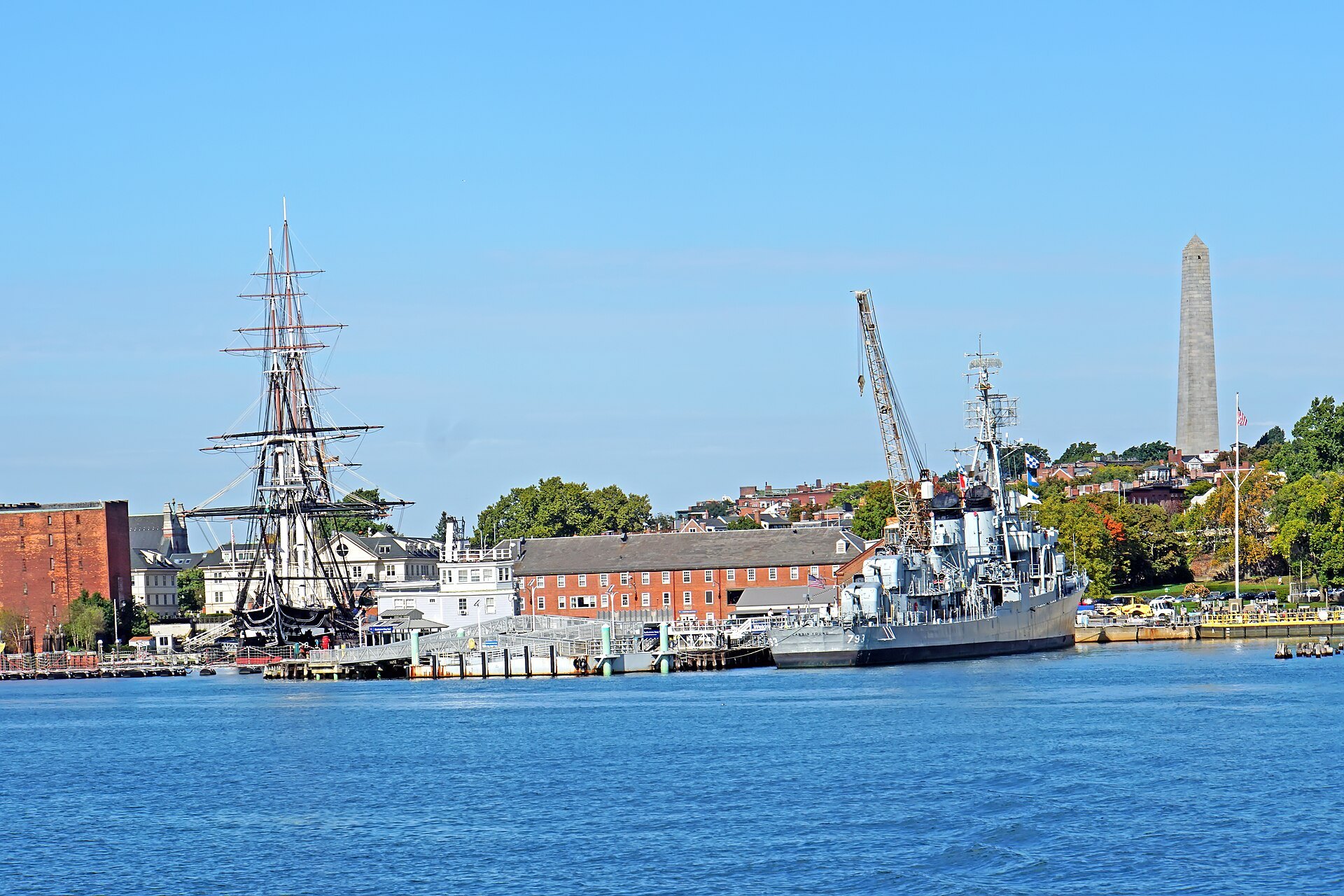
- The frigateThree masts and a wooden hull, launched in 1797 and still a commissioned ship of the Navy.
- The crewSeventy-five active-duty officers and sailors, who give the tours on board.
- The Navy YardA shipyard from 1800 to 1974; the Park Service keeps twenty-five acres of it.
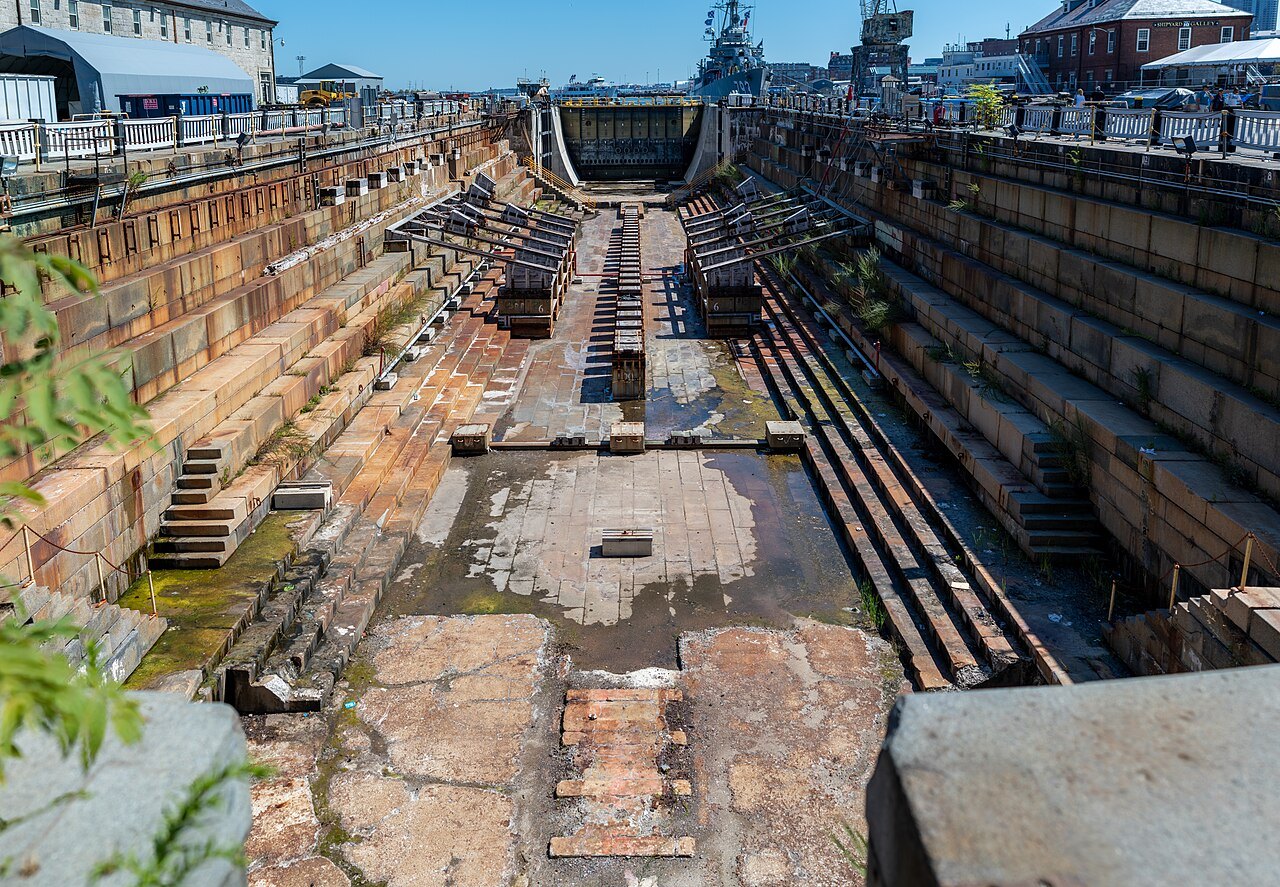
- Dry Dock 1Opened in 1833, one of the first dry docks in the country, where the ship is still repaired.
- The monumentA granite obelisk of 221 feet on Breed's Hill, dedicated on June 17, 1843.
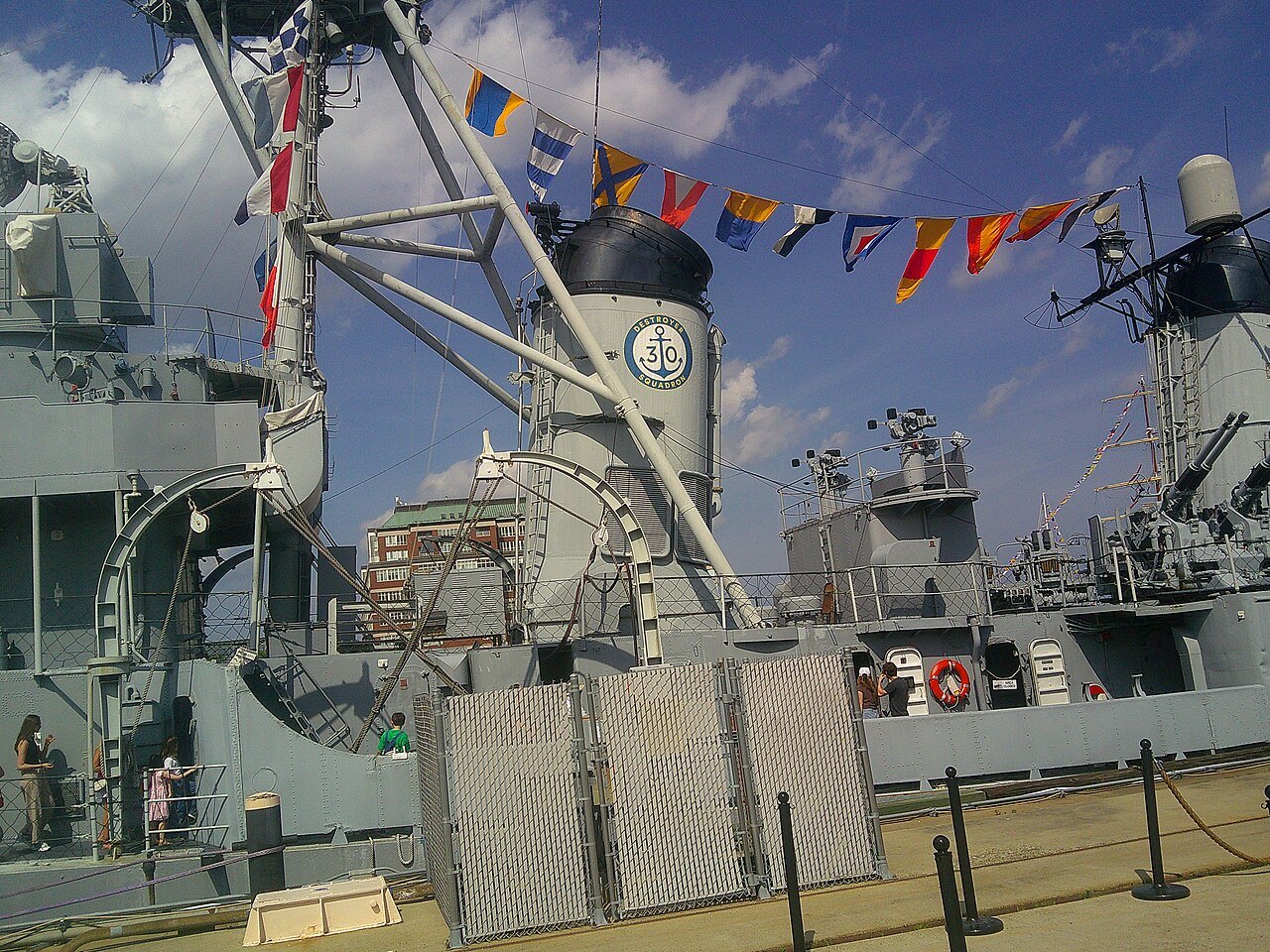
- USS Cassin YoungA destroyer of 1943 moored nearby, the other ship at the yard.
The place in fullII
Reading the place
Why it matters
USS Constitution is a three-masted, wooden-hulled heavy frigate of the United States Navy, launched in Boston in 1797. She is the second-oldest naval vessel still in commission and the oldest still afloat, and she is berthed at the old Charlestown Navy Yard, across the harbor from downtown and at the end of the Freedom Trail. Her crew are serving sailors, and they keep her open to visitors all year on free tours.
On Breed's Hill above the yard stands the Bunker Hill Monument, a 221-foot granite obelisk marking the first major battle of the Revolution, fought on June 17, 1775. Ship and monument make one visit: the two last stops on the trail, a short walk apart in Charlestown.
Old Ironsides
The name Constitution was one of ten sent to President George Washington for the six frigates authorized by the Naval Act of 1794, and she was the third of them built. Joshua Humphreys designed the frigates as the young Navy's capital ships, larger and more heavily armed than standard frigates of the day, and Constitution was built at Edmund Hartt's shipyard in the North End of Boston. Enslaved workers were used to harvest the oak for her hull, a fact the ship's own museum now records.
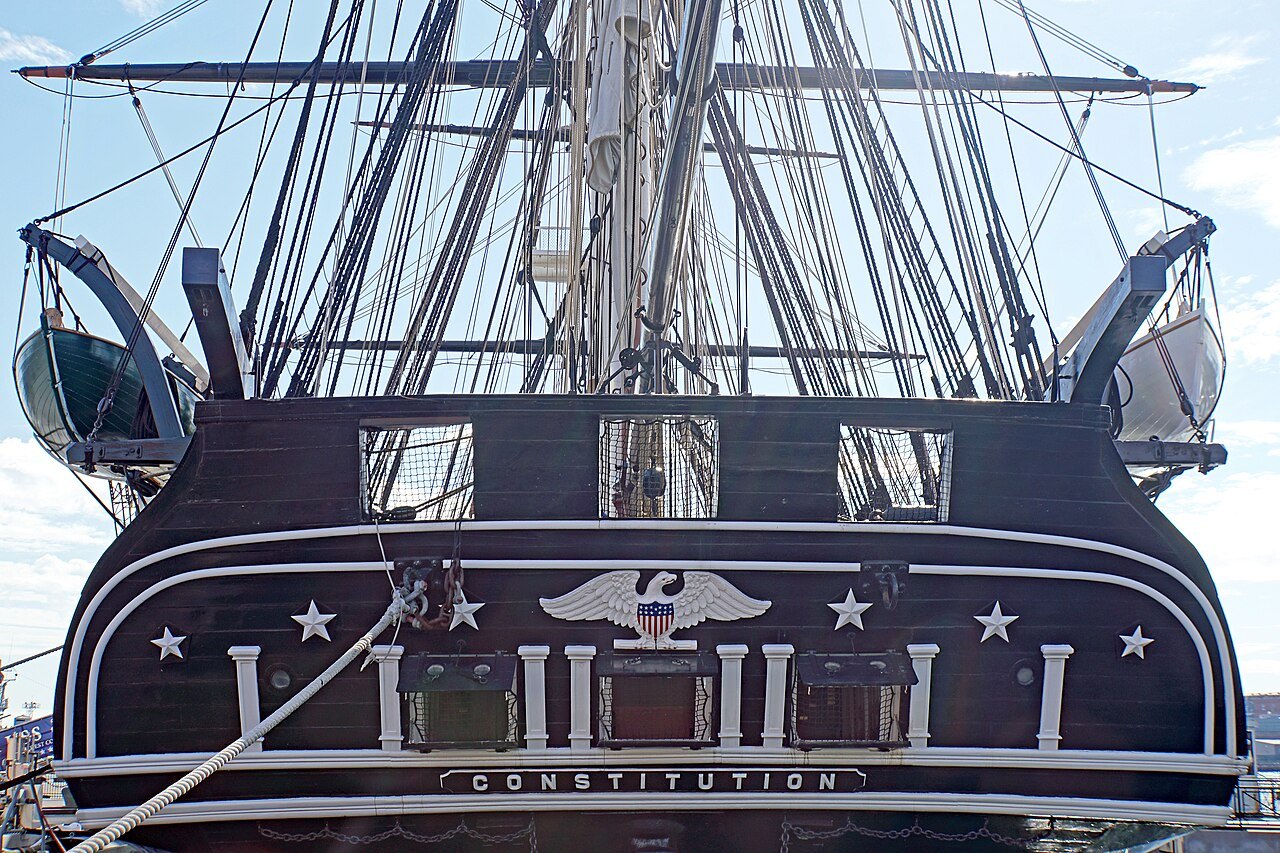
She is best known for the War of 1812 against Britain, when she captured numerous merchant ships and five British warships: Guerriere, Java, Pictou, Cyane and Levant. The capture of Guerriere earned her the nickname Old Ironsides, and added to the public affection that more than once saved her from being broken up.
A long career
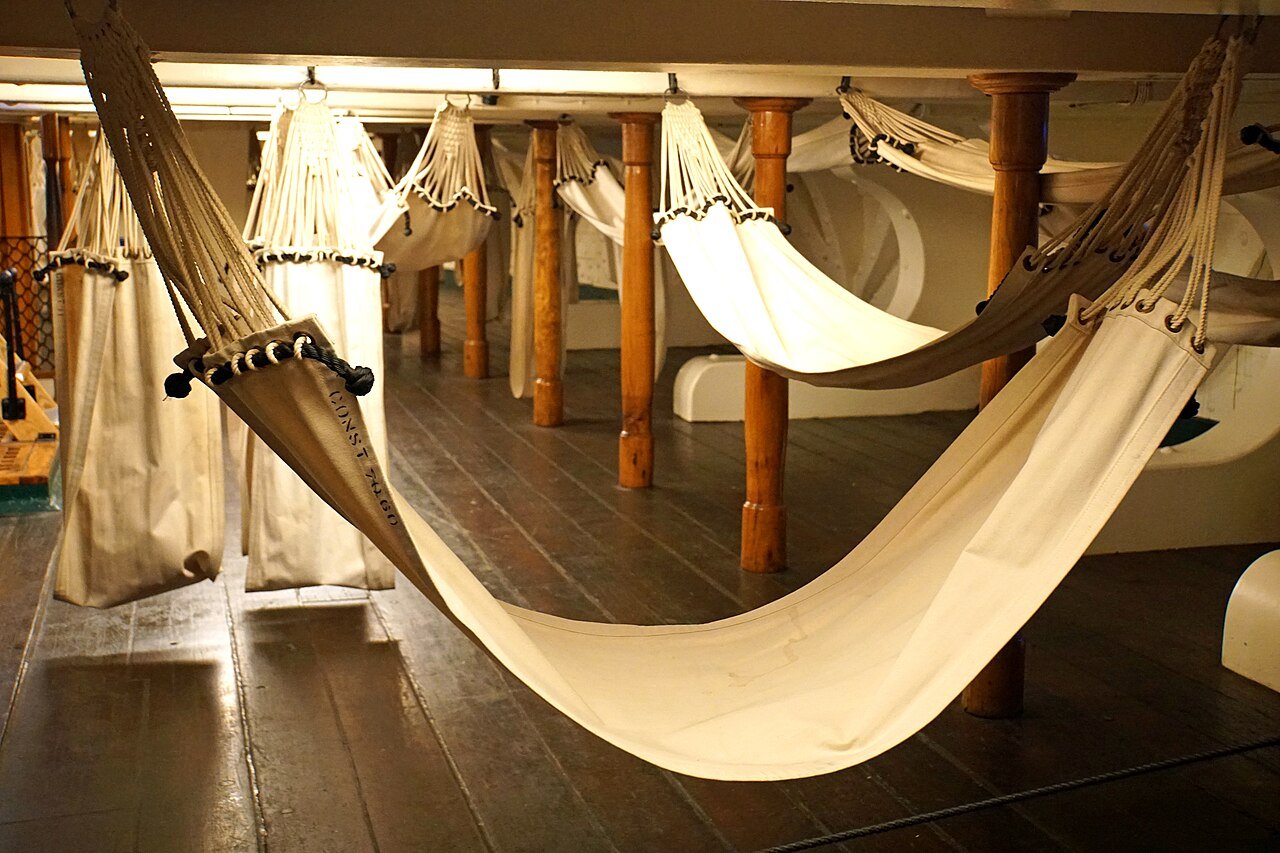
After the war she served as flagship in the Mediterranean and African squadrons and sailed around the world in the 1840s. During the Civil War she was a training ship for the Naval Academy, and in 1878 she carried American art and industrial exhibits to the Paris Exposition. She was retired from active service in 1881, served as a receiving ship, and was designated a museum ship in 1907.
In 1934 she completed a three-year tour of the country, visiting ninety ports. She sailed under her own power for her two hundredth birthday in 1997, and again in August 2012 for the bicentennial of her victory over Guerriere. The guns on board have all been replicas since her restoration of 1927 to 1931.
On board
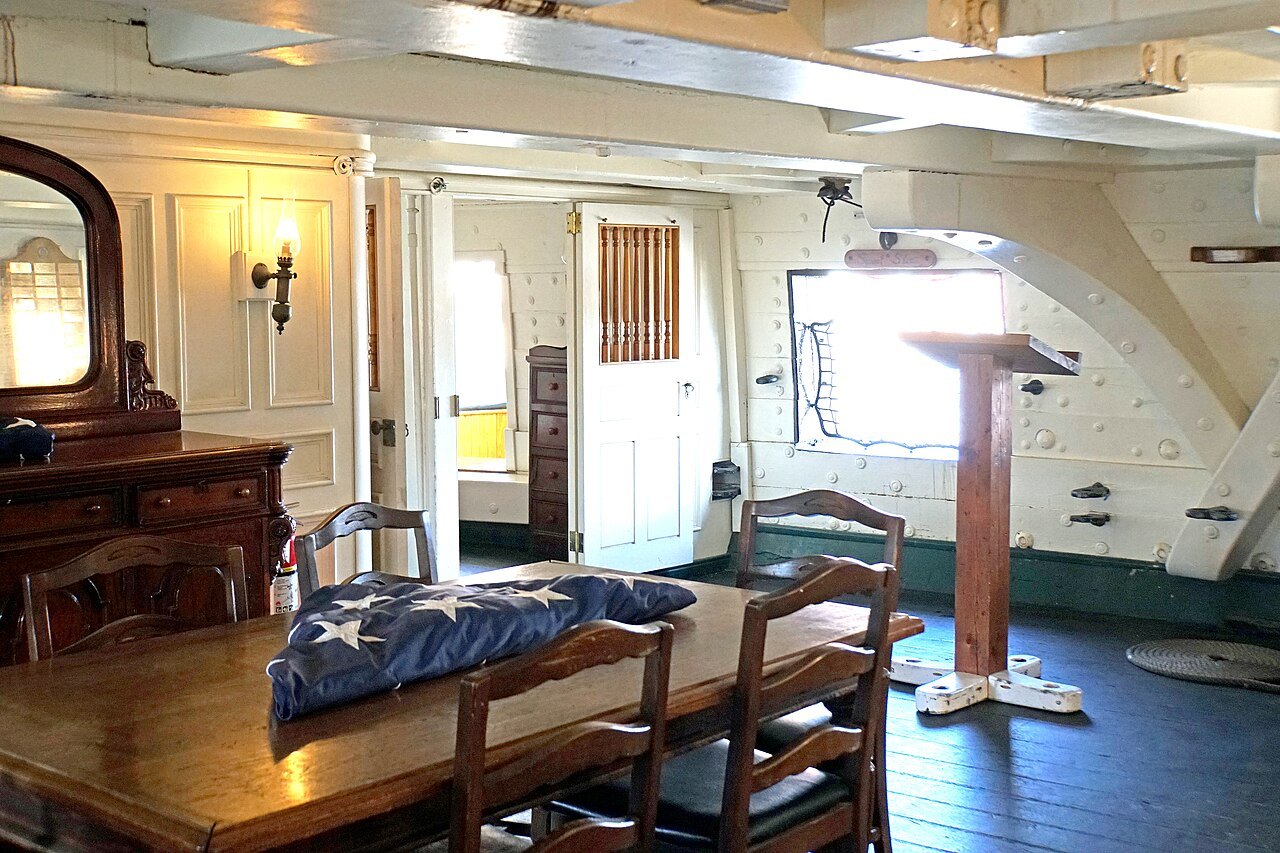
Constitution is a fully commissioned ship, and her crew of seventy-five officers and sailors, all active-duty Navy, are assigned to her as special duty. Her mission is to explain the Navy's role in war and peace through education, historical demonstration and public events, as part of the Naval History and Heritage Command, and the crew keep her open to visitors all year and give free tours.
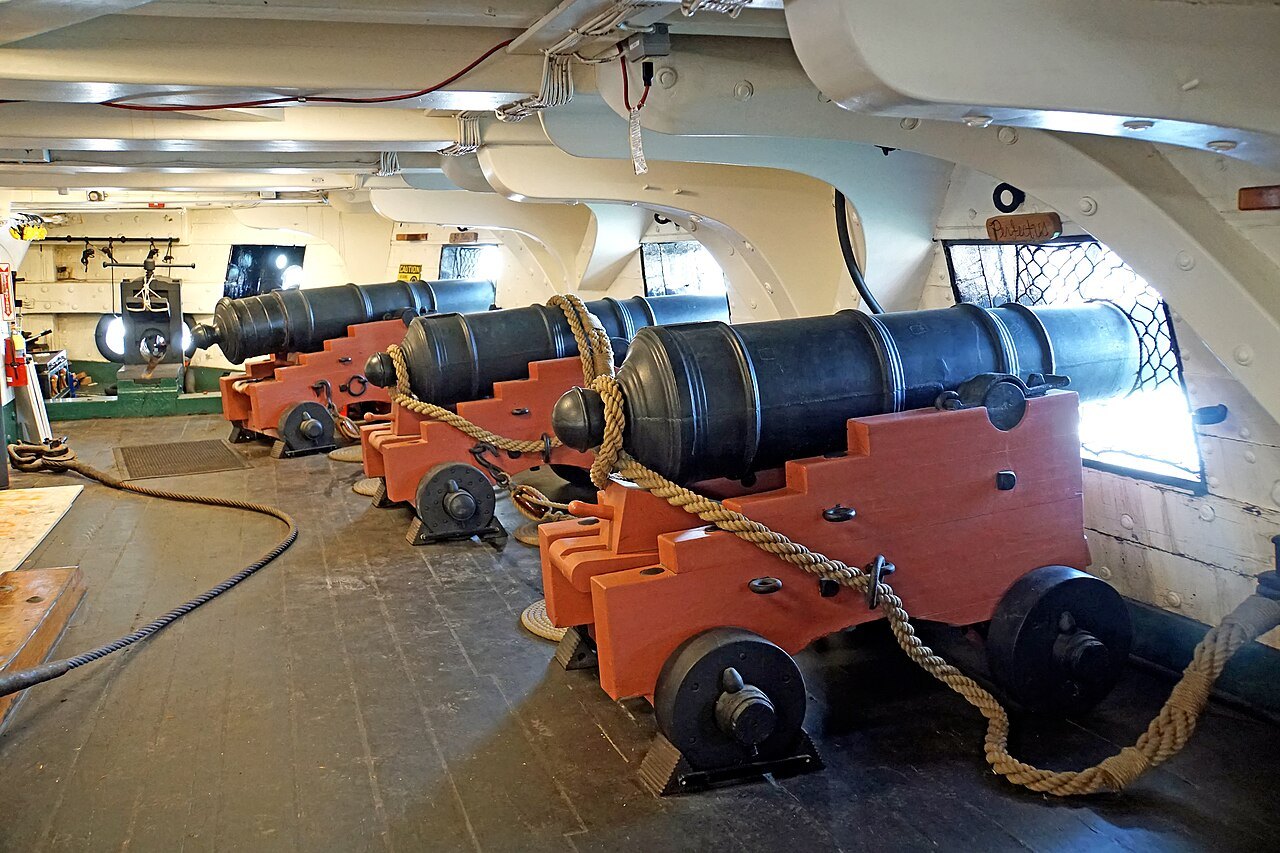
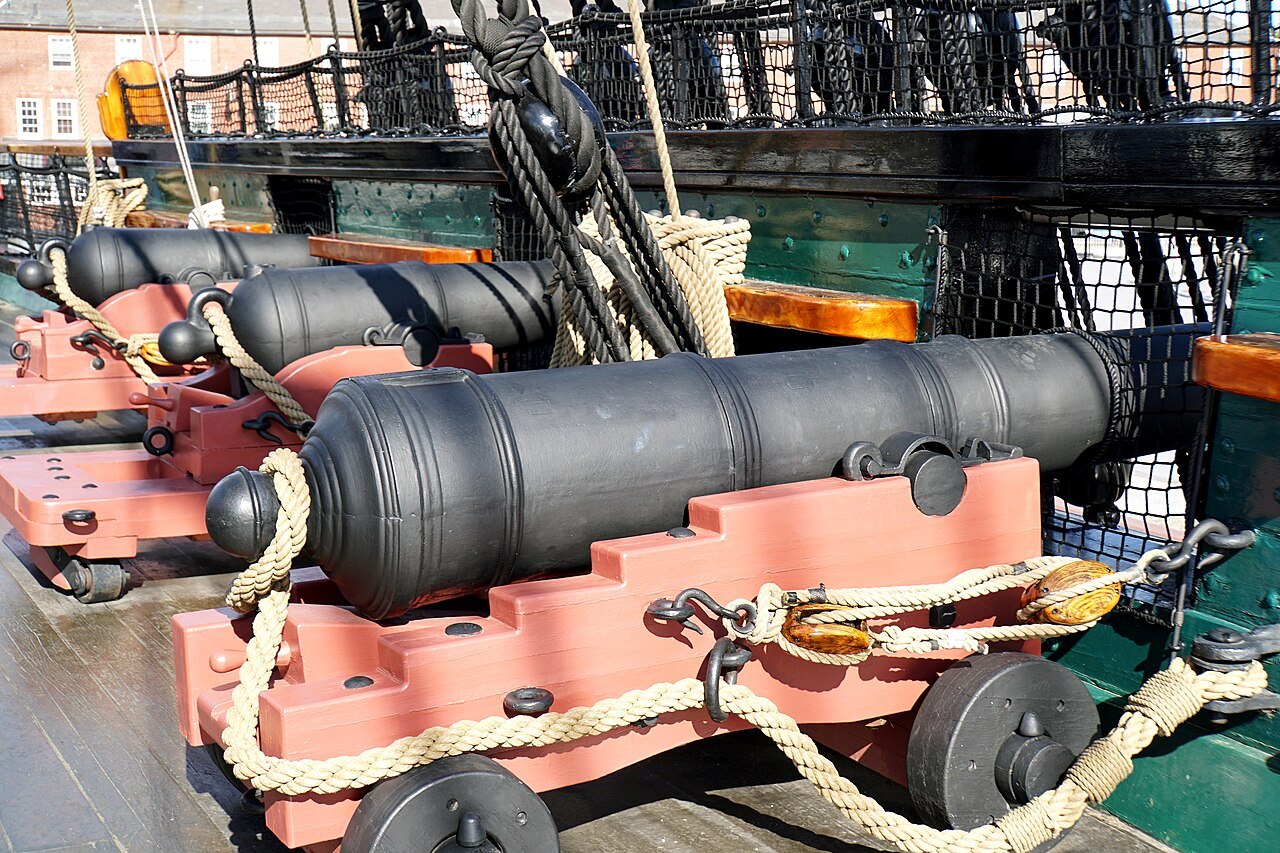
A tour covers the spar deck, with its rigging and guns, and the gun deck below, lined with long guns. The USS Constitution Museum, a separate institution in the yard, keeps her history, including the research on who built her.
The Charlestown Navy Yard
The yard was one of the first shipbuilding facilities of the Navy. Planned in 1799, it opened in 1800, began building ships in 1812 and worked until July 1, 1974, in its last quarter-century as the Boston Naval Shipyard, repairing ships rather than building them. The Park Service now controls twenty-five acres as part of Boston National Historical Park, and the rest has been redeveloped for offices, shops and housing.
More than two dozen buildings survive from its working years, among them the Commandant's House, the Marine Barracks and the long Charlestown Ropewalk, which opened in 1837 and at first made rope for the whole Navy. Dry Dock 1 was inaugurated on June 24, 1833, delayed by granite shortages and bad weather. The second ship moored at the yard is the destroyer USS Cassin Young, of 1943.
The Bunker Hill Monument
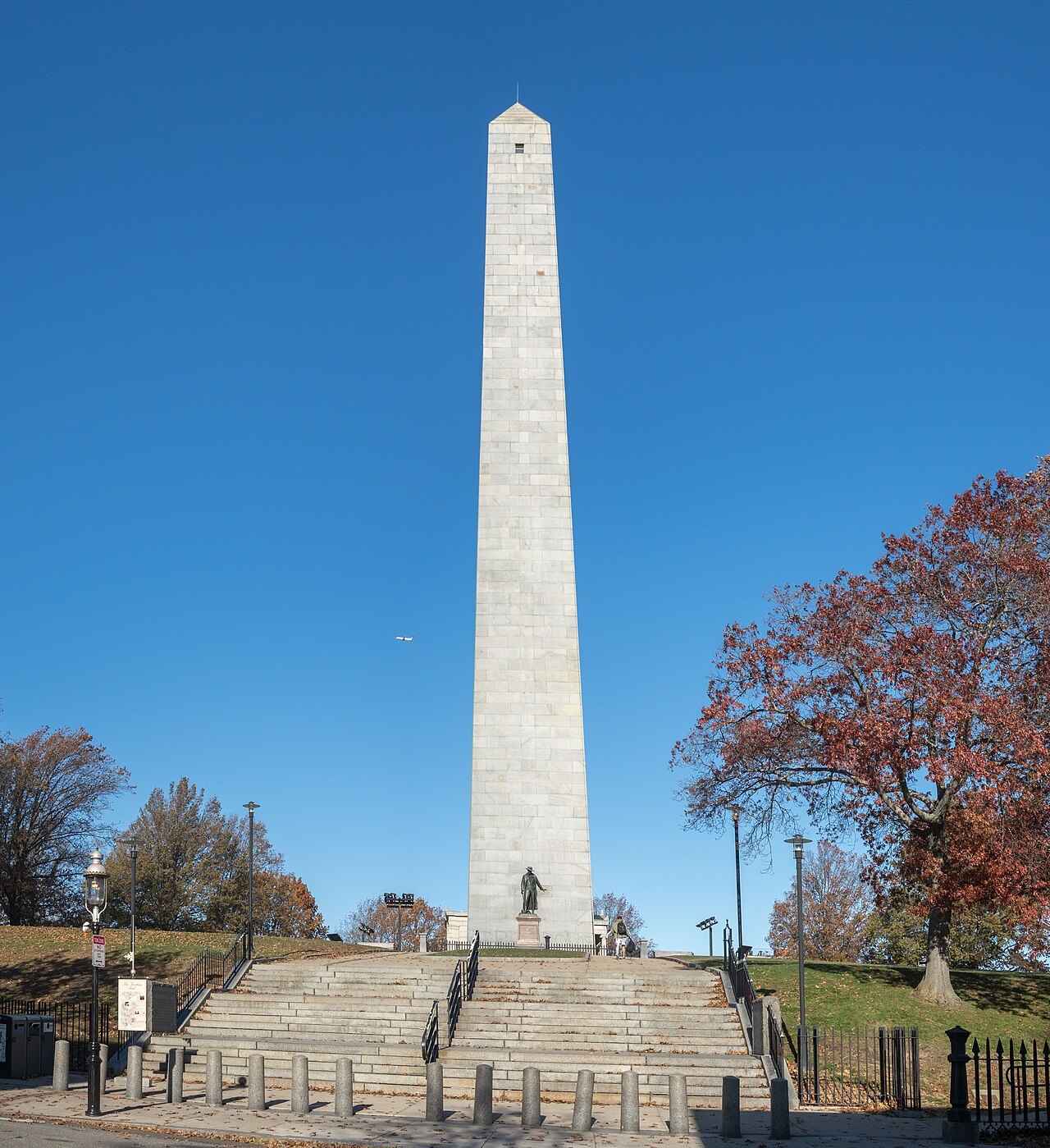
The Battle of Bunker Hill was fought on June 17, 1775, during the siege of Boston, and most of it on Breed's Hill, a sixty-two-foot glacial drumlin in the south of the Charlestown peninsula. Colonial troops fortified the summit and threw back two British assaults with heavy losses before the redoubt fell to the third. It was a British victory, but a costly one; among the American dead was General Joseph Warren, the popular leader of the Massachusetts Committee of Safety.
The first monument on the site, raised in 1794, honored Warren. The Bunker Hill Monument Association was formed to save the ground when it came up for sale in 1822, and the present obelisk, designed by Solomon Willard, was begun in 1825. Twice work stopped for lack of money, and it was dedicated on June 17, 1843, then the largest obelisk in the United States. William Wetmore Story's statue of Colonel William Prescott, the colonial commander, stands on its south side, and the Park Service has run the monument since 1976.
How to visit
Walk the Freedom Trail over the bridge from the North End to Charlestown. See the ship first, allowing time for the tour, then the museum, then climb the streets to Monument Square, where a circular path runs round the obelisk, the Prescott statue and the granite entrance building of 1902.
The Park Service runs both the ship's yard and the monument as part of Boston National Historical Park, and its rangers can say what can be visited on the day. Inside the obelisk a spiral stair of 294 steps winds round a hollow central core, lit by narrow openings on the north face; four gates on the avenue round the square, each for a regiment in the battle, lead up to the monument. Give the pair half a day, and more if the museum holds your interest.
Where to go nextIII
Nearby
- Nearby · Greater Boston · Downtown to CharlestownThe Freedom TrailA walking path of two and a half miles through Boston that links sixteen places from the years before and during the Revolution, from the Common to the Old North Church and the Bunker Hill Monument.Read the page →
- Nearby · Greater Boston · DowntownFaneuil Hall and Quincy MarketThe red-brick market and meeting hall of 1742 that Boston calls the Cradle of Liberty, and behind it the three granite market buildings of 1826 that became the Faneuil Hall Marketplace.Read the page →
- Nearby · Greater BostonBostonThe capital of Massachusetts, founded on the Shawmut Peninsula in 1630 and grown by filling in its marshes: a city of neighborhoods, from Beacon Hill and the North End to the Back Bay, walkable end to end.Read the page →