Home · Landmarks · The Isabella Stewart Gardner Museum
What you are looking atI
The Isabella Stewart Gardner Museum
Greater Boston · the Fenway
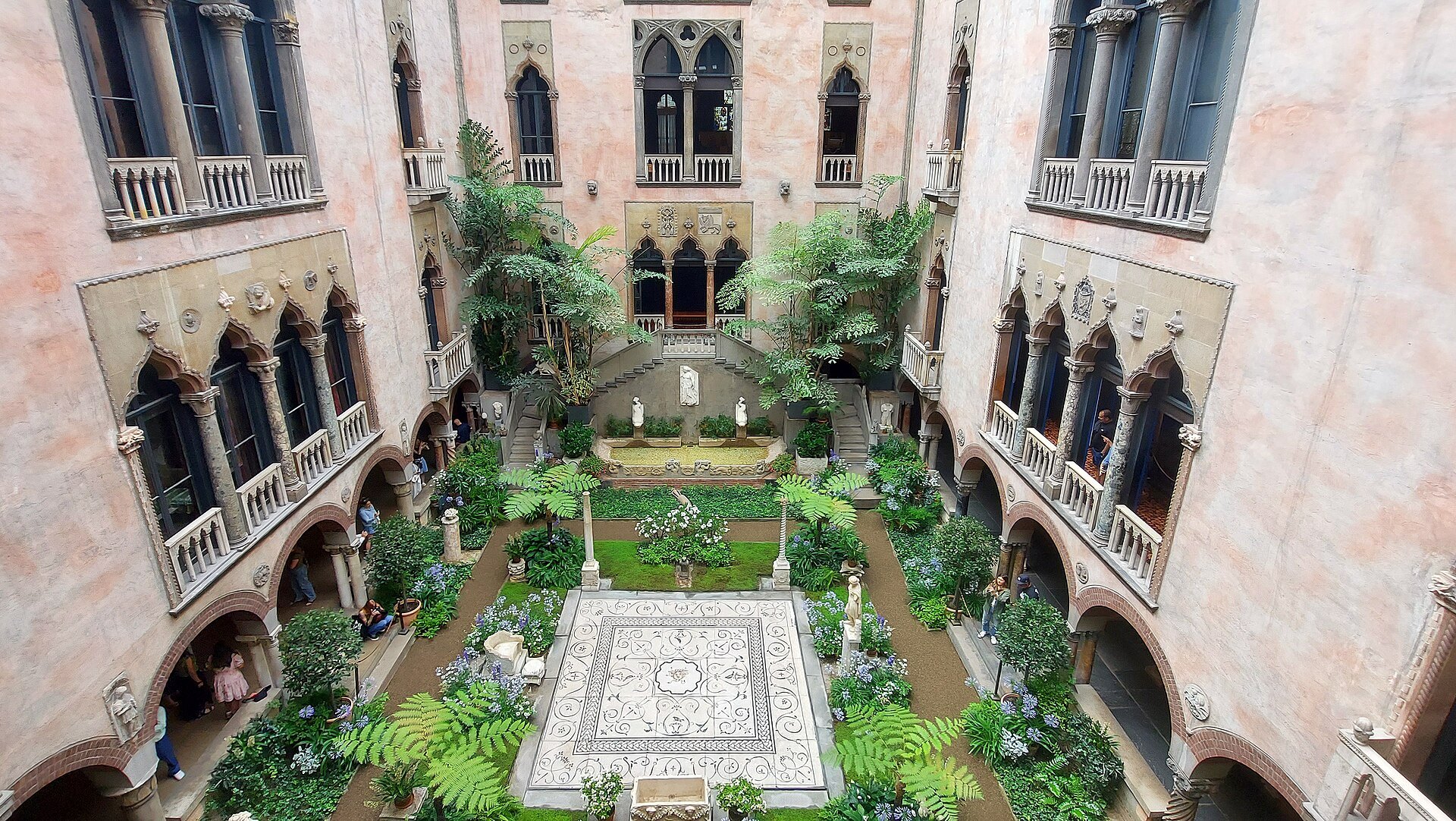
- The courtyardA garden court under a glass roof, with a Roman mosaic floor and flowers changed through the year.
- Three floors of roomsGalleries round the court, hung as Gardner left them, frames within frames.
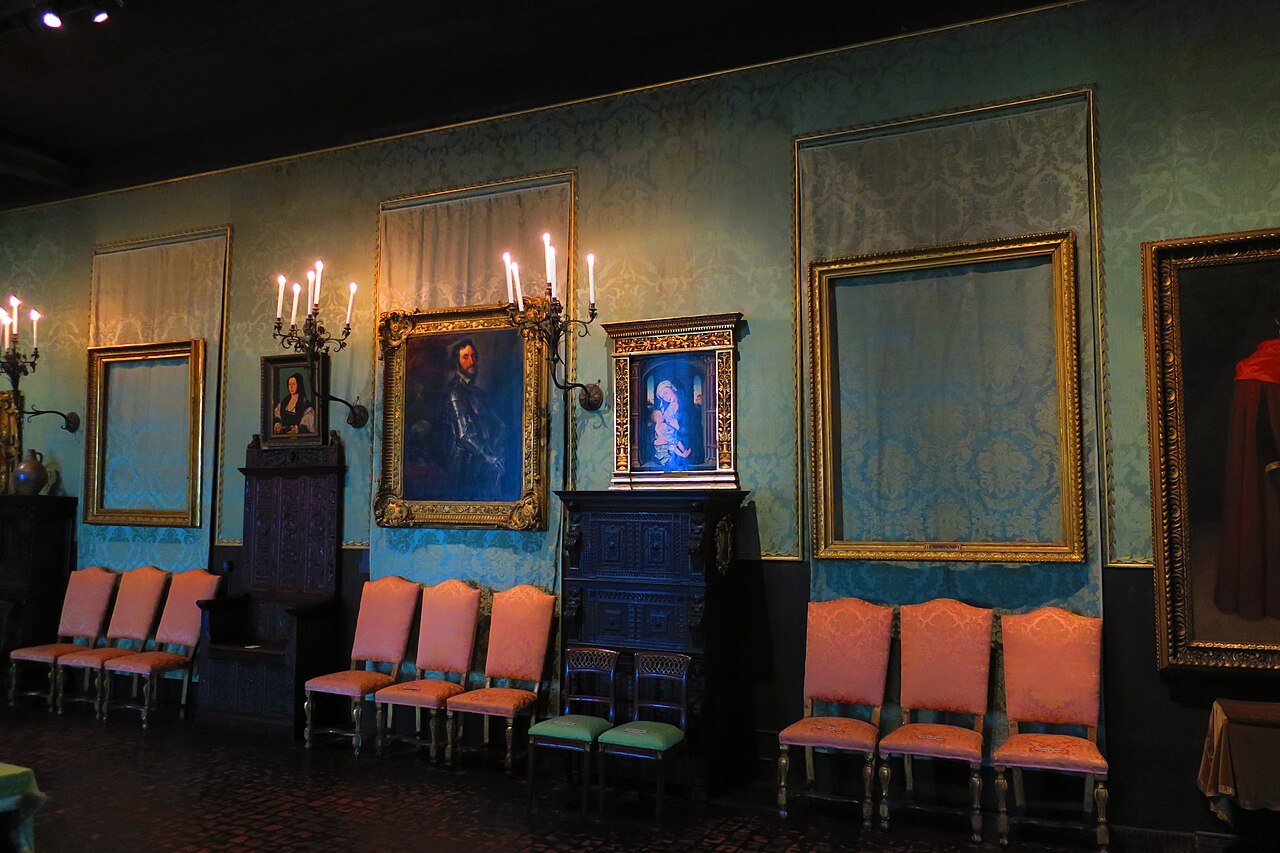
- The Dutch RoomWhere empty frames hold the places of works stolen in 1990.
- El JaleoJohn Singer Sargent's great painting of a Spanish dancer, in its own setting.
- Titian's EuropaThe Rape of Europa, among the most admired Renaissance paintings in the country.
- The Piano wingRenzo Piano's addition of 2012, for concerts, exhibitions and visitor services.
The place in fullII
Reading the place
Why it matters
The Isabella Stewart Gardner Museum is one collector's house turned into a museum and kept exactly as she arranged it. Isabella Stewart Gardner built it between 1898 and 1901 in the style of a fifteenth-century Venetian palace, filled it with European, Asian and American art, kept her private apartments on its fourth floor, and opened it to the public in 1903. Her will required that the collection be permanently exhibited for the education and enjoyment of the public forever, according to her own arrangement.
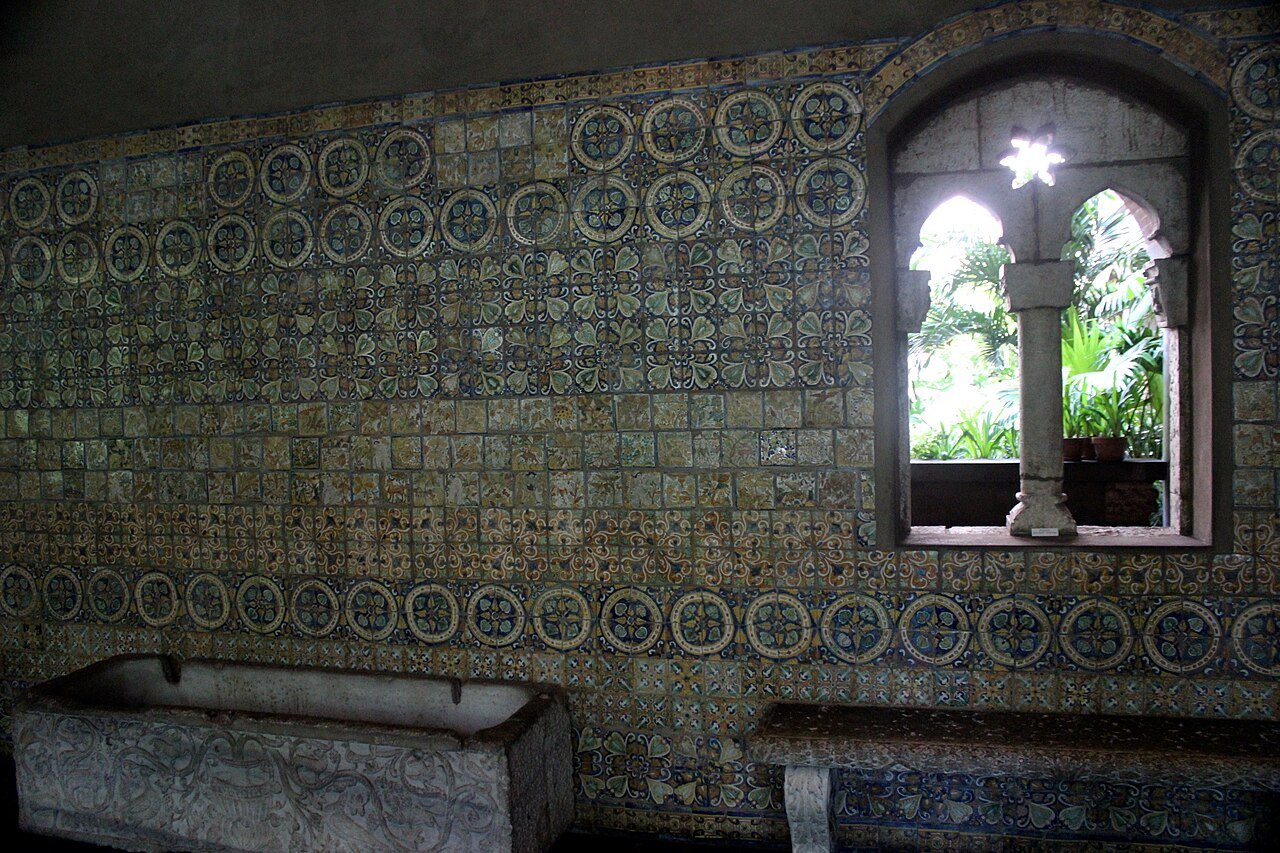
The result is unlike any other museum in the city. Paintings, sculpture, tapestries, furniture and books share rooms as they would in a house, and three floors of galleries look inward onto a garden court under a glass roof. Among the artists in the rooms are Titian, Rembrandt, Michelangelo, Raphael, Botticelli, Manet, Degas, Whistler and Sargent.
Isabella Stewart Gardner and Fenway Court
Gardner, who lived from 1840 to 1924, built her collection with her husband and with the help of the scholar Bernard Berenson, who in 1894 offered to find her a Botticelli. After her husband's death in 1898 she built the house they had planned, which she called Fenway Court, on marshy land near the Back Bay Fens, modeled on the Renaissance palaces of Venice. Her architect was Willard T. Sears, but she was so involved in every part of the design that he joked he was only the structural engineer who made her plans possible.
During her lifetime she welcomed artists, performers and scholars to Fenway Court, John Singer Sargent among them, and hosted exhibitions and music in its rooms. When she died in 1924 her will created an endowment and set out the rules for the museum's future. The arrangement of the rooms is itself part of the collection: many large pieces hang in a frame within a frame, held with thumbscrews, the way she hung them.
The courtyard
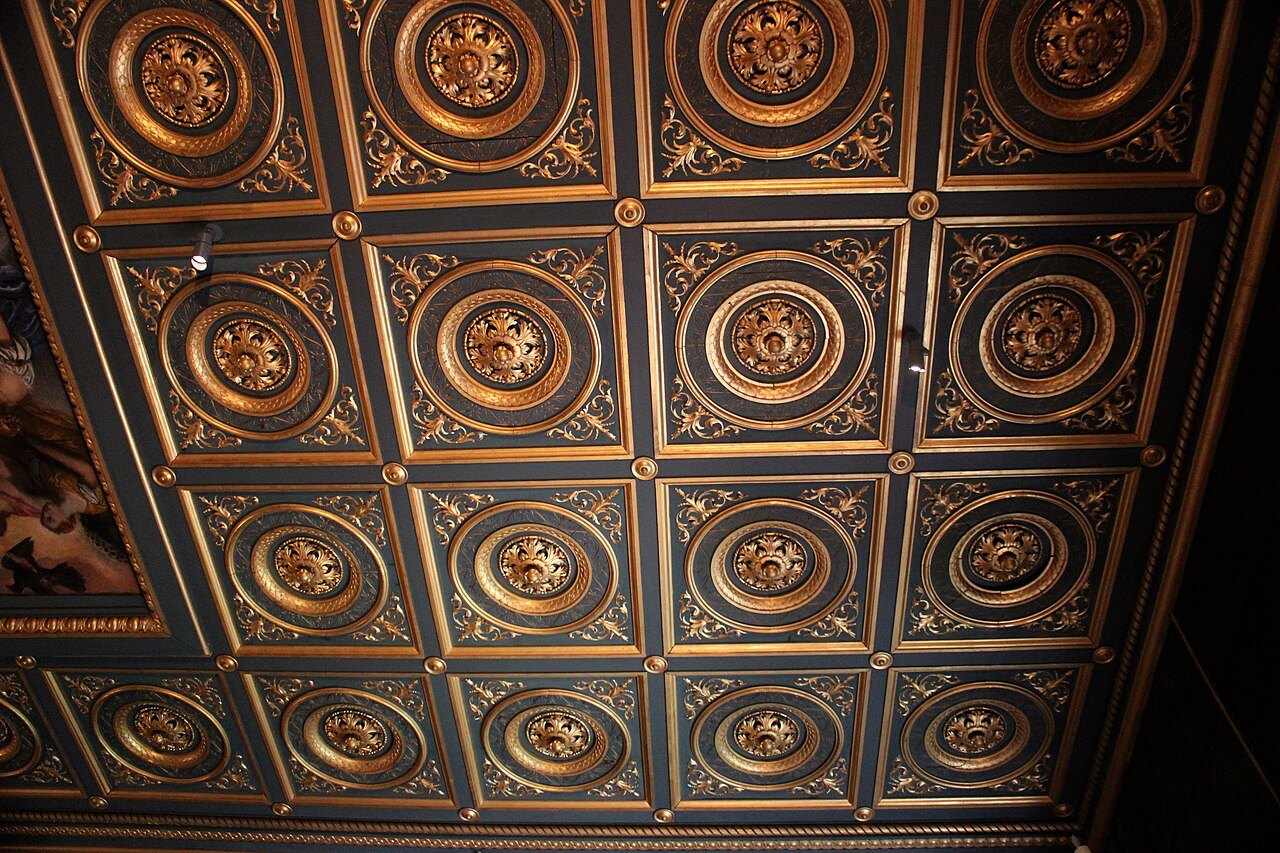
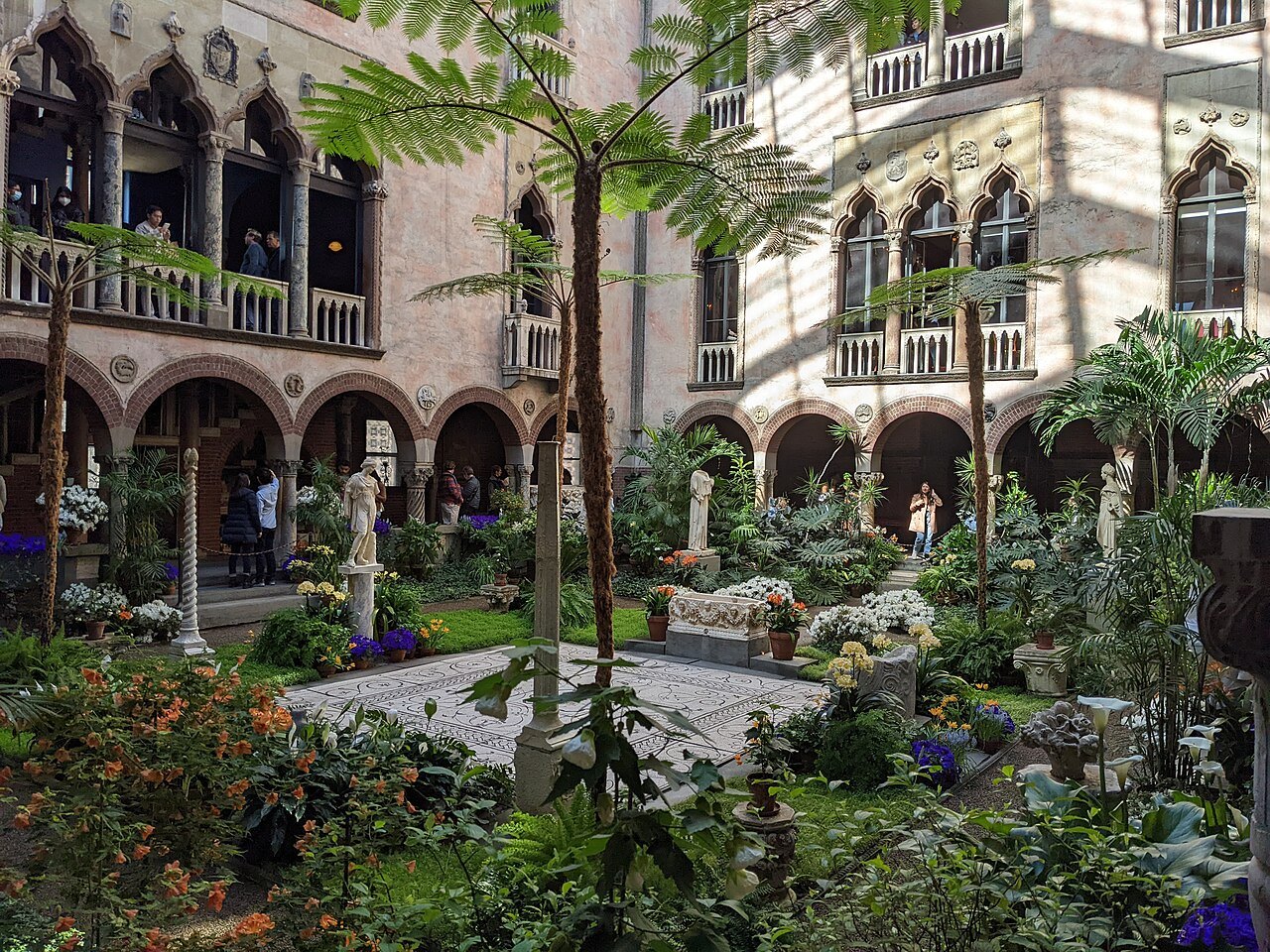
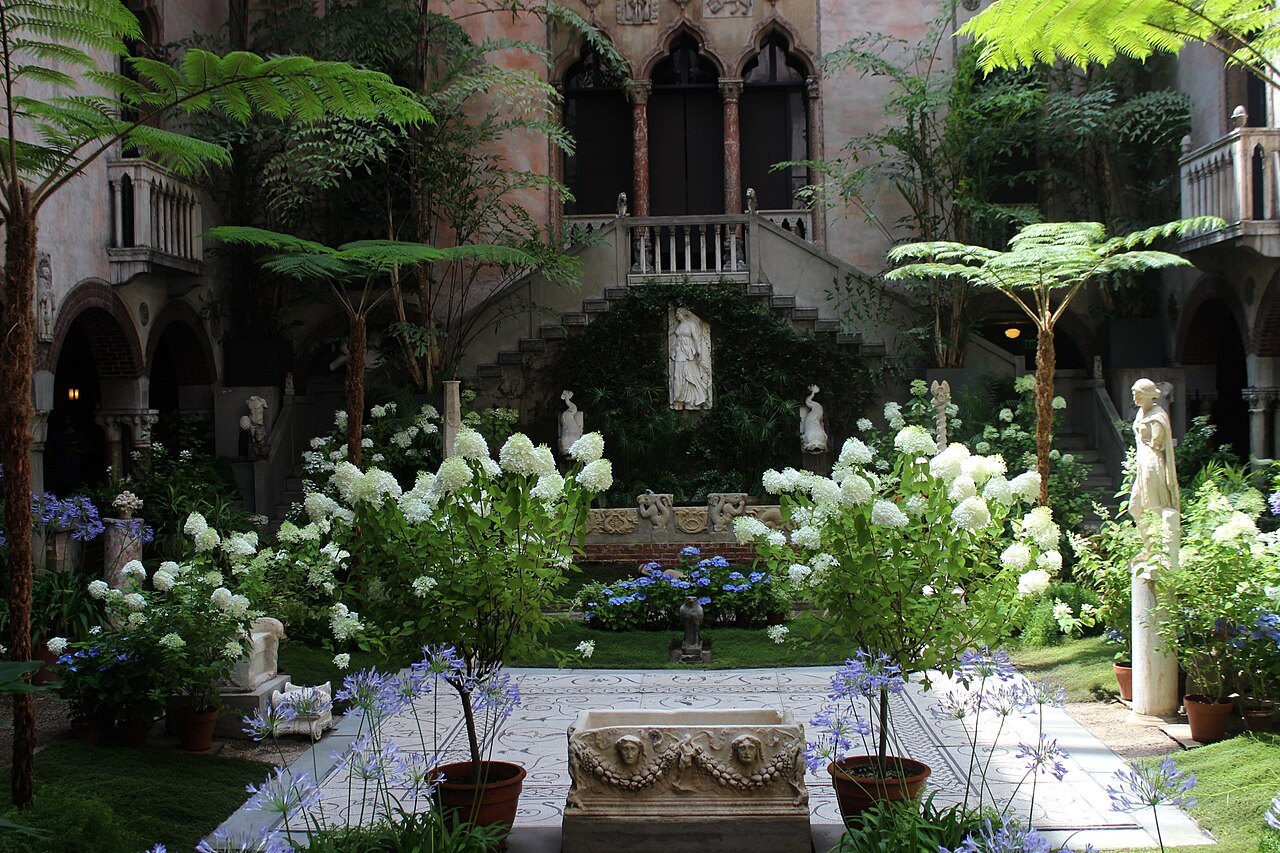
The heart of the building is the courtyard, three stories high under a glass roof whose steel structure is original to the house. Its floor is laid with a Roman mosaic, and its planting is changed through the year in seasonal displays that follow Gardner's own tastes in gardening, so that something is in flower in every season.
Every gallery opens onto it, through Venetian windows and balconies, and the building is designed to be walked around it: the court is where a visit begins and where it keeps returning, a place of light between the darker, crowded rooms.
What is in the rooms
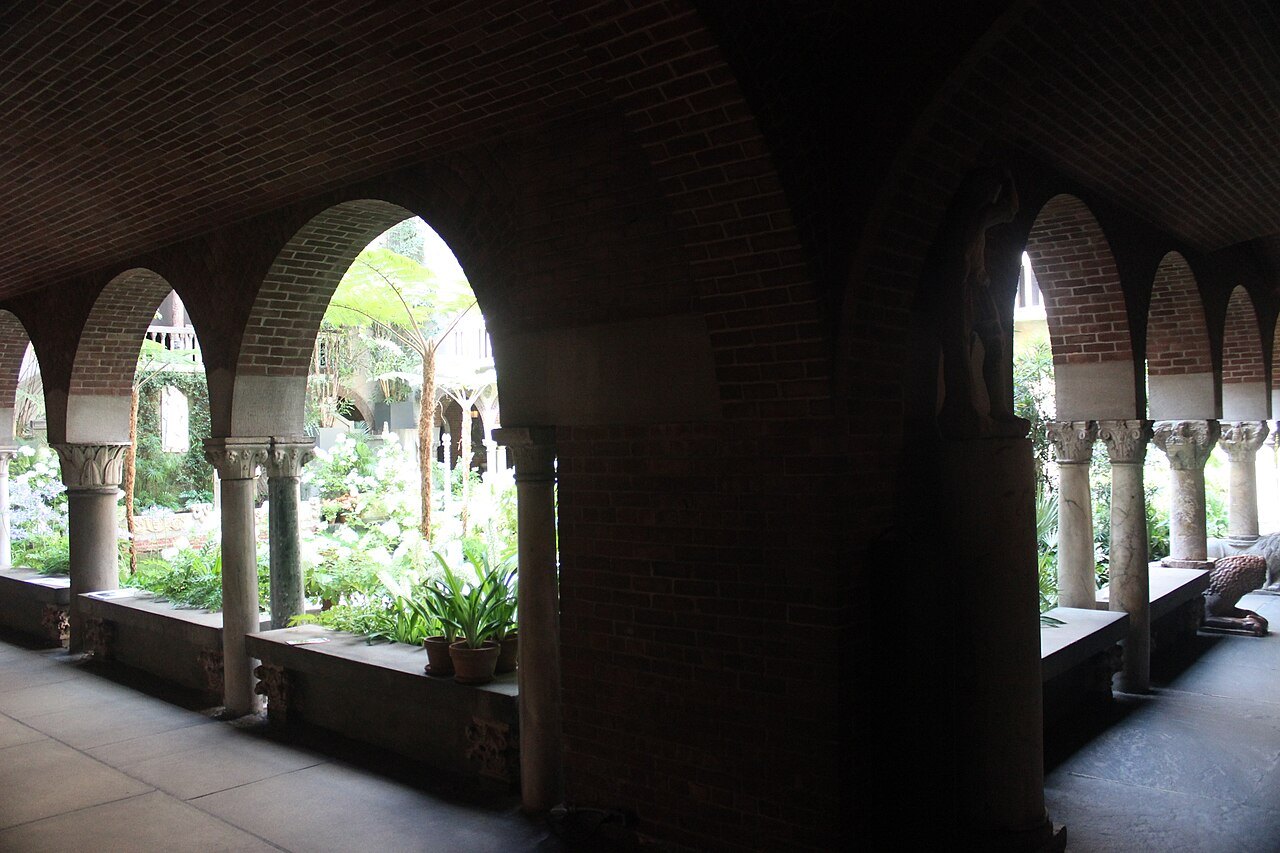
The best-known works include Titian's The Rape of Europa, John Singer Sargent's El Jaleo and his portrait of Isabella Stewart Gardner, Fra Angelico's Death and Assumption of the Virgin, Rembrandt's self-portrait at the age of twenty-three, Cellini's bust of Bindo Altoviti, Piero della Francesca's Hercules and Botticelli's The Story of Lucretia. The first work by Matisse to enter an American collection hangs in the Yellow Room. Around these famous pictures the collection runs across paintings, sculpture, tapestries and the decorative arts, from Europe, Asia and America, all of it gathered by Gardner herself.
The pleasure of the place is in how the objects are combined, chosen and placed by one collector rather than by a curator's chronology. The fourth floor, once her apartments, now holds offices and only rarely an exhibition.
The theft of 1990
Early in the morning of March 18, 1990, two thieves disguised as police officers robbed the museum of thirteen works, among them Vermeer's The Concert, one of only thirty-four known paintings by him, and Rembrandt's The Storm on the Sea of Galilee, his only known seascape. It is the greatest known property theft in history, it remains unsolved, and none of the works has been recovered.
Because the will forbids rearranging the collection, the museum did not fill the gaps. Empty frames hang in the Dutch Room as placeholders for the missing paintings. The museum still offers a large reward for information that leads to their recovery, raised in May 2017 to double its first amount.
The new wing
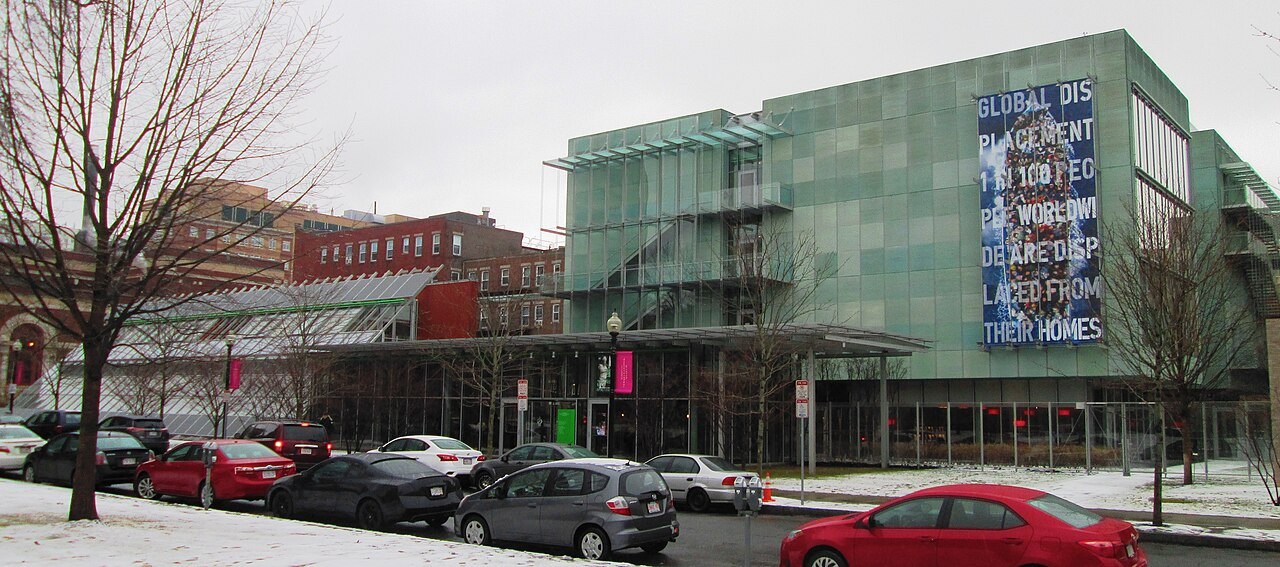
In 2002 the trustees decided that a new wing was needed to protect the historic house and give room to the concerts, exhibitions and education programs that carry on Gardner's interests in art, music and gardens. The Pritzker Prize-winning architect Renzo Piano was chosen in 2004, and the wing, set beside the original house near the Back Bay Fens, was completed in 2012.
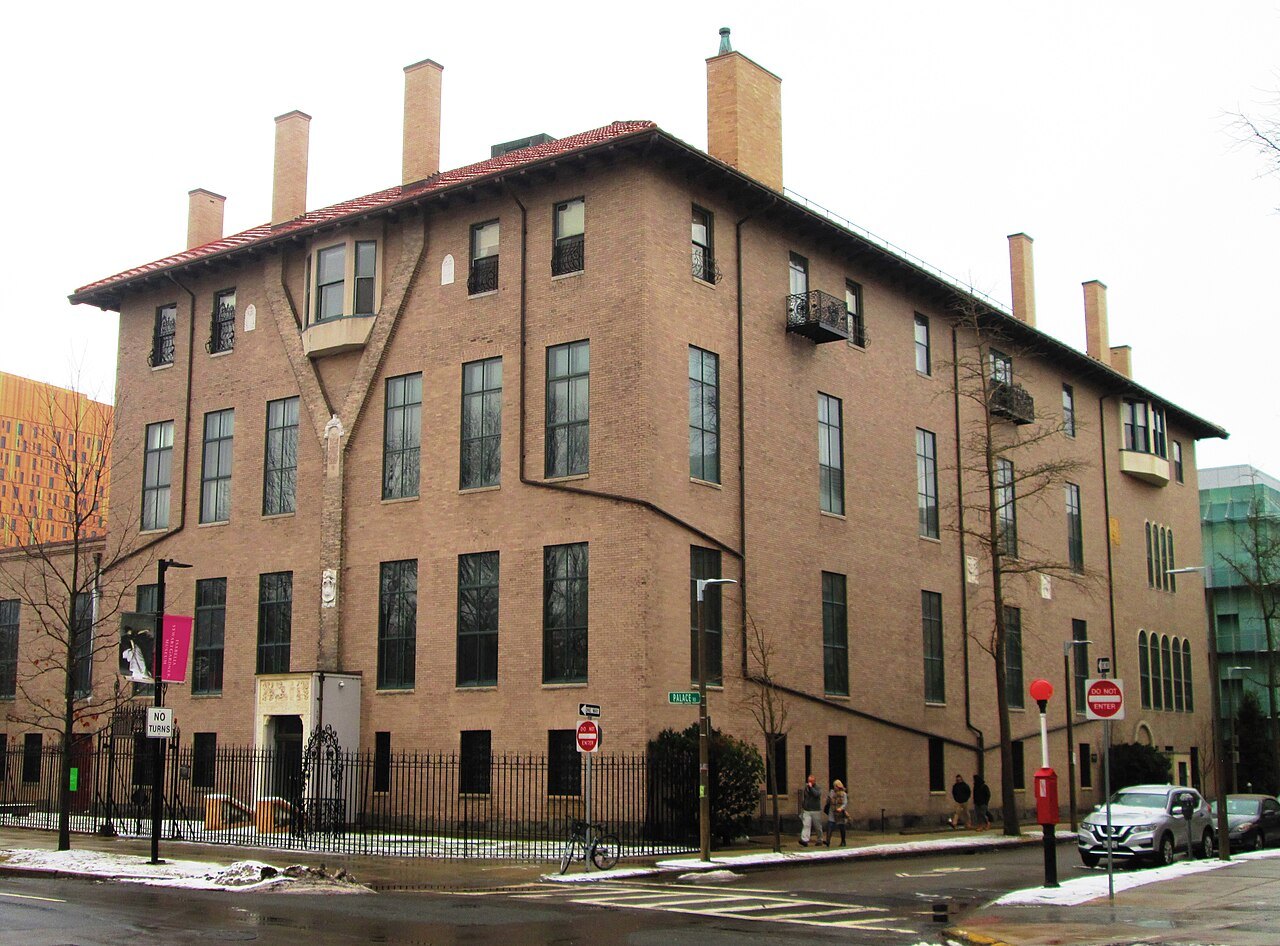
It holds the visitor services and spaces for concerts, special exhibitions and teaching, and it takes the pressure of modern visitor numbers off the old rooms. The museum's artist-in-residence program and its concert series, on Sunday afternoons and some Thursday evenings, carry on the music and visits Gardner hosted in the house during her lifetime.
How to visit
Enter through the new wing and walk from there into the old house; the courtyard is the place to start and to rest between floors. Allow at least two hours, since the rooms reward slow looking and the upper floors are easy to rush. Tickets are sold by the museum, which often uses timed entry; check its own site before going. The Museum of Fine Arts is a few minutes' walk away on Huntington Avenue, and the two together make a full day in the Fenway.
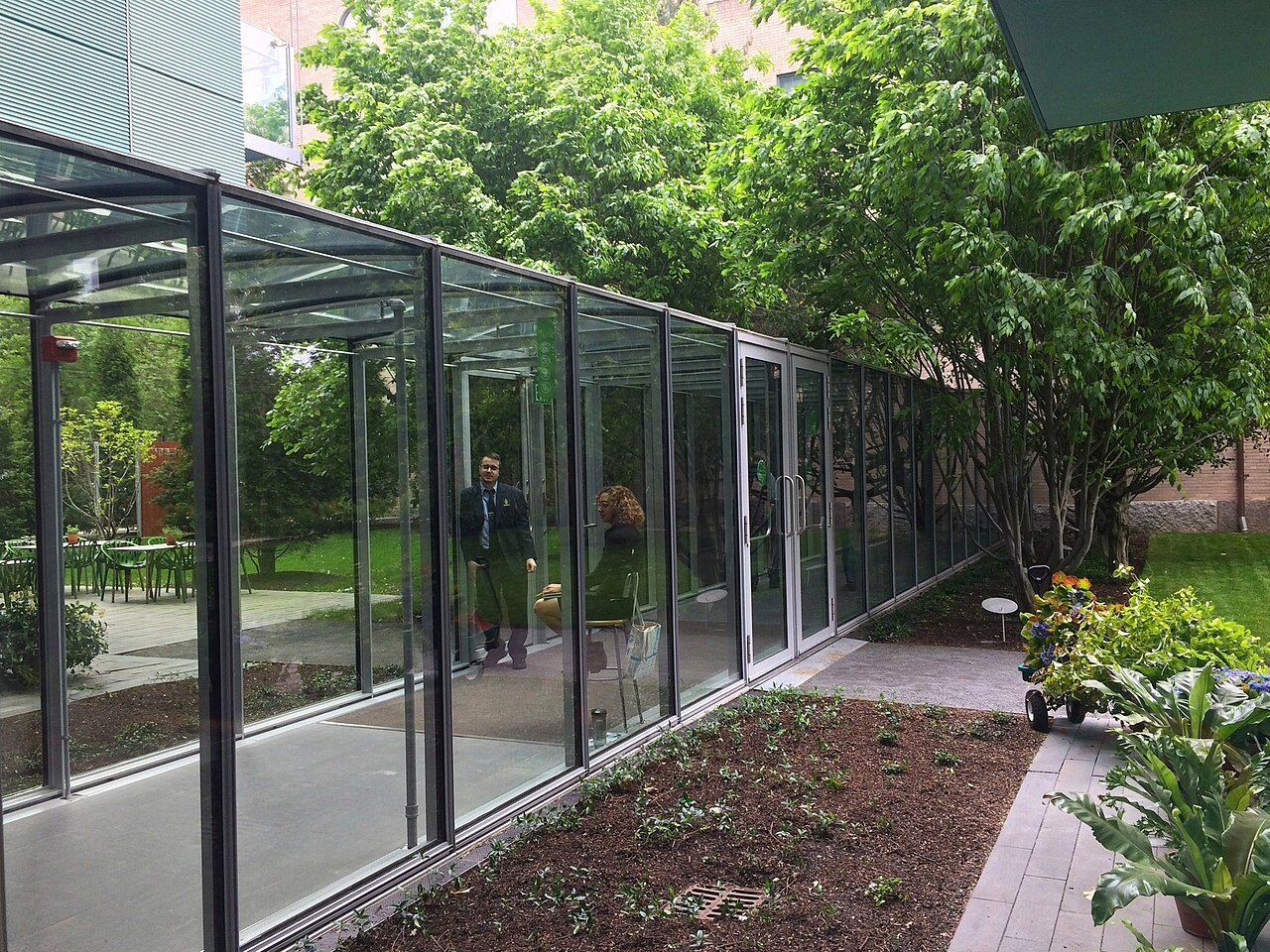
The concert series is also published as videos, audio recordings and a free classical-music podcast, an easy way to hear the house before you go. The Gardner is not a museum to rush; if time is short, choose the courtyard, the Dutch Room and one floor, and leave the rest for another visit.
Where to go nextIII
Nearby
- Nearby · Greater Boston · the FenwayThe Museum of Fine Arts, BostonOne of the most comprehensive art collections in the Americas, more than 450,000 works behind a granite front on Huntington Avenue, with a rotunda painted by John Singer Sargent and a wing for the art of the Americas.Read the page →
- Nearby · Greater Boston · Beacon HillBoston Common and the Public GardenThe oldest city park in the United States, fifty acres of lawn and hill below the State House, and beside it the Public Garden of 1837, with its lagoon, its little bridge and the Swan Boats.Read the page →
- Nearby · Greater Boston · CambridgeHarvard YardThe oldest part of Harvard, grown around a parcel bought in 1637: a lawn of elms and brick halls behind a fence with twenty-seven gates, with the university's great library and its church facing each other across the middle.Read the page →