Home · Landmarks · Harvard Yard
What you are looking atI
Harvard Yard, Cambridge
Greater Boston · Cambridge
- Johnston GateThe main gate from Harvard Square into the Old Yard, where the freshman halls cluster.
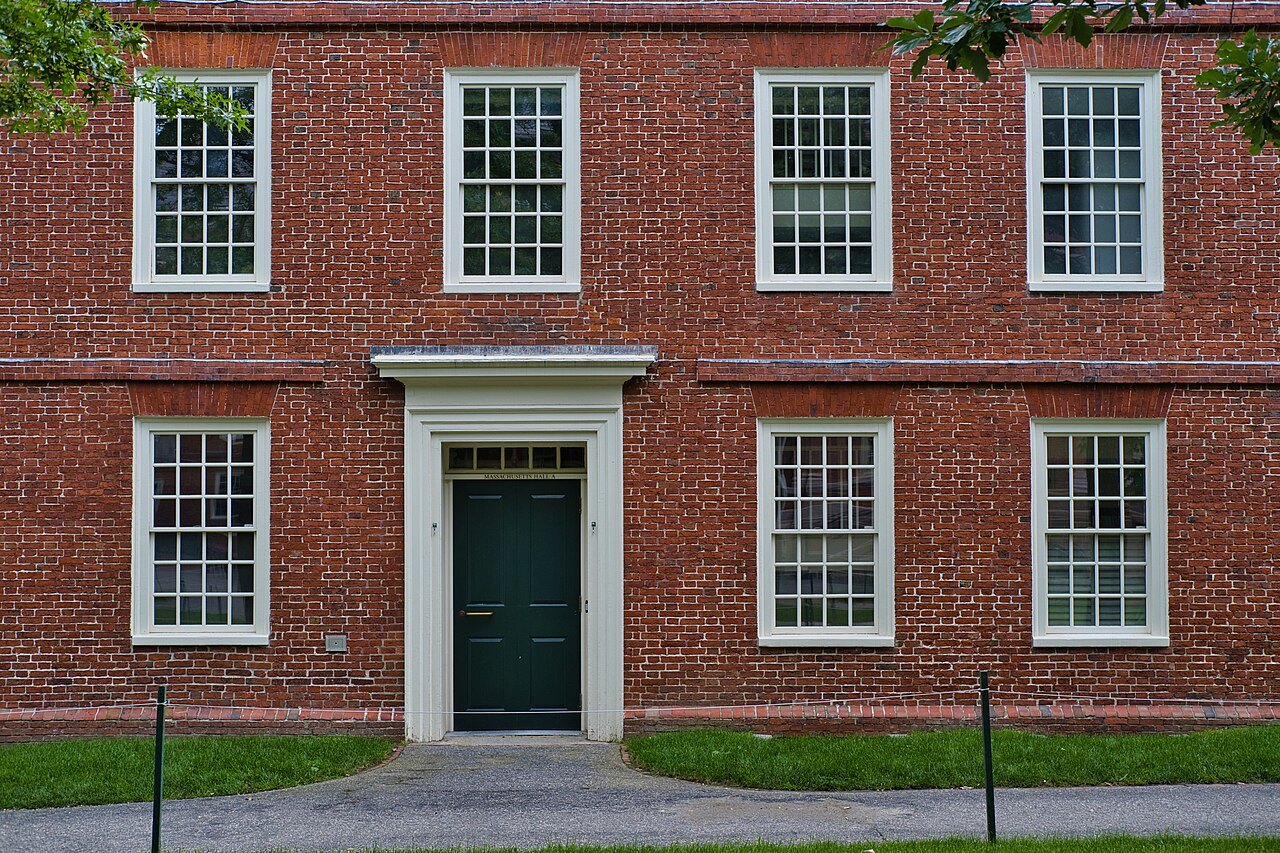
- Massachusetts HallBuilt from 1718 to 1720, Harvard's oldest building, the president's office on its lower floors.
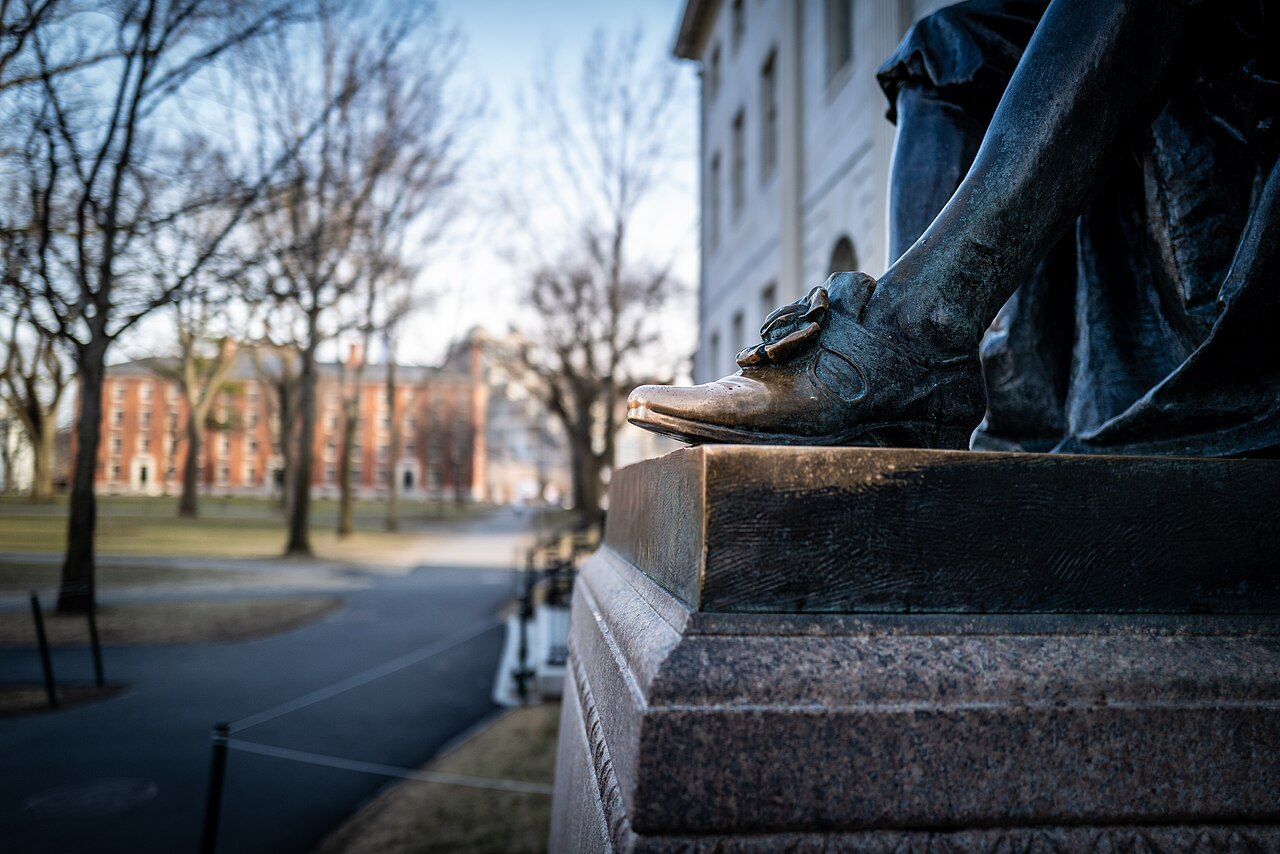
- The John Harvard statueDaniel Chester French's bronze of 1884, in front of University Hall.
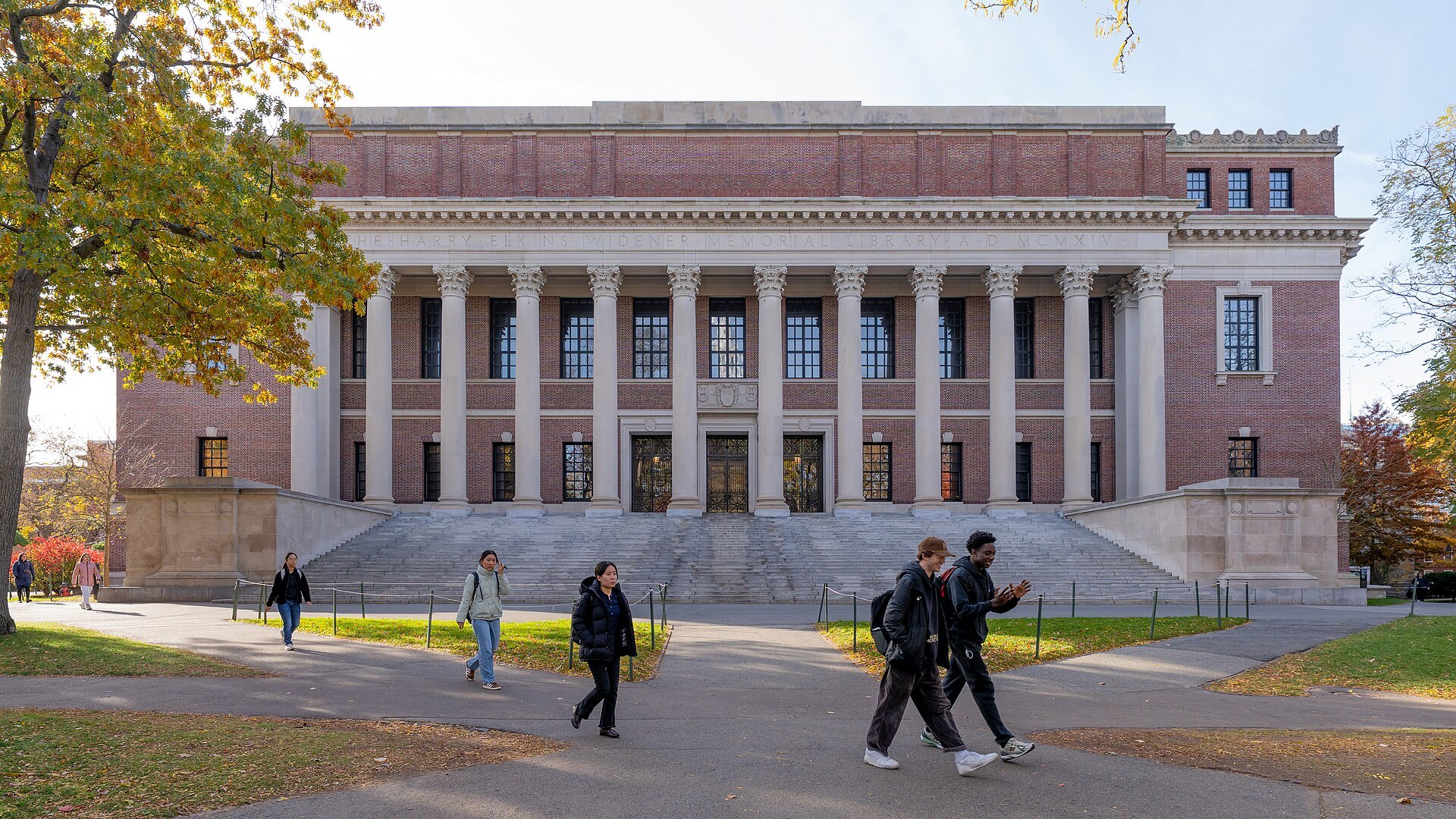
- Widener LibraryThe heart of the university's libraries, built in memory of a son lost on the Titanic.
- Memorial ChurchA church and war memorial of 1932 facing Widener across the Tercentenary Theatre.
- Tercentenary TheatreThe lawn between library and church where commencement is held each year.
The place in fullII
Reading the place
Why it matters
Harvard is the oldest institution of higher learning in the United States, founded in 1636 by a vote of the Great and General Court of the Massachusetts Bay Colony and named Harvard College in 1639 for its first benefactor, the Puritan clergyman John Harvard. Harvard Yard is where it began. It grew over the centuries around the college's first parcel of land, bought in 1637, and it is still the oldest and most prominent part of the university's campus in Cambridge.
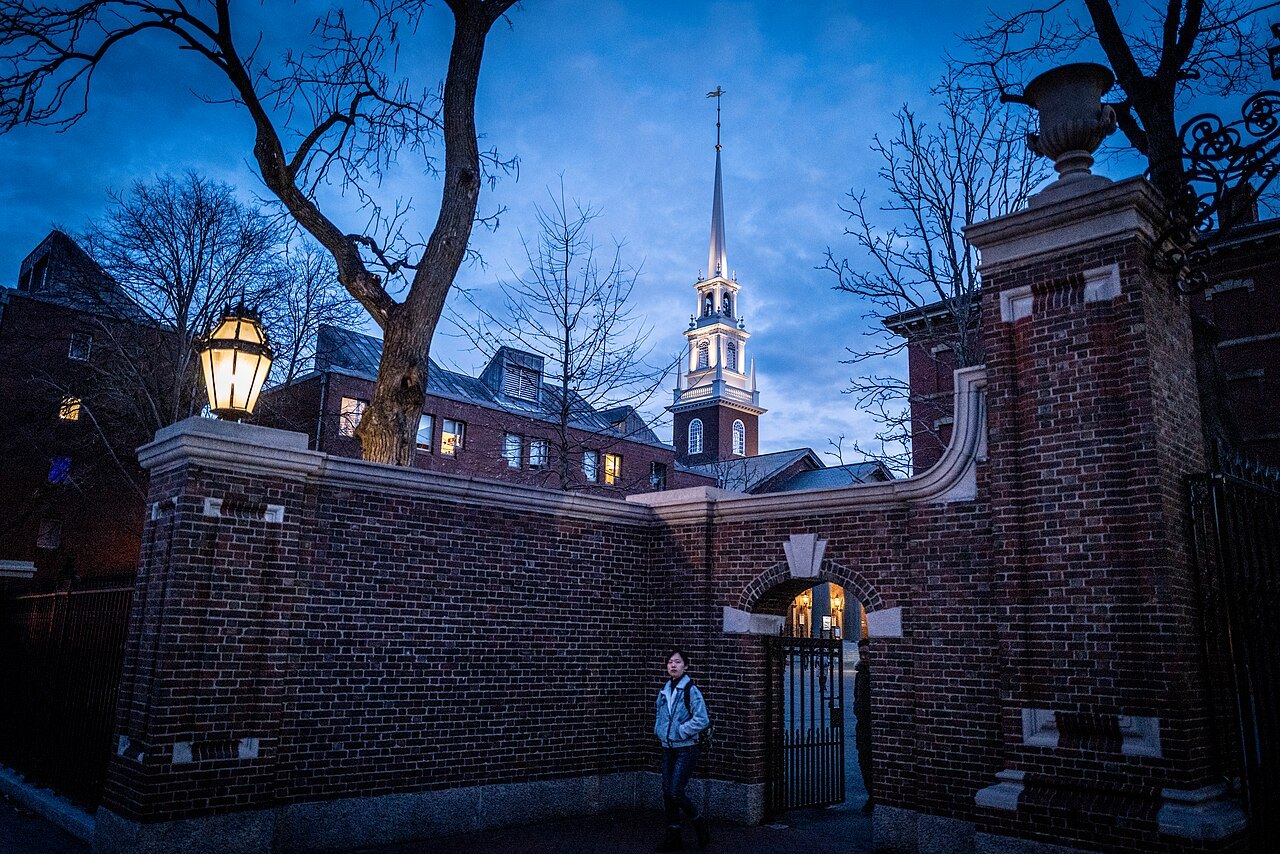
Today the Yard is a grassy space of about twenty-two acres, bounded mainly by Massachusetts Avenue, Cambridge Street, Broadway and Quincy Street, and closed by an iron and brick fence with twenty-seven gates. Inside are most of the freshman dormitories, the university's most important libraries, its church, classroom buildings, the offices of the president and the deans, and the John Harvard statue. It is a working campus first, and a place to visit second.
The Old Yard
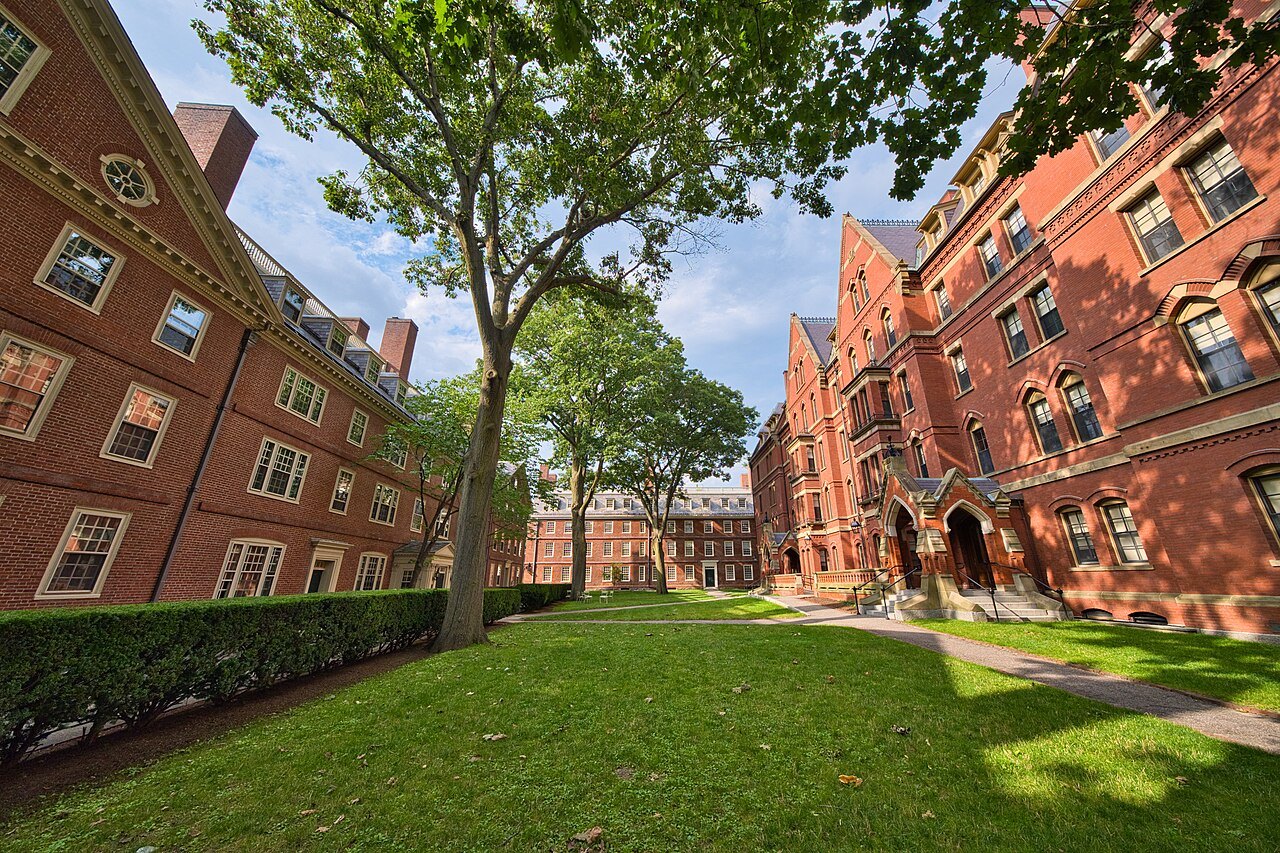
The western third of the Yard, entered from Peabody Street through Johnston Gate at the edge of Harvard Square, is known as the Old Yard. Most of the freshman halls stand around it, among them Massachusetts Hall, built between 1718 and 1720 to plans by the presidents John Leverett and Benjamin Wadsworth. It is Harvard's oldest surviving building and the second-oldest academic building in the country; it was built as a dormitory for sixty-four students, and during the Siege of Boston 640 American soldiers were quartered in it. Its lower floors now hold the office of the president.
Beside it stands Harvard Hall. The first Harvard Hall held the college library, including the books John Harvard left, and all but one of them were lost when it burned in 1764; the hall was rebuilt in 1766 and holds classrooms. Holden Chapel, the college's first building for worship, from 1744, stands among the halls nearby.
University Hall and John Harvard
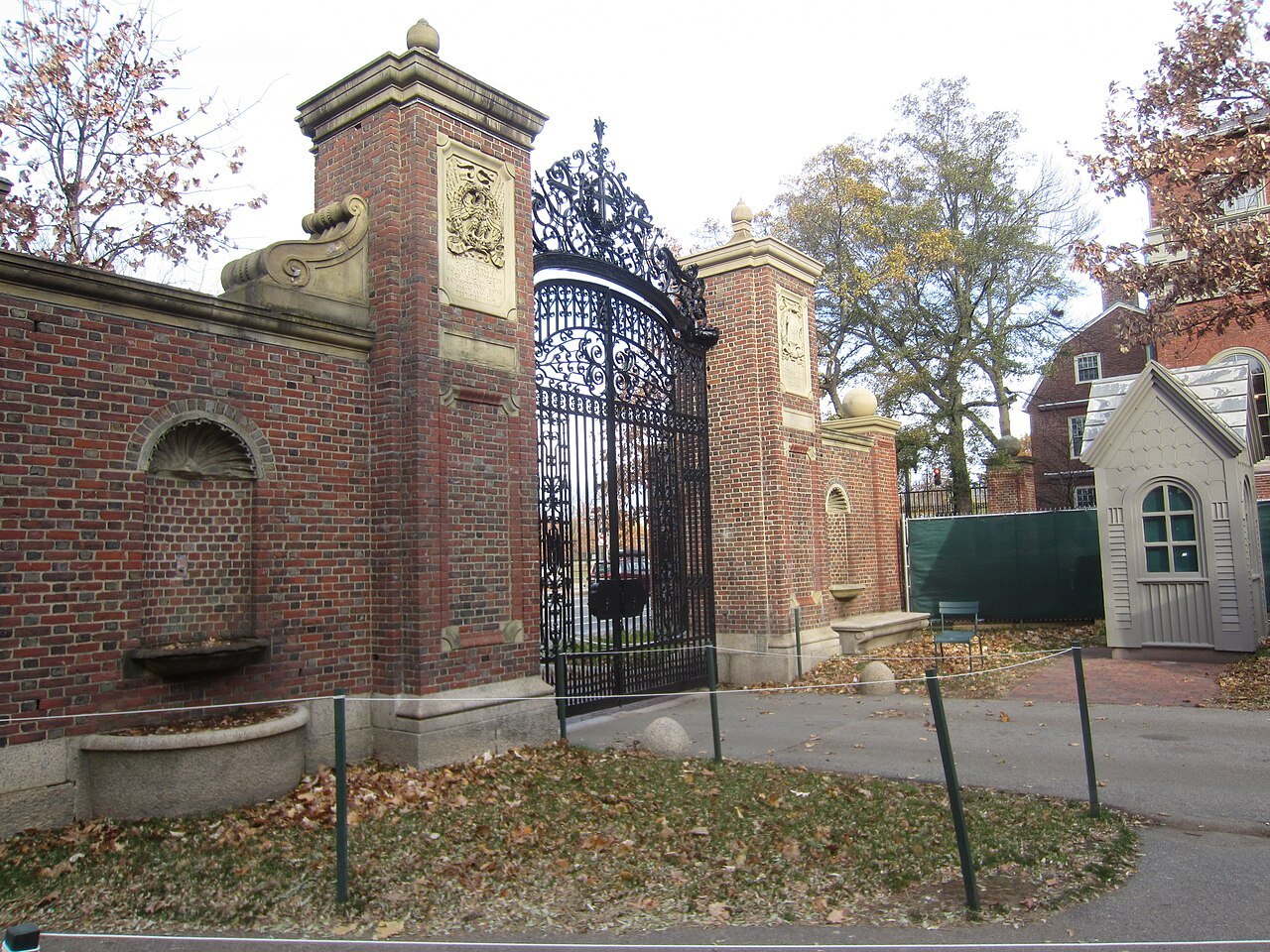
Across the Old Yard from Johnston Gate is University Hall, of 1815, whose white granite front was the first to break with the red-brick Georgian style that had ruled the Yard until then. It holds the offices of the dean of the Faculty of Arts and Sciences and the dean of Harvard College, and between its twin west stairs sits the bronze John Harvard by Daniel Chester French, of 1884.
The statue is famous for what it gets wrong. No portrait of John Harvard survived, so French used a student, Sherman Hoar, as his model for the face. John Harvard left the college a bequest when he died in 1638, and he is honored as a founder of the college rather than the founder. Visitors often rub the toe of the statue's left shoe for luck, in the mistaken belief that this is a student tradition.
Tercentenary Theatre
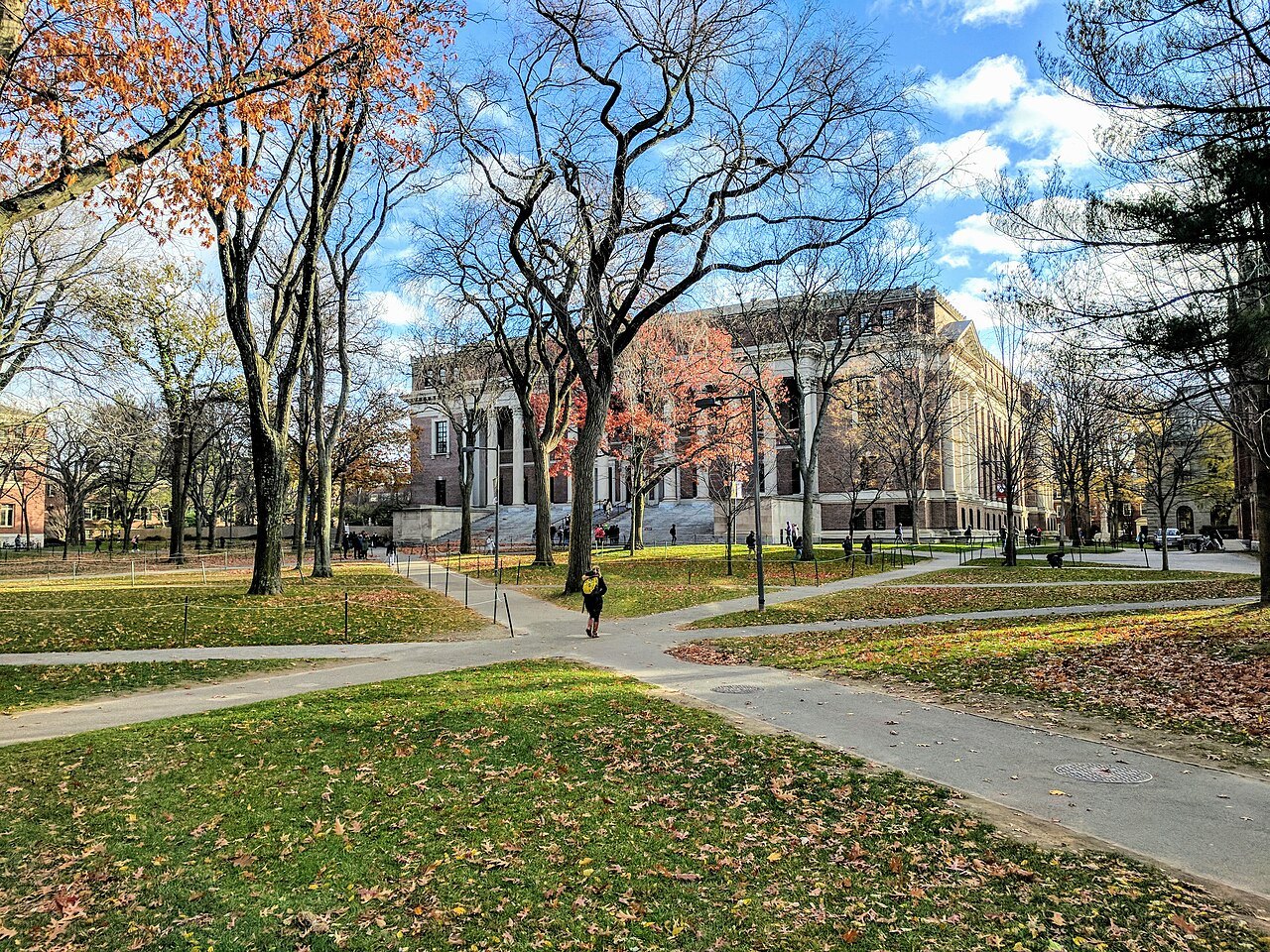
The center of the Yard, east of University Hall, is a broad lawn known as Tercentenary Theatre, framed by Widener Library, Memorial Church, University Hall and Sever Hall. Commencement is held there every year, with other convocations, and on an ordinary day it is the Yard's great open room, crossed by paths under the elms.
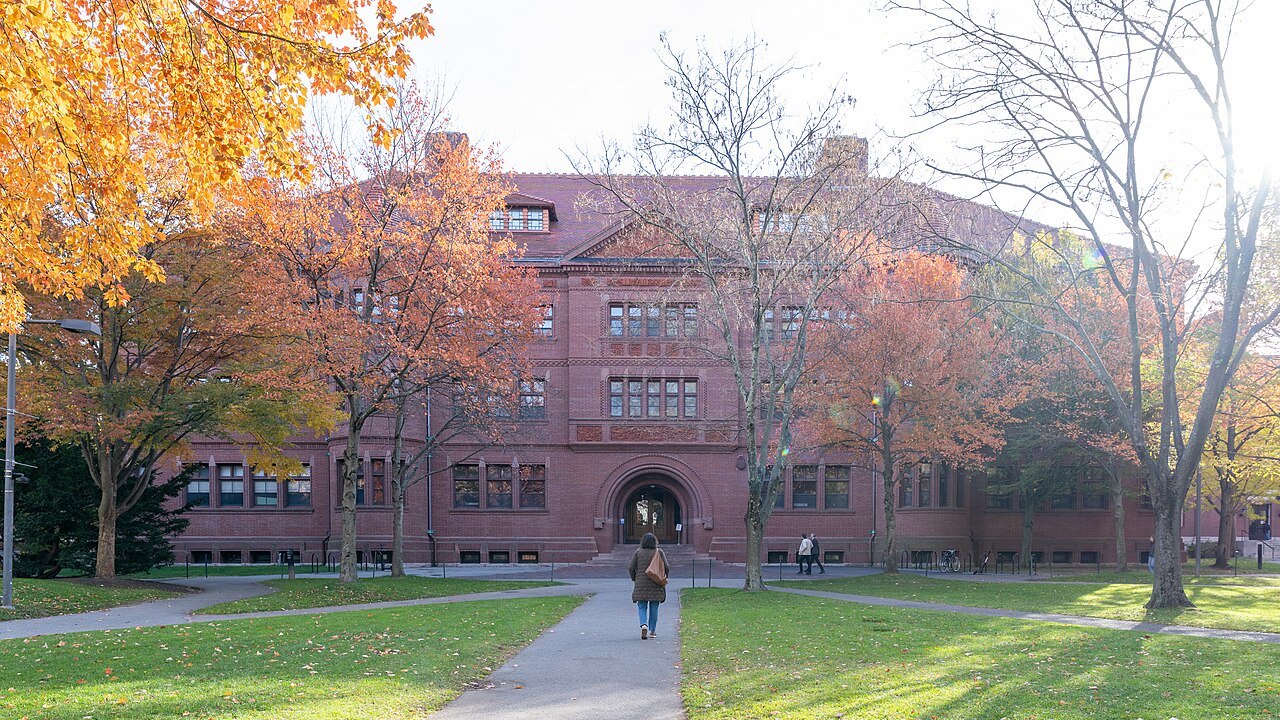
Widener Library, on the south side, is the centerpiece of the Harvard Library system, with some three and a half million books. It was built by Eleanor Elkins Widener in memory of her son Harry Elkins Widener, a 1907 graduate and book collector, who died in the sinking of the Titanic in 1912. Its stacks run to fifty-seven miles of shelves on ten levels, in more than a hundred languages, and at its heart are the Widener Memorial Rooms, with his collection and papers.
Memorial Church
Facing Widener across the lawn is the Memorial Church, completed in 1932, an interdenominational Protestant church. After the First World War, President Abbott Lawrence Lowell joined the idea of a war memorial to the need for a new chapel, and the university's architects, Coolidge, Shepley, Bulfinch and Abbott, designed a building to answer the mass of Widener opposite.
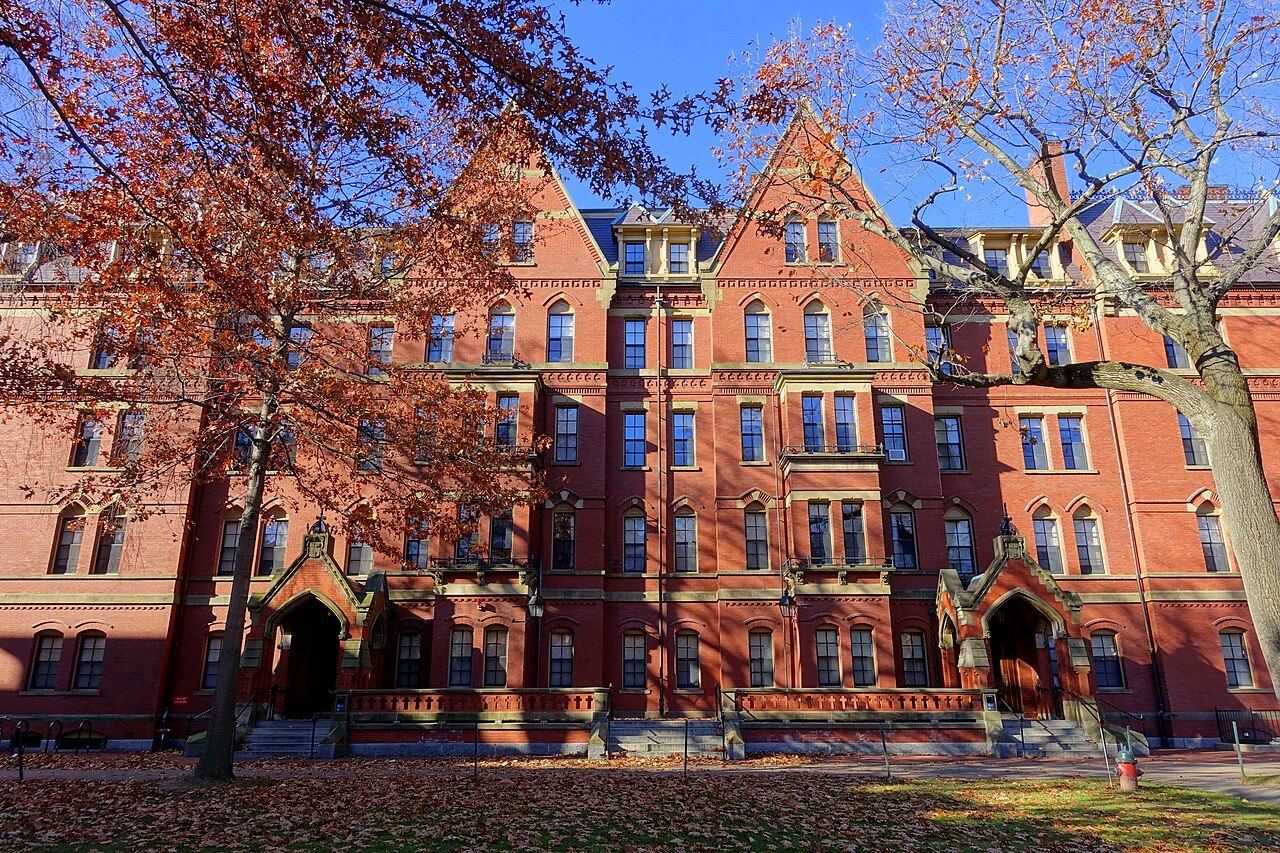
It replaced Appleton Chapel, which had stood on the site since 1858, and part of the new building keeps that name and holds the daily service of Morning Prayer. Inside are engraved the names of 373 alumni who died in the war, with a sculpture by Malvina Hoffman called The Sacrifice.
The rest of the Yard
Around these buildings are the other libraries: Houghton Library for rare books and manuscripts, Lamont Library for undergraduates, and the Pusey annex beside Widener. Sever Hall, Emerson Hall, Robinson Hall and Boylston Hall hold classrooms and departments; Loeb House on the east side is the home of the university's governing boards, and Wadsworth House on the south side holds the university librarian and the marshal. Near Widener stands the Harvard Bixi, a Chinese stone stele with an inscribed text.
The freshman halls, among them Weld, Grays, Matthews, Straus, Hollis, Stoughton, Holworthy, Canaday and Thayer, fill the edges of the Yard, and Phillips Brooks House, dedicated to student service, stands among them.
How to visit
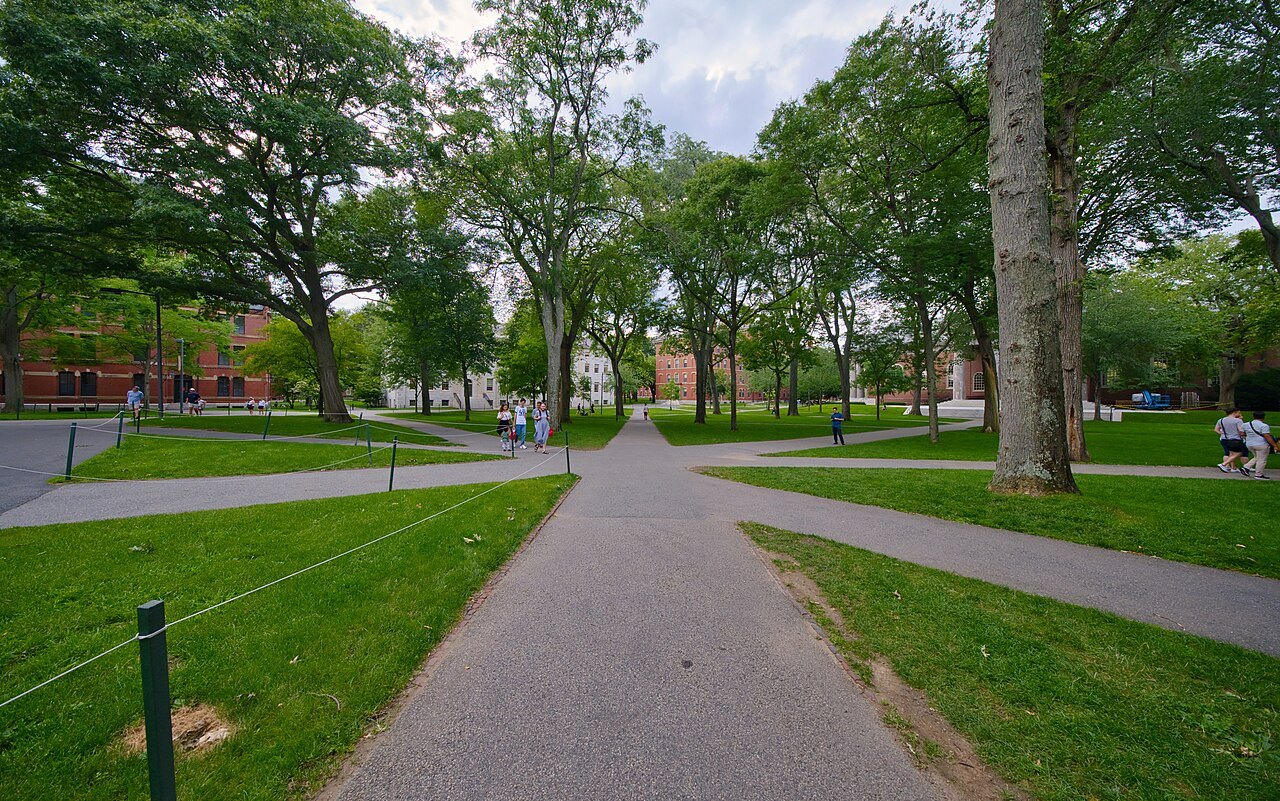
The Yard is a lawn crossed by footpaths inside its gates, and walking through it is part of any visit to Cambridge, but the buildings are the university's: dormitories, libraries and offices are not open to visitors, and in term the Yard is where students live. Walk in from Harvard Square through Johnston Gate, see the Old Yard and the statue, then cross to the lawn between Widener and Memorial Church. Commencement fills the Tercentenary Theatre with seating and ceremony, so a visit that week sees a different Yard. Harvard Square and the rest of Cambridge are just outside the gates.
Where to go nextIII
Nearby
- Nearby · Greater BostonCambridgeThe city directly across the Charles River from Boston, founded in December 1630 as Newtowne and renamed for the English university in 1638: home to Harvard and MIT, a string of squares, and the common where the Continental Army was born.Read the page →
- Nearby · Greater Boston · the FenwayThe Museum of Fine Arts, BostonOne of the most comprehensive art collections in the Americas, more than 450,000 works behind a granite front on Huntington Avenue, with a rotunda painted by John Singer Sargent and a wing for the art of the Americas.Read the page →
- Nearby · Greater Boston · ConcordLexington, Concord and the Old North BridgeWhere the Revolutionary War began on April 19, 1775: the Battle Green in Lexington, five miles of Battle Road, and the wooden North Bridge in Concord where the militia fired the shot heard round the world.Read the page →