Home · Landmarks · Hancock Shaker Village
What you are looking atI
Hancock Shaker Village
The Berkshires · Pittsfield
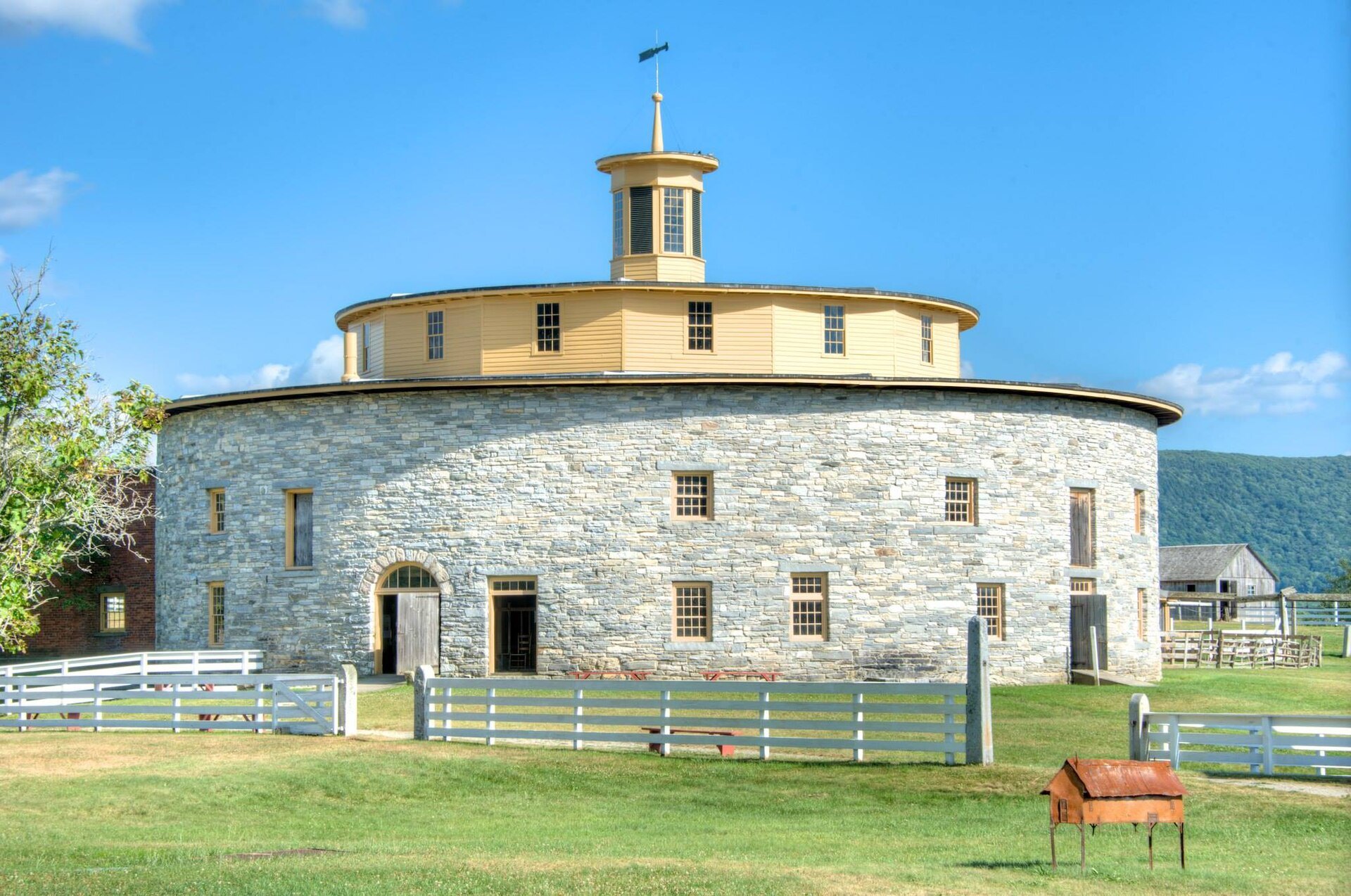
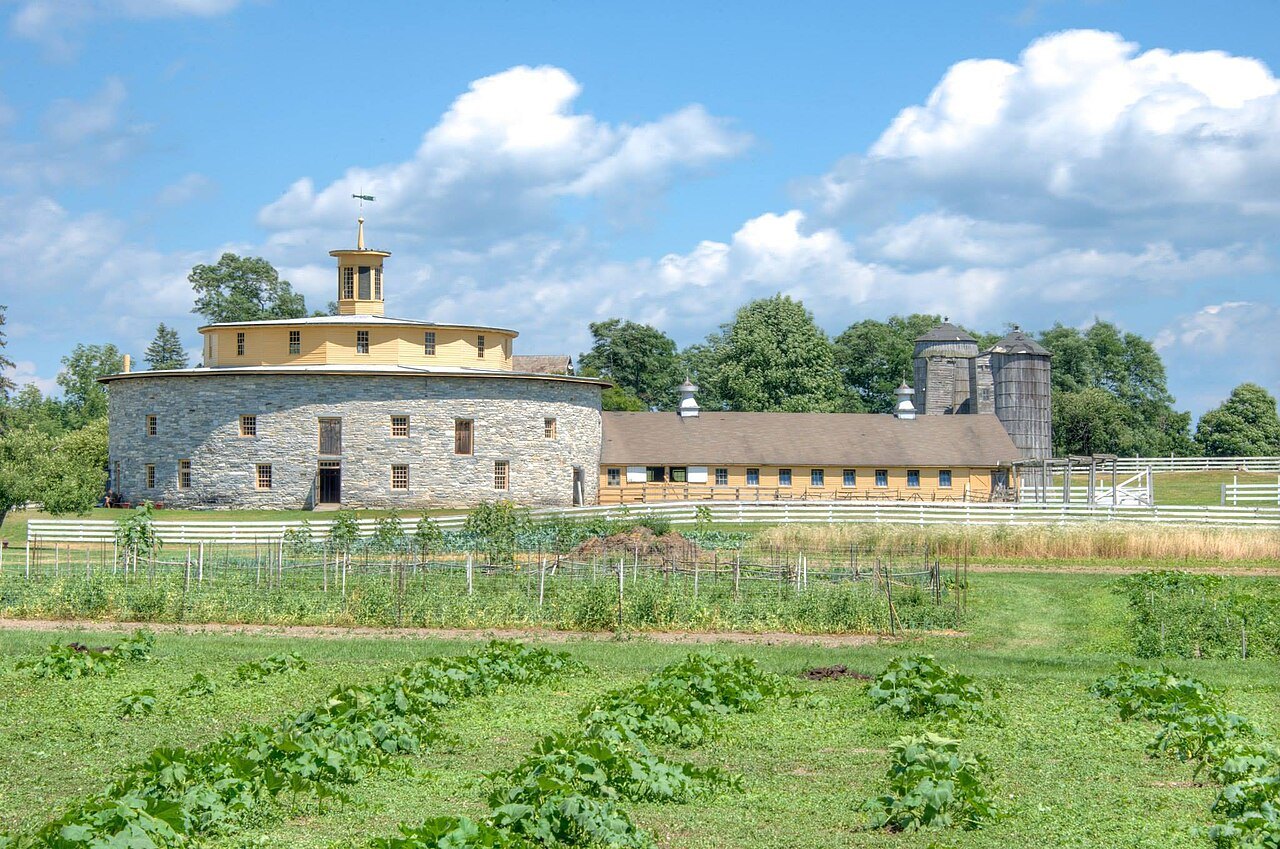
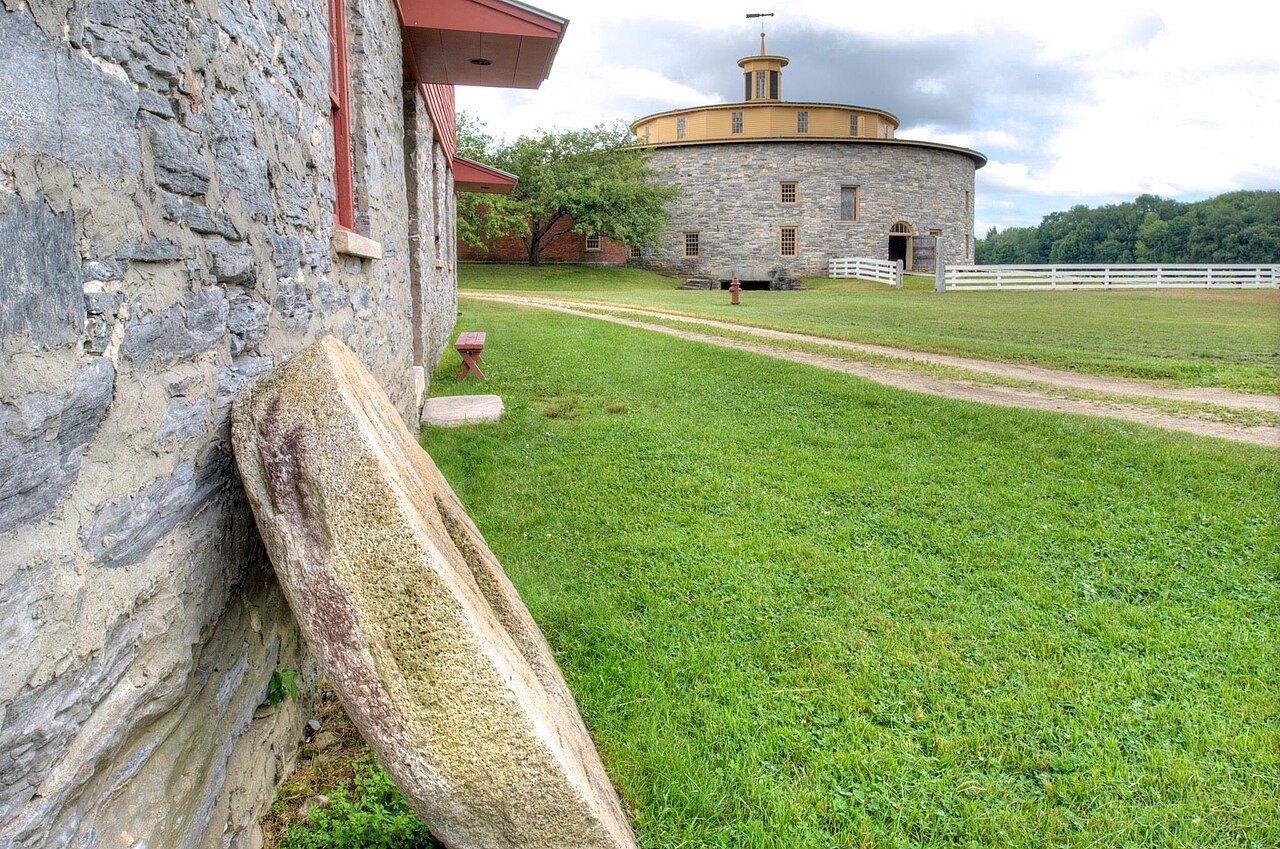
- The Round Stone BarnBuilt in 1826 so ox wagons could drive round, unload hay and leave without backing.
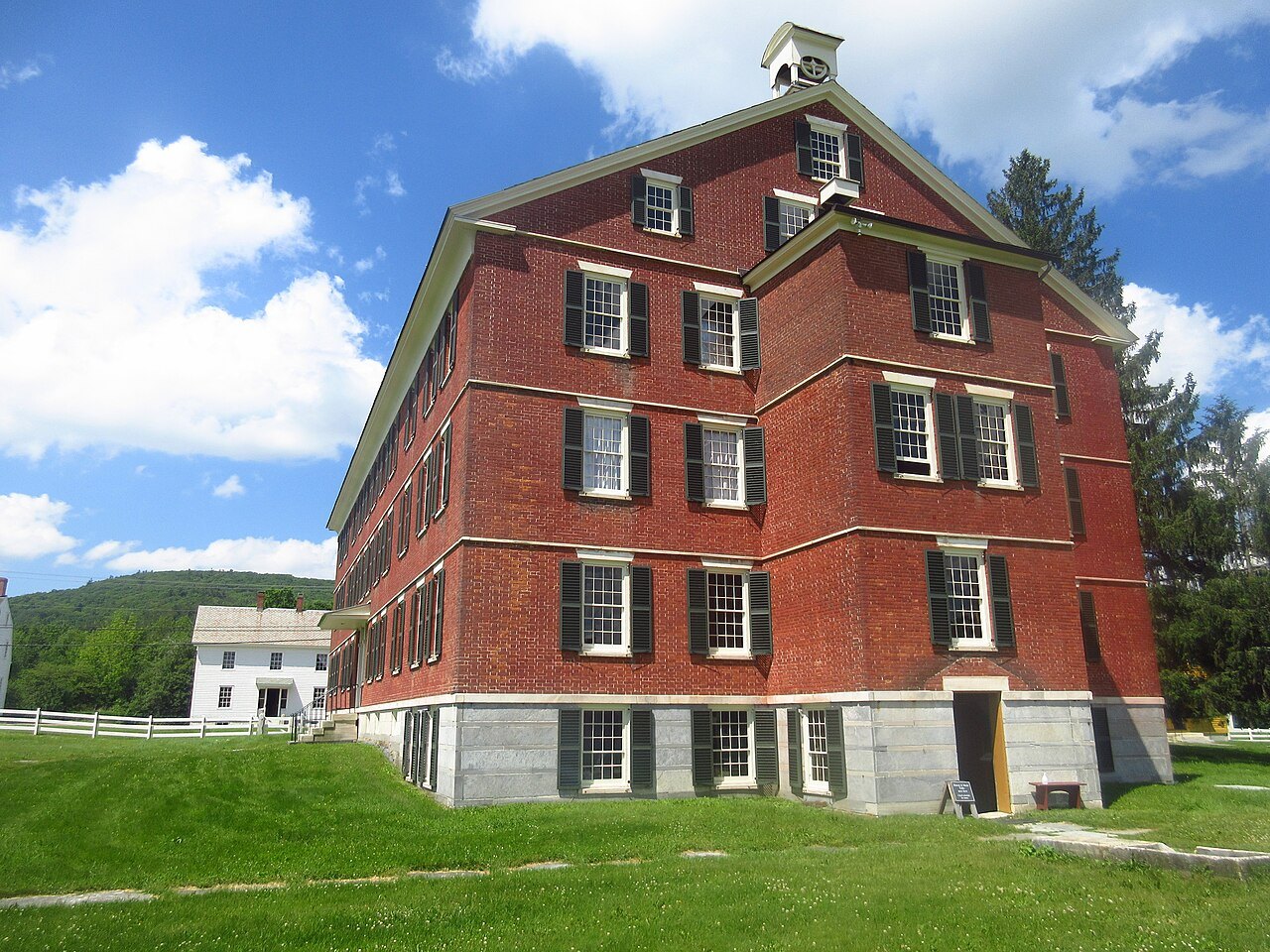
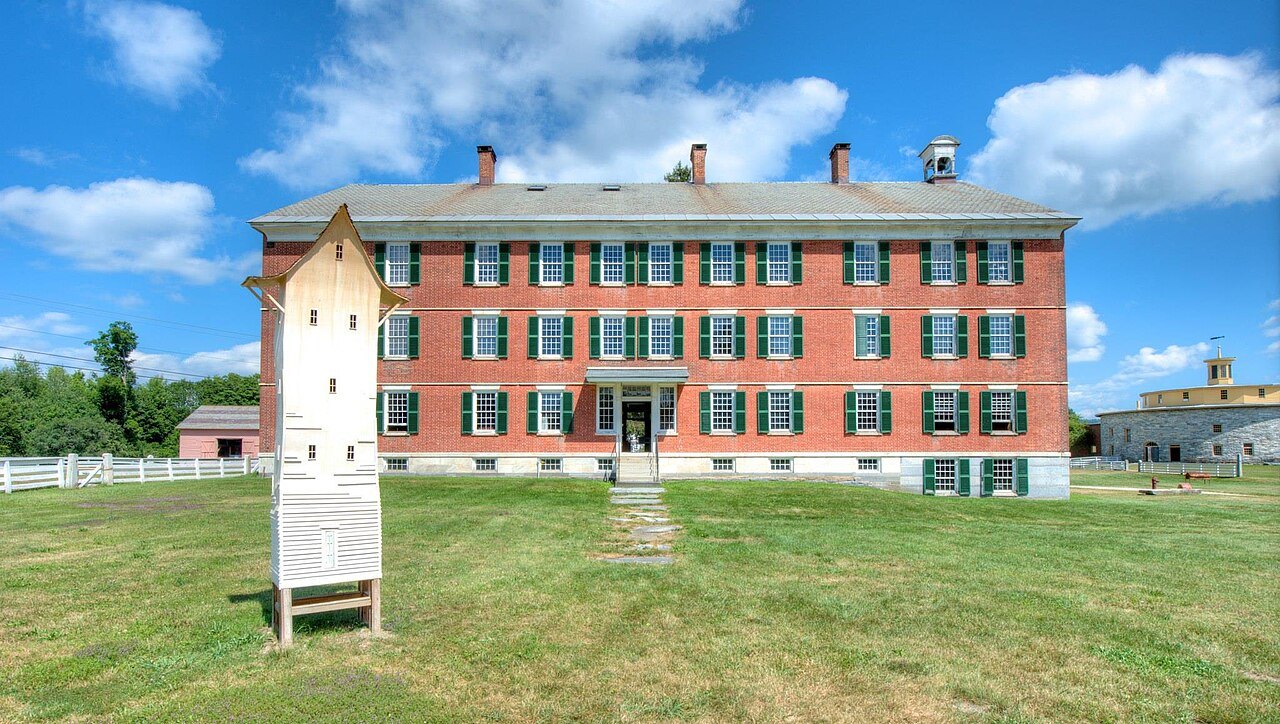
- The Brick DwellingHousing of 1830 for more than a hundred brothers and sisters, with separate doors and stairs.
- The Church FamilyThe largest of the six communal families, whose buildings form the museum.
- The working farmFields, gardens and animals kept on the Shakers' own land.
- The shopsWhere the craft of the Shakers is shown, from their boxes to their furniture.
- The collectionMore than twenty-two thousand objects made and used by the community.
The place in fullII
Reading the place
Why it matters
Hancock Shaker Village was a Shaker commune on the border of Hancock and Pittsfield, in the Berkshire hills near the New York line. It grew from converts in the 1780s, was organized in 1790, and lasted until 1960, the third of nineteen major Shaker villages founded between 1774 and 1836. When the last Shakers closed it, a local group bought it and made it a museum, and it is now an open-air museum of twenty historic buildings, gardens, a working farm and more than twenty-two thousand objects.
It is the best place in the state to understand the Shakers, a religious society known for its simple living, its architecture, its inventions, its music and its furniture, in buildings that the Shakers themselves designed and used. It was listed on the National Register and declared a National Historic Landmark District in 1968.
Who the Shakers were
The Shakers began in Manchester, in England, around 1747, as a group of dissident Christians who practiced ecstatic worship; they were first called the Shaking Quakers for the way they moved in their services. A young woman, Ann Lee, became their leader, and in 1770 she had visions teaching that only by renouncing sexual relations could people enter heaven. After persecution in England, she led a small group across the Atlantic in 1774, and they settled at Watervliet in New York.
The Shakers lived celibate, communal lives, men and women as equals, with women among their spiritual leaders from the start, Ann Lee and Lucy Wright among them. In the middle of the nineteenth century a period they called the Era of Manifestations brought new dances, gift songs and gift drawings inspired by revelation.
The Hancock community
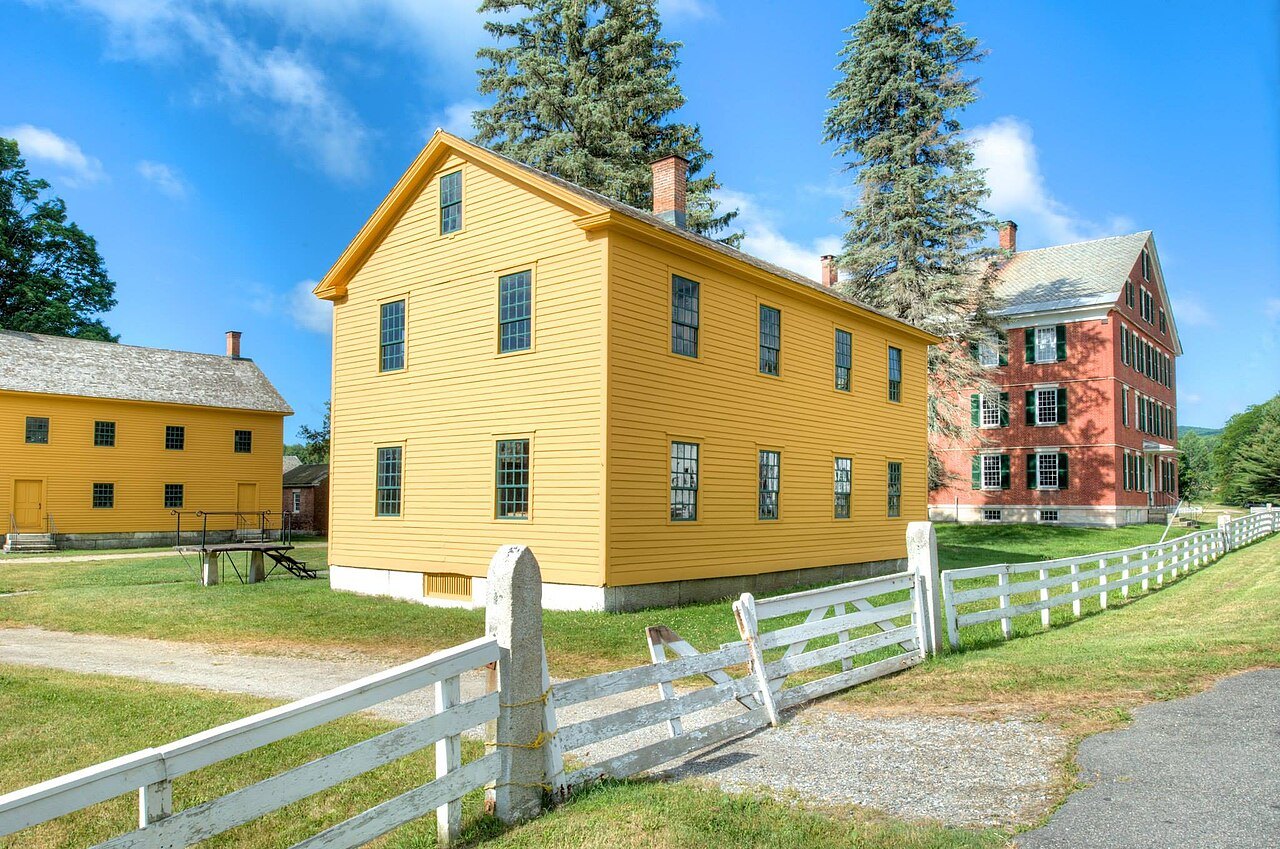
In the 1780s farmers in New Lebanon, Hancock, West Pittsfield and Richmond joined the faith, after local ministers converted. Hancock was organized in 1790, and from then until 1893 it was the seat of the Hancock Bishopric, which also oversaw the Shaker communities at Tyringham and at Enfield in Connecticut, under the central ministry at New Lebanon, one town over in New York.
At its peak in the 1830s and 1840s Hancock was six communal families, the Church, Second, East, West, South and North, each overseen by two elders and two eldresses. The Shakers lived mainly by farming, and their most profitable early business was raising and selling garden seeds; by the 1830s some three hundred Hancock Shakers owned about three thousand acres. Neighbors admired the clean, well-kept property and praised its boxes of beautiful workmanship. After the 1840s the movement dwindled, as young people left for the cities and the West; by the early twentieth century about fifty people lived at Hancock, most of them children, and in 1960 the central ministry closed the village.
The Round Stone Barn
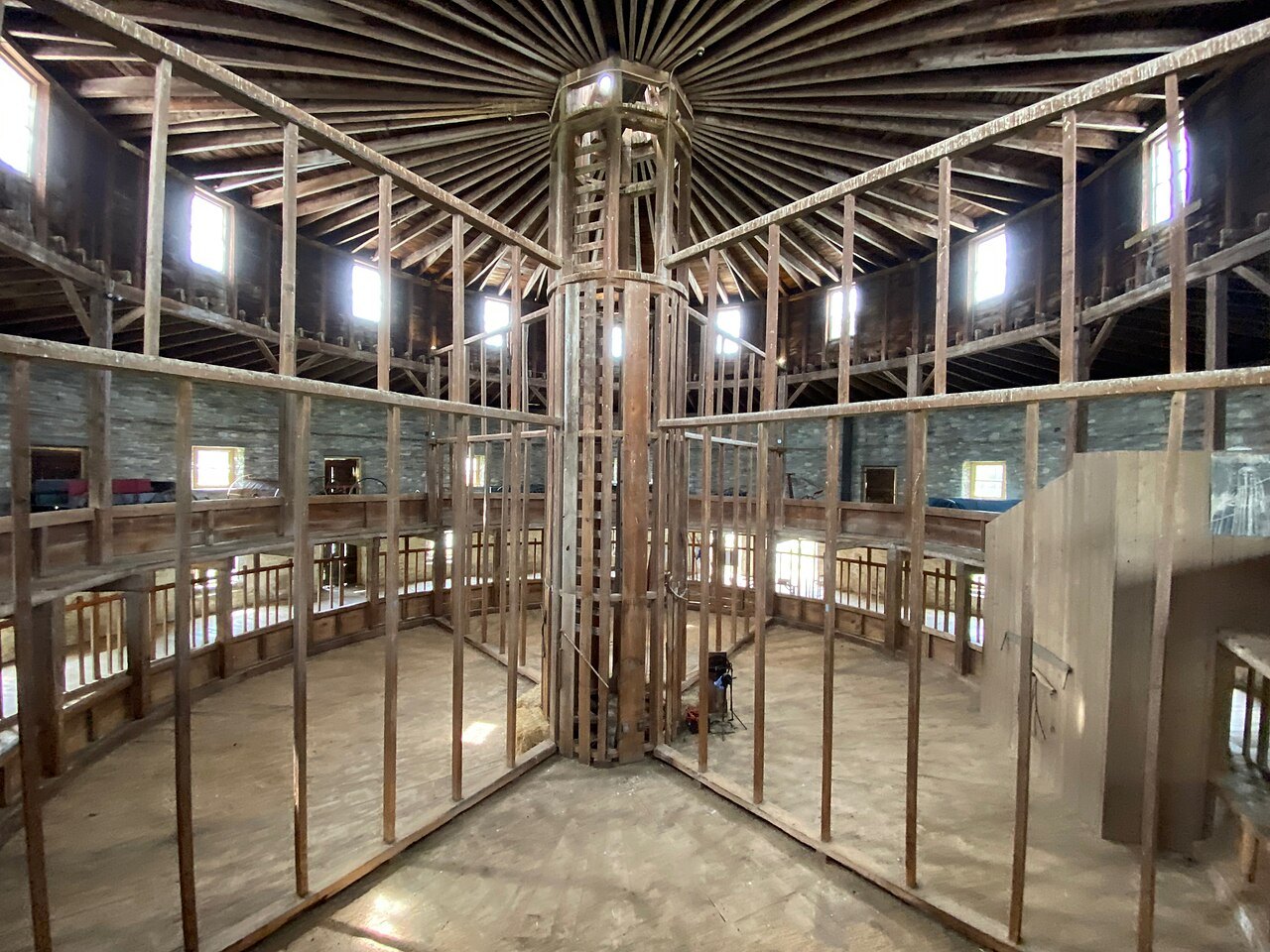
The most famous building is the Round Stone Barn of 1826, one of the few round barns surviving in the state, built round because the shape worked. Inside are four rings. At the center a ventilation shaft draws moisture up out of the hay, which keeps it from molding or catching fire. Around it the hay was stored, pitched in from an upper-level balcony reached by an outdoor ramp; because the barn was round, ox-drawn wagons could drive in, unload and drive out without ever backing up.
In the third ring the brothers walked to fork hay from the store to the cows, who stood in the outermost ring facing in. The barn attracted much attention from outsiders, one of the farming innovations that made the Shakers respected as good neighbors before 1820.
The Brick Dwelling
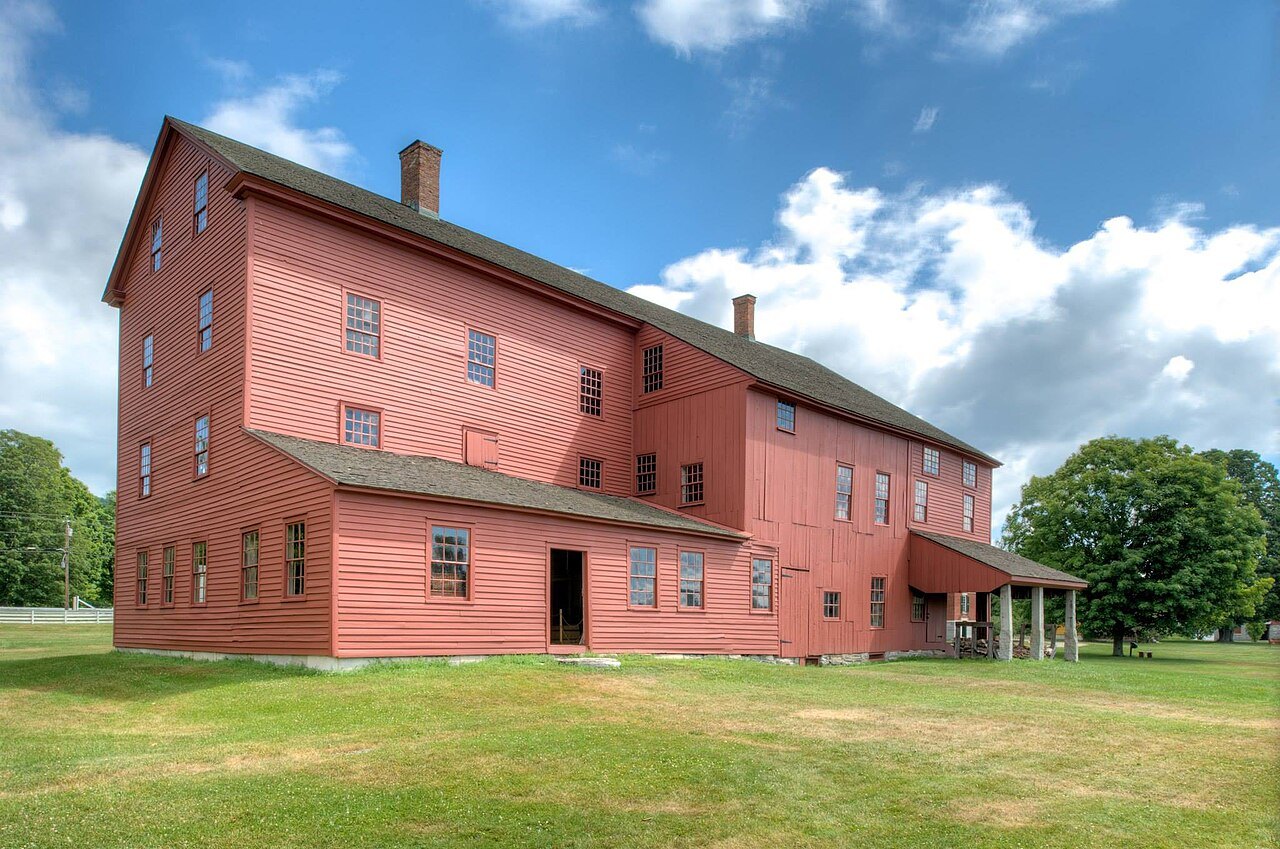
The other great building is the red-brick dwelling built in 1830 to house more than a hundred brothers and sisters. It shows the community's prosperity and its liking for space, air and labor-saving conveniences, among them water piped indoors, and it served as an advertisement for the comforts the society gave its members.
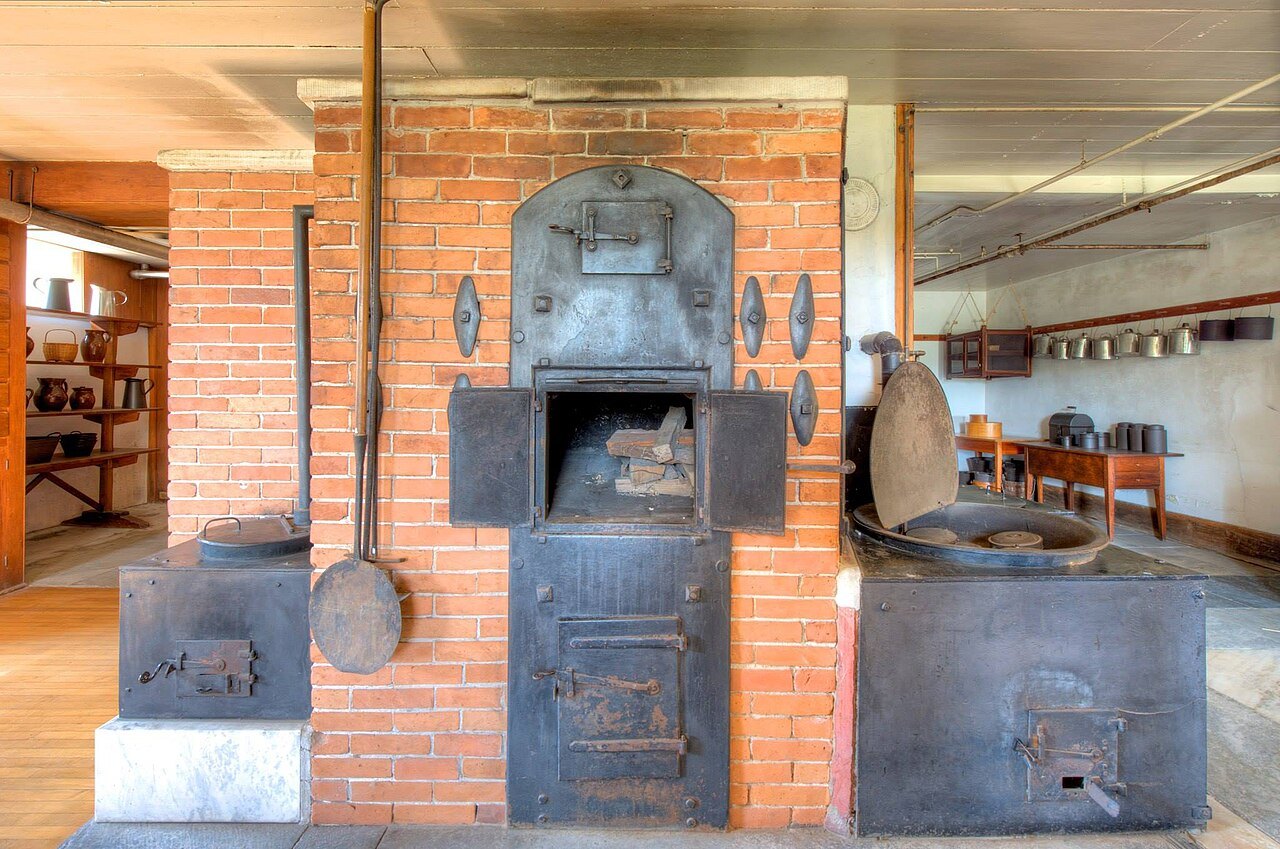
It also shows how men and women lived apart under one roof. Wide halls separate the brothers' rooms from the sisters'; separate doors and stairs meant a sister never had to pass a brother in a doorway, and the two sides ate at opposite ends of the dining room. Interior windows borrow light for a dark stair, built-in cupboards and drawers line the rooms, and dumbwaiters carried food from the kitchen to the dining room above. Visitors can still eat Shaker meals in that dining room, though they no longer have to sit apart.
After the Shakers
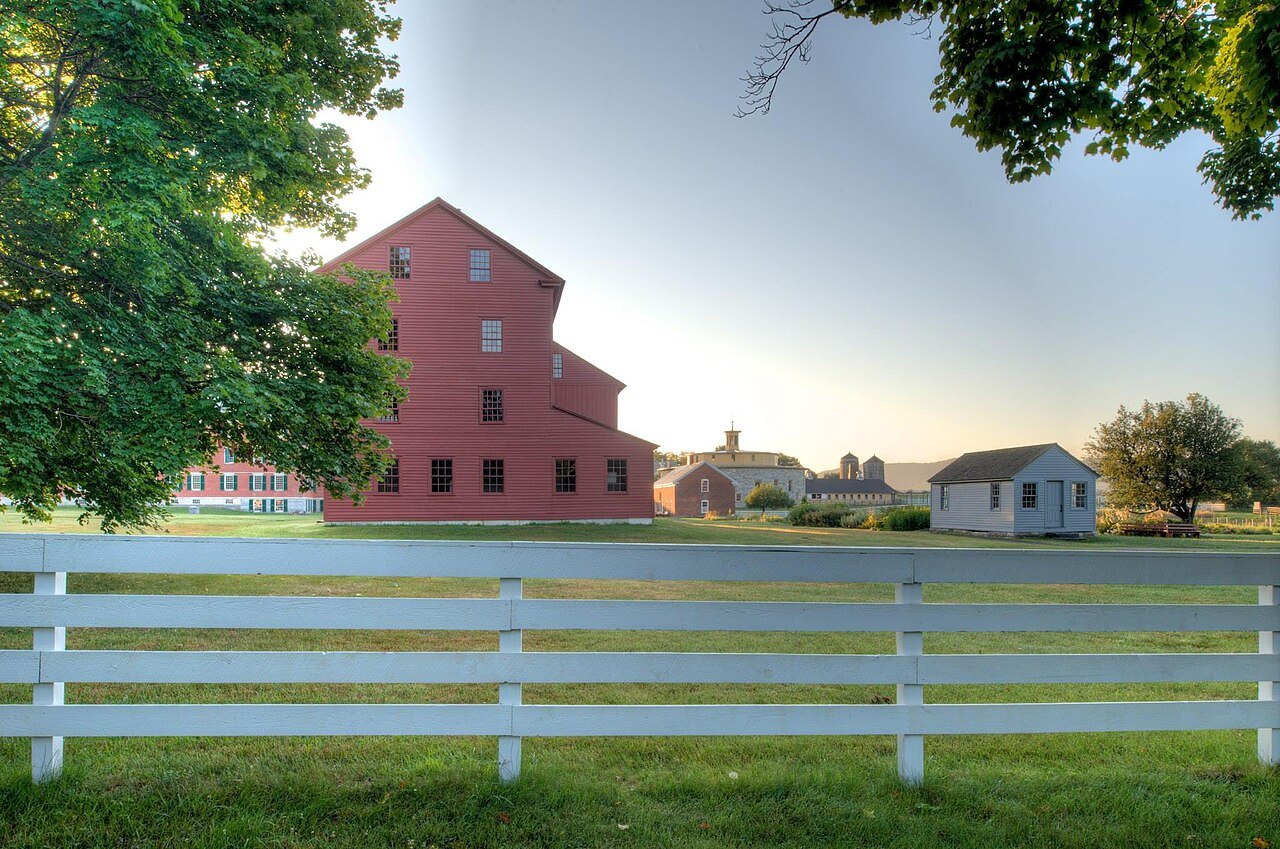
When the Shaker Central Ministry closed Hancock in 1960 and sold its land and buildings, the buyers formed a not-for-profit, Hancock Shaker Village, Inc., to preserve the site, with the aim of bringing the Shaker story to life and keeping it for future generations. The village has since appeared in Bob Vila's television guide to historic American homes, and in 2025 the film The Testament of Ann Lee, about the Shakers' founder, was shot on location here, a century and a half after the village's peak.
How to visit
The museum opened on July 1, 1961, and more than sixty thousand people visit each year, in its season from April to October. Give it half a day: the barn and the dwelling first, then the gardens, the farm and the craft demonstrations, and the hiking trails beyond. The village holds seasonal events, among them baby animals on the farm in spring and a country fair in autumn, and it sets its own tickets and hours. It lies on the Hancock–Pittsfield line, and the Mount and the rest of the Berkshires are a short drive south.
Where to go nextIII
Nearby
- Nearby · The Berkshires · LenoxThe Mount, Edith Wharton's HouseThe country house in Lenox that Edith Wharton designed for herself in 1902 and called her first real home, white stucco and dark green shutters above a terrace and restored gardens, where she wrote The House of Mirth.Read the page →
- Nearby · Pioneer ValleyNorthamptonThe county seat of Hampshire County on the west bank of the Connecticut River: a college town around Smith College, founded in 1871, with a busy arts and music scene, a history that runs from Jonathan Edwards to Calvin Coolidge, and rail trails out into the valley.Read the page →
- Nearby · Central · SturbridgeOld Sturbridge VillageNew England's largest living museum: a country town of the 1790s to the 1830s on more than two hundred acres, with 59 antique buildings brought from across the region, three water-powered mills and a working farm.Read the page →