What you will findI
Northampton
Pioneer Valley
- Smith CollegeA women's college founded in 1871, one of the Seven Sisters and of the Five Colleges.
- The Academy of MusicBuilt in 1890, the earliest known municipally owned theater in the United States.
- Forbes LibraryThe public library of 1894, with the Calvin Coolidge Presidential Library and Museum upstairs.
- Look ParkOver 150 acres left to the city, free to anyone arriving on foot or by bicycle.
- The OxbowThe great bend of the Connecticut River at the foot of Mount Nonotuck, inside the city limits.
- The rail trailsThe Norwottuck east to Amherst, the Manhan south, the bikeway west to Florence and Leeds.
The town in fullII
Reading the place
The city in brief
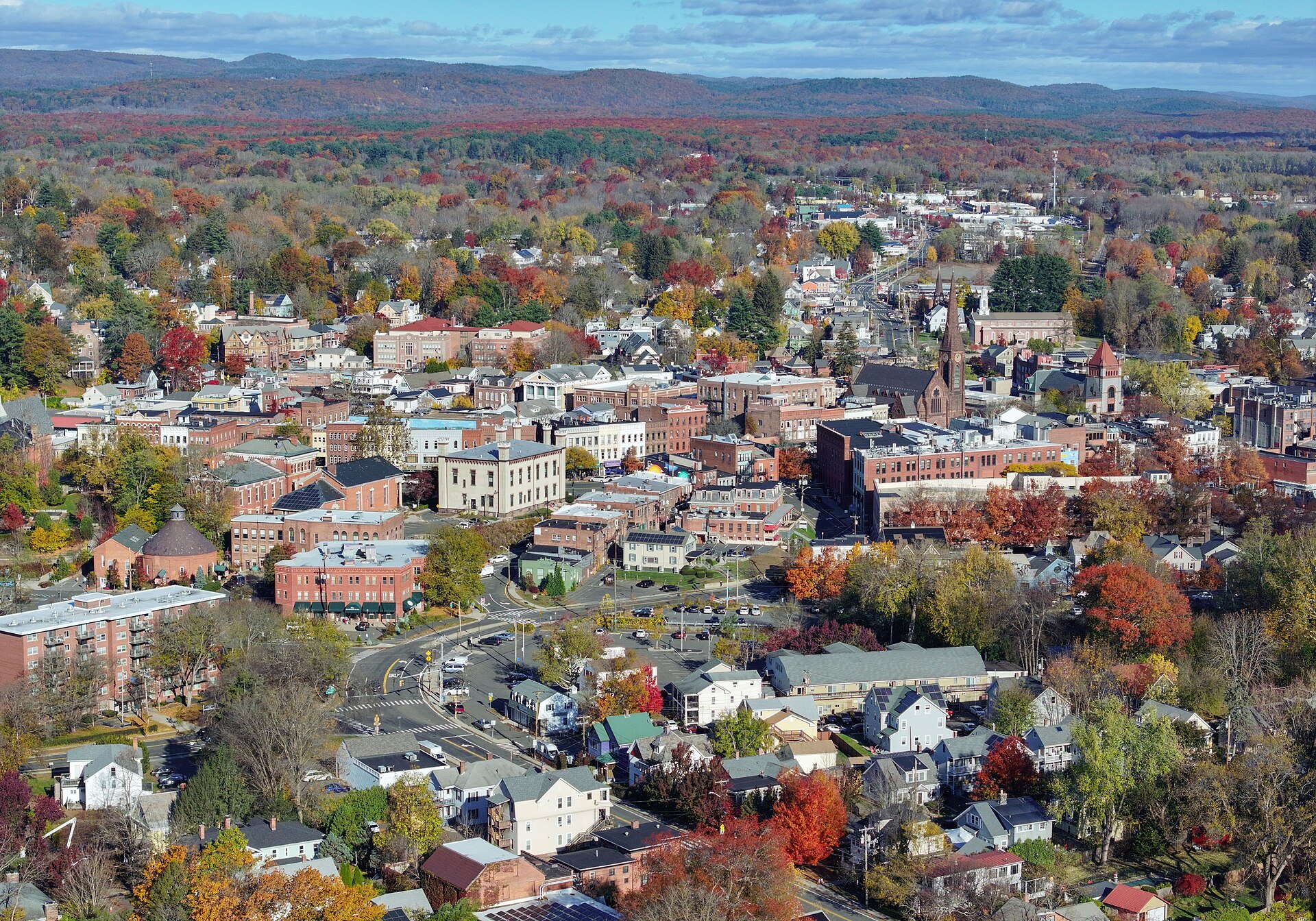
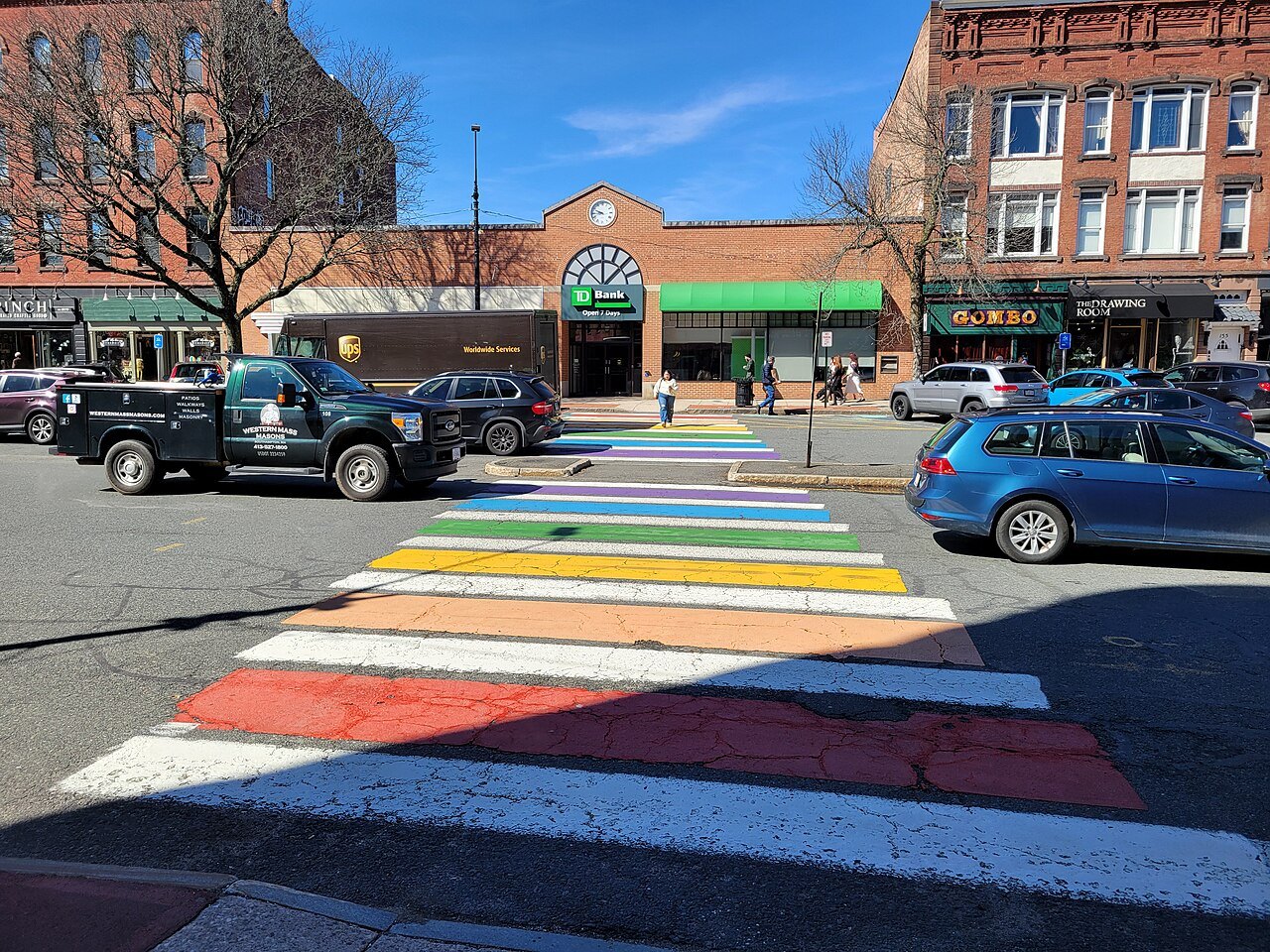
Northampton is the county seat of Hampshire County, on the west side of the Connecticut River in the Pioneer Valley of western Massachusetts. With its outer villages of Florence and Leeds it had 29,571 people at the 2020 census. It is known as an academic, artistic and musical hub, with a large liberal community, and it has long been a popular destination for gay and lesbian visitors and residents.
For a visitor it is the natural base for the middle of the state, a real town with a walkable downtown between Old Sturbridge Village to the east and the Berkshires to the west. Its nickname, the Paradise City, comes from the opera singer Jenny Lind, the Swedish Nightingale, who in 1851 called it the Paradise of America.
Nonotuck
The place was known as Norwottuck, or Nonotuck, the midst of the river, to its first inhabitants, the Pocumtuc. English settlers visited in the autumn of 1653 and came to stay in the spring of 1654, one of the early towns planted up the Connecticut River from the coast.
In 1734 the Congregational preacher and theologian Jonathan Edwards led a Christian revival in Northampton whose fame spread down the valley and across the Atlantic; it was followed in 1739 and 1740 by the wider Great Awakening, again with Edwards among its leaders.
Florence, silk and Sojourner Truth
In the nineteenth century a utopian community in the village of Florence supported itself by growing mulberry trees and making silk. Sojourner Truth, the formerly enslaved woman who became a national advocate for equality and justice, lived in the community until it broke up, and afterward in a house on Park Street until 1857.
The city also founded two notable schools: the Clarke School for the Deaf, now the Clarke Schools for Hearing and Speech, opened in 1867, and in Florence the Hill Institute, established in 1876 by Samuel L. Hill, which founded the first free kindergarten in the United States and still offers craft and industrial arts classes to adults and children.
Smith College and Coolidge
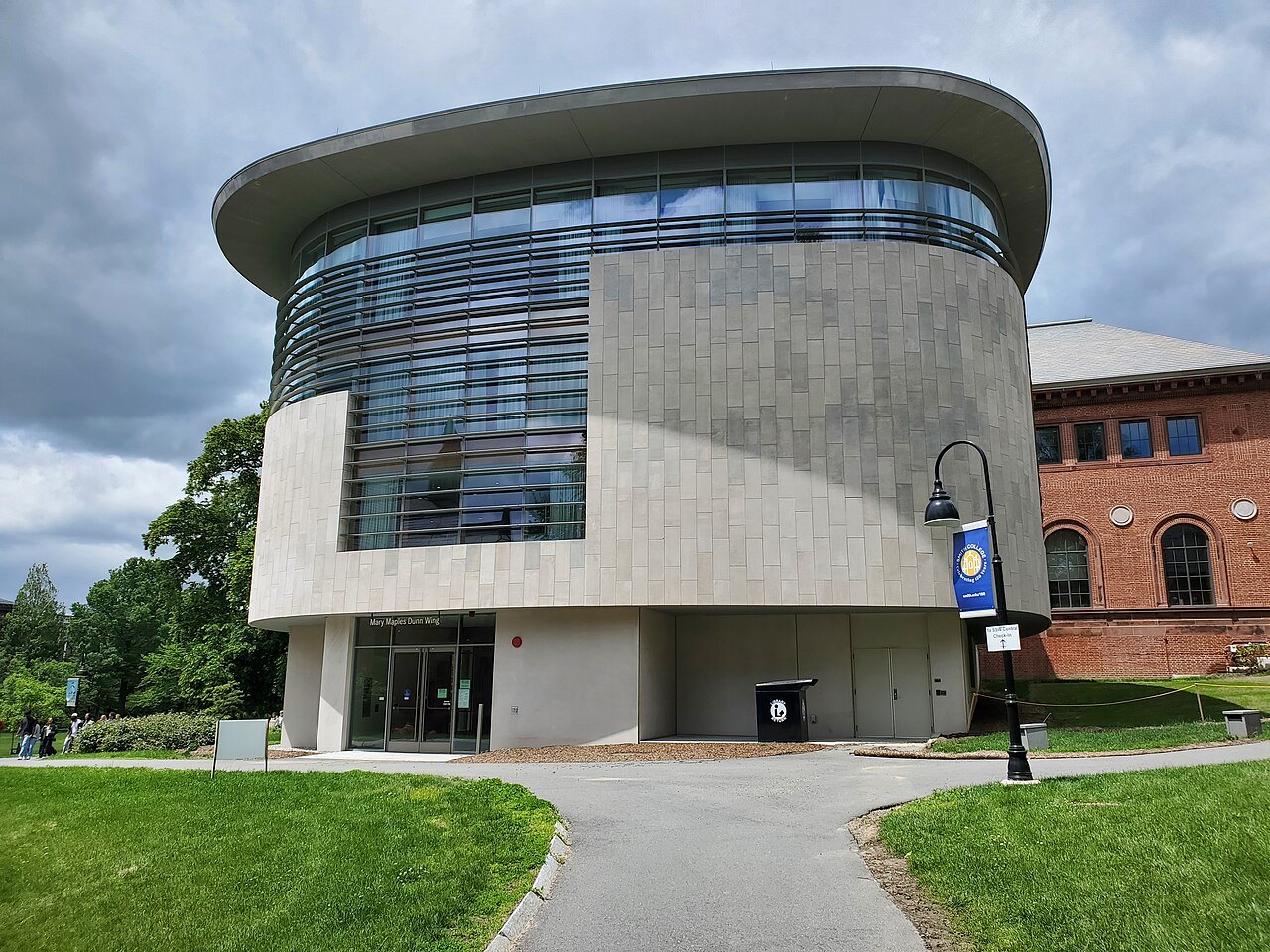
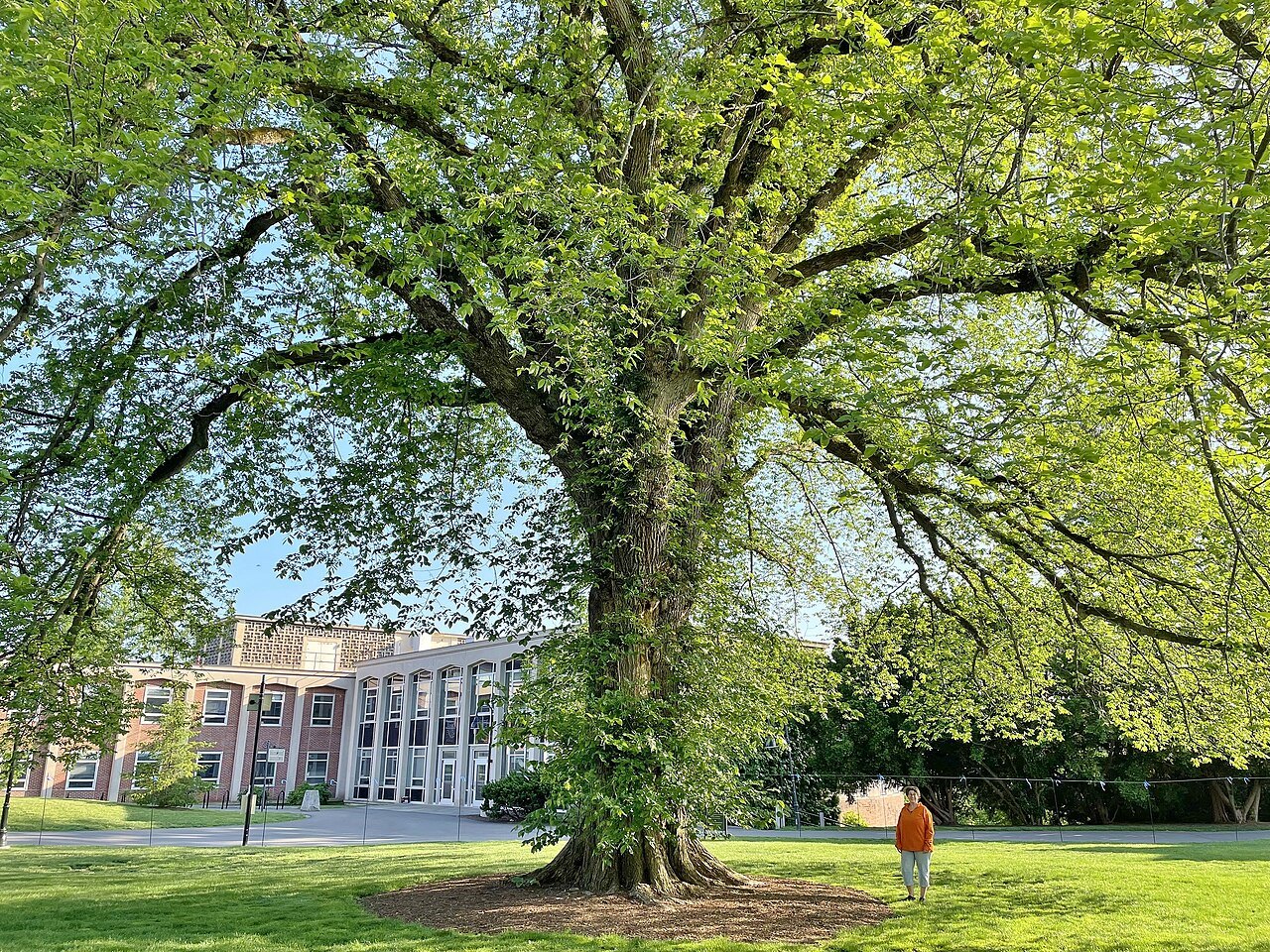
Northampton is home to Smith College, a women's college chartered in 1871 by a bequest of Sophia Smith and opened in 1875, one of the Seven Sisters and a member of the Five College Consortium with its neighbors in the valley. Its students give Northampton much of its college-town character, and since 2004 the campus has hosted Django in June, a week-long gypsy jazz music camp.
Among the city's past mayors was Calvin Coolidge, who held the office from 1910 to 1911 before he became governor and then President of the United States. Forbes Library, the public library built in 1894, houses the Calvin Coolidge Presidential Library and Museum on its second floor; its first director was the library scientist Charles Ammi Cutter, and it is one of the few libraries in the world still shelved by his Cutter Expansive Classification.
Theaters, music and fairs
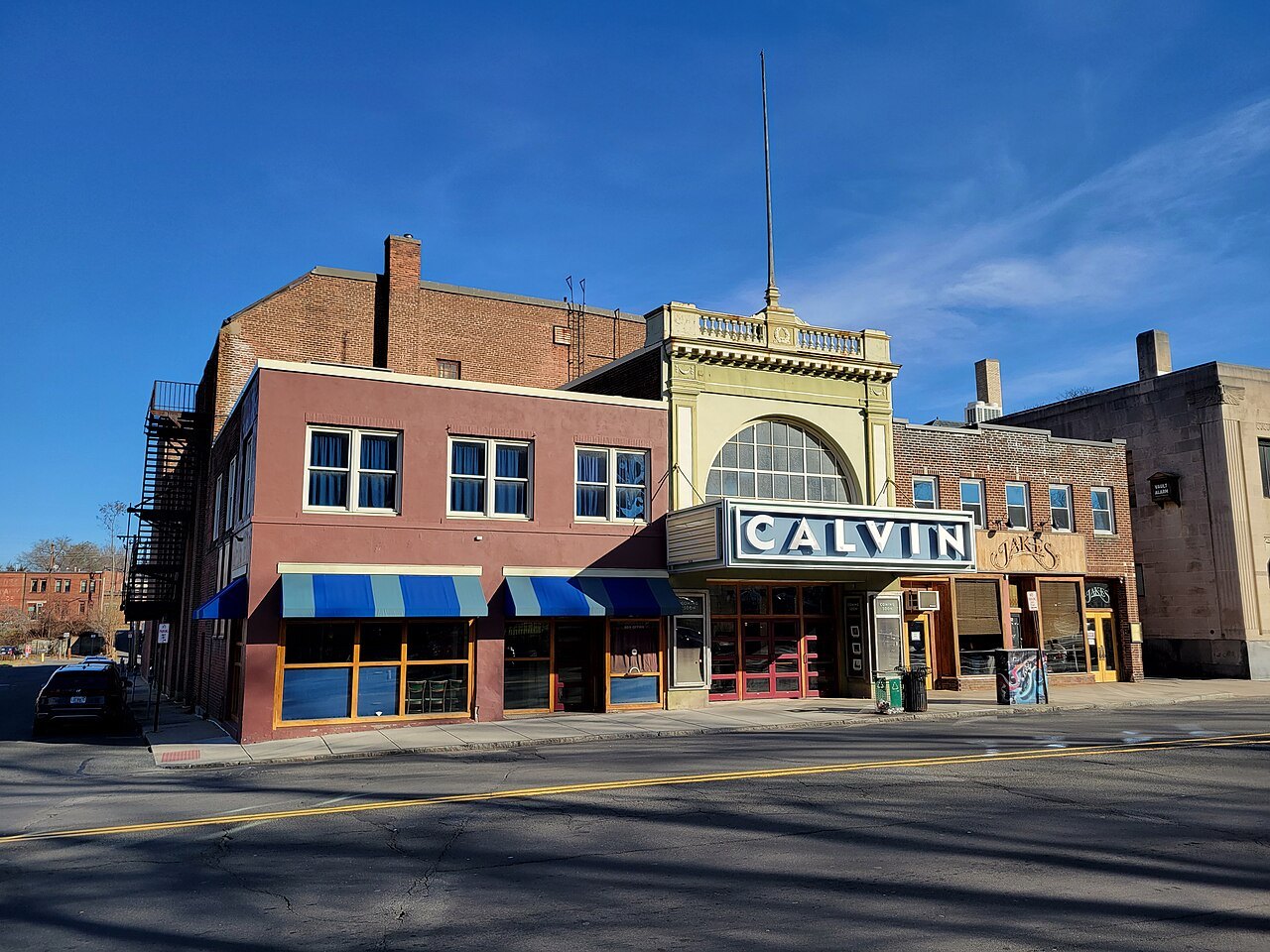
The city's resurgence since the late twentieth century has made it a cultural center with eclectic restaurants and a lively arts and music scene. The Academy of Music, built in 1890 by Edward H. R. Lyman, is the earliest known municipally owned theater in the United States; Boris Karloff played there, and Harry Houdini installed a trap door in the stage. It still serves as a music venue, cinema and performance space, and the Iron Horse Music Hall is among the town's many smaller stages.
Twice a year, on Memorial Day weekend and Columbus Day weekend, the Paradise City Arts Festival fills the Three County Fairgrounds with contemporary craft and fine art; the Three County Fair itself, incorporated in 1818, calls itself the longest consecutive running agricultural fair in the country. Four weekly farmers markets sell produce from local farms, and in May the students of the Northampton Community Music Center fill the streets for Springfest.
Streets and parks
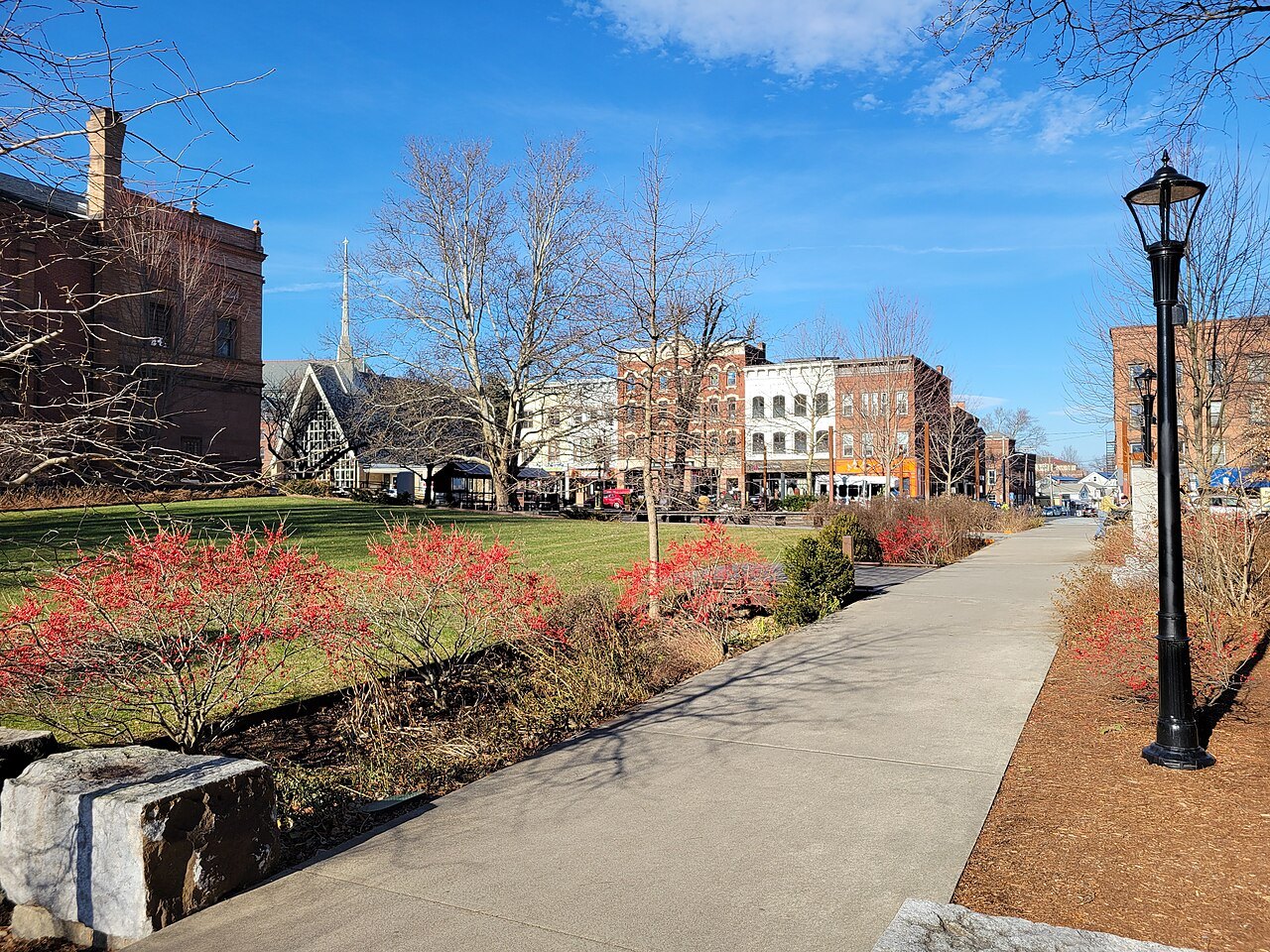
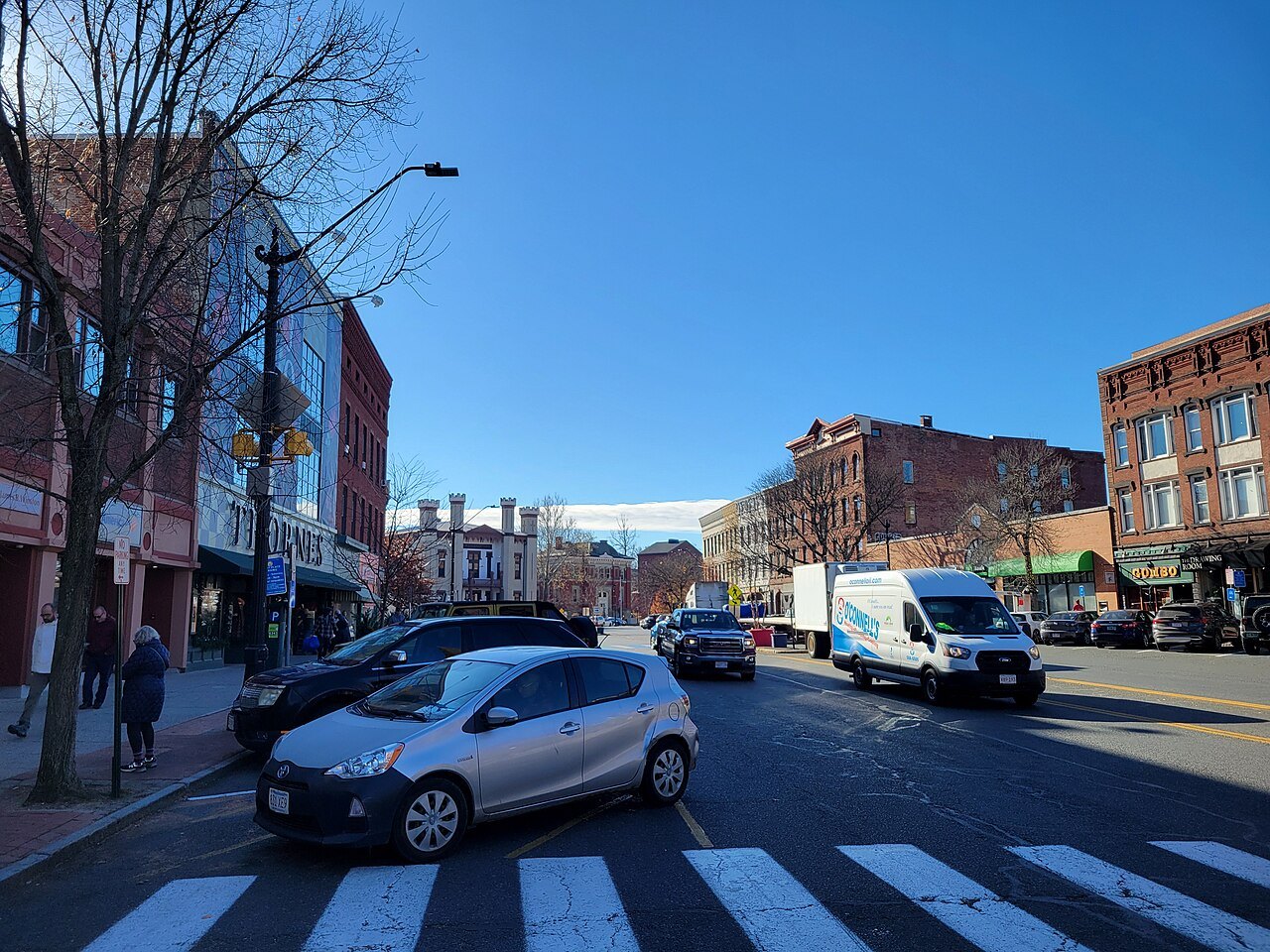
The Elm Street and Round Hill Historic District runs almost a mile west from State Street, with houses from eighteenth-century colonial to contemporary and an abundance of Queen Anne and Colonial Revival homes. Downtown, Thornes Marketplace gathers shops and eateries under one roof.
Look Park, founded in 1930, covers over 150 acres. Frank Newhall Look left the land to the city asking that it always be free to the public, so it costs nothing to come on foot or by bicycle and a day-use fee applies only to parking; Bob Dylan is among the musicians who have played its amphitheater.
The river and the Oxbow
The Connecticut River, New England's longest river at 406 miles from near the Canadian border to Long Island Sound, runs along the east side of the city, and within its limits lies the Oxbow, the great bend of the river fourteen miles north of Springfield at the foot of Mount Nonotuck. The art deco Calvin Coolidge Bridge carries the road across the river to Hadley and the college town of Amherst; as the only bridge that way, it makes for daily traffic in town.
Interstate 91 passes east of downtown along the river with four exits, and U.S. Route 5 with Routes 9 and 10 meet downtown.
Getting around
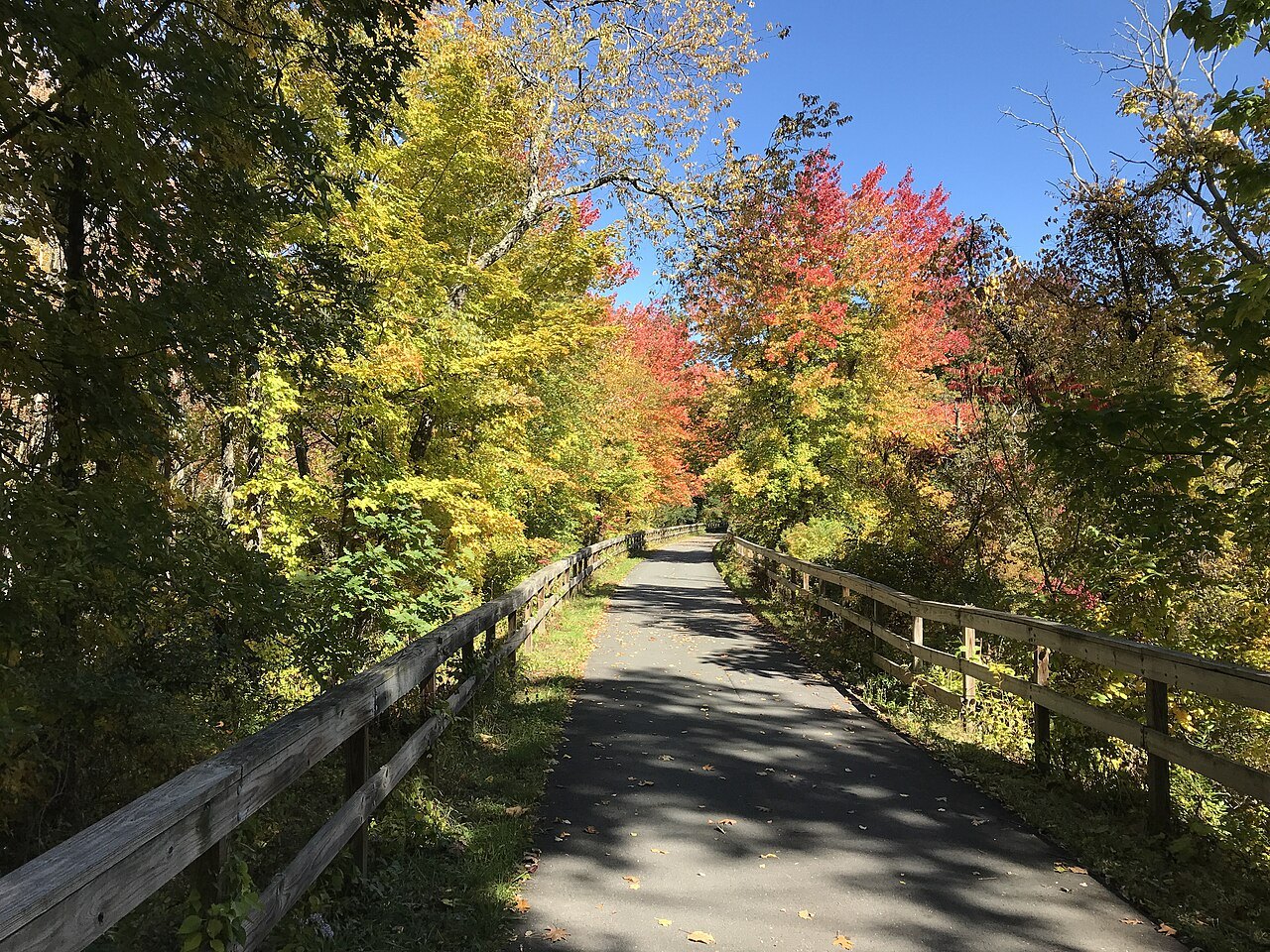
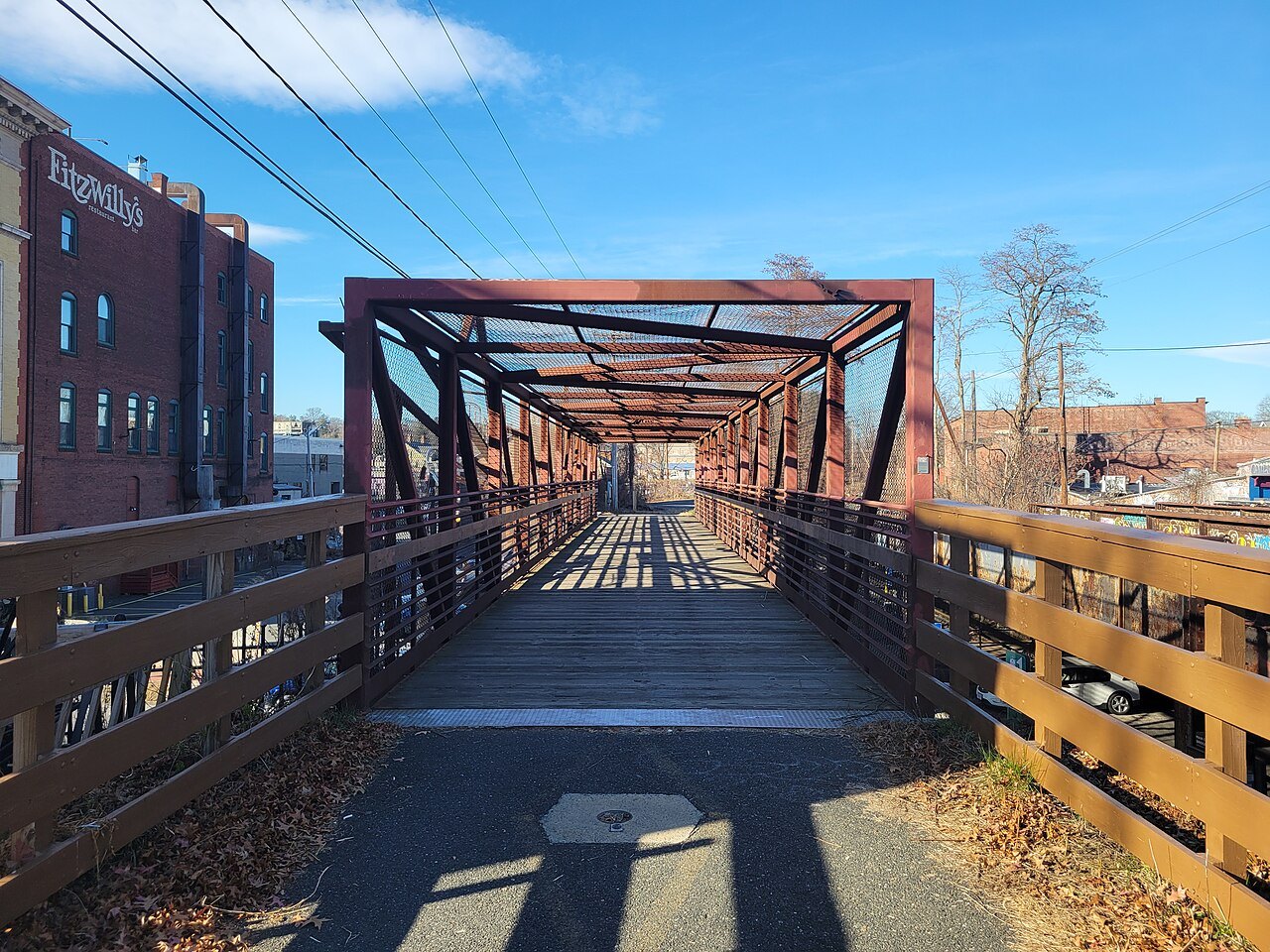
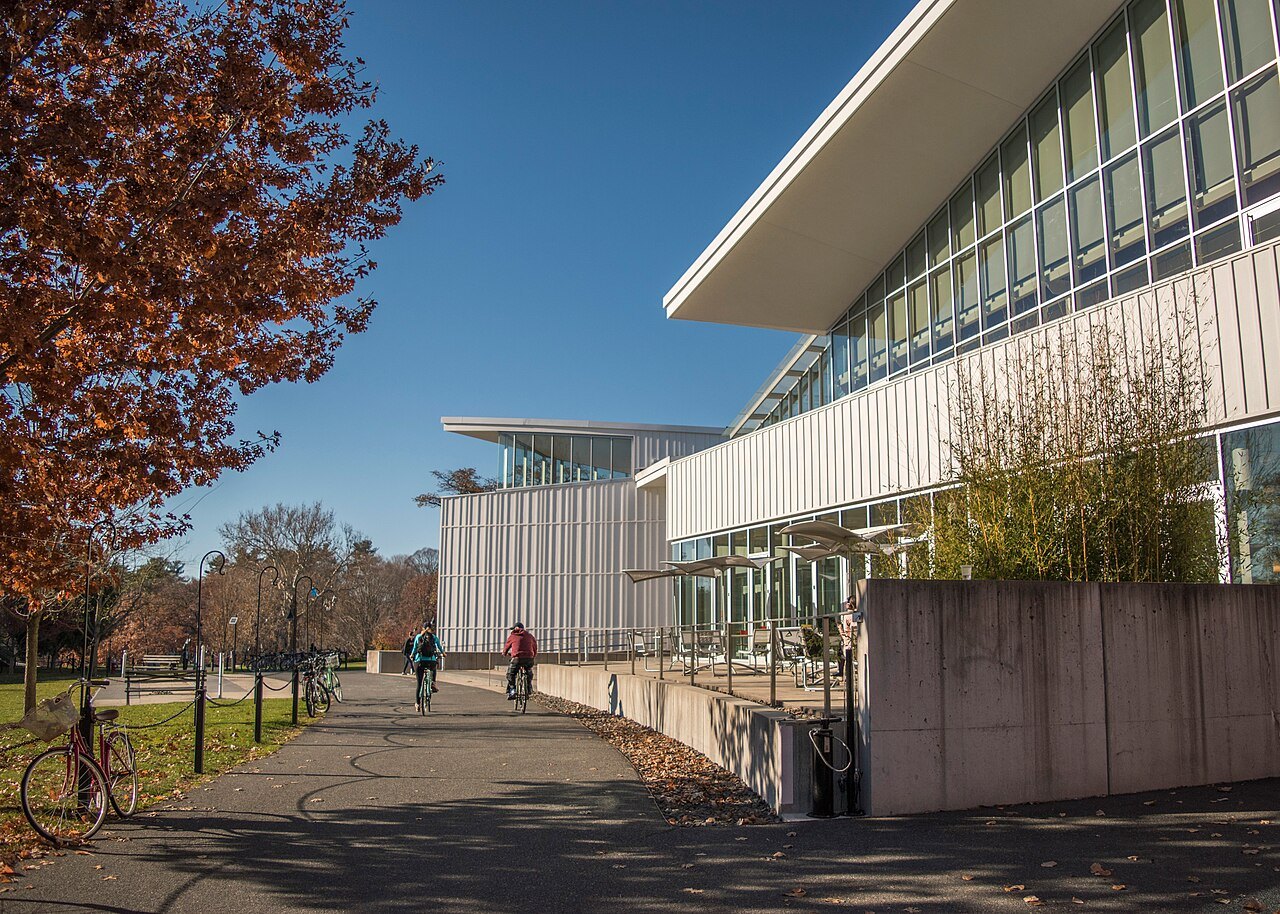
The city is the hub of a growing network of rail trails. The Norwottuck Rail Trail runs eighteen miles from Leeds, Florence and downtown through Hadley and Amherst into Belchertown; the Manhan Rail Trail runs south through Easthampton to Southampton; and to the west the Northampton Bikeway leads to Florence and Leeds through Look Park and on to Haydenville. Amtrak's Vermonter and Valley Flyer stop here on the old Connecticut River Line, where passenger service returned in 2014, and the Pioneer Valley Transit Authority runs the local buses.
A car is useful for the hills around the valley, but the town itself, from the Academy of Music to Smith and the river, is best seen on foot or by bicycle.
How to visit
Spend a day in town: the downtown streets, the Smith campus and Forbes Library, then an hour on the bikeway to Look Park. Stay a night or two to use Northampton as a base, driving west to the Mount in the Berkshires or east toward Sturbridge, and time it for an arts festival weekend if you can.
Where to go nextIII
Nearby
- Nearby · Central · SturbridgeOld Sturbridge VillageNew England's largest living museum: a country town of the 1790s to the 1830s on more than two hundred acres, with 59 antique buildings brought from across the region, three water-powered mills and a working farm.Read the page →
- Nearby · The Berkshires · PittsfieldHancock Shaker VillageA Shaker community in the Berkshire hills from 1790 to 1960, the third of nineteen, now an open-air museum of twenty historic buildings, among them the Round Stone Barn of 1826 and the Brick Dwelling of 1830.Read the page →
- Nearby · The Berkshires · LenoxThe Mount, Edith Wharton's HouseThe country house in Lenox that Edith Wharton designed for herself in 1902 and called her first real home, white stucco and dark green shutters above a terrace and restored gardens, where she wrote The House of Mirth.Read the page →