Home · Landmarks · Old Sturbridge Village
What you are looking atI
Old Sturbridge Village
Central · Sturbridge
- The Center VillageThe meetinghouse, the store, the bank, the law office and the houses round the green.
- The CountrysideThe Freeman farm, the blacksmith, the cooper, the potter and the district school.
- The Mill NeighborhoodA gristmill, a sawmill and a carding mill driven by the millpond dug in 1795.
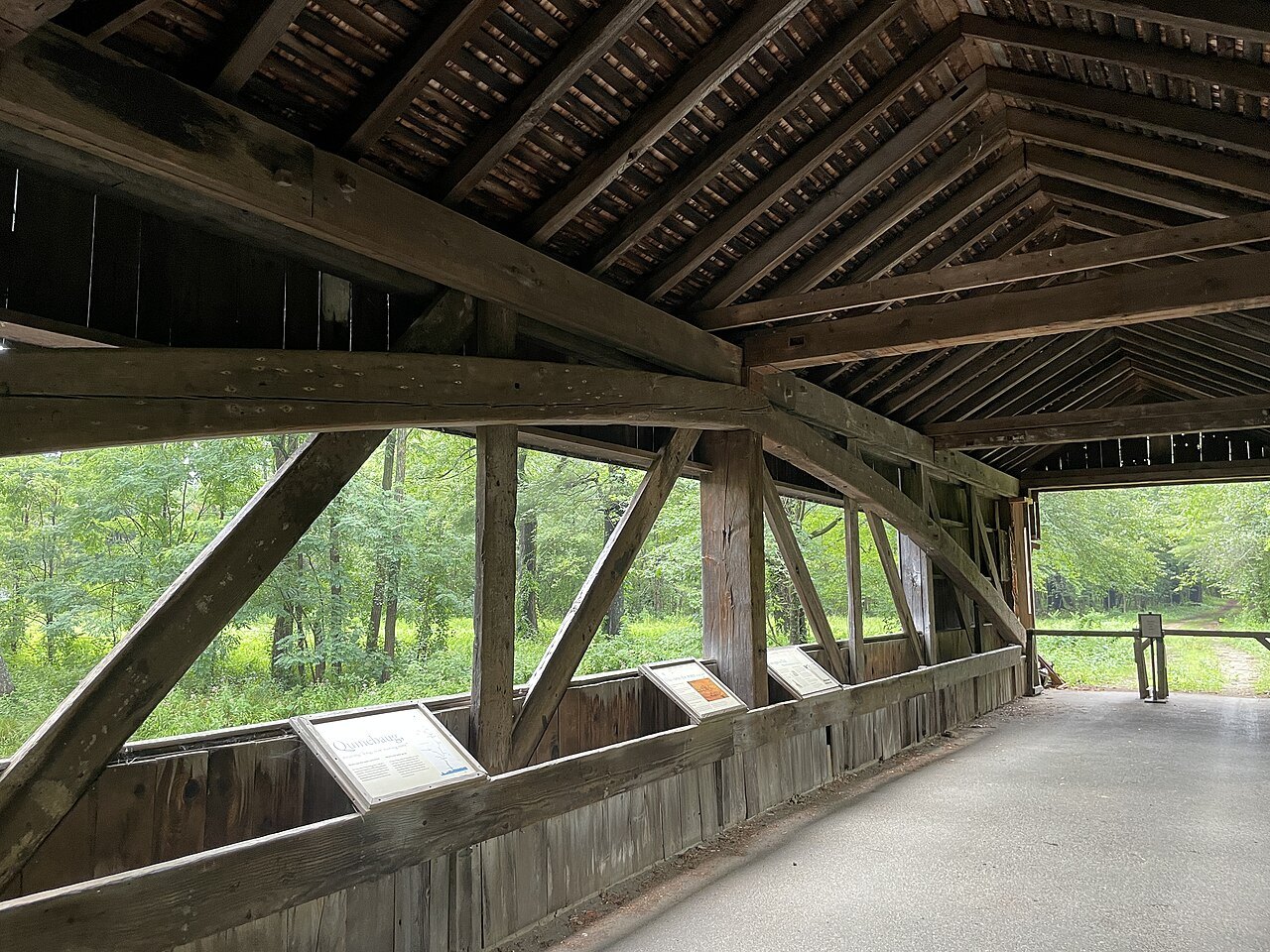
- The covered bridgeA wooden bridge under its roof, swept off its foundation in the flood of 1955 and set back.
- The interpretersCostumed staff at work in the shops and fields, explaining what they do.
- The collectionsGalleries of early American firearms, glass and lighting devices.
The place in fullII
Reading the place
Why it matters
Old Sturbridge Village is a living museum in Sturbridge that recreates life in rural New England from the 1790s to the 1830s. It covers more than two hundred acres, the largest living museum in New England, with 59 antique buildings, three water-powered mills and a working farm, and costumed interpreters who demonstrate the crafts, trades and farm work of the time.
It sits in the middle of the state, and it is the easiest way to see the ordinary New England town that lay behind the famous places on the coast: not a battlefield or a harbor, but a green, a meetinghouse, a store, a mill and the farms around them.
A lottery, a millpond and a family of collectors
In the early nineteenth century the land was a farm owned by David Wight, with a sawmill, a gristmill and a millpond. The pond was dug in 1795, the year Wight's son, on business in Boston, bought tickets in the Harvard Lottery, a fund-raising scheme for the college, and won; the money paid off the farm's mortgage. The same millpond still powers the village's mills.
The museum grew from the collections of the Wells family of Southbridge, whose business became the American Optical Company. From 1926 A. B. Wells collected antiques, his brother Cheney clocks and his brother Channing fine furniture, and by the early 1930s A. B. had more than forty-five rooms full of them. The family formed a museum in 1935, and in 1936 A. B.'s son George proposed a working village with shops and water power rather than a small cluster of buildings; within a week the trustees bought the Wight farm and hired Malcolm Watkins as the first curator of what they at first called Quinnebaug Village.
Opening in 1946
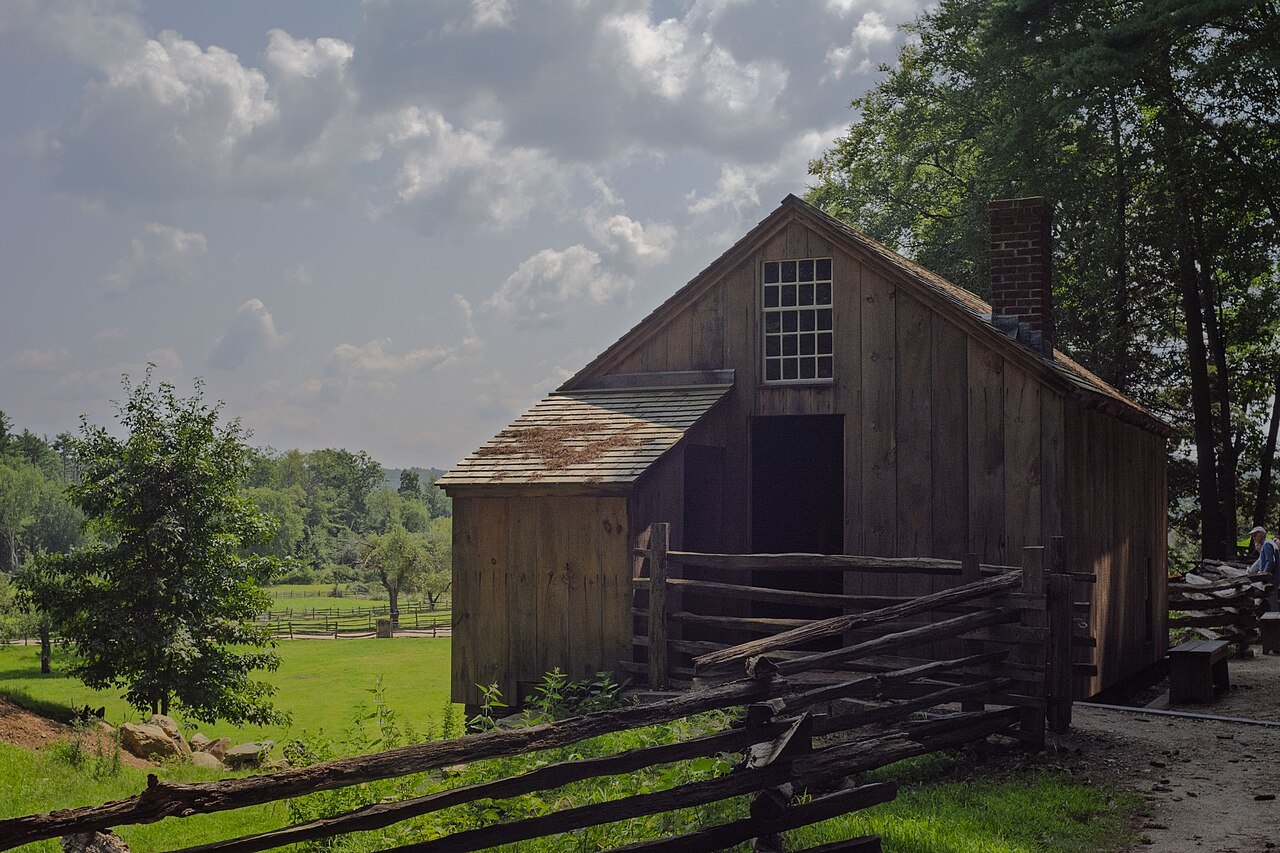
After a pause for the Second World War, George's wife Ruth became acting director, and the village opened under the name Old Sturbridge Village on June 8, 1946. Attendance grew mostly by word of mouth, and in 1950 The Saturday Evening Post featured it as the town that wants to be out of date. By 1955 it had brought in the meetinghouse from Fiskdale, the Salem Towne House from Charlton, and the Fenno House, the Friends Meetinghouse, the Pliny Freeman House, the printing office and the district school.
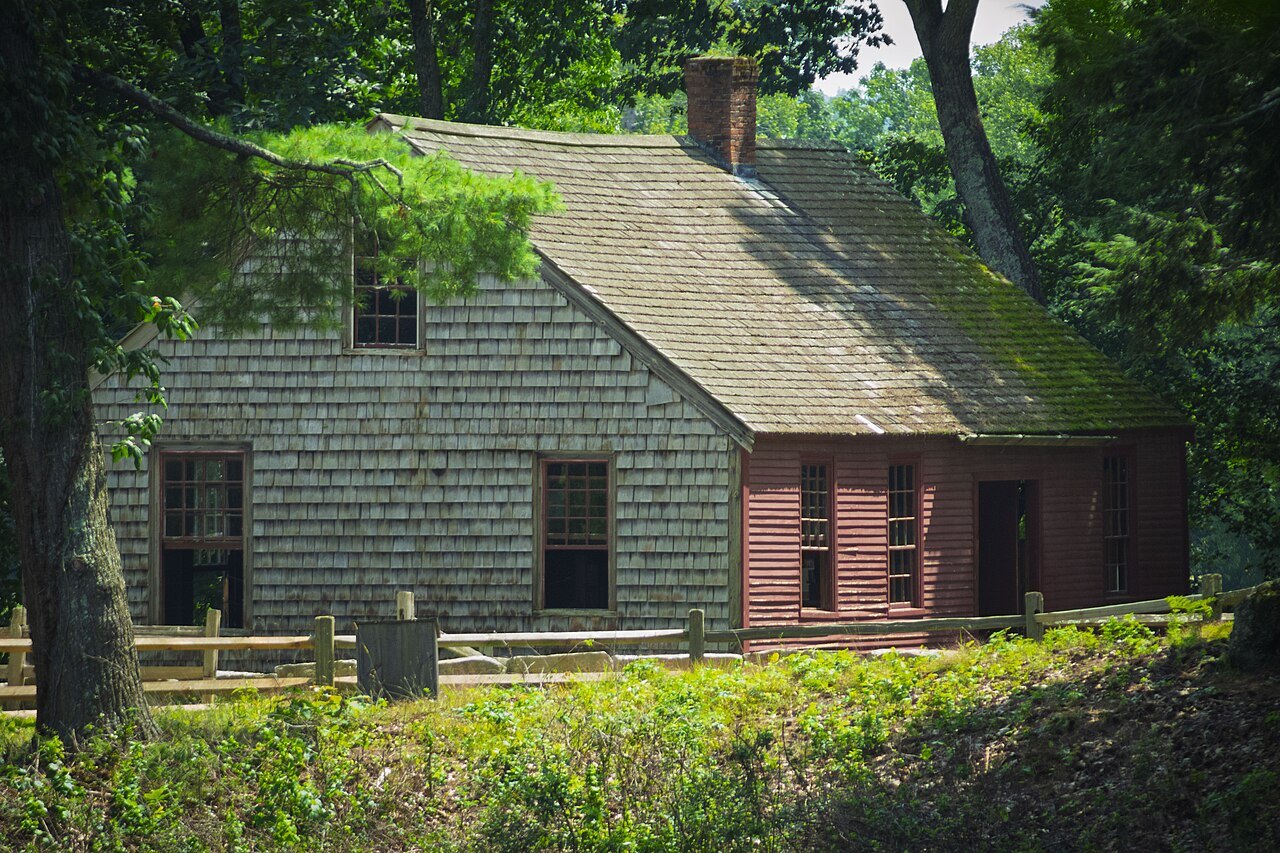
On August 18, 1955, the rains of Hurricane Diane broke dams upstream and flooded the village, stranding fifteen staff, who were supplied by helicopter for three days. The Freeman farmhouse was flooded and the covered bridge swept off its foundation, yet the village reopened in nine days.
The Center Village
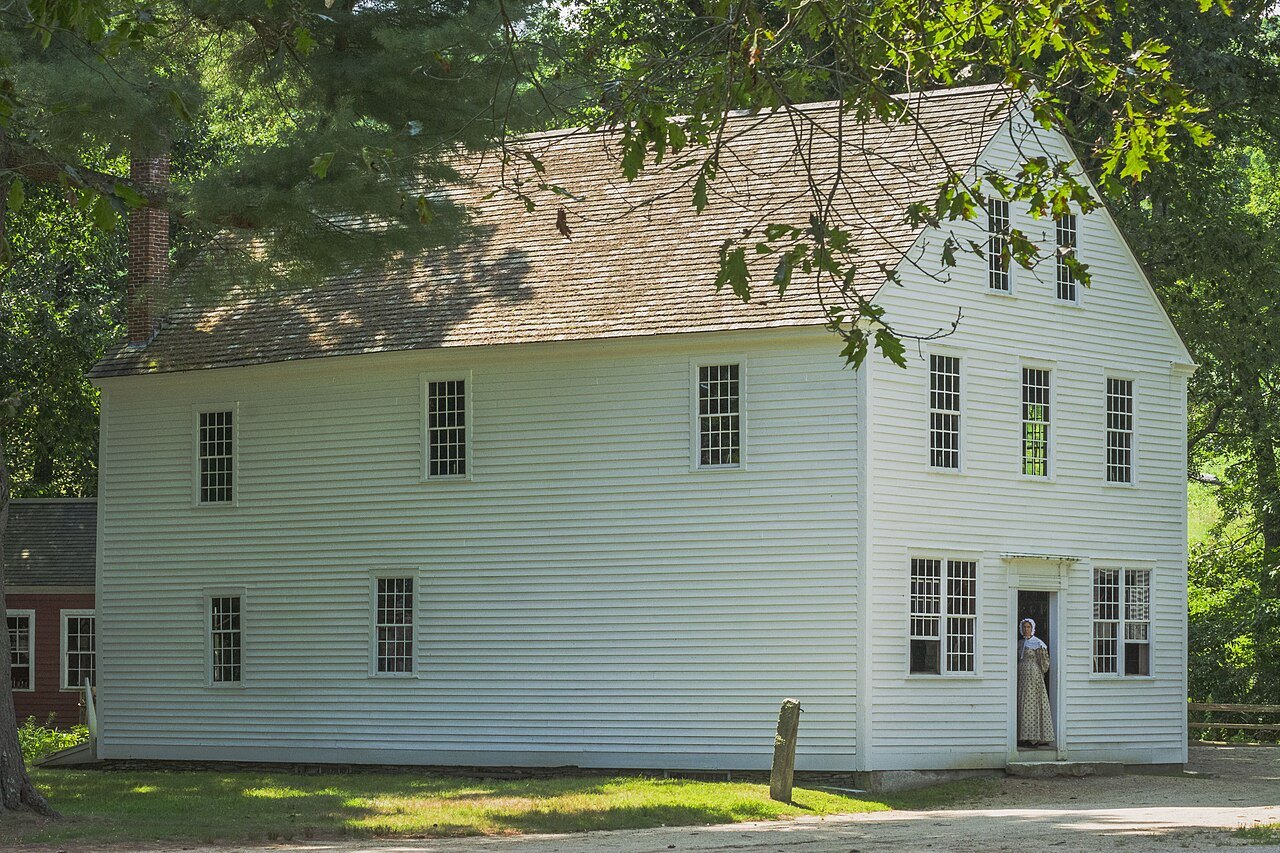
The village has more than forty main structures, most of them restored buildings bought and moved from around New England, some careful reconstructions, and it is laid out in three parts. The Center Village represents the center of a town, with the green as its focal point. Around it stand the Center Meetinghouse, where town meetings, elections and lectures were held as well as services; the Friends Meetinghouse of the Quakers; the Salem Towne House of a prosperous farmer; the parsonage; a law office; a bank; the Asa Knight country store; a tin shop and a printing office.
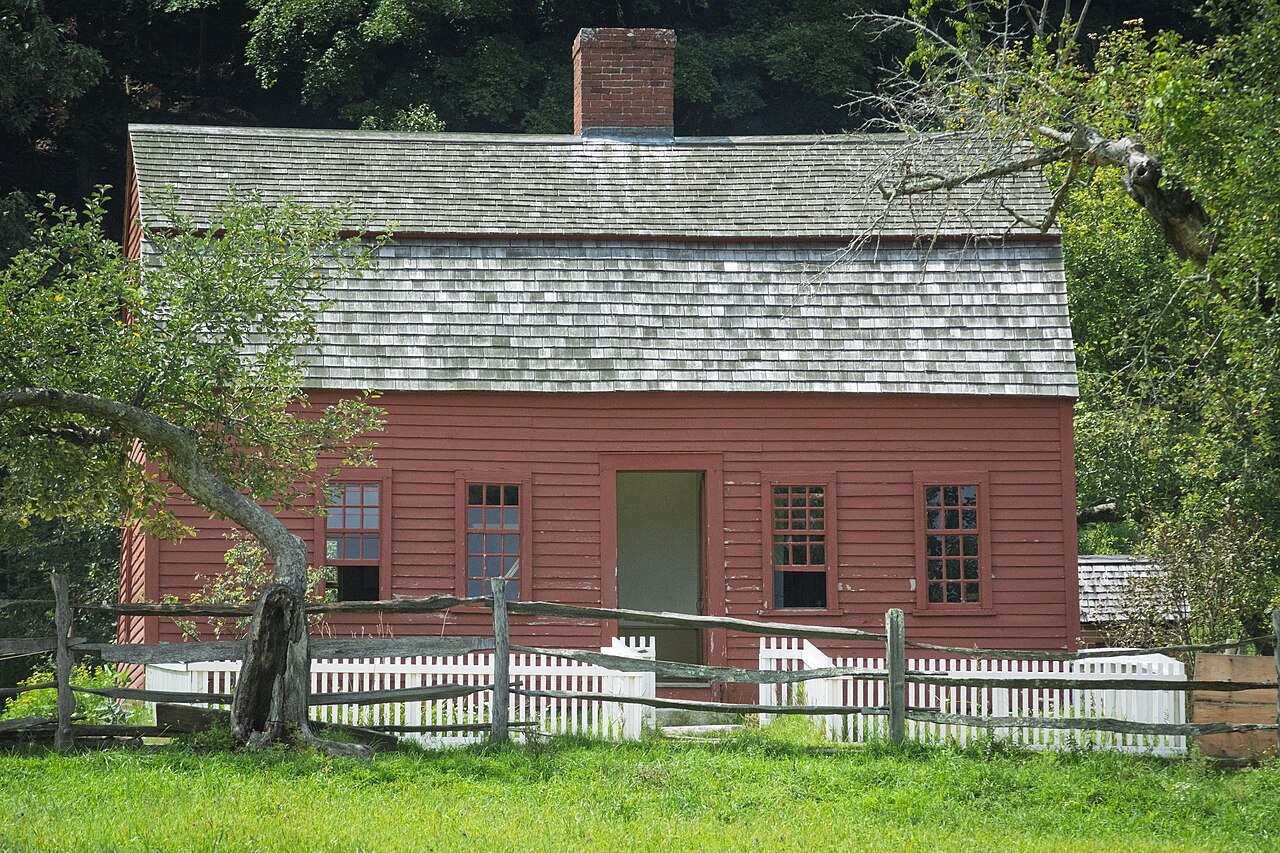
Smaller buildings fill in the picture: the Fenno House, with exhibits on home textile making; the Fitch House, on children and family life; a small house built on site in the manner of a poorer family's home; the Bullard Tavern; a shoe shop of the kind called a ten-footer; a cider mill turned by a horse; and the town pound for stray animals. A stagecoach makes trips through the Center Village.
The Countryside and the mills
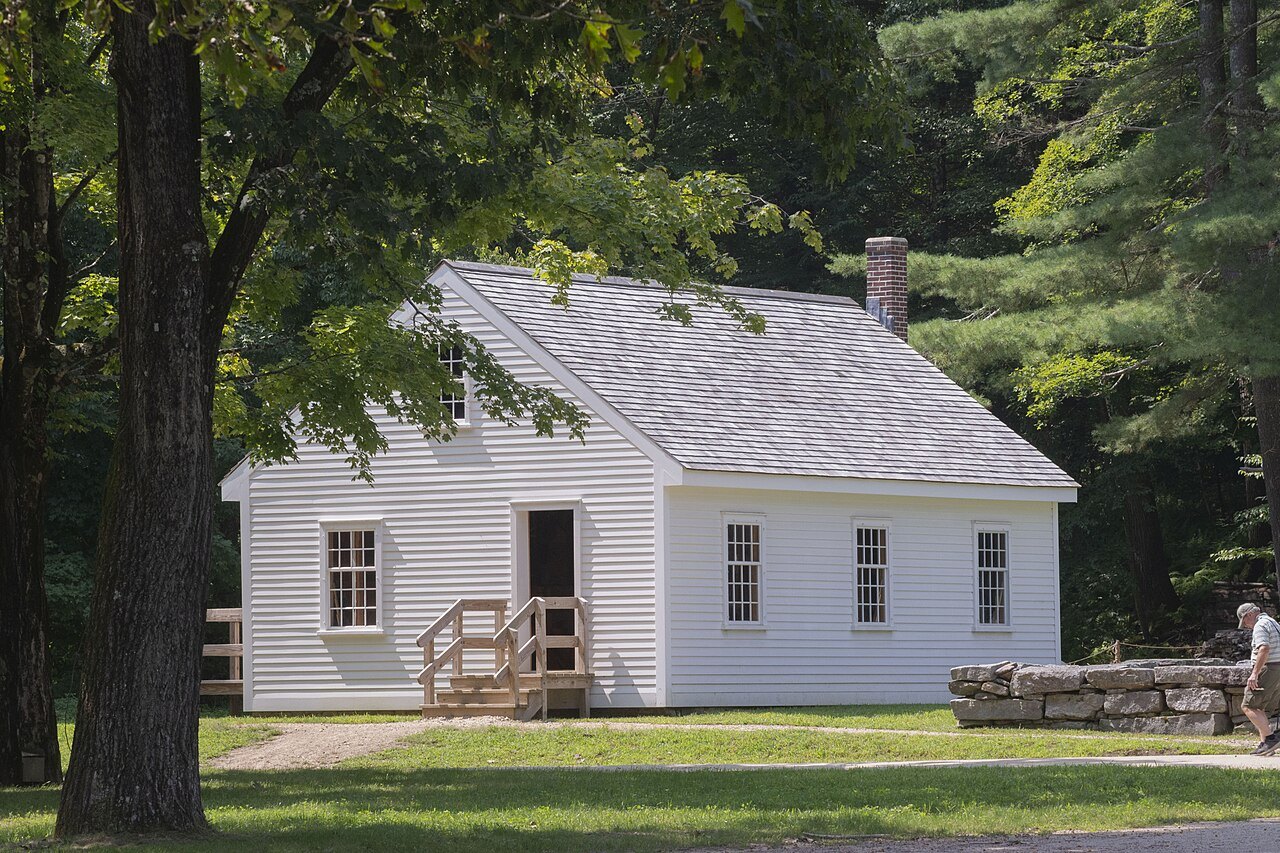
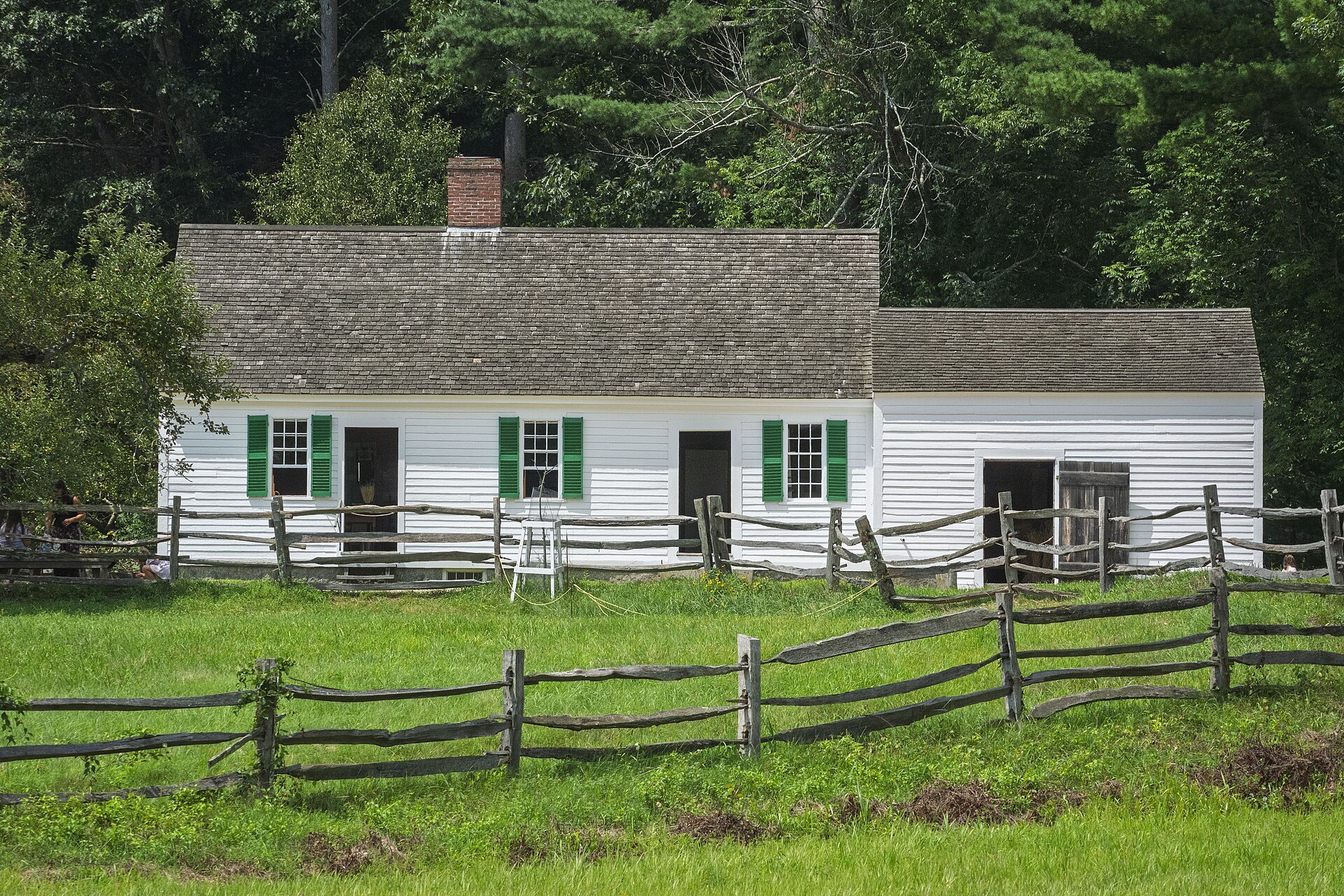
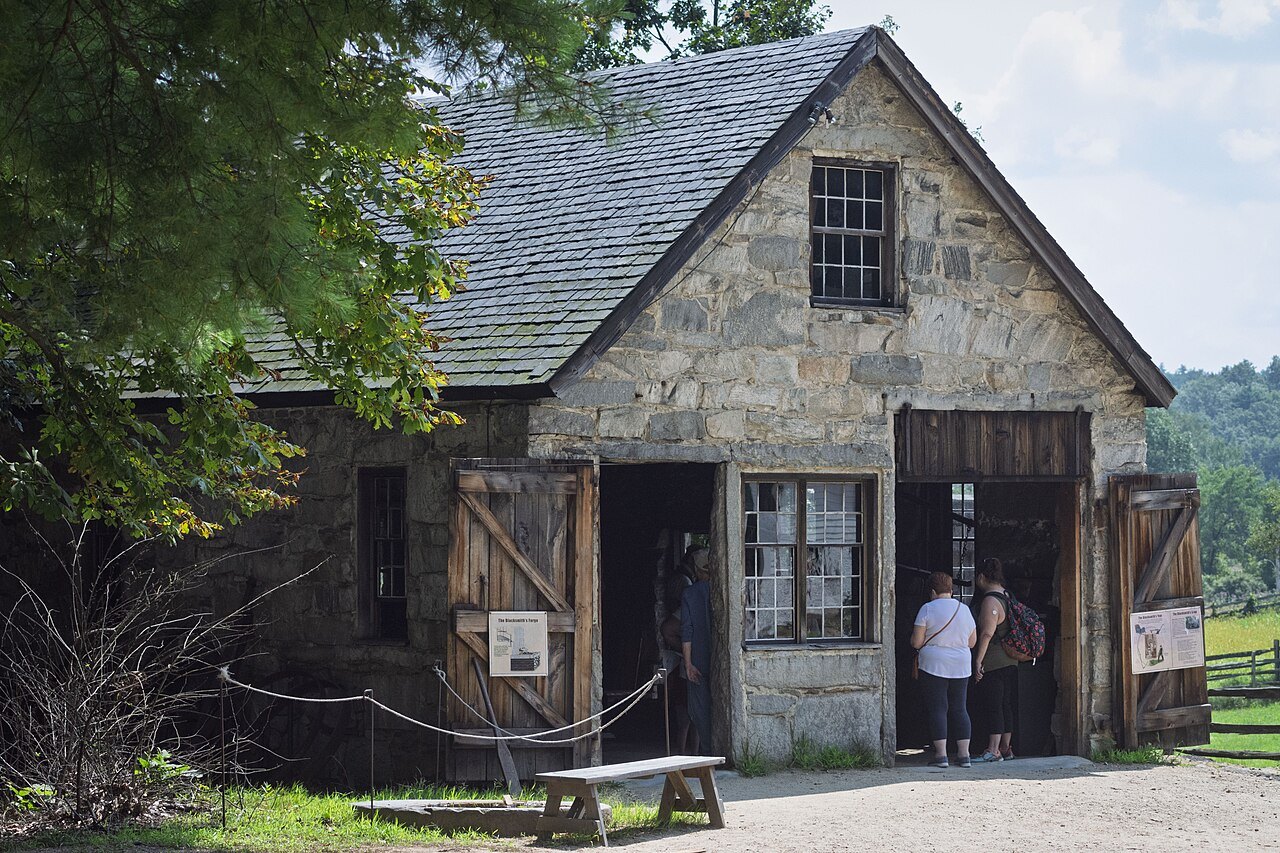
The Countryside is the outlying farms and shops. The Freeman farmhouse stands on a farm of about seventy acres with its barn, outbuildings and fields, and nearby are the blacksmith shop, where tools were made and mended and horses and oxen shod, with the blacksmith's Bixby House; the cooper shop, for barrels and pails; the pottery shop, making everyday wares from local clay; and the one-room district school. A covered bridge crosses the river.
The Mill Neighborhood depends on the millpond: a gristmill turning a millstone of three thousand pounds, a working replica of an up-and-down sawmill on a reaction waterwheel, and a carding mill that prepared wool for spinning. Separate galleries show the village's collections of early American firearms, glass and lighting, and an herb garden grows plants for cooking, medicine and dyeing.
The collections
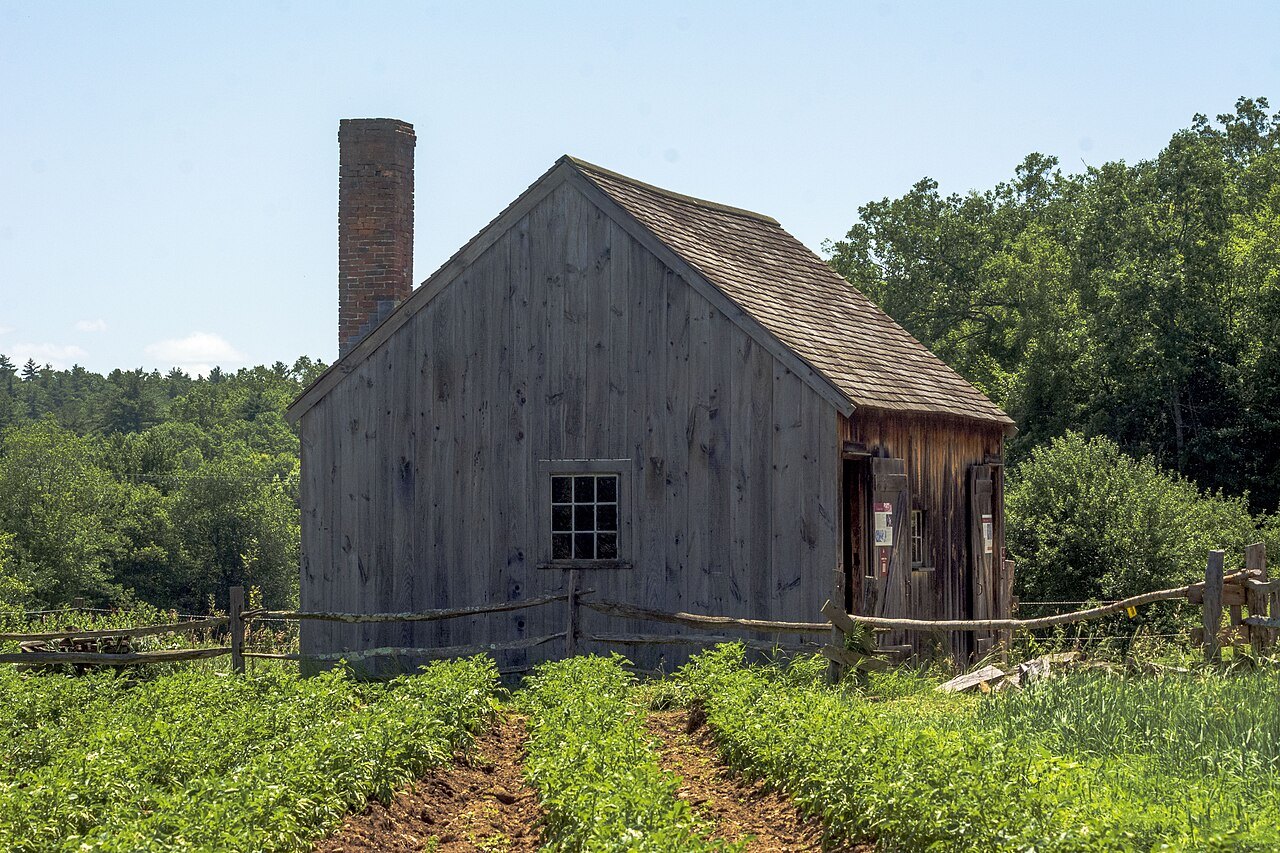
Behind the working buildings the village keeps the collections the Wells family began. The firearms galleries run from colonial America to the years after the Civil War. The glass collection is shown in three kinds, blown, molded and pressed. The lighting collection traces how New England homes were lit, from ancient oil lamps and candles through whale oil and camphene to the argand lamp. They make a useful quiet hour on a wet day, and they show the objects the interpreters' houses would have held.
How to visit
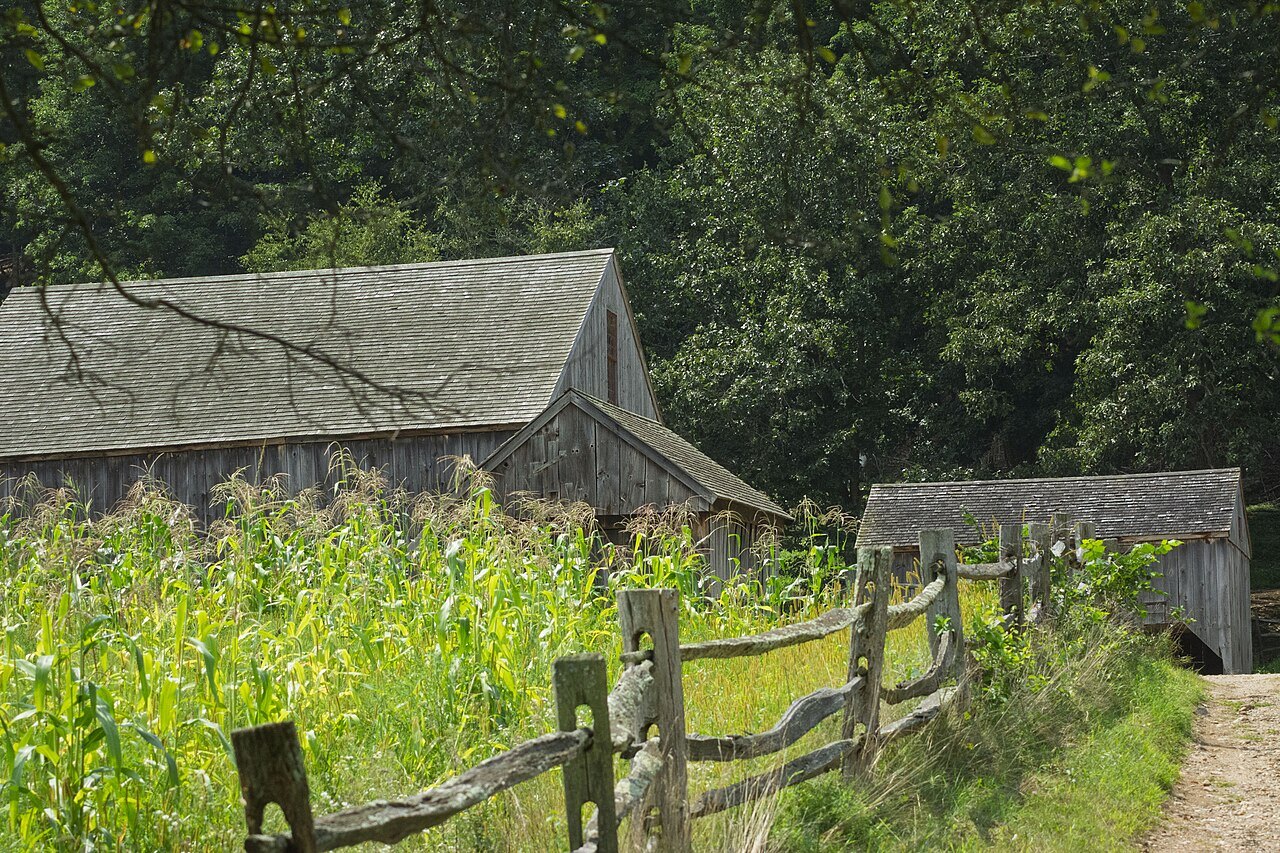
Give the village most of a day; the interpreters in each house and shop explain what they are doing, and the walk from the green out to the farm and the mills is long enough to fill the afternoon. The village keeps its own calendar of seasonal events, among them a naturalization ceremony often held on the Fourth of July, and sets its own tickets and hours; check its site before going. Film crews have used it as a ready-made period town, for pictures from Hawaii in 1966 to Glory in 1989. In 2018, 152 new citizens were sworn in at its Fourth of July ceremony. It pairs with a drive west along it toward the Connecticut River valley.
Where to go nextIII
Nearby
- Nearby · Greater Boston · ConcordWalden PondThe glacial pond in the woods south of Concord where Henry David Thoreau lived for two years from 1845 and wrote the book that made it famous, now a state reservation for walking and swimming.Read the page →
- Nearby · Pioneer ValleyNorthamptonThe county seat of Hampshire County on the west bank of the Connecticut River: a college town around Smith College, founded in 1871, with a busy arts and music scene, a history that runs from Jonathan Edwards to Calvin Coolidge, and rail trails out into the valley.Read the page →
- Nearby · The Berkshires · PittsfieldHancock Shaker VillageA Shaker community in the Berkshire hills from 1790 to 1960, the third of nineteen, now an open-air museum of twenty historic buildings, among them the Round Stone Barn of 1826 and the Brick Dwelling of 1830.Read the page →