Home · Landmarks · Lexington, Concord and the Old North Bridge
What you are looking atI
Lexington, Concord and the Old North Bridge
Greater Boston · Concord
- Lexington Battle GreenThe town common where the first shots of the day were fired at dawn.
- The Battle Road TrailFive miles between Lexington and Concord through a restored colonial landscape.
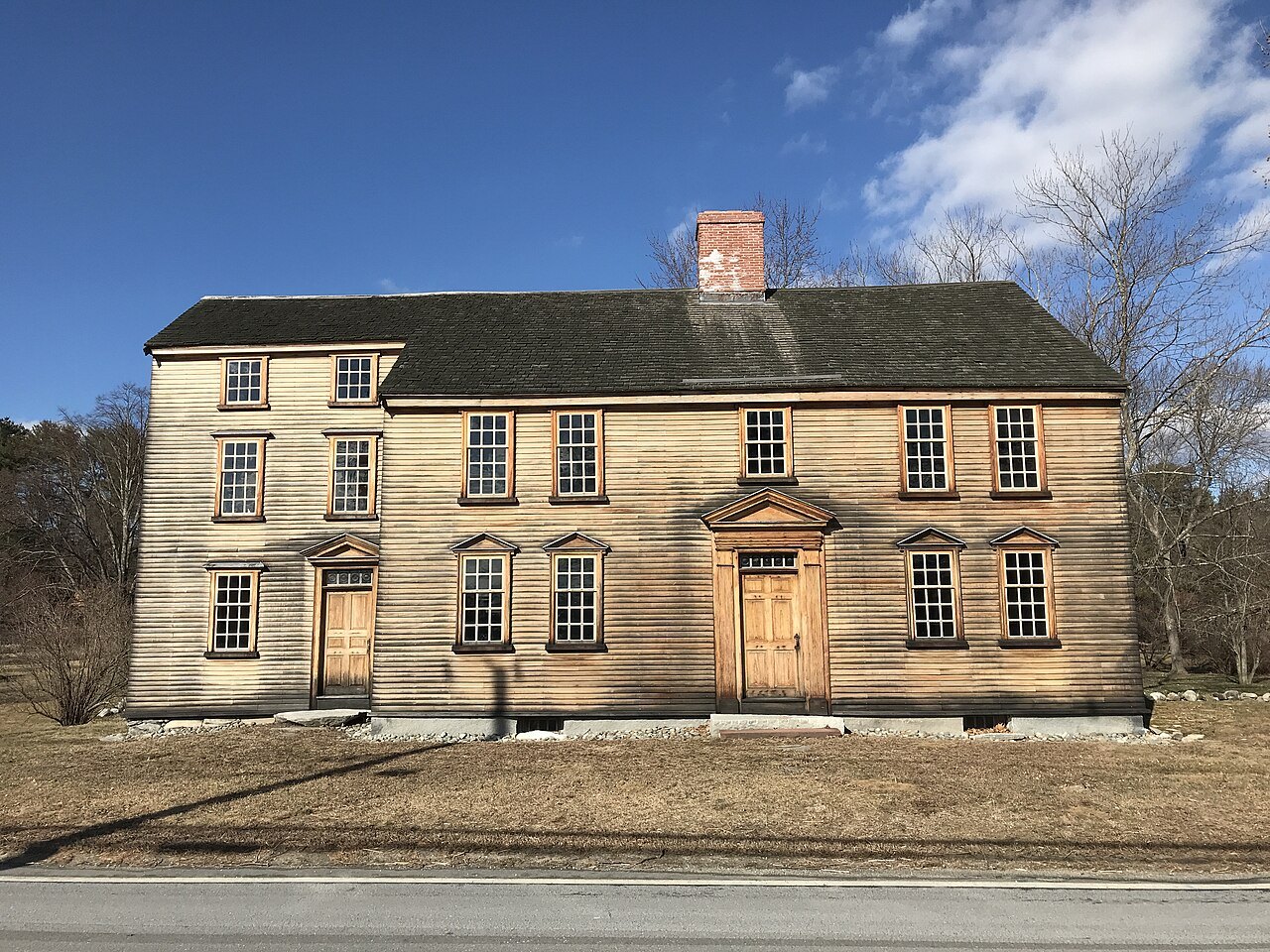
- Hartwell TavernAn eighteenth-century inn and house on the road, with living history programs in season.
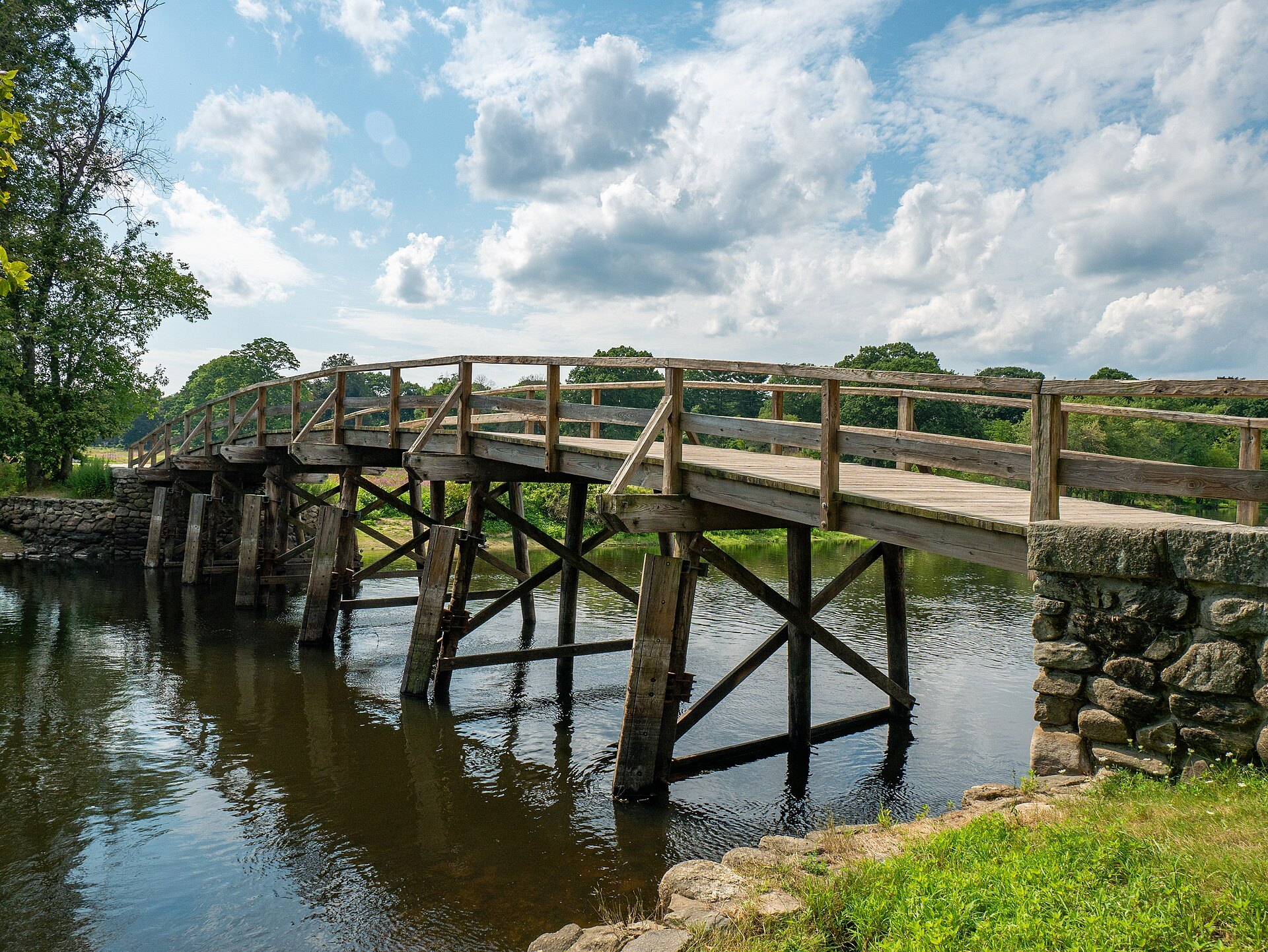
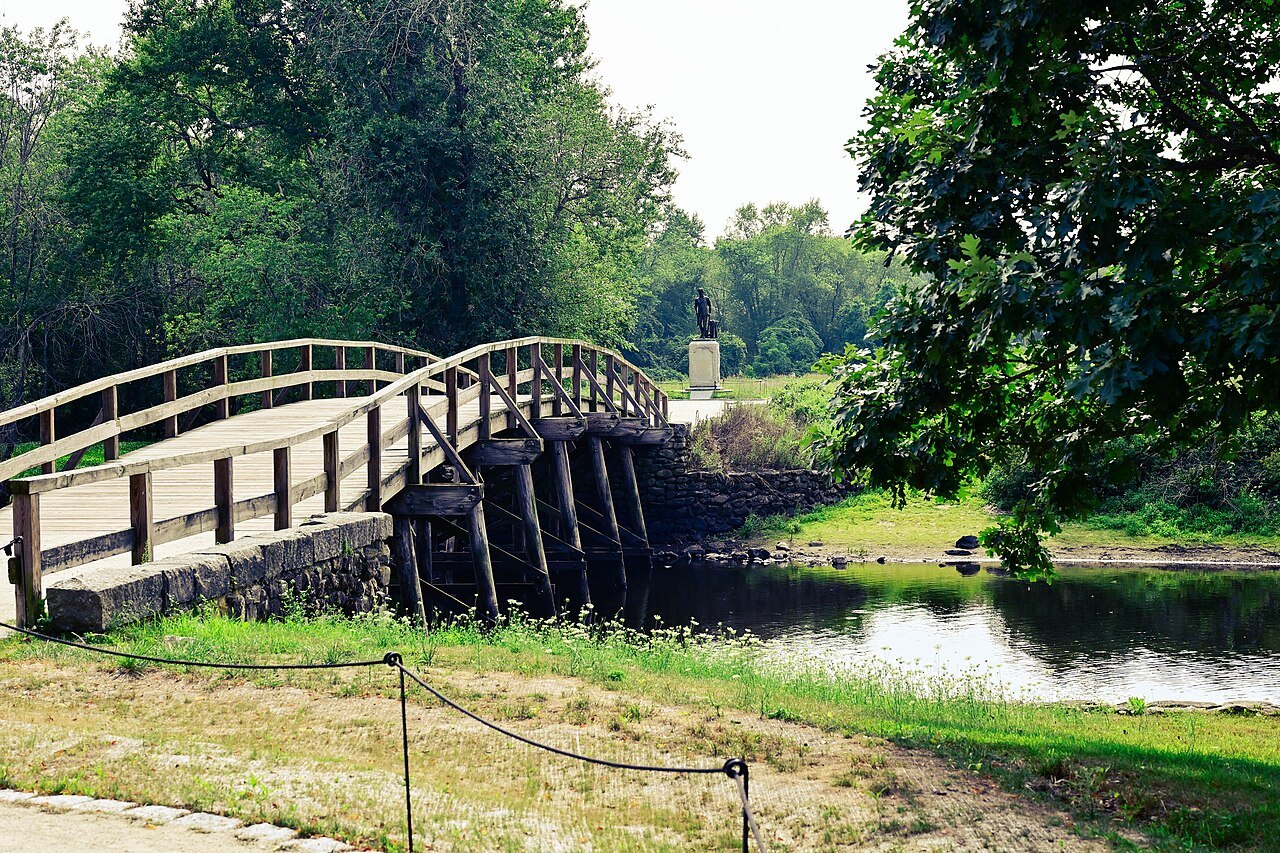
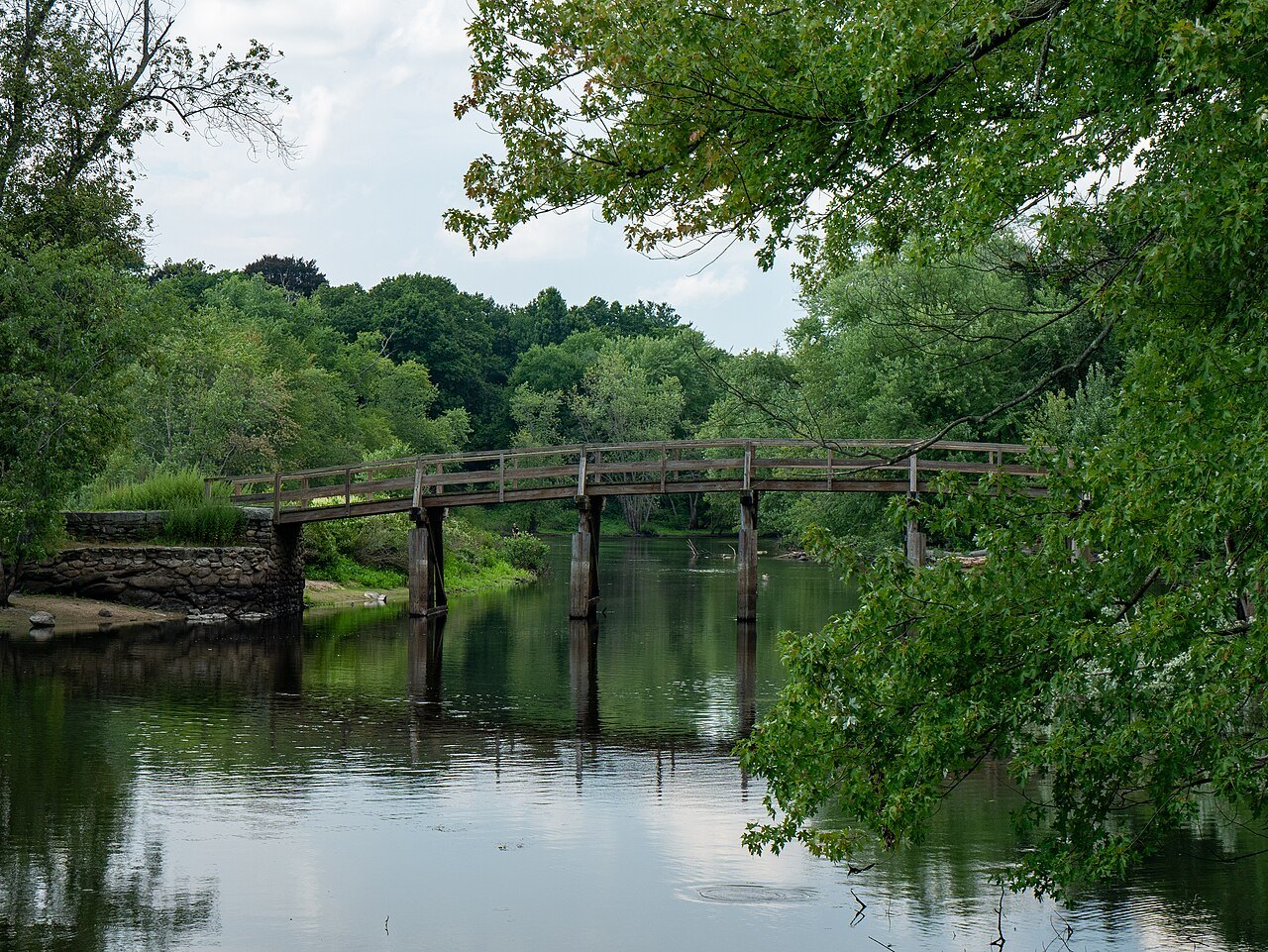
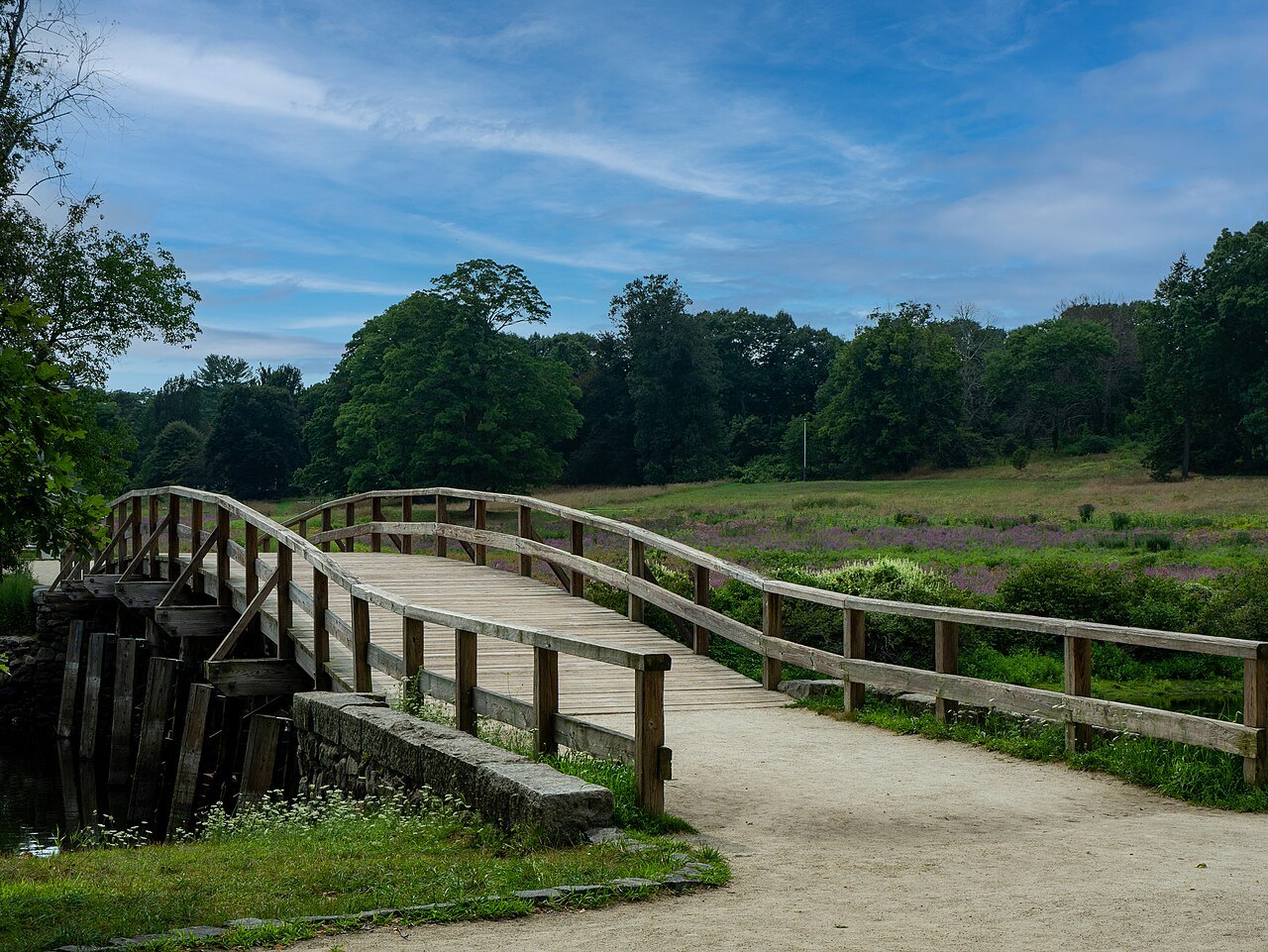
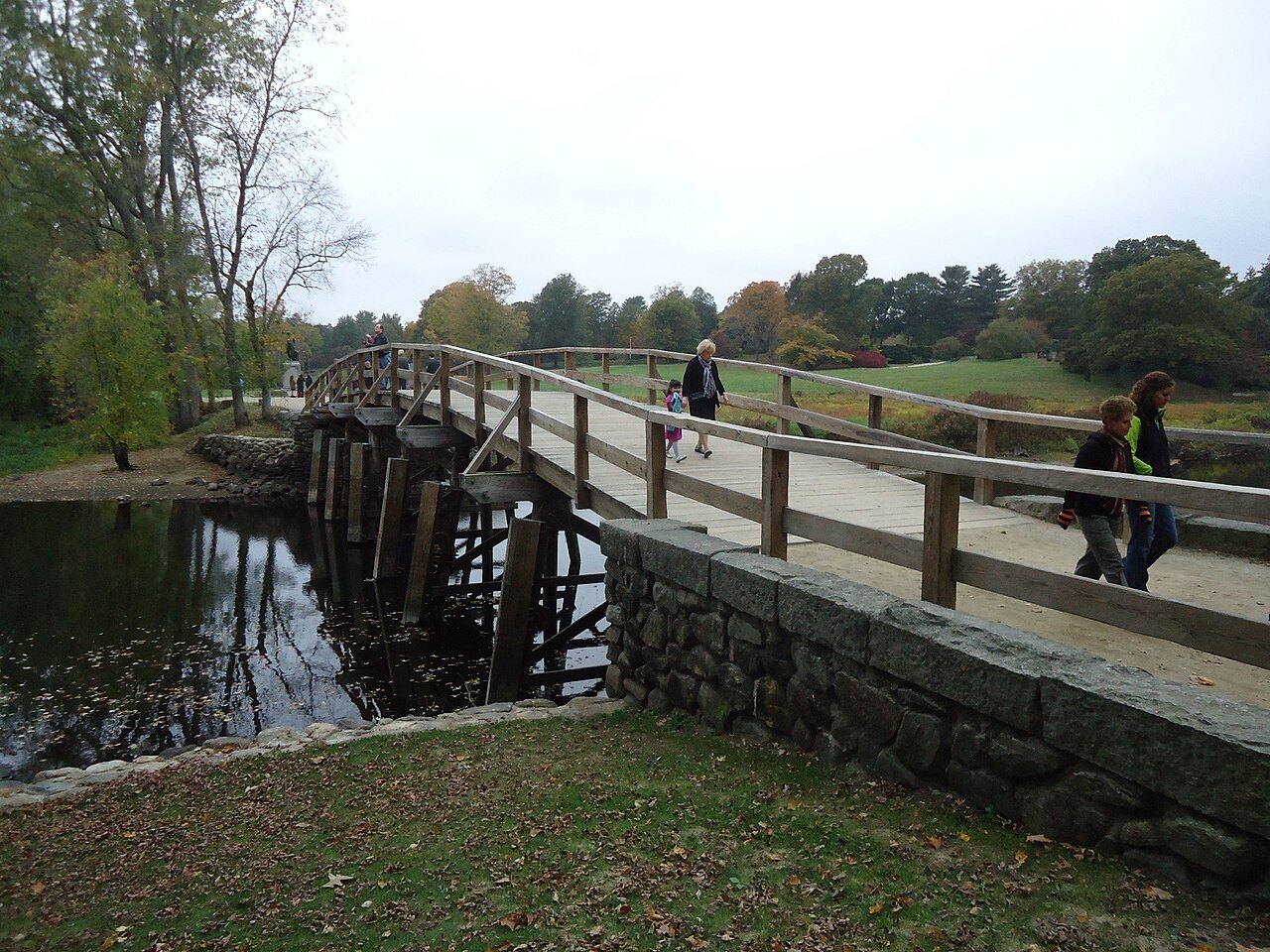
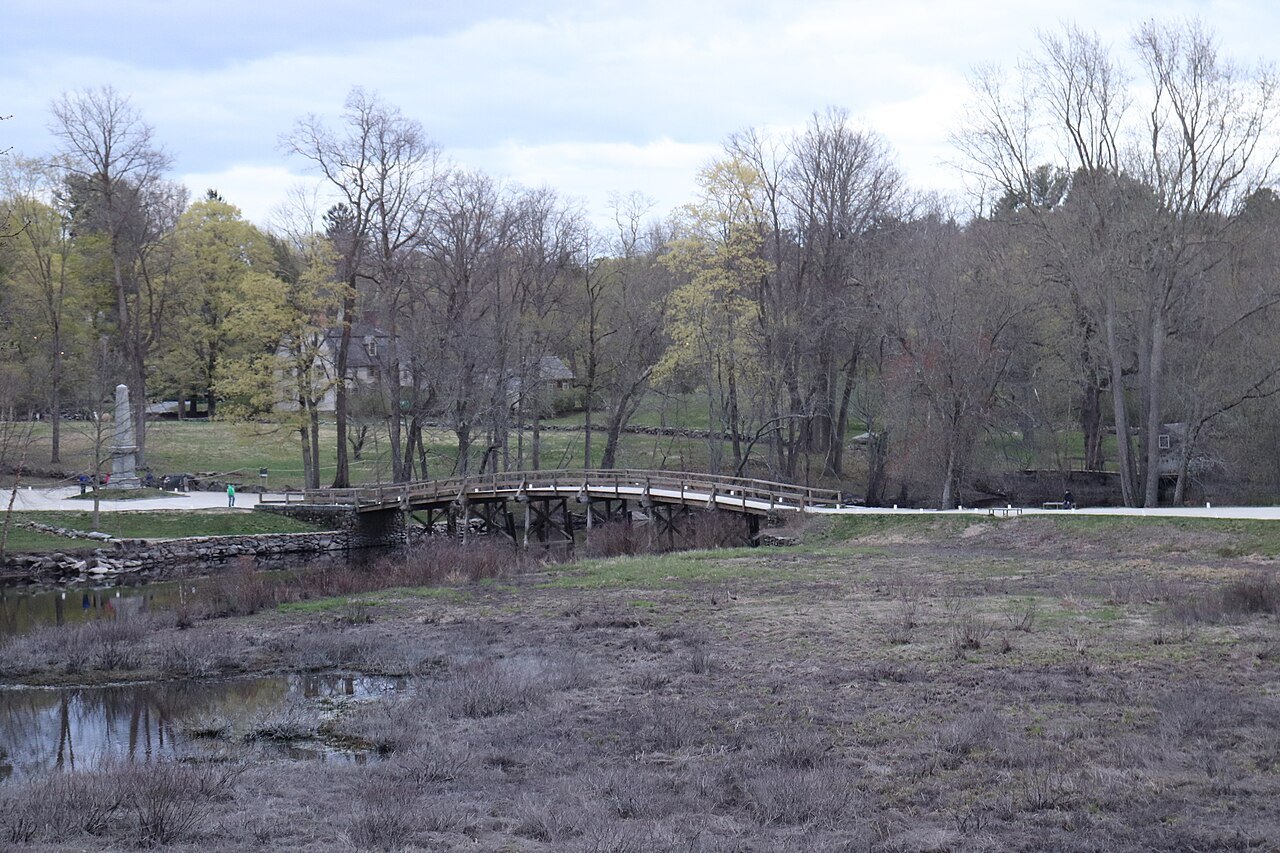
- The North BridgeA wooden bridge over the Concord River, built in 1956 to the form of the one of 1775.
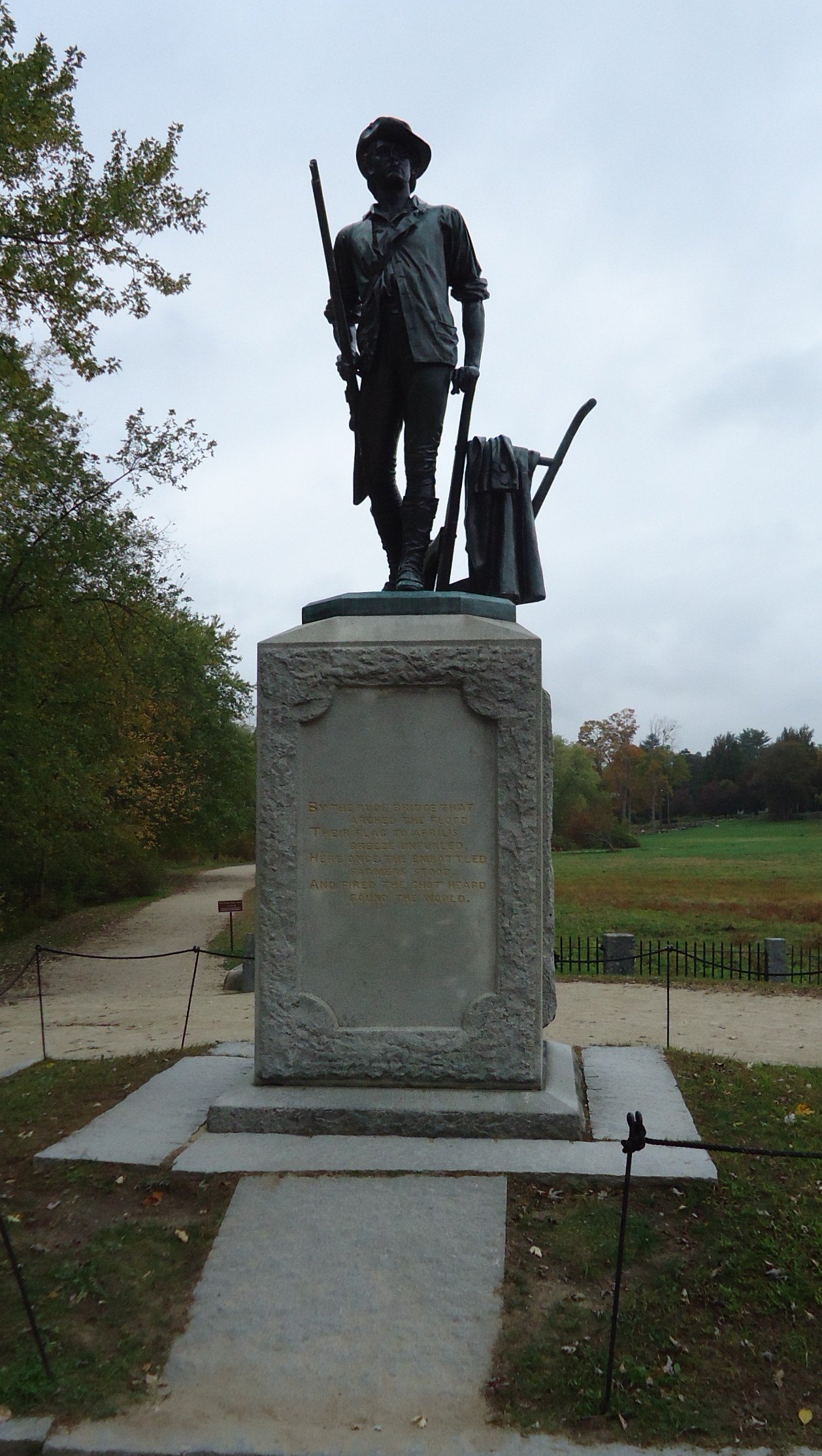
- The Minute ManDaniel Chester French's bronze of 1874, cast from Civil War cannon.
- The WaysideA house of 1775 that later belonged to the Alcotts and to Nathaniel Hawthorne.
The place in fullII
Reading the place
Why it matters
On April 19, 1775, British regulars marched out of Boston toward Concord to seize military supplies they believed were hidden there. At dawn they met the local militia on the common in Lexington, and later that morning they met a larger force at the North Bridge in Concord, where the militia advanced on the regulars, fired, and drove them back. The fighting that followed along the road to Boston was the opening of the Revolutionary War.
Minute Man National Historical Park, run by the National Park Service, protects some 970 acres in Lexington, Lincoln and Concord along that route. Its core is the North Bridge, the Battle Road between the towns, and a string of houses and farms that stood on the day. It is the most direct way to see where the war began, west of Boston, and it pairs naturally with Walden Pond in the same town.
Lexington Green
Lexington Battle Green, formerly Lexington Common, is where the first action of the day took place, a brief fight at dawn between the regulars and the town's militia. The town of Lexington owns and keeps the green, and on it stands the statue of Captain Parker, the militia's commander, by Henry Hudson Kitson.
From the green the regulars marched on to Concord, and the militia of the surrounding towns gathered behind them. The minutemen were a part of that militia: companies of young volunteers, formed after the Powder Alarm of September 1774, who drilled several times a week and were meant to be ready at a minute's notice.
The North Bridge
In Concord the regulars crossed the North Bridge over the Concord River on their way to Colonel James Barrett's farm, where they meant to search for artillery and ammunition. Provincial minutemen and militia, about four hundred of them, gathered on the hill above the river and advanced in formation on the roughly ninety regulars guarding the bridge. When the British fired, killing and wounding several Americans, Major John Buttrick of Concord gave the order to fire back, and the regulars retreated to the town.
It was the first time American forces had advanced in formation on British regulars, inflicted casualties and routed them. The bridge has been rebuilt at least eight times; the present wooden footbridge, an approximate replica of the one of 1775, was built in 1956 and extensively restored in 2005. It and about 114 acres around it form the park's North Bridge unit.
The Minute Man and the obelisk
On the far bank from the town stands The Minute Man, Daniel Chester French's statue of a young farmer who has left his plow, his coat thrown over it, and taken up a musket. French worked on it from 1871 to 1874; it was meant to be stone, but was cast in bronze from ten Civil War cannon provided by Congress, and it was unveiled in 1875 for the centennial of the battle. It was praised from the start, and it has since been used as the symbol of the National Guard and appeared on the Massachusetts state quarter of 2000. Art historians noticed that its pose recalls the Apollo Belvedere, one of several statues French studied.
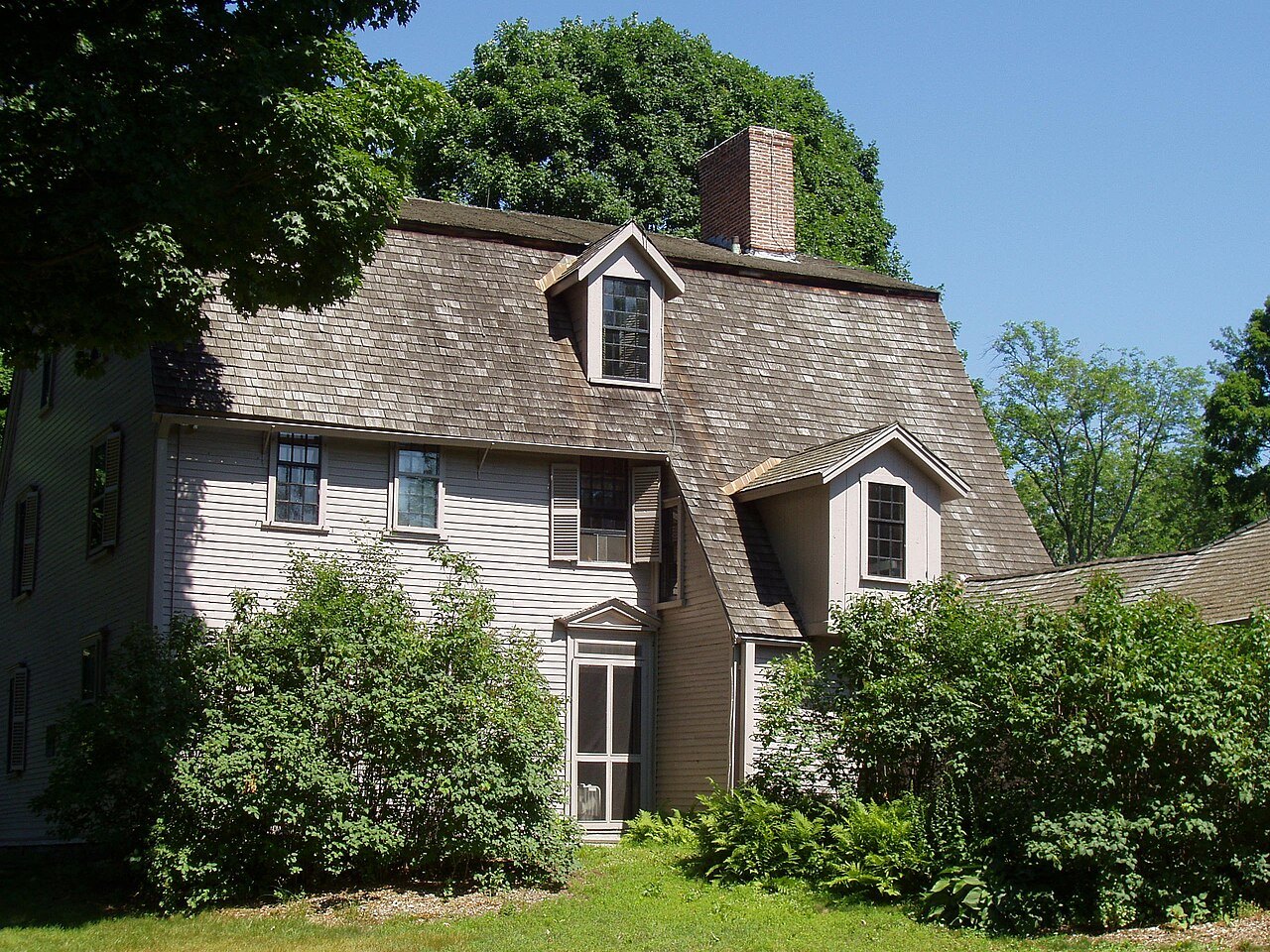
Across the bridge from the statue stands the obelisk the town dedicated on July 4, 1837, for which Ralph Waldo Emerson wrote his Concord Hymn, sung at the dedication. It is in that poem that the militia fired the shot heard round the world. Near the bridge are the graves of two British soldiers killed in the fight, and close by stands the Old Manse.
The Battle Road
On their way back to Boston the regulars fought a running series of skirmishes with the militia all along the road. The Battle Road Trail, about five miles long between Lexington and Concord, follows that path through a restored colonial landscape that approximates the ground of the day.
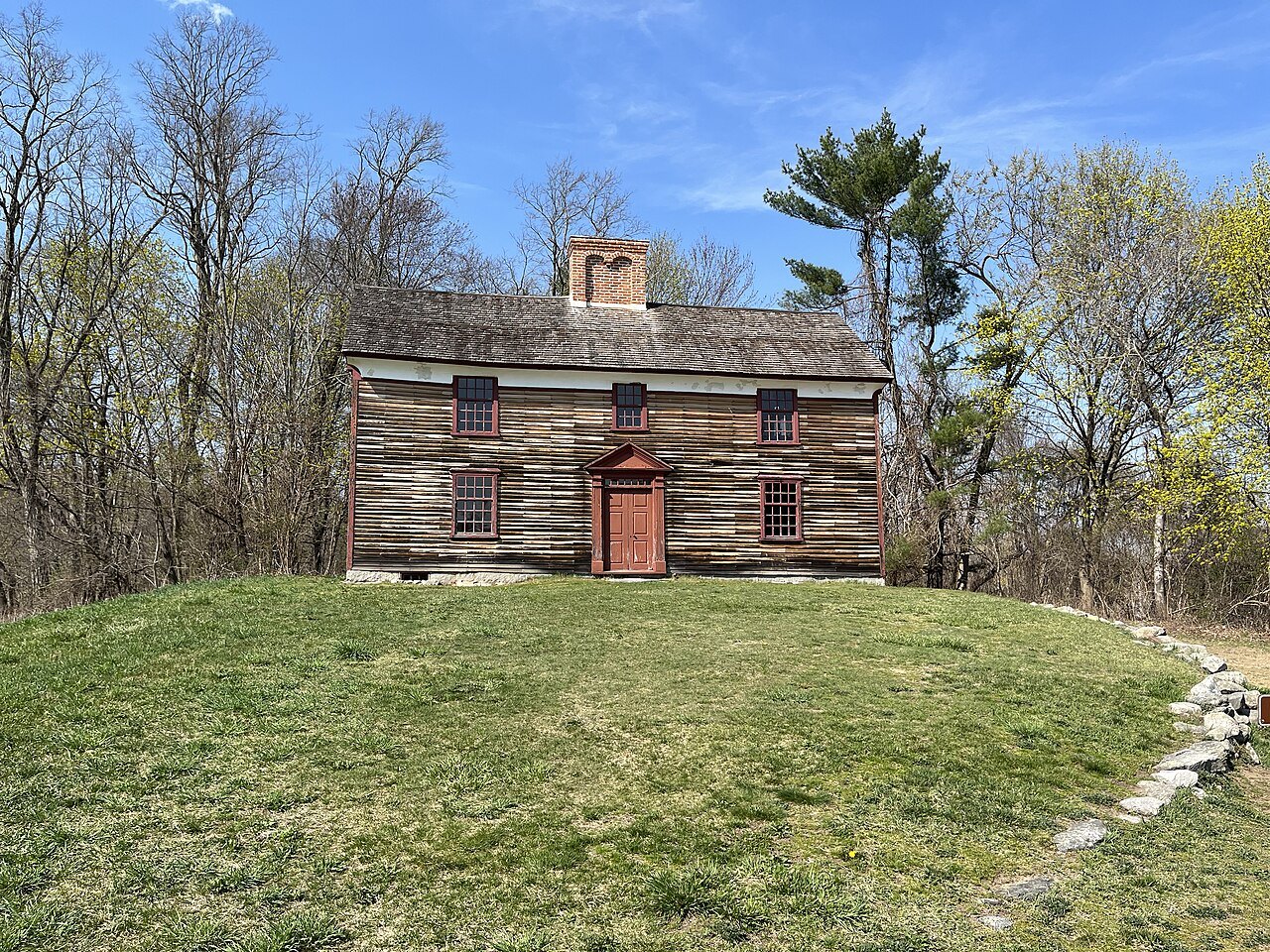
Along it are a monument where Paul Revere was captured during his ride to warn the towns, the Captain William Smith House, and Hartwell Tavern, a restored eighteenth-century inn and house where living history programs are given from May through October. The park's newest part is Barrett's Farm, the regulars' goal, bought and restored by a Concord nonprofit and passed to the Park Service.
The Wayside and Concord's writers
The park also holds The Wayside in Concord, a National Historic Landmark. On April 19, 1775 it was the home of Samuel Whitney, the town's muster-master; later it was home to Amos Bronson Alcott and his daughter Louisa May Alcott, who called it Hillside, to Nathaniel Hawthorne, who renamed it Wayside, and to the writer Margaret Sidney. It is also part of the National Underground Railroad Network to Freedom.
Concord's literary history runs through the same streets as its military one: Emerson, Hawthorne and the Alcotts lived here, and Henry David Thoreau's cabin stood at Walden Pond just south of the town.
How to visit
The park has two visitor centers: the main one on the Battle Road, on Route 2A, which shows a twenty-five-minute multimedia program called Road to Revolution, a good introduction to the whole day, and one on the hill above the North Bridge with an eight-minute film on the fight there. A car is the practical way to link the green, the Battle Road and the bridge; the trail itself is best walked or cycled in pieces. Start at Lexington Green, drive or walk the Battle Road to the main visitor center, and end at the North Bridge in the afternoon, then add Walden Pond if there is time.
Where to go nextIII
Nearby
- Nearby · Greater Boston · ConcordWalden PondThe glacial pond in the woods south of Concord where Henry David Thoreau lived for two years from 1845 and wrote the book that made it famous, now a state reservation for walking and swimming.Read the page →
- Nearby · Greater Boston · CambridgeHarvard YardThe oldest part of Harvard, grown around a parcel bought in 1637: a lawn of elms and brick halls behind a fence with twenty-seven gates, with the university's great library and its church facing each other across the middle.Read the page →
- Nearby · Greater Boston · Downtown to CharlestownThe Freedom TrailA walking path of two and a half miles through Boston that links sixteen places from the years before and during the Revolution, from the Common to the Old North Church and the Bunker Hill Monument.Read the page →