What you will findI
Cambridge
Greater Boston
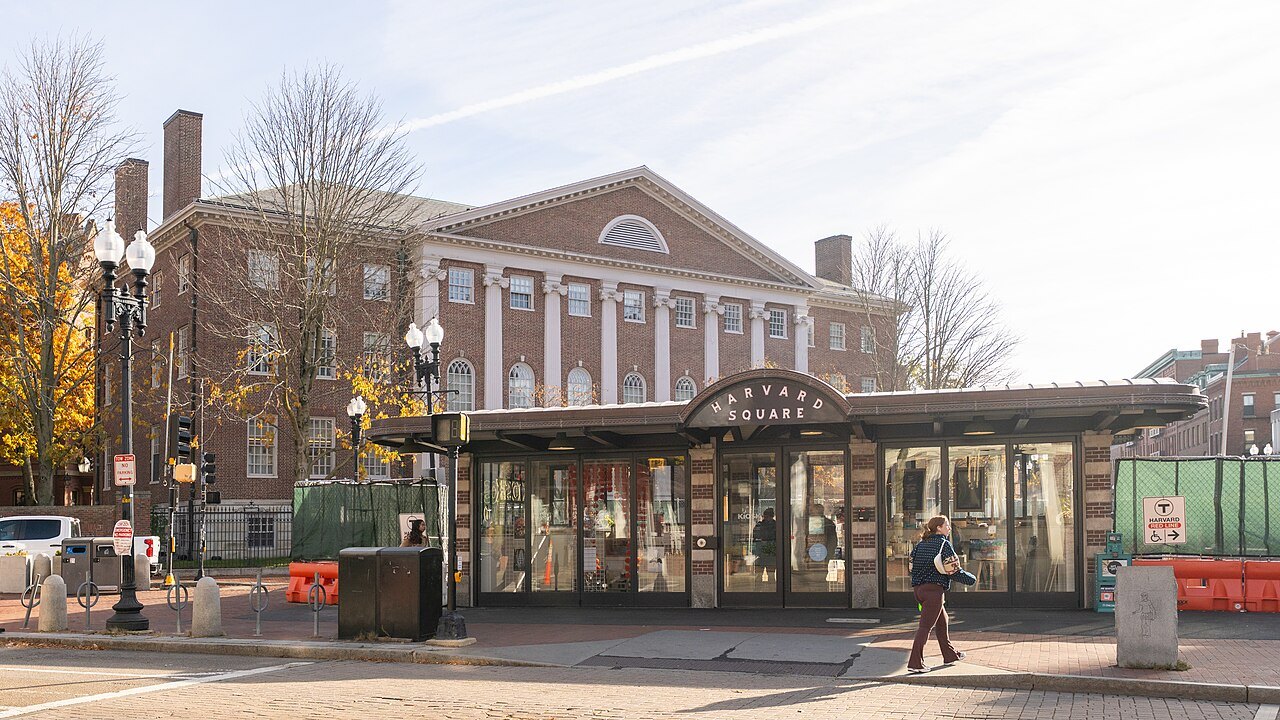
- Harvard SquareThe original village site, now the crossroads at the gates of Harvard Yard.
- Cambridge CommonWhere Washington took command of the army in July 1775.
- Brattle StreetThe old road west, lined with the mansions of colonial and later worthies.
- Central SquareThe city's commercial downtown since the nineteenth century.
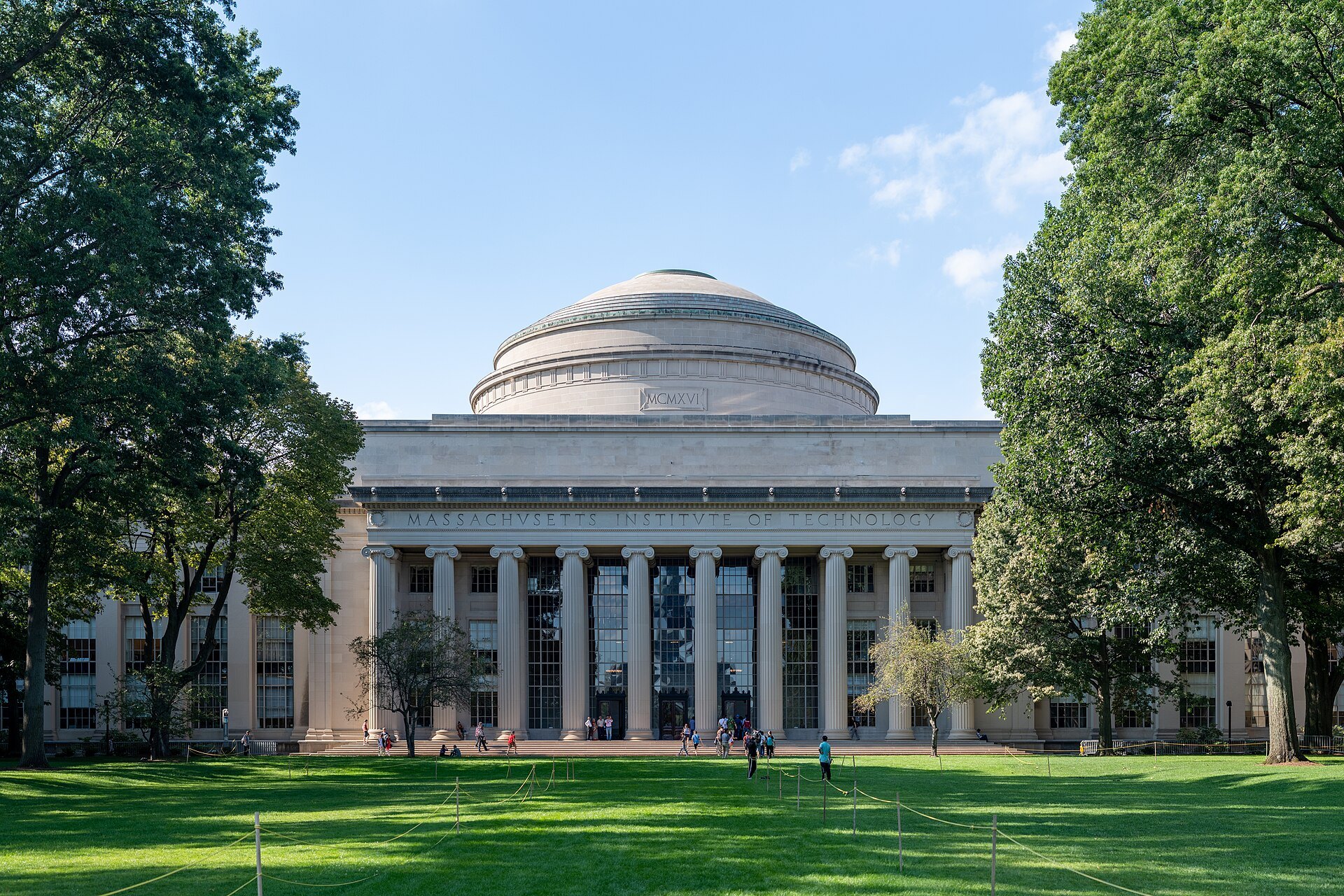
- Kendall Square and MITThe institute's campus and the densest cluster of biotech companies anywhere.
- The CharlesThe river front facing Boston across the water.
The town in fullII
Reading the place
The city in brief
Cambridge lies directly across the Charles River from Boston, in Middlesex County, and with 118,403 people at the 2020 census it is the fourth-largest city in the state. It is best known for its two universities: Harvard, the oldest institution of higher learning in the country, and the Massachusetts Institute of Technology, whose 168-acre campus lies along the river to the east. Between them run Massachusetts Avenue and a chain of squares, each a small center of its own.
For a visitor it is part of a Boston stay rather than a separate trip: a short ride over the river, and a day of walking from Harvard Square to the river and, for those interested, out to MIT and Kendall Square.
Newtowne and the college
Native people lived along the Charles for thousands of years before the English came, and the river basin was badly depopulated by European diseases before the settlers of the 1630s arrived. The town was founded in December 1630 by the Puritan colonists of the Winthrop Fleet as Newtowne, at the first convenient crossing of the Charles west of Boston; the original village site lies within today's Harvard Square.
No Native name for the place itself is known, though the names of other places along the river survive from the 1600s: Pequoset and Nonantum upstream, Mishawum and Shawmut, the site of Boston, downstream. An old claim that Cambridge stands on a place called Anmoughcawgen, fishing weir, is a misreading of John Smith's description of New England of 1617, which scattered English names along the coast. Newtowne was one of several towns, with Boston, Dorchester, Watertown and Weymouth, founded by the seven hundred colonists of the Winthrop Fleet.
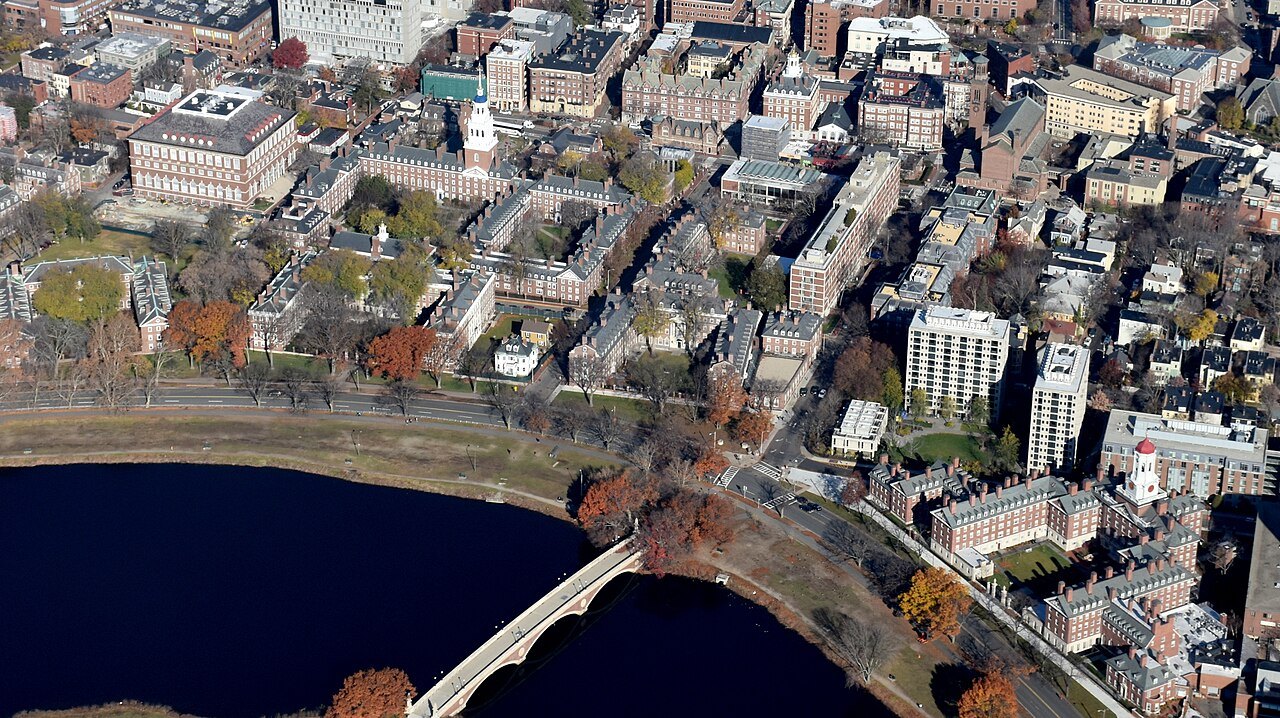
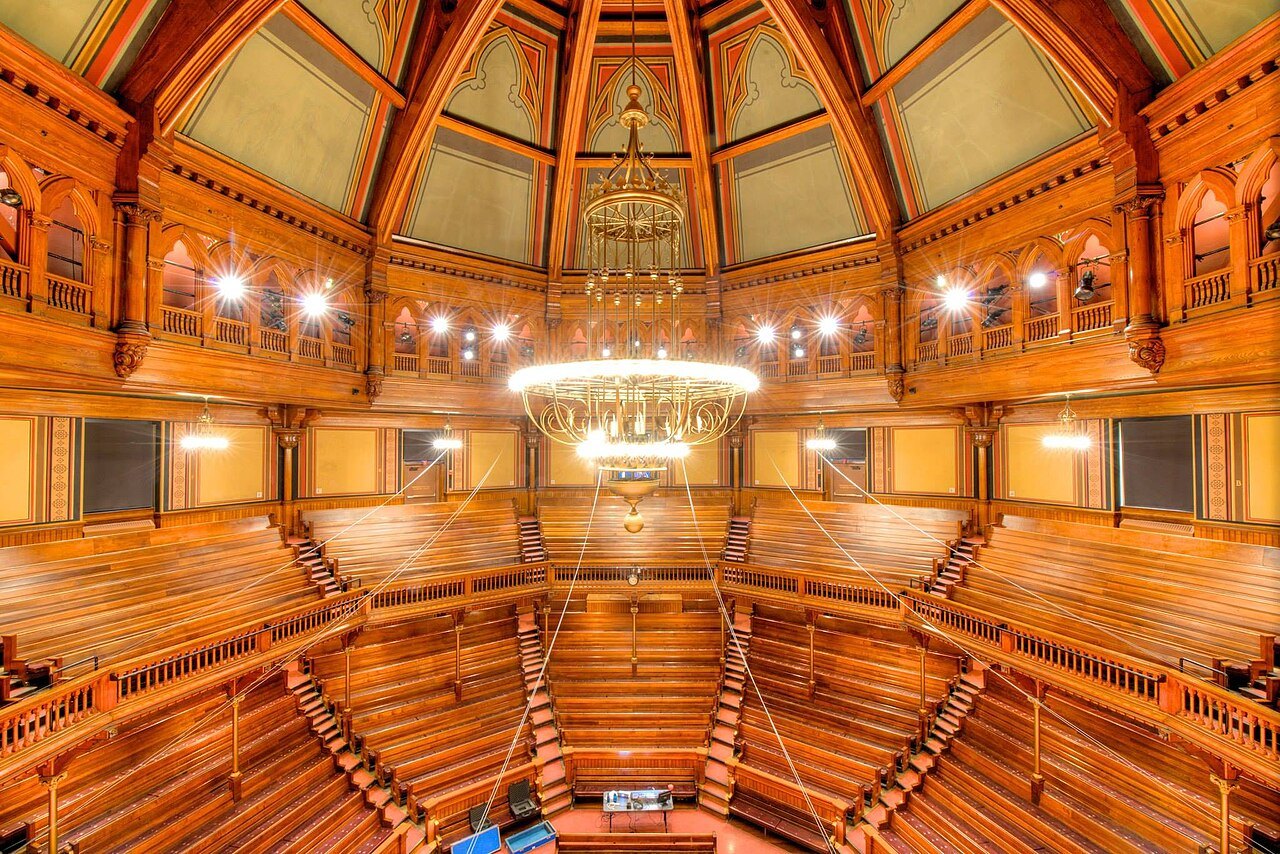
The General Court chose the town for the new college in 1636, partly for its nearness to the admired preacher Thomas Shepard, and in May 1638 the settlement was renamed Cambridge in honor of the English university, where its ministers, the college's first leaders and the colony's governor John Winthrop had all studied.
The Revolution on the common
In May 1775, after the fighting at Lexington and Concord, some sixteen thousand American patriots gathered on Cambridge Common to organize against the British army in Boston. On July 3, 1775, George Washington, newly appointed commander-in-chief of the Continental Army, arrived and took command of the troops camped there, and the common is celebrated as the birthplace of the Continental Army.
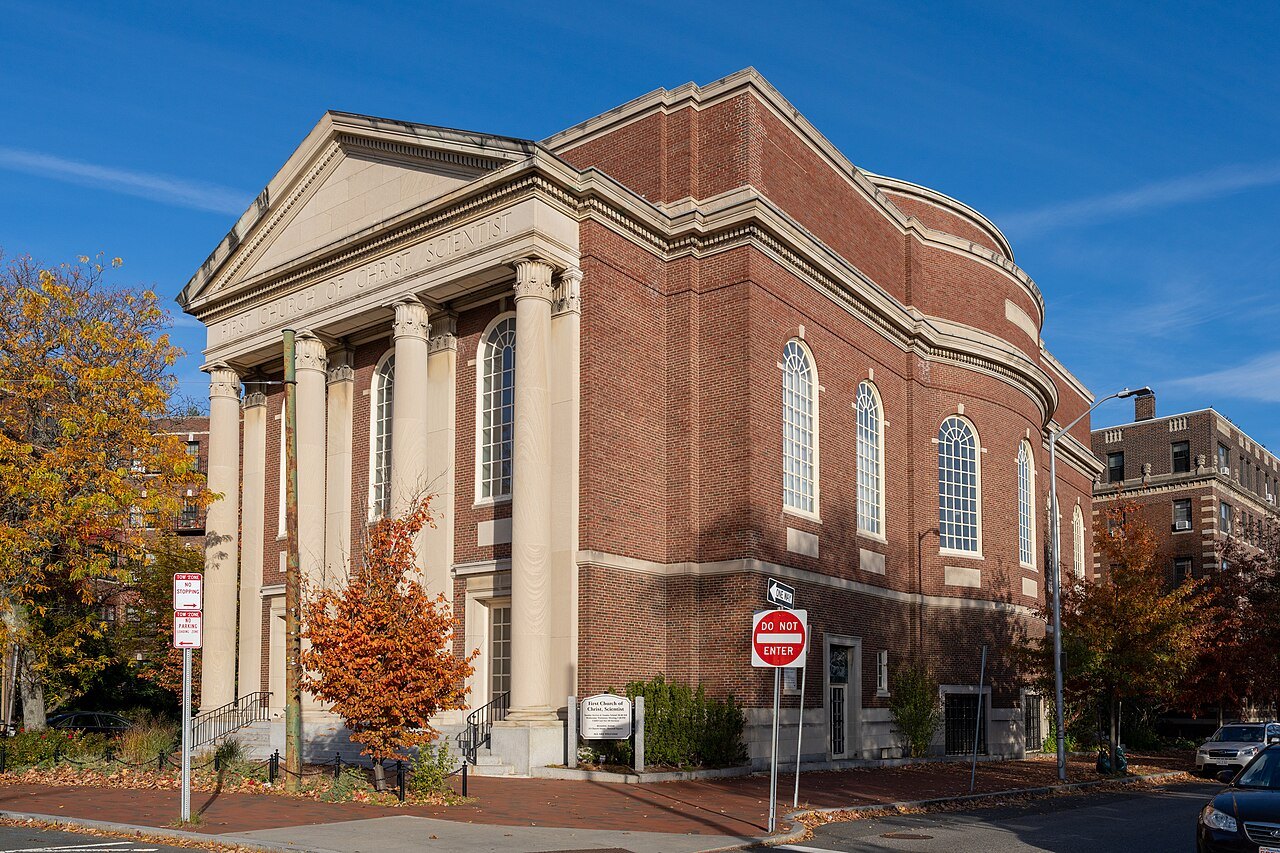
The road west from the common, the old road to Watertown now Brattle Street, was lined by a small elite of Anglican families who lived in mansions there, apart from the Puritan village, and some of those houses still stand.
A college town becomes a city
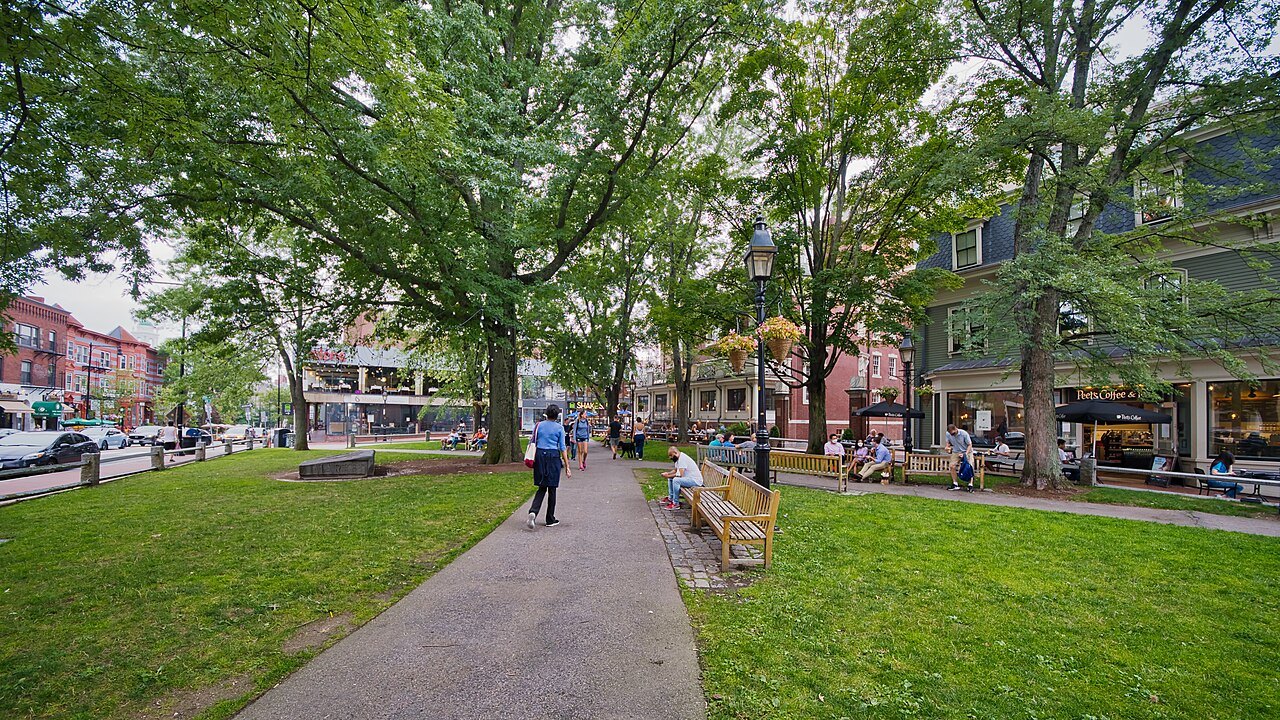
Cambridge grew fast after 1792, when the West Boston Bridge joined it directly to Boston and spared the long road round by the neck. New streets connected its parts to the bridges, the railroad brought the development of Porter Square, and the commercial center shifted from Harvard Square to Central Square, which became the city's downtown and is still served by its own Central Square station on the Red Line. The Fireside poets, among them Henry Wadsworth Longfellow, James Russell Lowell and Oliver Wendell Holmes, made it a literary center in the same years.
Industry followed in the east of the city. Brickyards spread in North Cambridge between Massachusetts Avenue, Concord Avenue and Alewife Brook, the ice merchant Frederic Tudor began cutting ice on Fresh Pond, and factories filled Cambridgeport and East Cambridge: the Carter's Ink Company, for years the world's largest ink maker, the Kennedy Biscuit Factory that gave the world the Fig Newton, the Necco candy works and the New England Glass Company.
Kendall Square
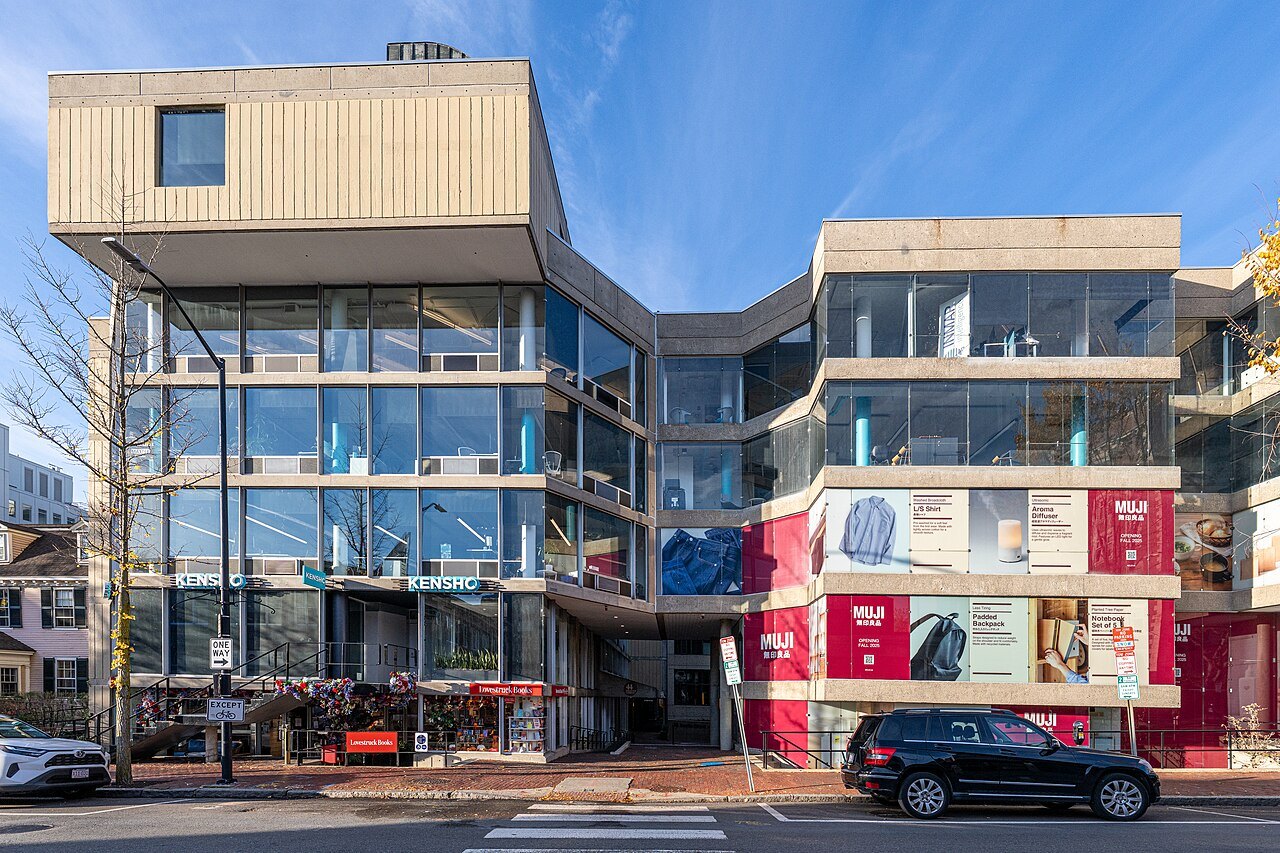
The old factory district near MIT has become Kendall Square, called the most innovative square mile on the planet for the number of startup companies founded there since 2010. In 2022 Cambridge was home to more than 250 biotechnology companies, more than 120 of them in the Kendall Square area. It lies just over the Longfellow Bridge from Boston, at the eastern end of the MIT campus, and is served by the Kendall/MIT station of the Red Line. MIT itself moved across the river from Boston in 1916, a move that confirmed Cambridge's standing as an intellectual center of the country.
Harvard Square and around
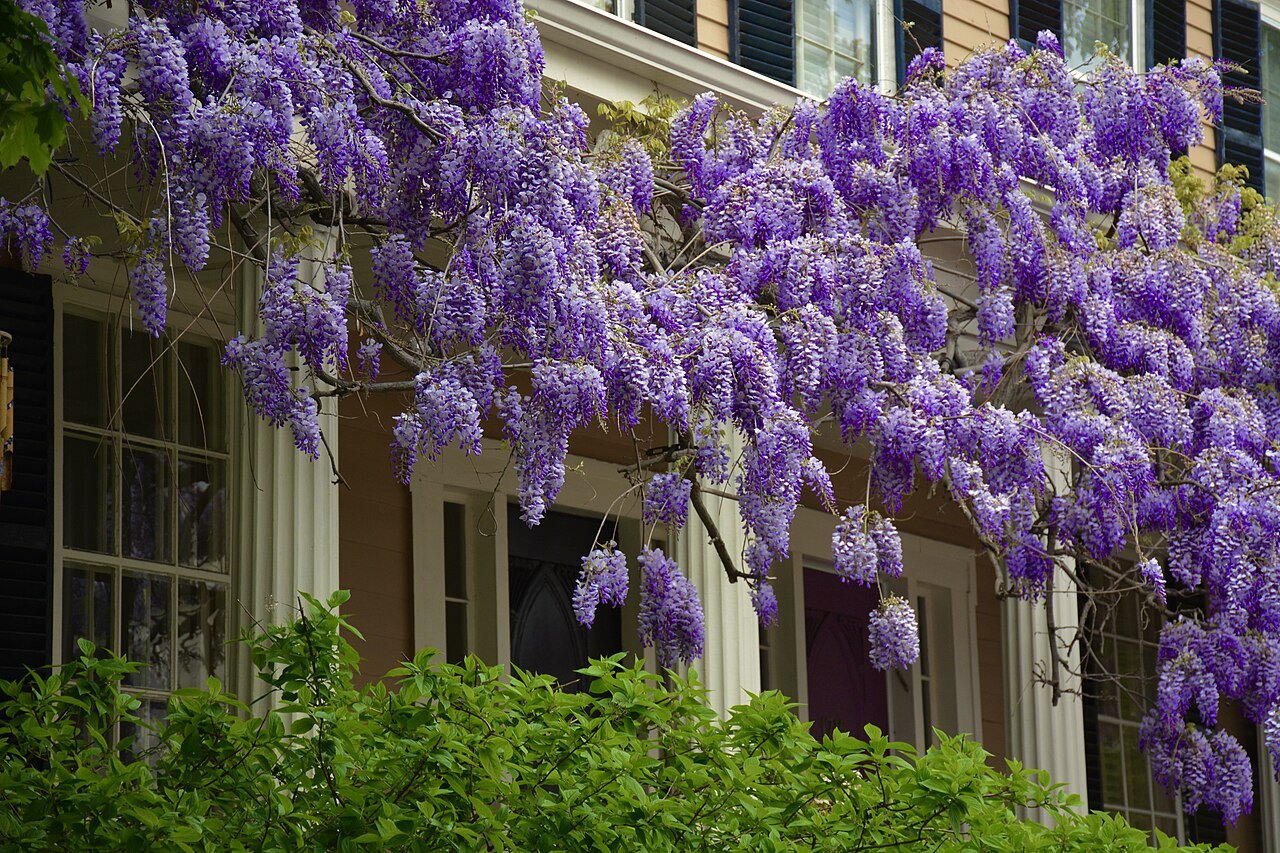
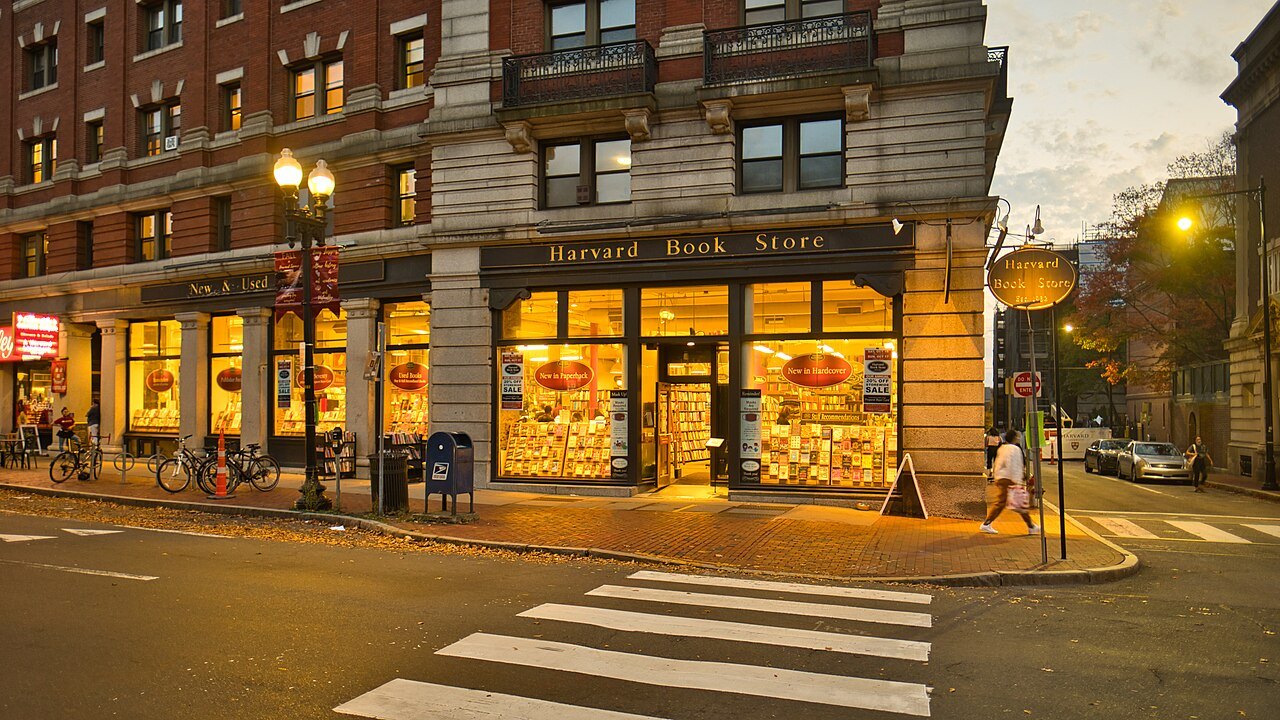
Harvard Square is the junction of Massachusetts Avenue, Brattle Street, Dunster Street and JFK Street, with the gates of Harvard Yard on one side and the Harvard station of the Red Line below; the square was the line's northwestern end and a streetcar transfer point until the station was rebuilt in the 1980s, and it is still a major bus terminal. The common lies a few steps north. From it Brattle Street runs west past the old houses, and Massachusetts Avenue leads east through Central Square toward MIT and the river.
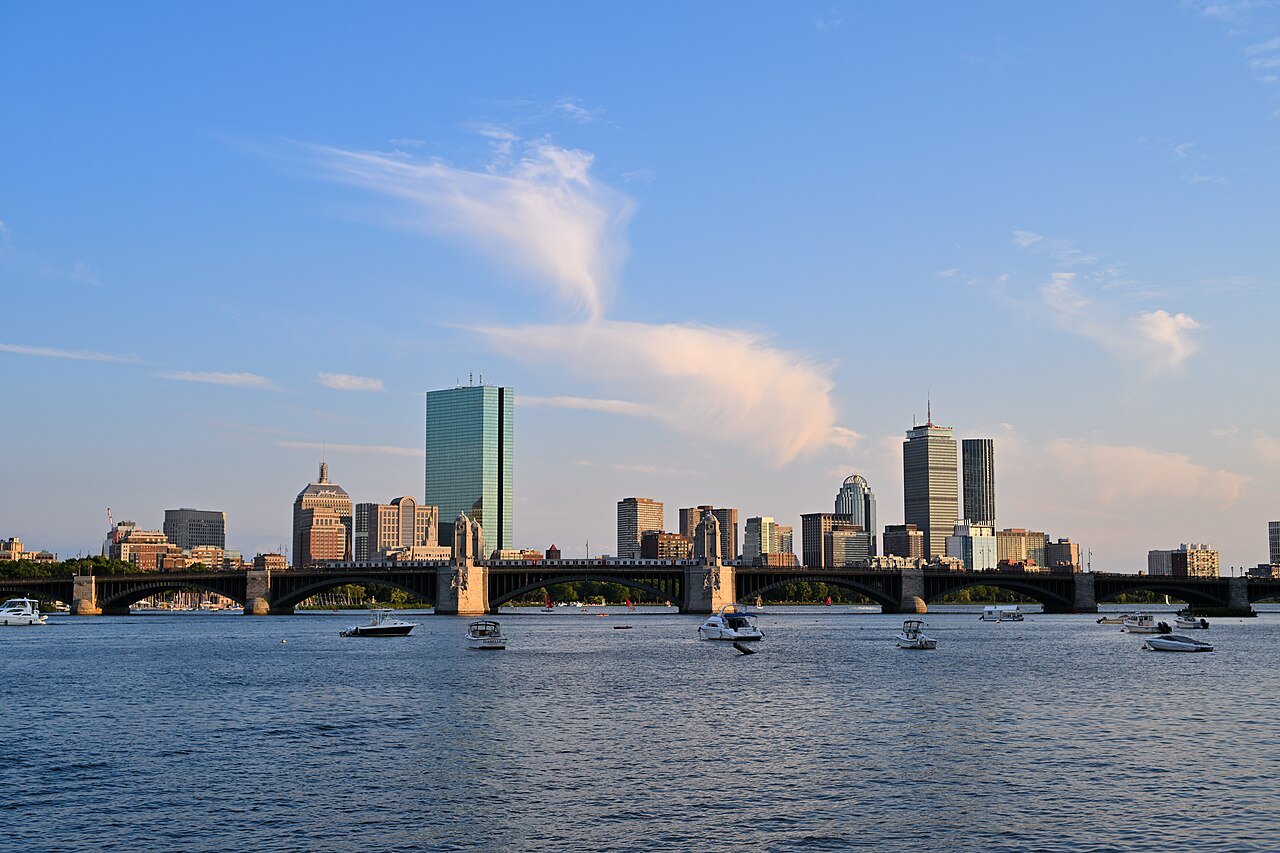
The riverbank is the other Cambridge: the Charles runs between the city and Boston's Back Bay, and from the Cambridge side the view is of the whole Boston skyline across the water.
How to visit
Take the Red Line of the T from Boston to Harvard, walk the Yard and the square, then the common and Brattle Street; give the afternoon to the river and, if you like, to MIT and Kendall Square by the same line. Cambridge is best on foot, and a car is rarely worth the parking. Pair it with a day on the Freedom Trail in Boston, or with a drive out to Lexington and Concord along the route the regulars marched in 1775.
Where to go nextIII
Nearby
- Nearby · Greater Boston · CambridgeHarvard YardThe oldest part of Harvard, grown around a parcel bought in 1637: a lawn of elms and brick halls behind a fence with twenty-seven gates, with the university's great library and its church facing each other across the middle.Read the page →
- Nearby · Greater BostonBostonThe capital of Massachusetts, founded on the Shawmut Peninsula in 1630 and grown by filling in its marshes: a city of neighborhoods, from Beacon Hill and the North End to the Back Bay, walkable end to end.Read the page →
- Nearby · Greater Boston · ConcordLexington, Concord and the Old North BridgeWhere the Revolutionary War began on April 19, 1775: the Battle Green in Lexington, five miles of Battle Road, and the wooden North Bridge in Concord where the militia fired the shot heard round the world.Read the page →