The answer in fullII
Read on
A Mansion Older Than the Nation
The House of the Seven Gables stands on Salem's old waterfront in Essex County on the North Shore, a wooden mansion built in 1668 for the sea captain John Turner. It ranks among the oldest surviving wooden structures of its kind in the country, built when Salem was already a busy harbor for the fishing and coastal trade that would, within a century, carry its ships to China and the East Indies.
Decades of expansion left a rambling, many-roomed mansion facing the harbor, built in the style of the seventeenth-century merchant houses that once lined Salem's waterfront before the Great Salem Fire of 1914 and later redevelopment thinned their ranks, sparing comparatively few beyond the Federal mansions of the historic Chestnut Street district.
It stands a short walk along the water from the Custom House of Salem Maritime National Historical Park, first established in 1938 as the country's first National Historic Site and redesignated a national historical park in 2025, in the same stretch of harbor where Salem's China trade once brought in tea, pepper and sugar from distant ports. Visitors touring the park's wharves and its replica tall ship can continue on foot to the Gables without recrossing downtown.
Hawthorne and the House
The house owes its modern fame to Nathaniel Hawthorne, whose 1851 novel The House of the Seven Gables gave it a lasting identity in American literature. Hawthorne drew on Salem's old mercantile families, grown rich on the sea trade of merchants like Elias Hasket Derby, and on its houses of faded grandeur for his tale of a cursed New England household; the mansion has carried his title ever since.
Hawthorne knew Salem's waterfront directly: he served as surveyor of the port at the nearby Custom House from 1846 to 1849, and set the opening pages of The Scarlet Letter there. His two Salem novels, written within a few years of each other, fixed the city's old houses and harbor in American fiction long before the witch trials of 1692 came to dominate the city's modern image as the self-styled Witch City.
The link between the real building and Hawthorne's fictional one is a matter of inspiration rather than a documented one-to-one match, and visitors curious about exactly how closely the house matches the novel's descriptions, room by room, should ask staff on site, who can point out the features most often associated with the book and with the Turner family who once lived there.
From Private Mansion to Museum
The House of the Seven Gables is today a museum, preserving the Turner family's seventeenth-century mansion as part of a small campus of historic buildings gathered on the harbor over the years. It sits alongside other relocated and preserved structures from Salem's early centuries, giving visitors a sense of the port town before the China trade reshaped it with Federal mansions, civic wealth and the institutions, like the Peabody Essex Museum, that grew from it.
The property is also, unusually among Salem's old houses, a working settlement house: it has long offered classes for the city's immigrant families alongside its role as a historic site open to visitors. That double identity, a museum by day and a community institution in its own right, sets it apart from the grander, more purely ceremonial houses of the Chestnut Street district farther inland.
Because the site combines a historic-house tour with an active community program, its public areas, any group arrangements, and seasonal changes to how the house and grounds are shown are best confirmed directly with the museum before a visit, particularly for anyone planning a trip around a specific day, a tour group or an event elsewhere in the city.
What to Expect on a Visit
A visit typically centers on the mansion itself, its period rooms, and the gardens that run down toward the harbor, though the exact layout of a tour, which rooms and buildings are included on a given day, and whether access is self-guided or led by staff are details that change and should be checked with the museum well before arriving in Salem.
The grounds include other historic structures connected with Salem's colonial and maritime past, gathered on the property over time, and the house's long waterfront setting makes it a natural stop after the Custom House and the tall ship replica at Salem Maritime National Historical Park, rather than a separate excursion requiring its own trip across the city center.

Because the building is a seventeenth-century wooden mansion that has grown by additions over nearly two centuries, its staircases, doorways and room sizes reflect its age; visitors with mobility concerns, or questions about how much walking and how many stairs a tour involves, should raise them with the museum beforehand rather than assume a modern, step-free layout.
Salem's Waterfront Around the Gables
The Gables sit within easy reach of the rest of old Salem on foot. Salem Maritime National Historical Park, with its twelve historic buildings and roughly nine acres of harborfront, lies just along the water, and the Custom House where Hawthorne worked is part of the same walk. For a fuller sense of the city's streets, port and museums, see the overview of Salem.
Downtown, the Peabody Essex Museum holds collections built up from the East India Marine Society founded by Salem's China trade captains in 1799, while the Federal mansions of the Chestnut Street district, designed largely by the architect Samuel McIntire, lie a few blocks west, both reachable on the same walk from the station. The House of the Seven Gables is best treated as one stop on a wider circuit of the city's maritime and literary history, not an isolated attraction.
Visitors arriving by commuter rail from Boston can walk the whole route from the station to the harbor and back; those planning a longer day on the North Shore, perhaps combining Salem with Cape Ann farther up the coast, may want to consult general advice on getting around Massachusetts before deciding how to sequence the stops.
Planning Around the Rest of Salem
Salem rewards visitors who choose an emphasis before arriving: the witch-trial sites draw the largest crowds, while the port, the museum and the old merchant houses reward a slower day built around walking rather than scheduled stops. The House of the Seven Gables, with its mix of colonial architecture, literary history and community use, fits naturally into the second kind of visit rather than a quick circuit of witch-trial landmarks.
Because hours, tour formats, grounds access and any seasonal arrangements at the house can change, and because it operates both as a museum and as an active settlement house serving Salem's immigrant families, visitors should confirm current details directly with the House of the Seven Gables itself before building a Salem itinerary around it.
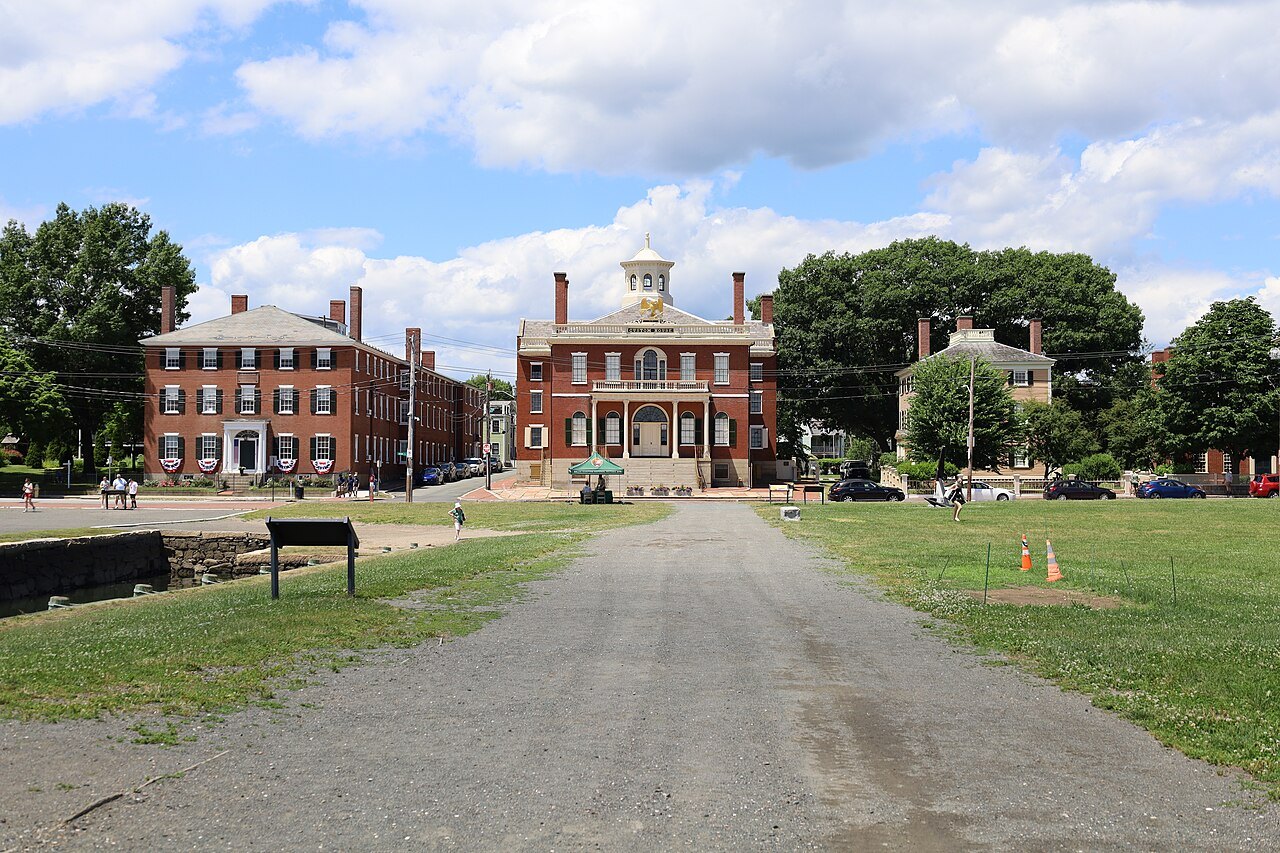
Combined with the Custom House, the maritime park's tall ship and wharves, and the China trade collections of the Peabody Essex Museum, the Gables gives visitors a fuller picture of Salem beyond the witch trials of 1692: a seventeenth-century sea captain's mansion that became, through Hawthorne's novel, one of the country's best-known literary houses and remains, in its own right, a living part of the city today.
Read nextIII
More from the journal
- SalemWhat really happened in the Salem witch trials of 1692?What the surviving record shows about Salem's 1692 witch trials, the real execution site, and how the city remembers them.Read the piece →
- The Freedom TrailWhat happened at the Old South Meeting House before the Tea Party?How a plain Puritan meeting house became the hall where Boston decided to throw British tea into the harbor.Read the piece →
- USS Constitution and Bunker HillHow did USS Constitution get the name Old Ironsides?How a War of 1812 victory over Guerriere gave USS Constitution her famous nickname, and how to visit her in Charlestown.Read the piece →