What you will findI
Salem
North Shore
- Salem MaritimeTwelve historic buildings, a replica tall ship and the wharves of the old port.
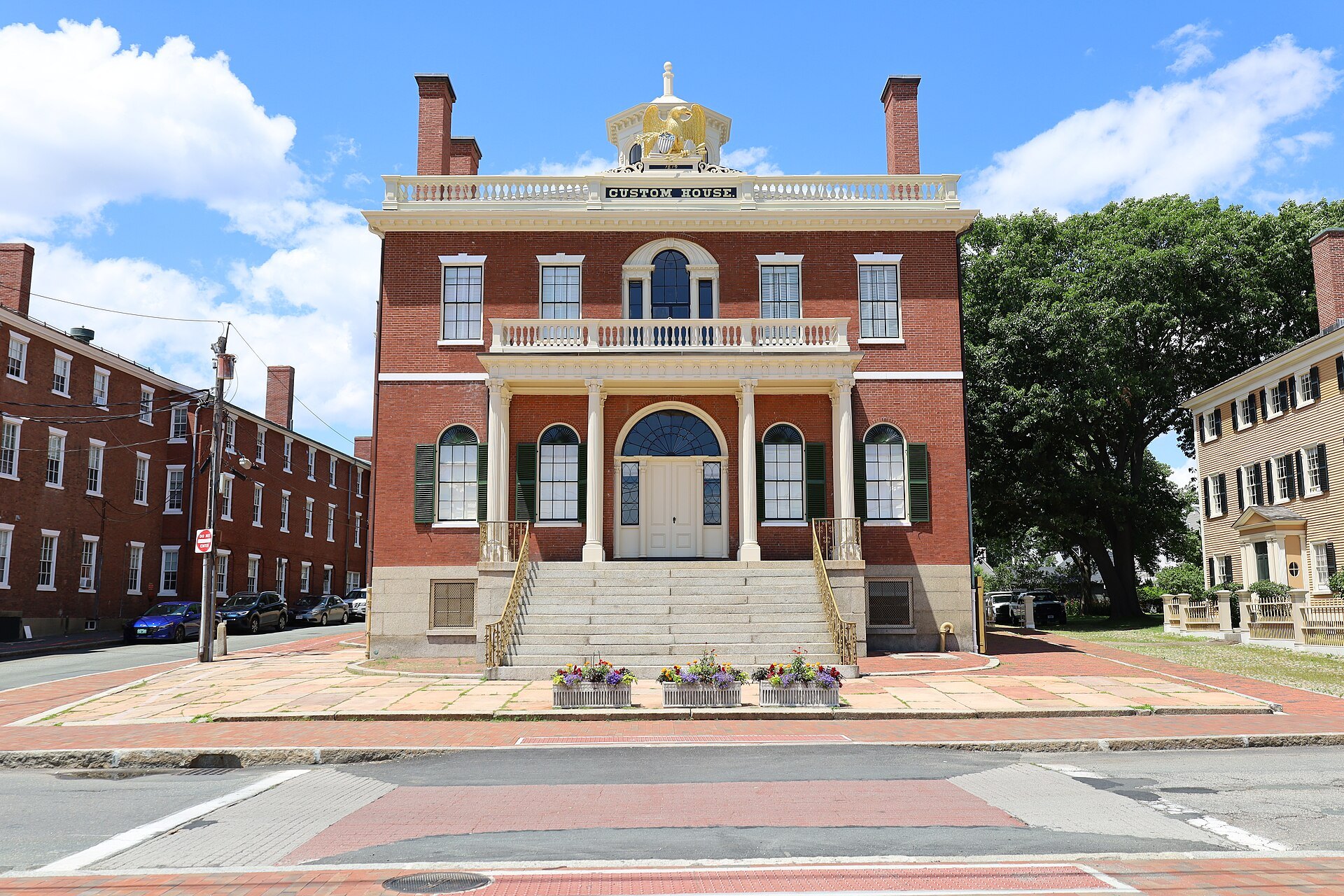
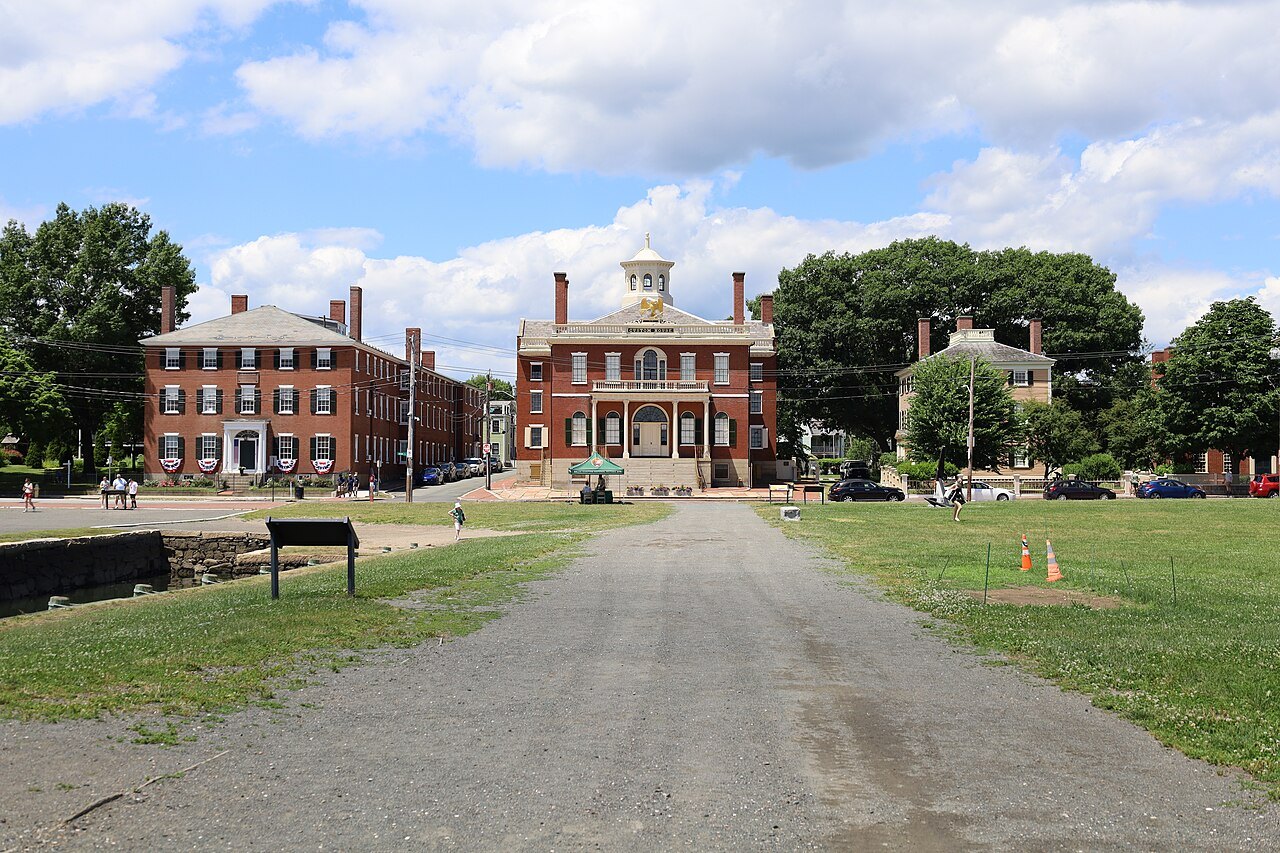
- The Custom HouseWhere Nathaniel Hawthorne worked from 1846 to 1849, the opening of The Scarlet Letter.
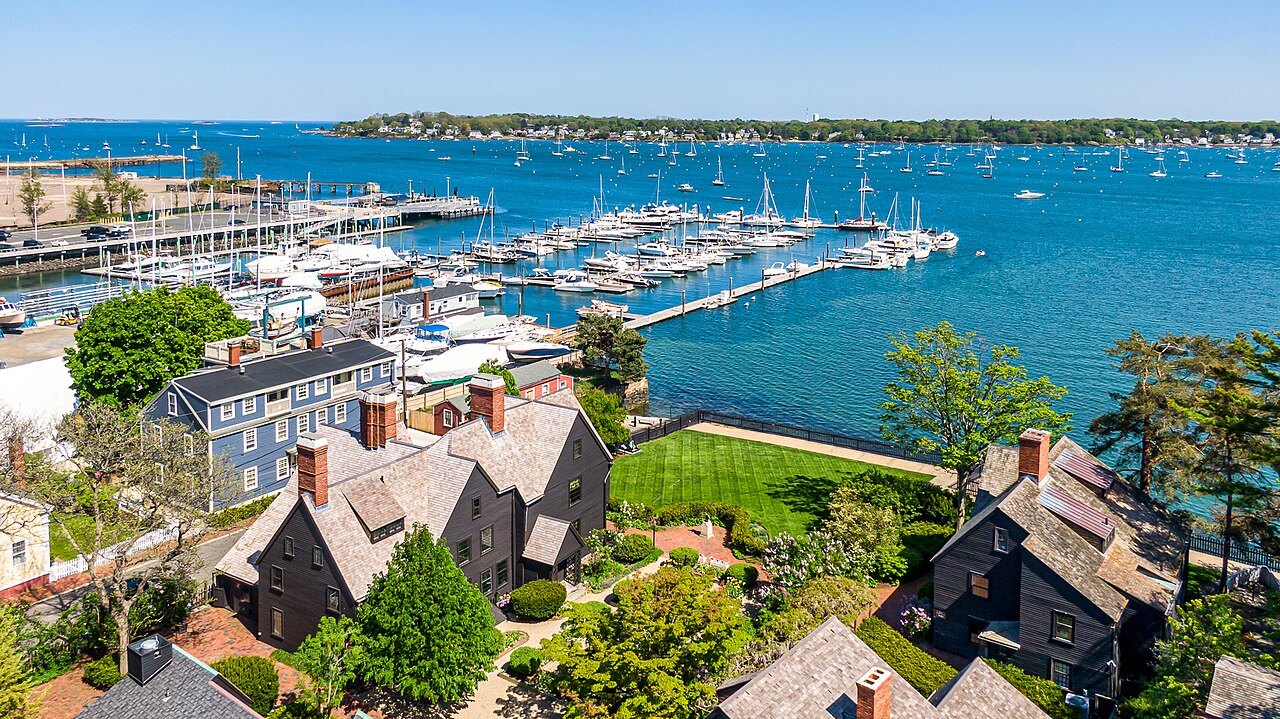
- The House of the Seven GablesA mansion of 1668 made famous by Hawthorne's novel of 1851.
- The Peabody Essex MuseumHeir to the East India Marine Society of 1799, among the country's oldest museums.
- Chestnut StreetFederal mansions in the Samuel McIntire Historic District, spared by the fire of 1914.
- Proctor's LedgeThe site of the hangings of 1692, identified in 2016 and made a memorial.
The town in fullII
Reading the place
The city in brief
Salem is a coastal city in Essex County on the North Shore, with 44,480 people at the 2020 census. Continuous European settlement began in 1626, and it was one of the most important seaports in early America. It is best known for the Salem witch trials of 1692, which still shape the way the city presents itself, and it calls itself the Witch City.
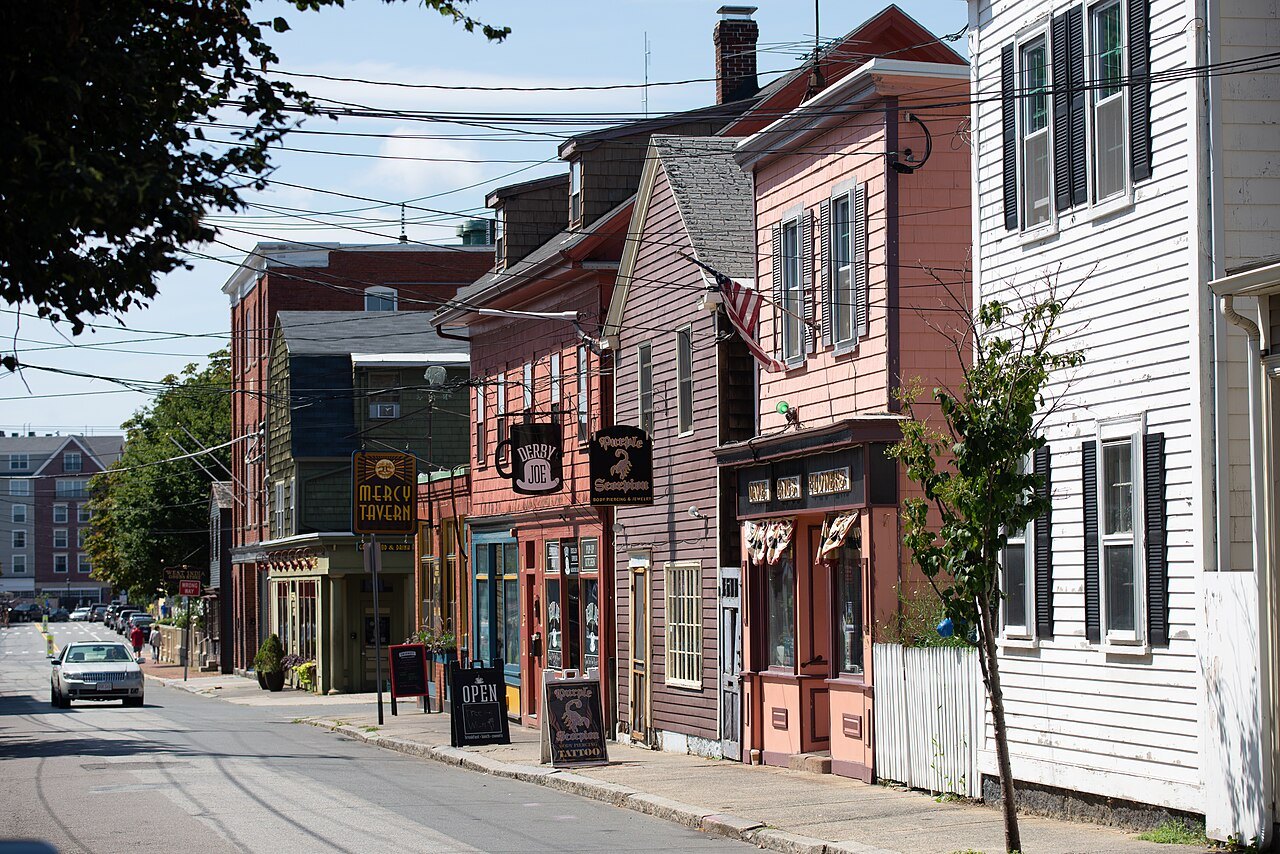
Behind that reputation is a remarkable port town: the wharves and custom house of the maritime trade, streets of Federal mansions, the house that gave Hawthorne a novel, and a major museum. Salem is an easy day from Boston and pairs well with Cape Ann farther up the coast.
Naumkeag
The peninsula was called Naumkeag by its Native people, a major settlement of a group whose territory ran from the Merrimack to the Mystic rivers. The years before the English arrived were disastrous for them: war with the Tarrantine and a smallpox epidemic of 1617 to 1619 killed many, including their powerful sachem Nanepashemet.
In 1626 a company of fishermen led by Roger Conant came from Cape Ann and settled at Naumkeag. It was only in 1686, under the Dominion of New England, that the heirs of the sachem Wenepoykin pressed their claim to the land and were paid twenty pounds for it.
The witch trials
In 1692 Salem and the villages around it were caught up in the witch trials, one of the most infamous cases of mass hysteria in American history. Nineteen people were hanged on false accusations, and Giles Corey was pressed to death for refusing to enter a plea.
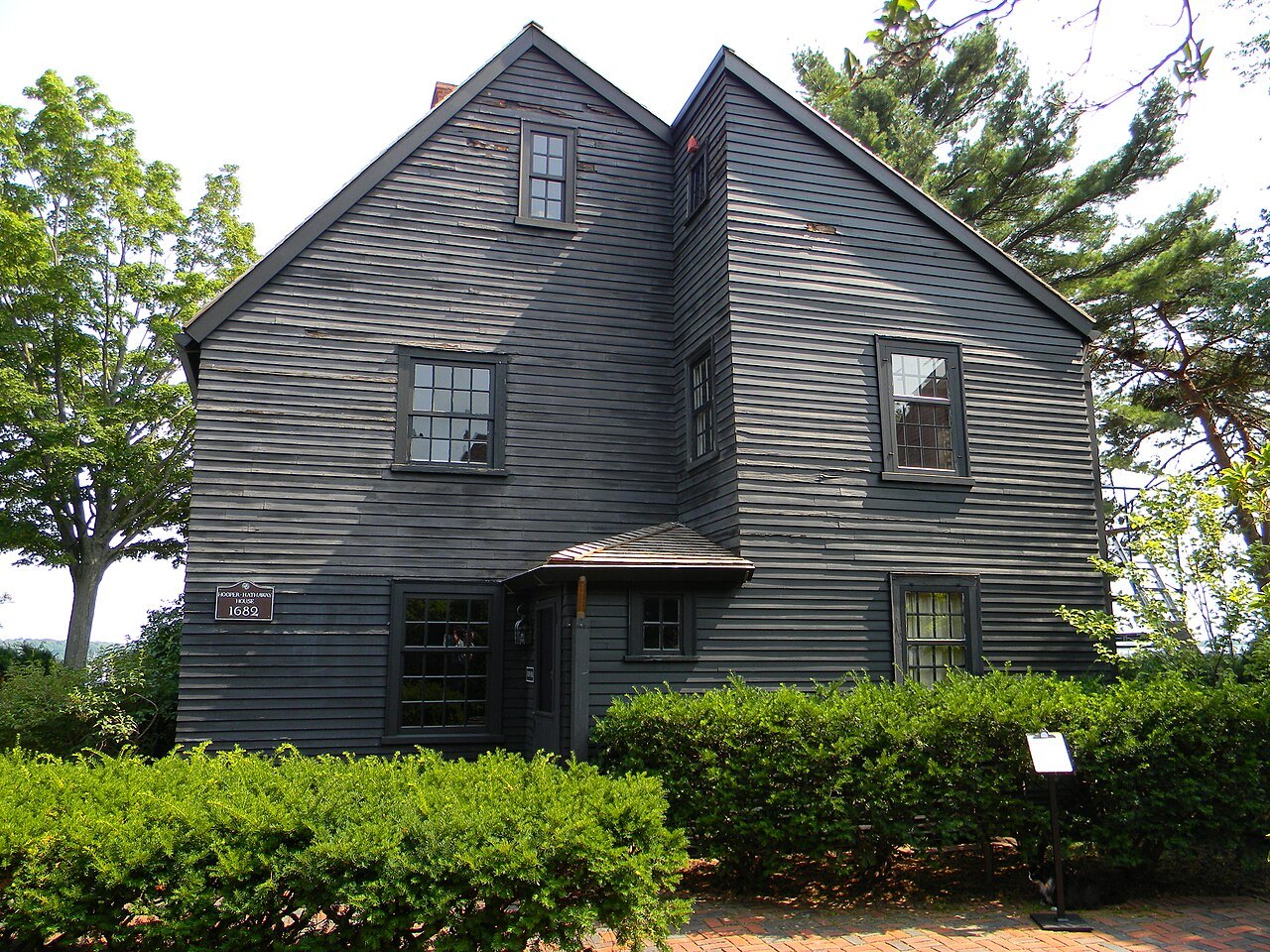
The hangings were long thought to have taken place on top of Gallows Hill, now a city park, but in 2016 a site at its foot called Proctor's Ledge was identified as the place, and it has been made a memorial. The trials dominate the city's tourism, and the city debates it: some residents would rather Salem played down the witches and marketed itself as a cultural center.
The port and the China trade
During the Revolution Salem became a center of privateering: nearly eight hundred vessels sailed from it as privateers and are credited with capturing or destroying about six hundred British ships. After the war their owners, with ships too large for coastal work, looked to distant trade. By 1790 Salem was the sixth-largest city in the country and a world-famous seaport, especially in the China trade, exporting codfish and importing sugar and molasses from the West Indies, tea from China and pepper from Sumatra.
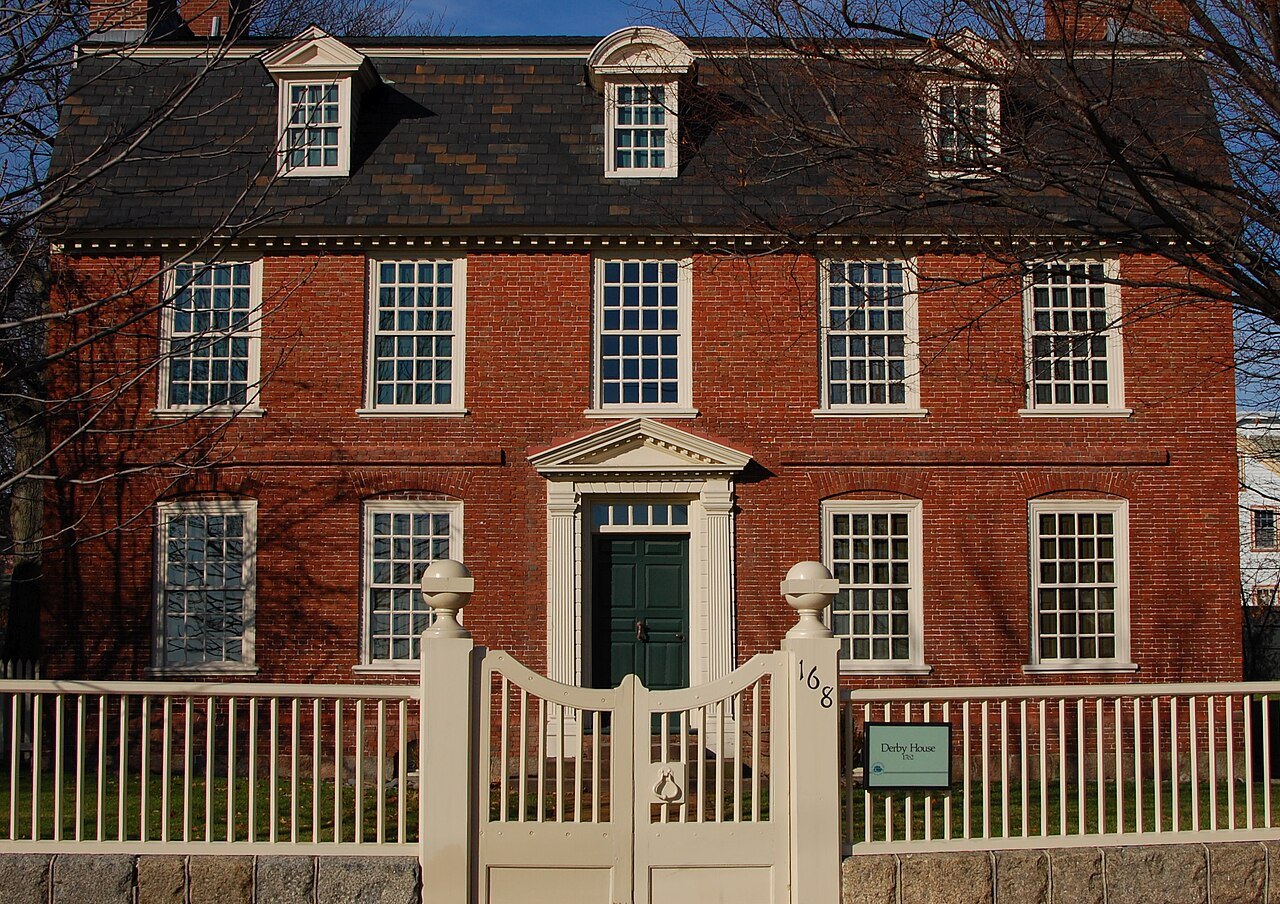
Elias Hasket Derby was among the richest of its merchants; his Grand Turk was the first New England ship to trade with China. Young captains made some of the first American voyages to the East Indies, and the frigate USS Essex was built on Winter Island in 1799.
What to see
The old waterfront is Salem Maritime National Historical Park, established in 1938 as the first National Historic Site in the country and redesignated a national historical park in 2025: twelve historic buildings, a replica tall ship and about nine acres along Salem Harbor. Among them is the Custom House, where Nathaniel Hawthorne was surveyor of the port from 1846 to 1849 and where he set the opening of The Scarlet Letter.
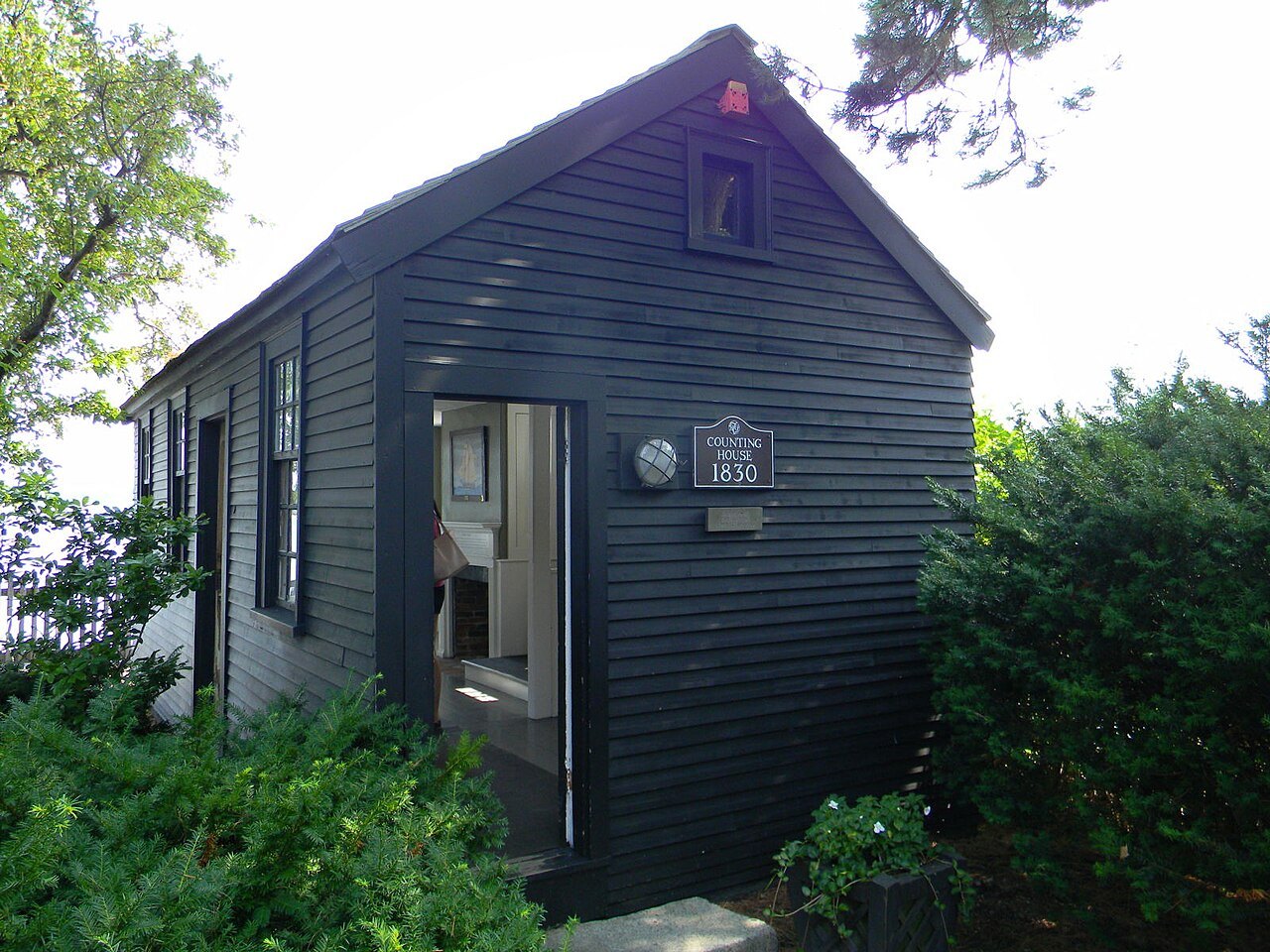
Nearby is the House of the Seven Gables, built in 1668 for the sea captain John Turner and made famous by Hawthorne's novel of 1851; it is now a museum and still a settlement house, with classes for the city's immigrant families. The Peabody Essex Museum is the successor of the East India Marine Society, founded in 1799 by Salem captains and supercargoes, and one of the oldest continuously operating museums in the country, with a major collection of Asian art and a wing by Moshe Safdie opened in 2003.
Chestnut Street and the city's houses
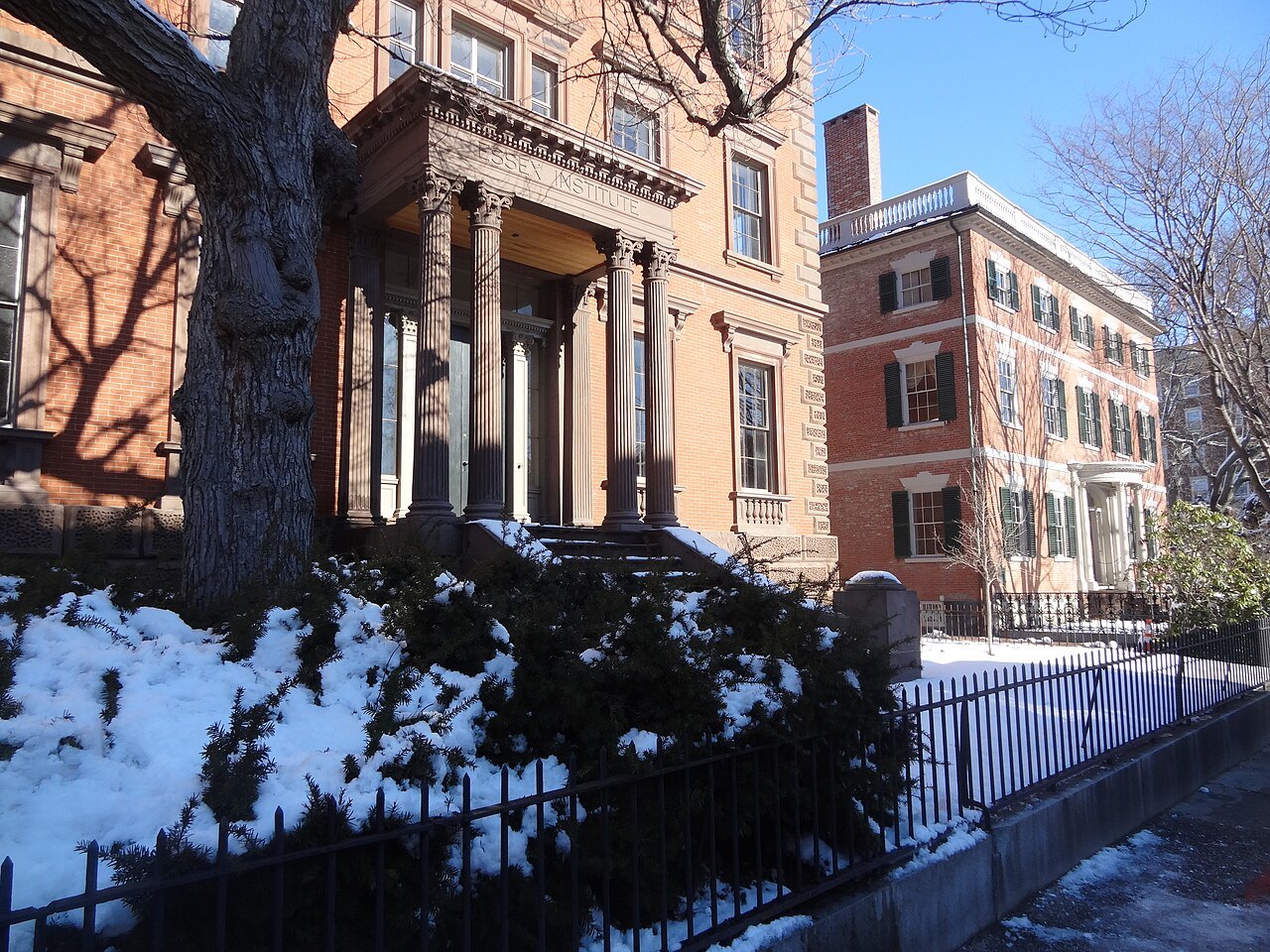
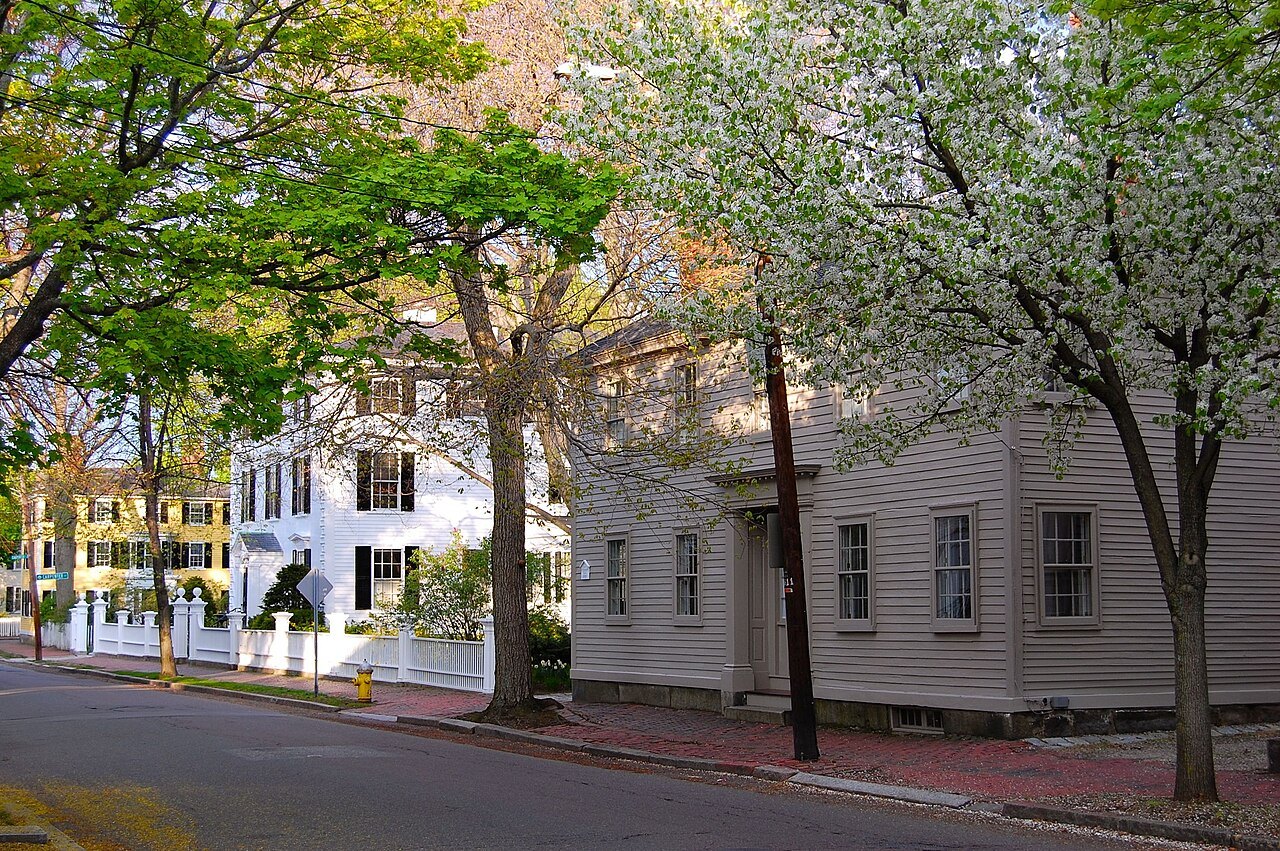
The China trade left the city with fine architecture, above all the Federal-style mansions of Samuel McIntire, one of the country's first architects, for whom the largest historic district is named; its Chestnut Street District holds 407 buildings. The Great Salem Fire of 1914 destroyed more than four hundred homes and left 3,500 families homeless, but spared the Federal houses of Chestnut Street. Industry followed the sea trade, with tanneries, shoe factories and the Naumkeag Steam Cotton Company.
Salem beyond the center
The city is more than its old port. Salem Willows Park, on the water at the east end, Pioneer Village, a recreation of the early settlement, and Salem State University, in the south of the city, are all part of today's Salem. Winter Island, where the Essex was built, later became Air Station Salem, designated in October 1944 the first air-sea rescue station on the eastern seaboard.
In the nineteenth century the town also became a subject of American literature, above all in the writing of Nathaniel Hawthorne, who worked at its custom house and set two of his best-known books in it. By the Park Service's count the city drew more than 750,000 visitors in 2012.
How to visit
Salem station is on the commuter rail from Boston, and the center is walkable from it: the maritime park and the Custom House on the harbor, the House of the Seven Gables a short walk along the water, the Peabody Essex Museum downtown, and Chestnut Street a few blocks west. Local bus routes from the station reach North Salem, the Willows and Salem State University. Choose your emphasis before you go: the witch-trial attractions draw the crowds, while the port, the museum and the houses reward a slower day.
Where to go nextIII
Nearby
- Nearby · North Shore · Rockport and GloucesterCape Ann: Rockport and GloucesterA rocky granite peninsula north of Boston with two harbor towns, Gloucester of the fishing fleet and the fisherman's memorial, and Rockport, whose red shack on Bradley Wharf is called the most often-painted building in America.Read the page →
- Nearby · Greater BostonBostonThe capital of Massachusetts, founded on the Shawmut Peninsula in 1630 and grown by filling in its marshes: a city of neighborhoods, from Beacon Hill and the North End to the Back Bay, walkable end to end.Read the page →
- Nearby · Greater Boston · Downtown to CharlestownThe Freedom TrailA walking path of two and a half miles through Boston that links sixteen places from the years before and during the Revolution, from the Common to the Old North Church and the Bunker Hill Monument.Read the page →