Home · Landmarks · Martha's Vineyard
What you are looking atI
Martha's Vineyard
The Islands · Dukes County
- EdgartownThe old whaling port, its captains' houses lining Water Street along the harbor.
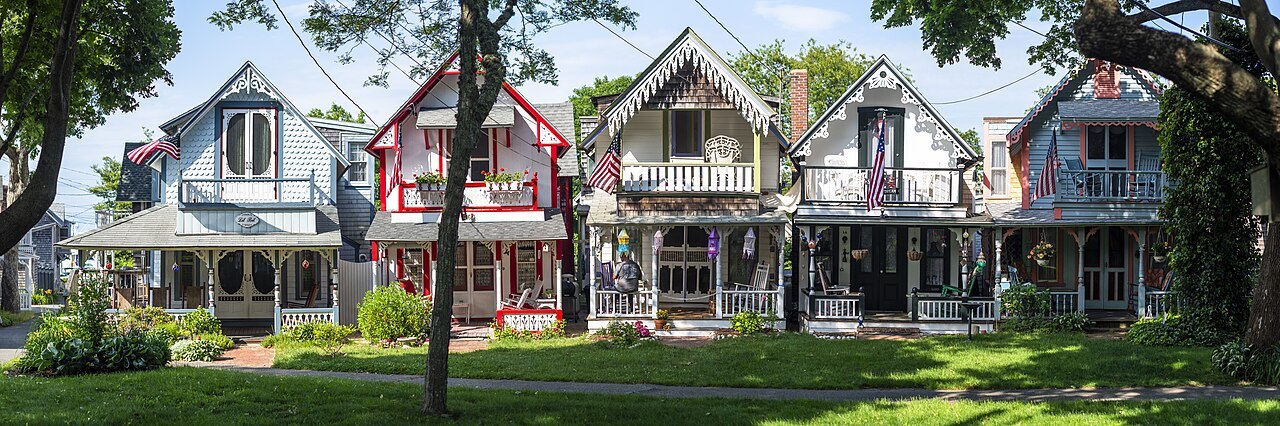
- Oak BluffsThe island's one planned town, with the gingerbread cottages of the Methodist camp meeting.
- The Flying HorsesA carousel of 1876, the oldest platform carousel still running, in Oak Bluffs since 1884.
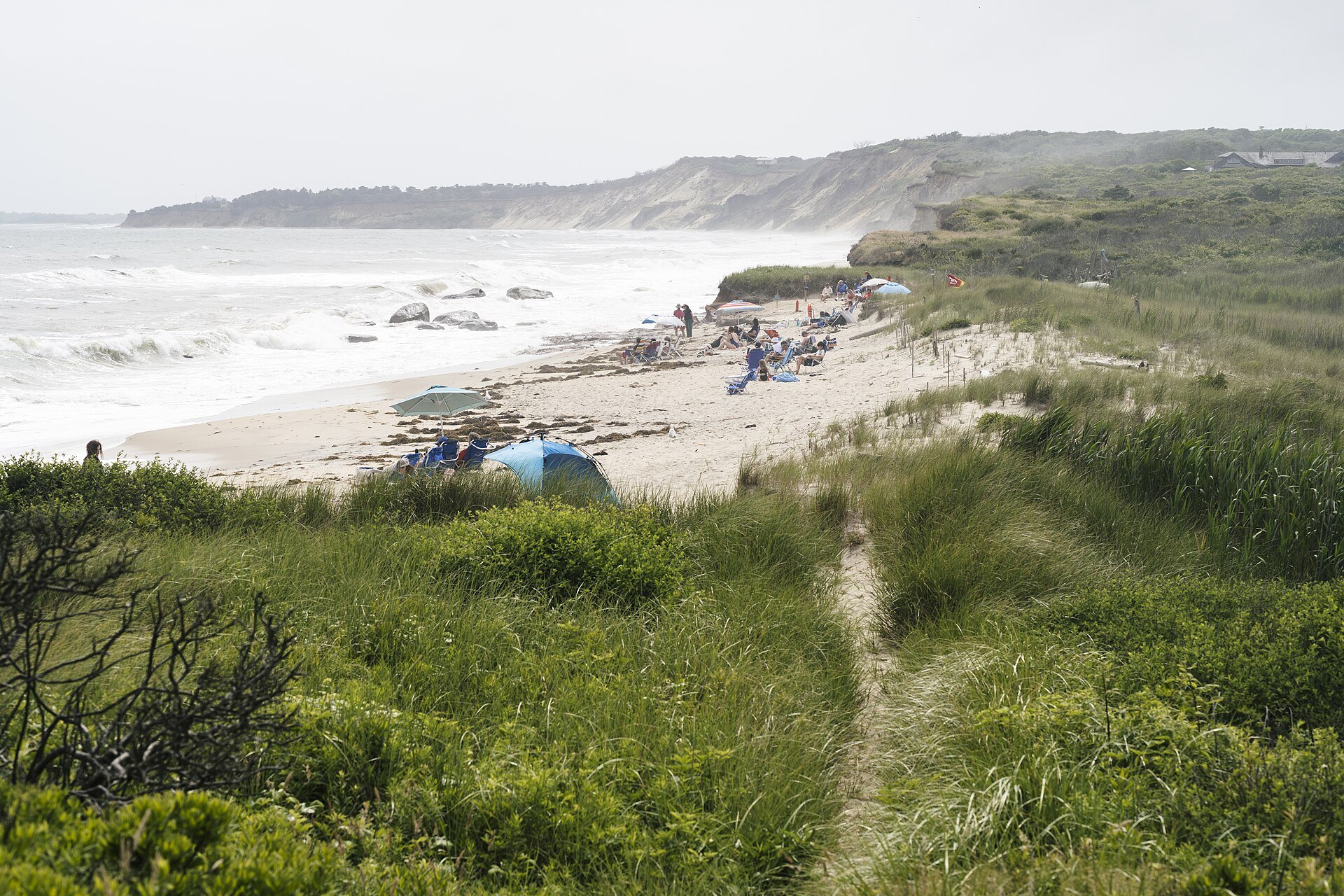
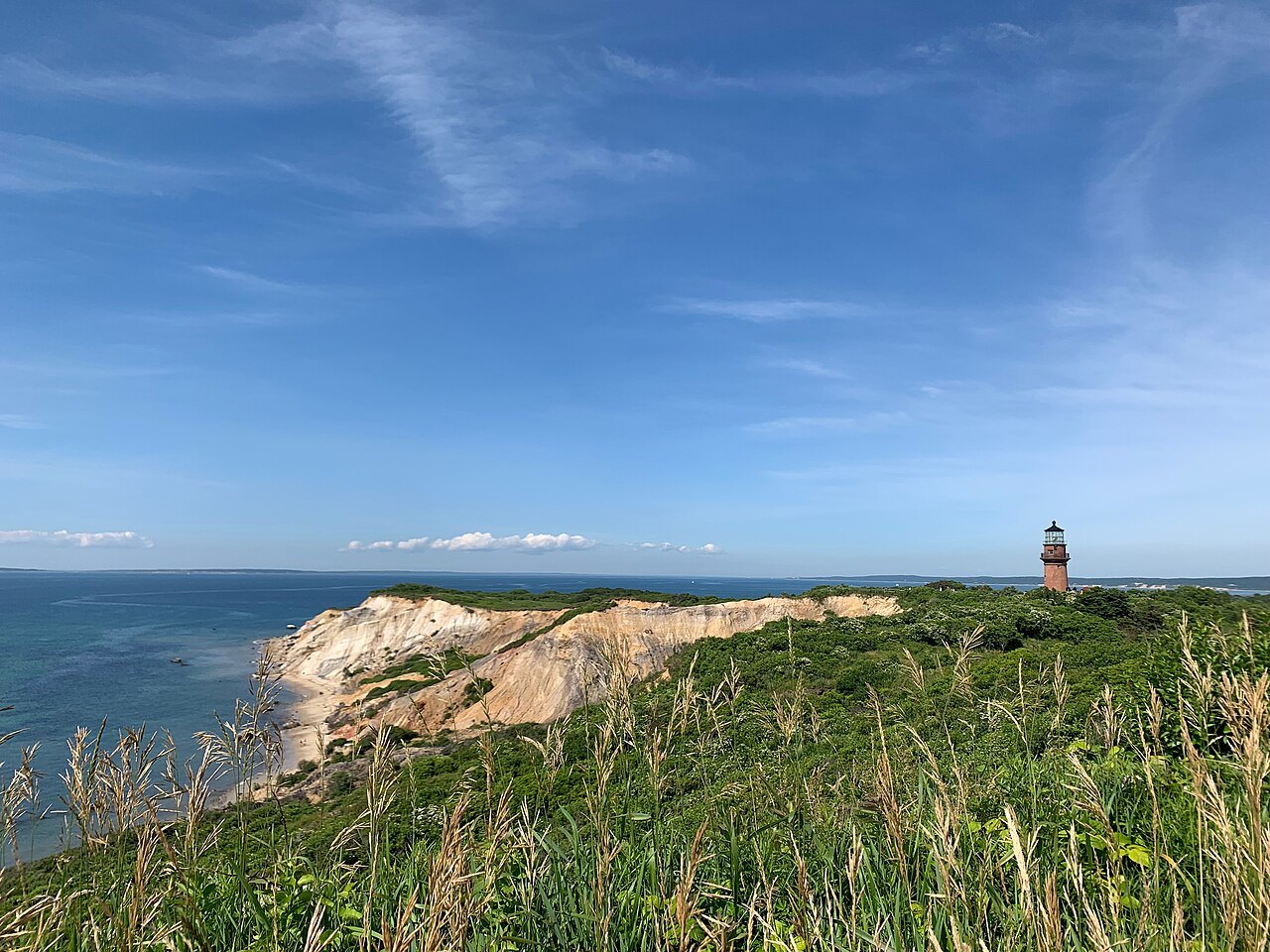
- AquinnahThe western point, home of the Wampanoag, and its multicolored clay cliffs.
- Gay Head LightA red-brick tower lit in 1856 above the cliffs and the rocks called Devil's Bridge.
- Menemsha and ChilmarkThe fishing village and up-island farmland where much of Jaws was filmed.
The place in fullII
Reading the place
Why it matters
Martha's Vineyard lies just south of Cape Cod, an island of about ninety-six square miles, the largest in New England after Long Island and Mount Desert. It makes up most of Dukes County, and it is known above all as a summer colony: about twenty thousand people live there all year, and in summer the population swells to more than two hundred thousand, with more than half of its homes occupied only seasonally.
It is several islands in one. Down-island, the three harbor towns of Edgartown, Oak Bluffs and Vineyard Haven hold the ferries, the shops and the busiest streets; up-island, West Tisbury, Chilmark and Aquinnah are farms, stone walls, ponds and the cliffs at the western end. A visit that sees only one half misses the character of the other.
Noepe and the Mayhews
The island was first home to the Wampanoag, who called it Noepe, land amid the streams; in 1642 some three thousand of them lived there. The English name is often said to honor the daughter of Bartholomew Gosnold, who sailed here in 1602, but more likely both the island and his daughter were named for his mother-in-law, Martha Golding, who helped pay for his voyage.
Thomas Mayhew bought the Vineyard, Nantucket and the Elizabeth Islands, and his son, also Thomas, founded the first English settlement in 1642 at Great Harbor, later Edgartown. The Mayhews were careful of Wampanoag land rights and kept friendly relations, and during King Philip's War the island's Wampanoag did not join the uprising. A substantial Wampanoag community remains on the island today, mainly in Aquinnah.
Edgartown and the whalers
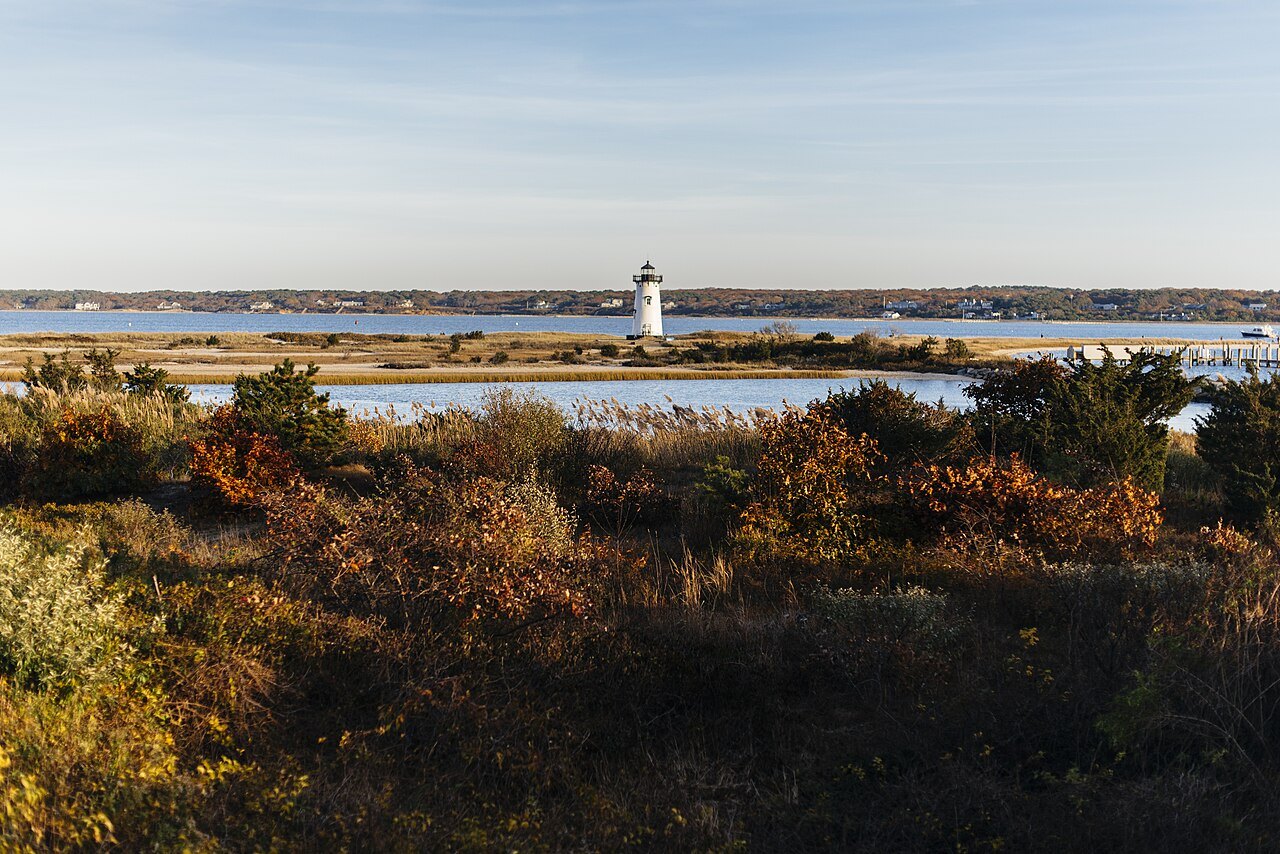
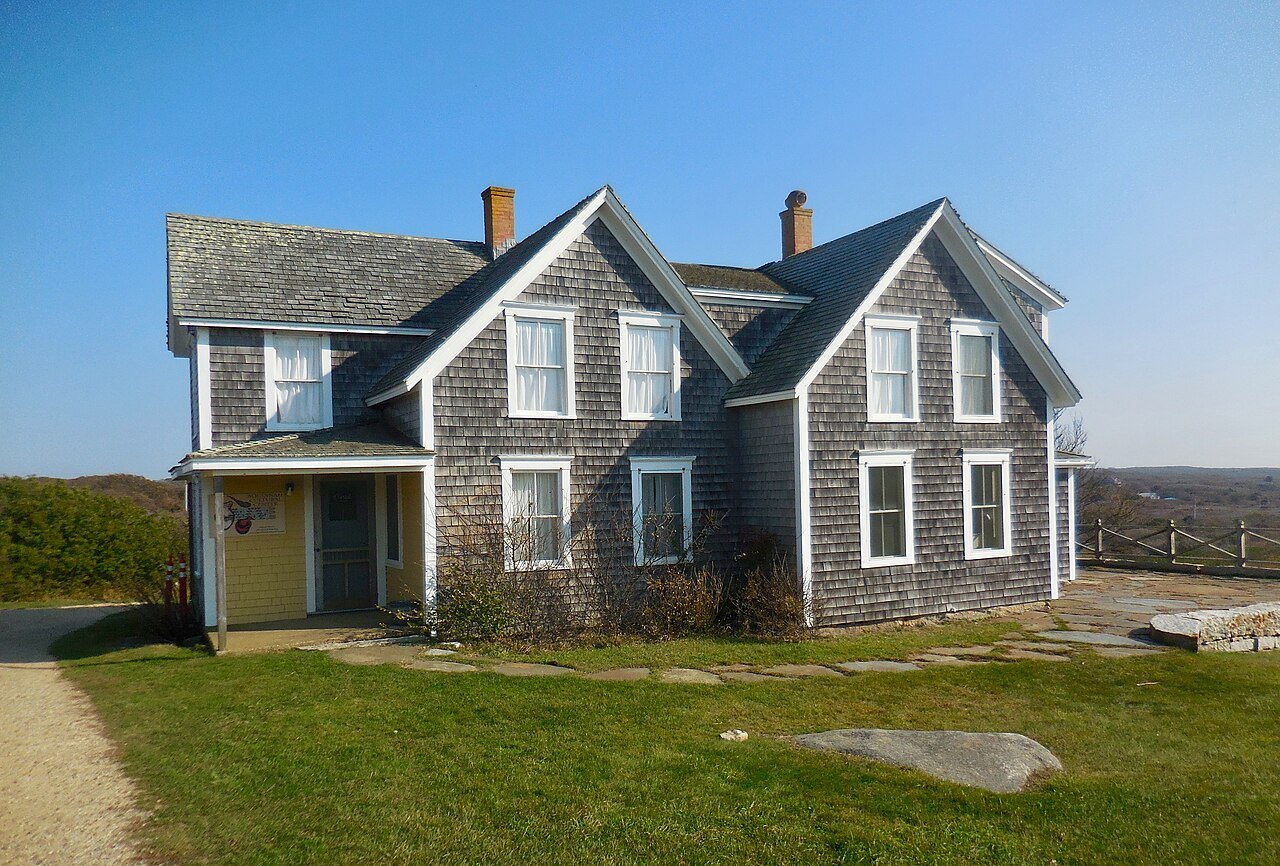
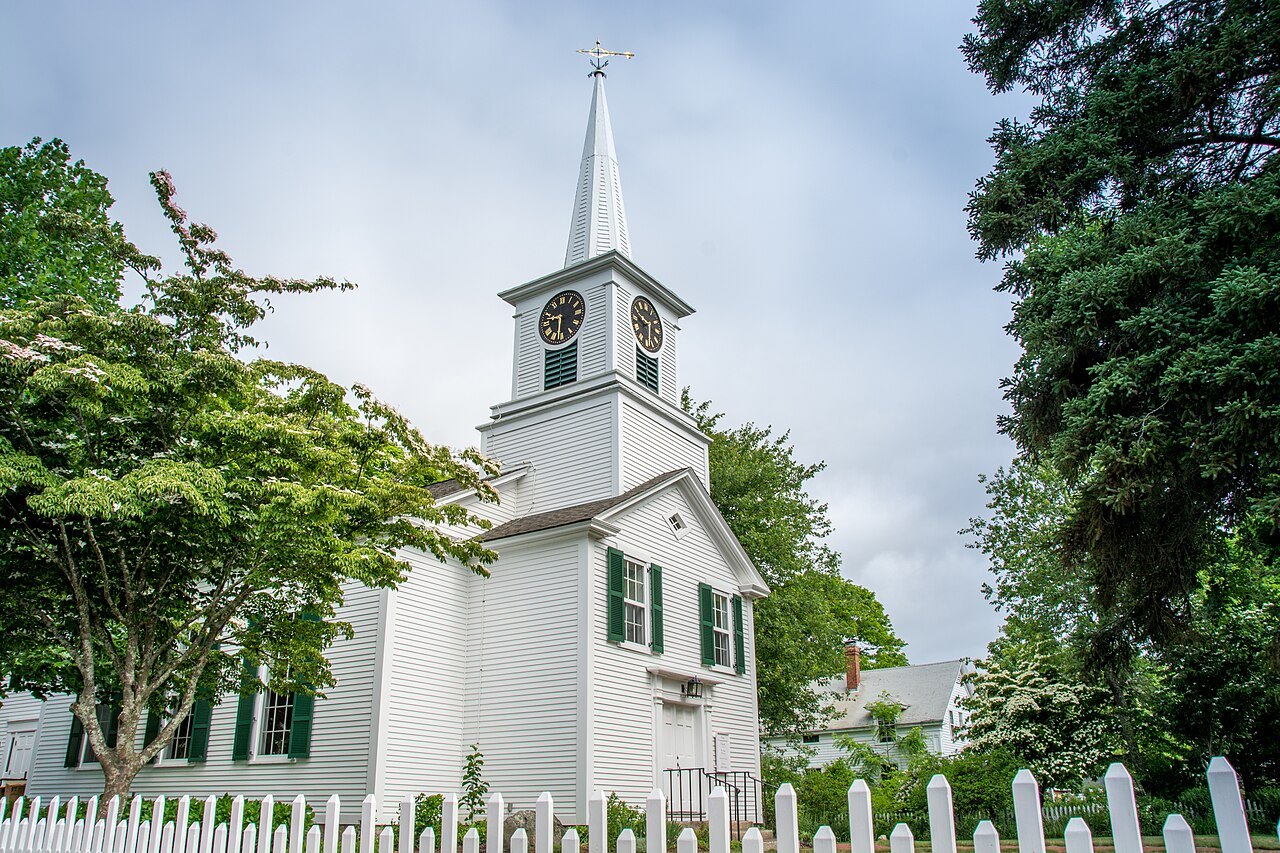
Like Nantucket, the Vineyard was brought to prominence in the nineteenth century by whaling. Edgartown, one of the two original towns, was an old whaling port where ships from around the world docked in the sheltered bay, and its captains built large houses with widow's walks overlooking the harbor. Many of them still line both sides of Water Street, and the town is now a summer place known for its harbor and its yachting events.
Across a narrow channel from Edgartown lies Chappaquiddick, part of the town, reached by a short ferry.
From whaling to summer colony
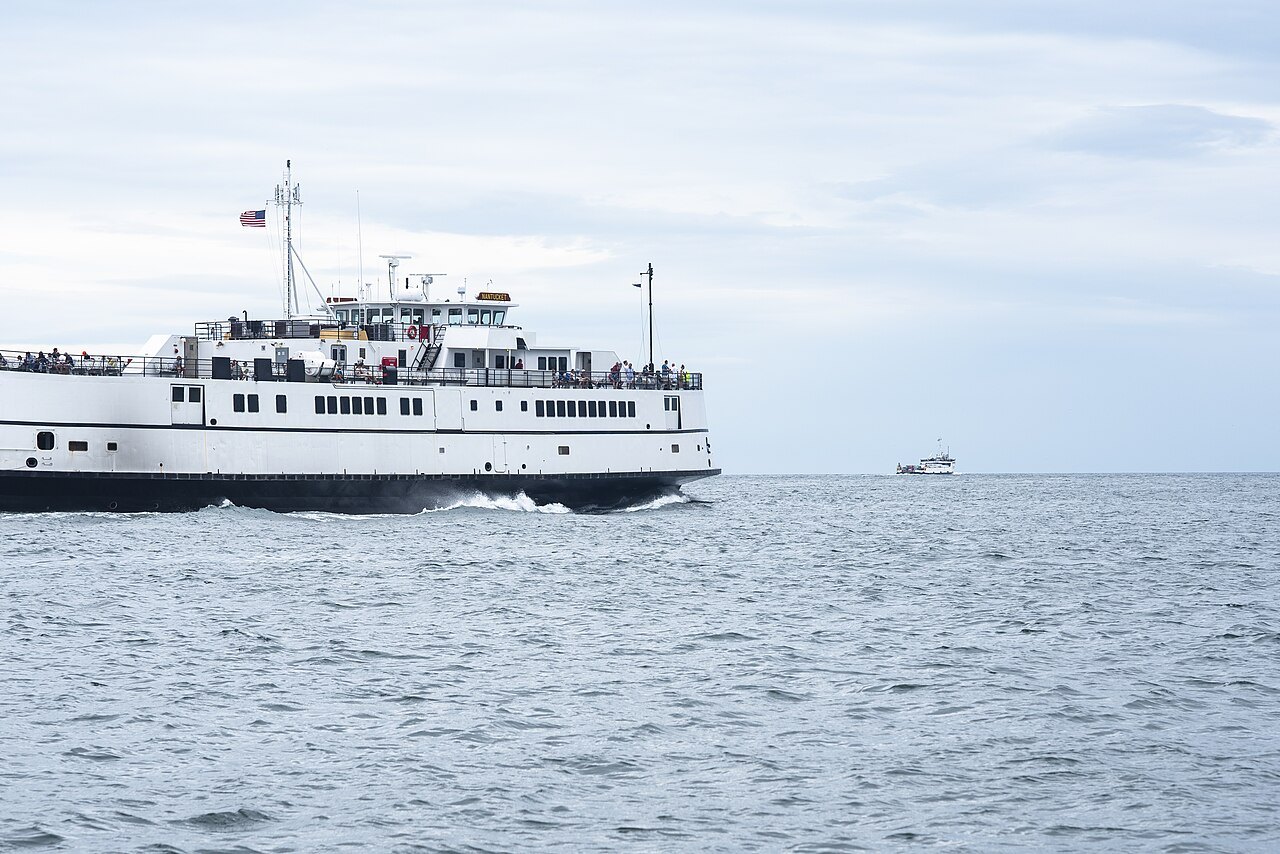
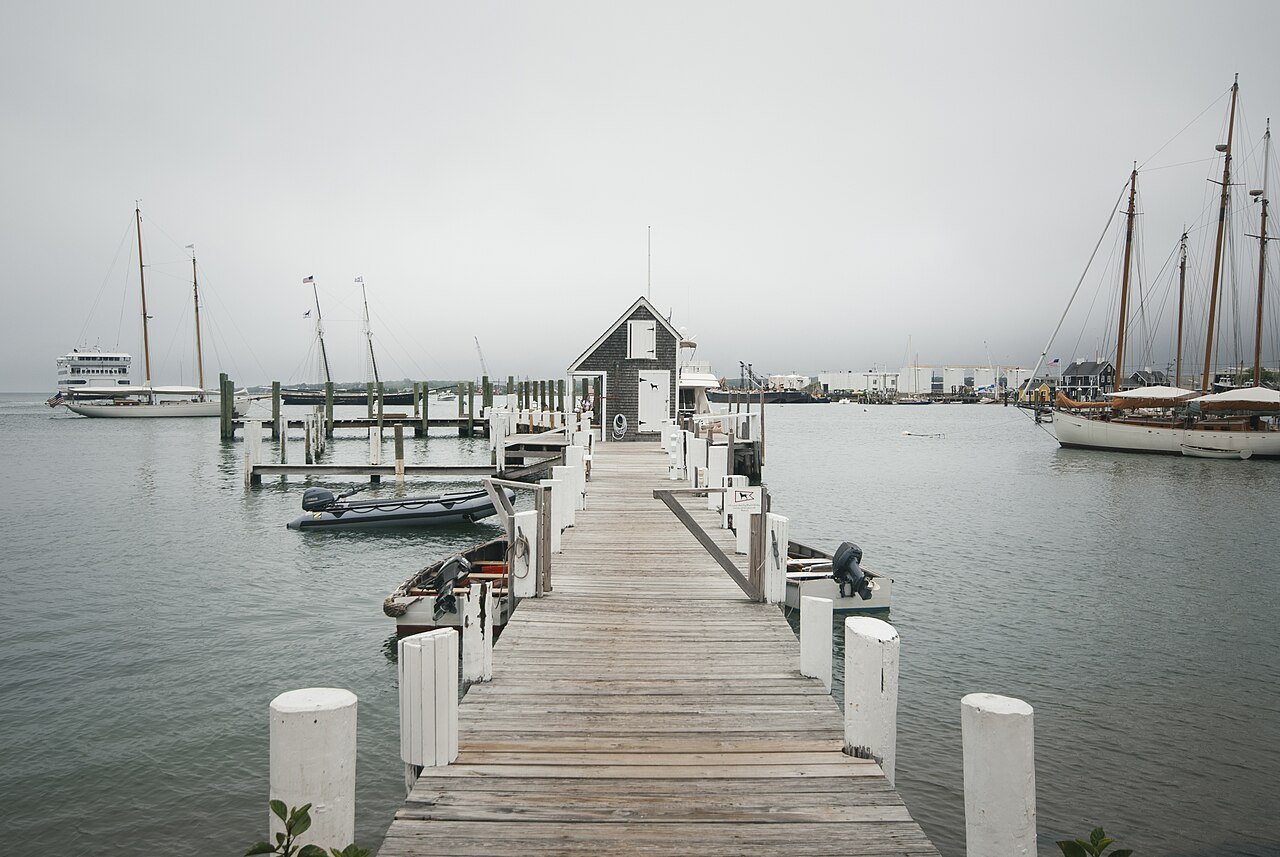
The summer colony came with the railroad. After the Old Colony line reached Woods Hole in 1872, summer houses began to spread across the island, among them new communities such as Harthaven and Ocean Heights near Sengekontacket Pond in Edgartown. Ferries had linked the islands to the mainland since the steamboat companies of the nineteenth century, and in 1949 the Commonwealth gathered the private lines into a single public body, the Steamship Authority, which still regulates every ferry to the Vineyard and Nantucket.
Politically the island has not always been Massachusetts: in 1671 Mayhew's lands were placed under the Province of New York, and only in 1691, with the new Massachusetts charter, was Dukes County transferred to Massachusetts and split from Nantucket County.
Oak Bluffs and its cottages
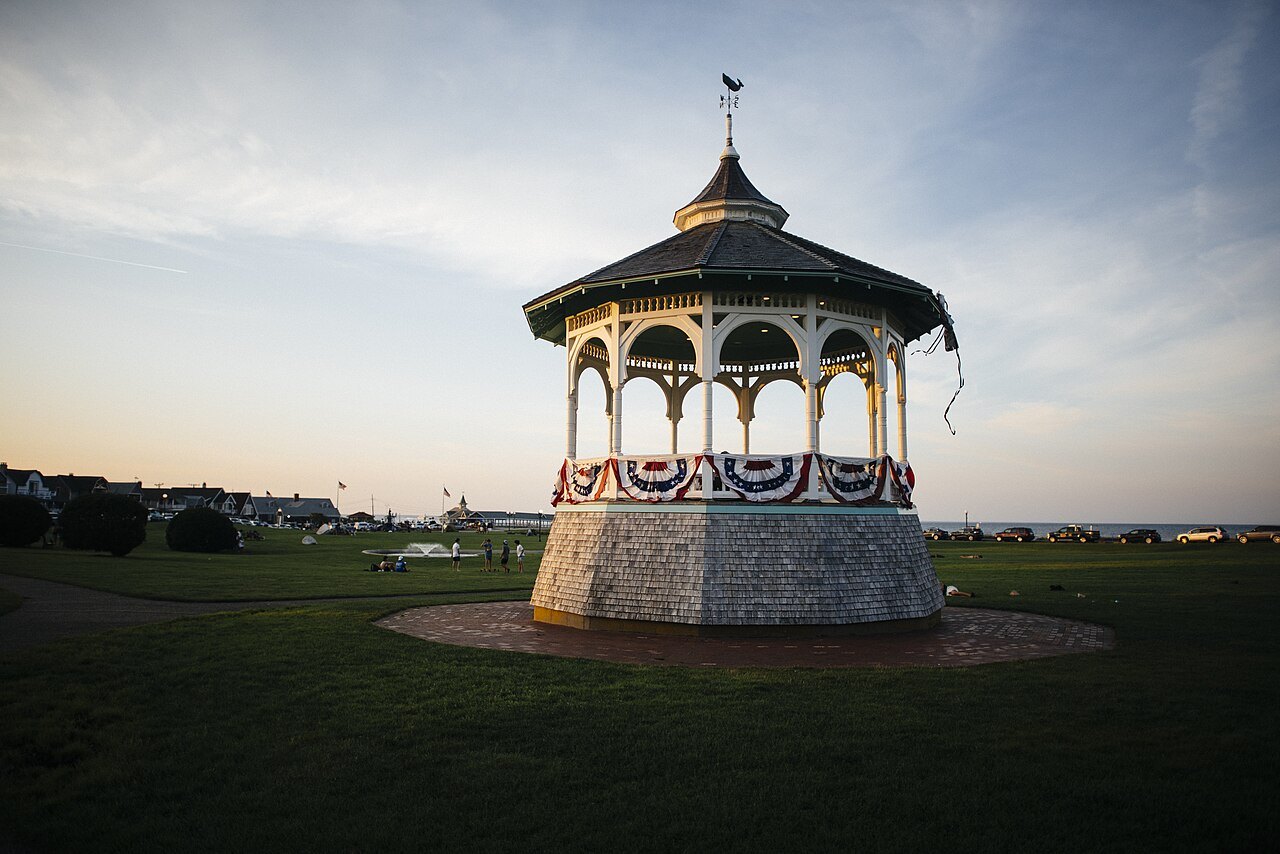
Oak Bluffs began as a Methodist camp meeting. Worshipers gathered each summer in an oak grove called Wesleyan Grove for meetings under tents; as families returned year after year, the tents moved onto wooden platforms and then gave way to small wooden cottages, closely packed along narrow curving lanes. Over time the cottages grew more elaborate, in a Carpenter's Gothic style of fretwork and bright paint, and by the late nineteenth century these gingerbread cottages were a sight in their own right.
Oak Bluffs was the only one of the island's six towns to be consciously planned, and the only one built with tourism in mind. It has been a center of African American culture since the eighteenth century, and when inns elsewhere on the island refused Black guests, it welcomed them; by the 1930s it was the country's best-known African American summer resort, with Shearer Cottage its first inn for Black vacationers. The Flying Horses Carousel, built in 1876 and brought from Coney Island in 1884, is the oldest platform carousel still running.
Aquinnah and the light
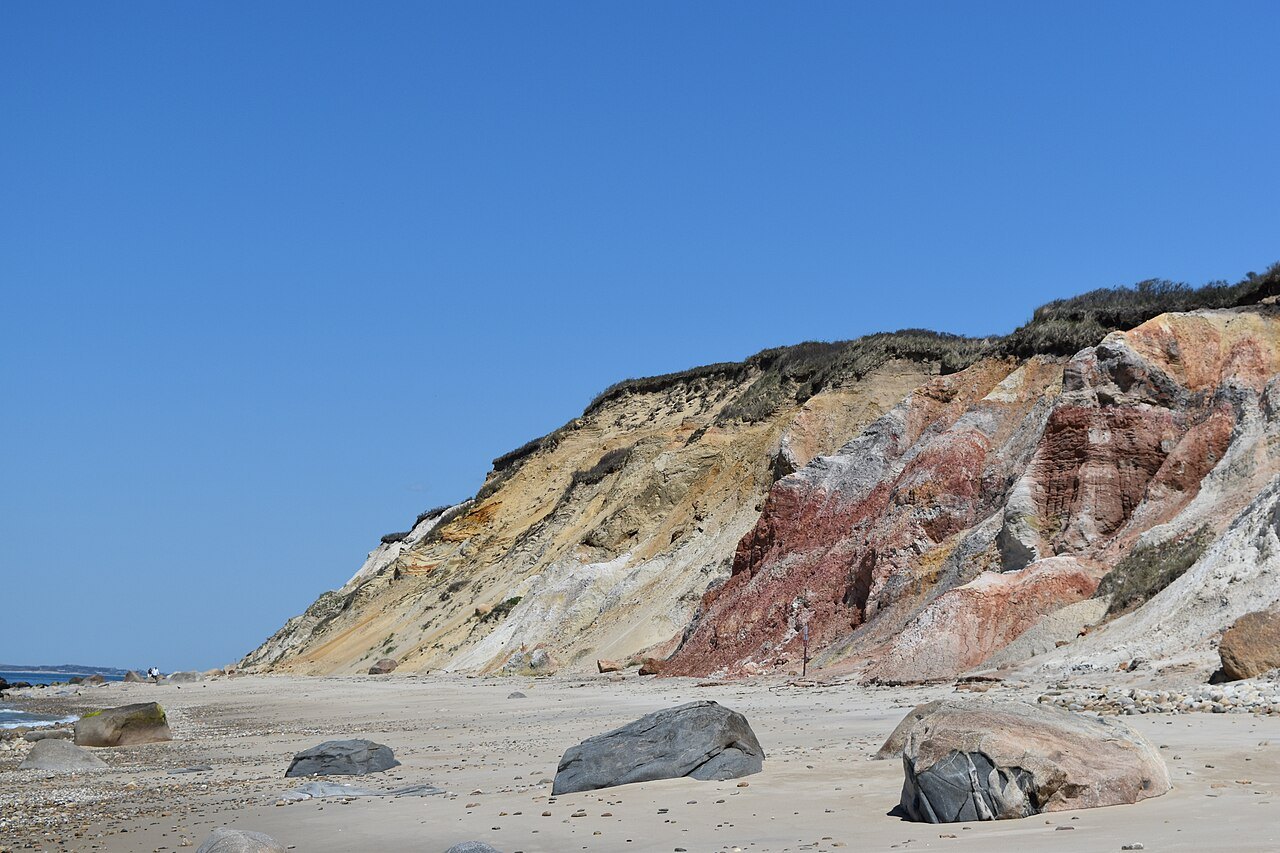
At the island's western point is Aquinnah, formerly Gay Head, home to the Wampanoag and to the clay cliffs that give the headland its colors. Above them stands Gay Head Light. A light was first requested in 1796 to warn ships off a reef of underwater rocks known as Devil's Bridge, in waters crossed by great numbers of vessels, and in 1799 President John Adams approved a wooden tower here.
That tower was moved back from the eroding cliffs in 1844, and the present conical tower of red brick, fifty-one feet tall, was begun in 1854 and lit in 1856 to hold a first-order Fresnel lens. Its bricks were made at the Chilmark brickyard nine miles away, from the island's own clay.
Menemsha, Chilmark and Jaws
Up-island, between Aquinnah and West Tisbury, lie Chilmark and the fishing village of Menemsha. In 1974 Steven Spielberg filmed Jaws on the Vineyard, most notably in Menemsha and Chilmark, and scenes from two sequels were shot on the island too; in 2005 it marked the film's thirtieth anniversary with a weekend festival. West Tisbury holds the island's farmland and, with Edgartown, the Manuel F. Correllus State Forest and the airport.
How to visit
The Steamship Authority runs ferries all year from Woods Hole to Vineyard Haven, and from late May to late October to Oak Bluffs as well, a crossing of about forty-five minutes; it is the only line that carries cars. Hy-Line Cruises runs fast catamarans from Hyannis to Oak Bluffs in season, about an hour. Stay in one of the down-island towns and give a day to the up-island loop and Aquinnah; summer is the island at its fullest, spring and autumn at its quietest.
Where to go nextIII
Nearby
- Nearby · The Islands · NantucketNantucketAn island about thirty miles south of Cape Cod, once the whaling capital of the world, whose town the Park Service calls the finest surviving New England seaport of the late 1700s and early 1800s.Read the page →
- Nearby · Cape Cod · the Outer CapeCape Cod National SeashoreNearly forty miles of Atlantic shore on the outer arm of Cape Cod, set aside on August 7, 1961: high sand cliffs and dunes, kettle ponds and pine woods, and a chain of lighthouses from Nauset to Race Point.Read the page →
- Nearby · South Coast · New BedfordNew Bedford, the Whaling CityThe world's preeminent whaling port of the nineteenth century, remembered in a national historical park across thirteen city blocks: the Whaling Museum with its whale skeletons, the Seamen's Bethel of Moby-Dick, and the cobbled streets that ran down to the wharves.Read the page →