Home · Landmarks · New Bedford, the Whaling City
What you are looking atI
New Bedford, the Whaling City
South Coast · New Bedford
- The Whaling MuseumFive whale skeletons, the largest collections of scrimshaw and logbooks in the world.
- The LagodaA half-size whaling ship built inside the museum in 1916, the largest model of its kind.
- The Seamen's BethelThe whalers' chapel on Johnny Cake Hill, of 1832, walls lined with the names of the lost.
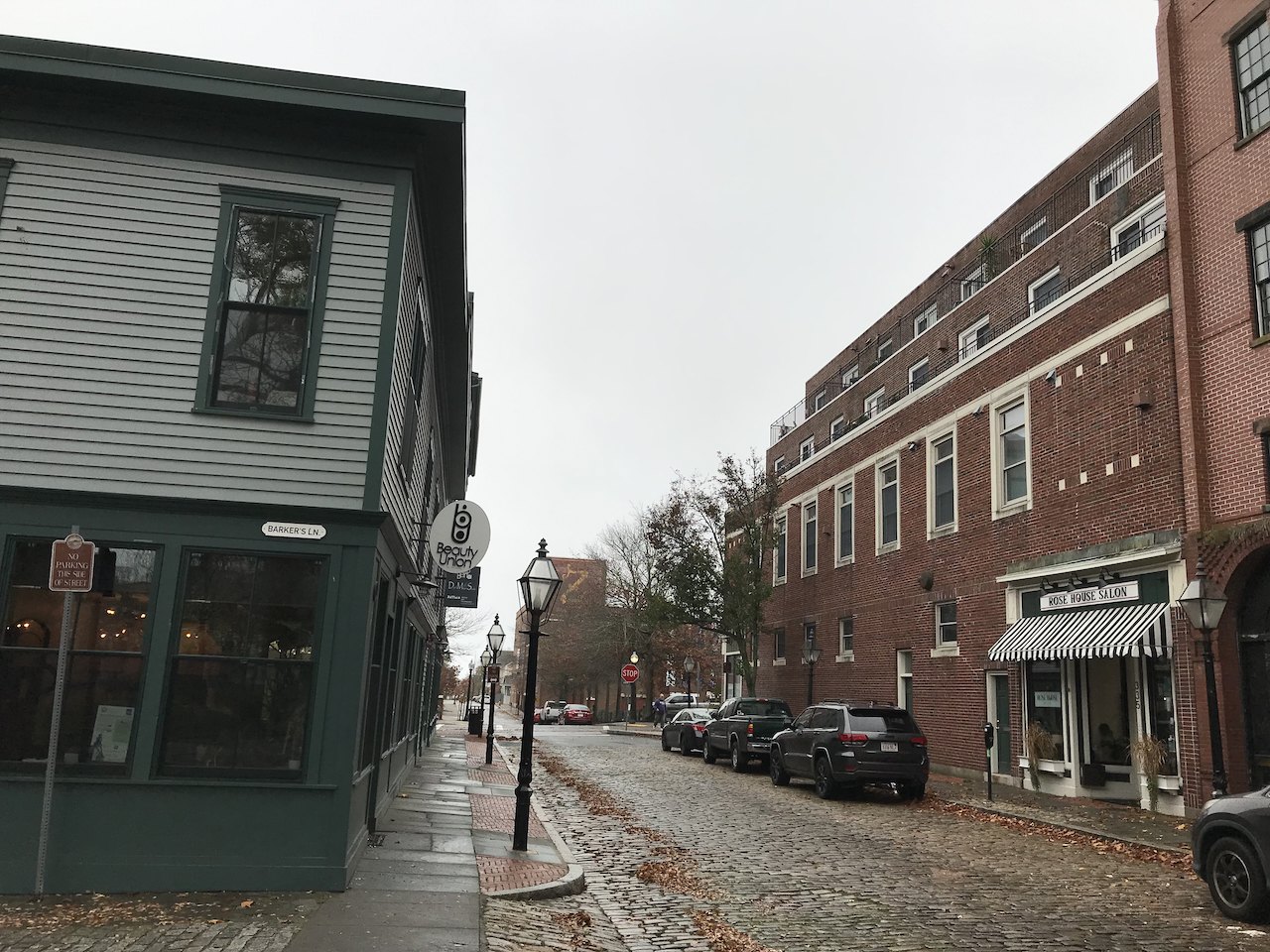
- The historic districtThirteen blocks of the old port, part of a National Historic Landmark.
- The Rotch–Jones–Duff HouseA whaling merchant's house and garden, now a museum.
- The WhalemanA monument to the whalers in front of the public library.
The place in fullII
Reading the place
Why it matters
In the nineteenth century New Bedford was the greatest whaling port in the world. At the height of the trade, in 1857, 329 vessels sailed from its harbor, and it was said to be the richest city per capita in North America. Its ships hunted whales across every ocean, some two thousand voyages of them to the western Arctic alone, and the logbooks of those voyages are still kept in the city.
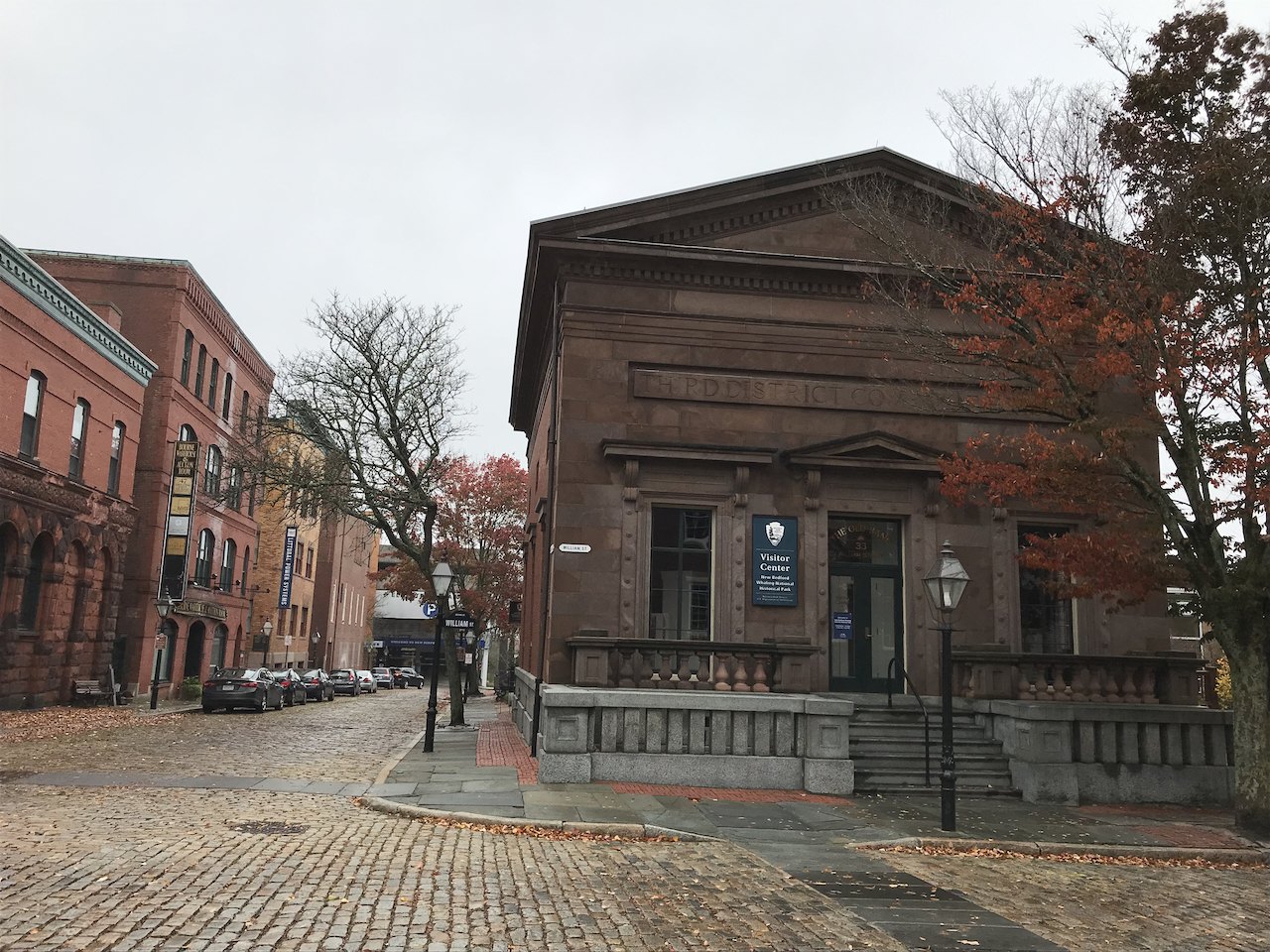
New Bedford Whaling National Historical Park, established in 1996, remembers that history across thirteen city blocks of the old port. It is a partnership: the National Park Service owns only its visitor center and a learning center, and the city and private owners keep the rest, including the Whaling Museum, the Seamen's Bethel, the historic district, the schooner Ernestina and the Rotch–Jones–Duff House and Garden Museum. Unlike museum villages made of buildings moved from elsewhere, this is the real place, and the city calls it New England's real seaport.
A port of many peoples
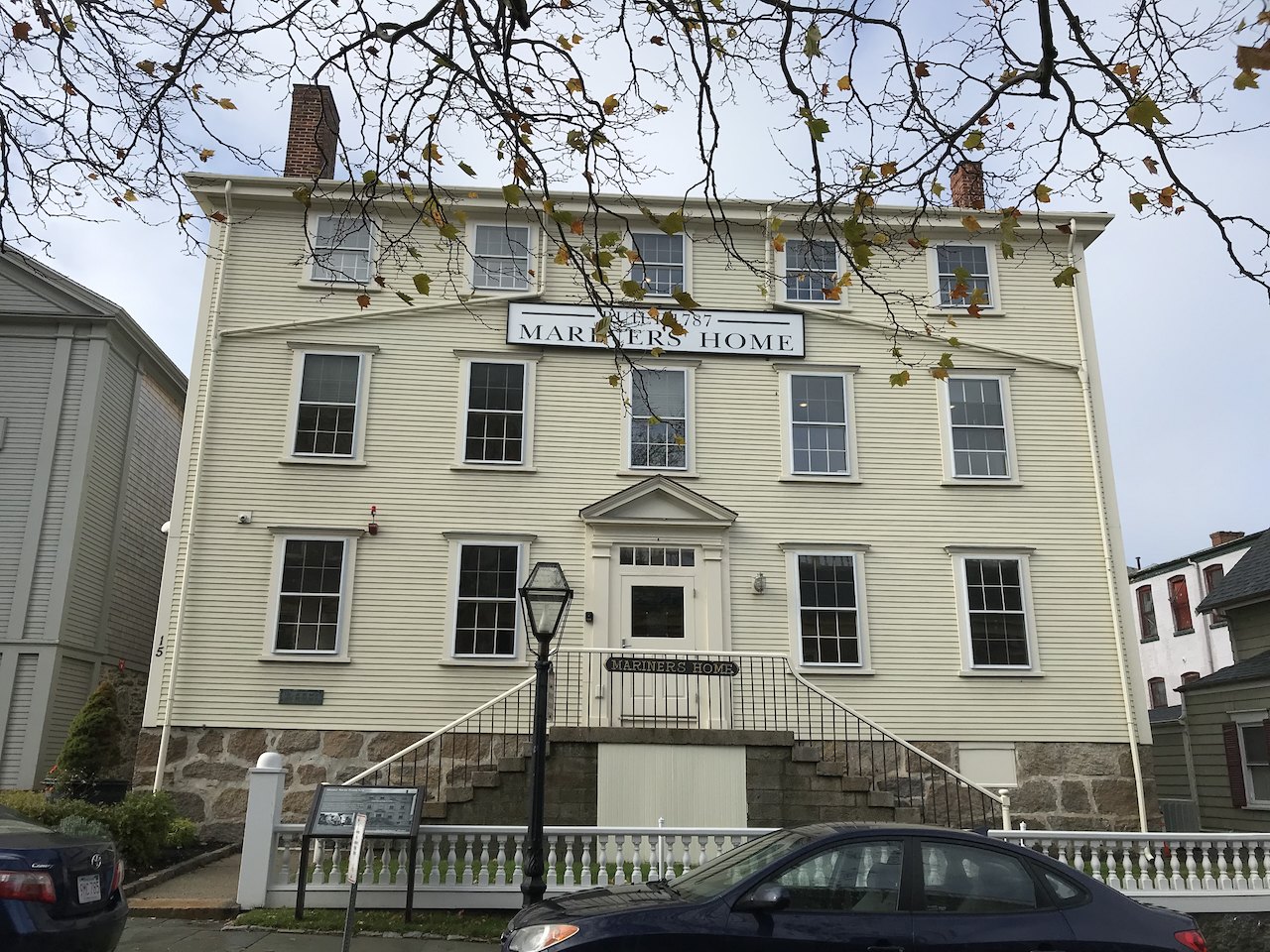
New Bedford grew from Bedford Village on the west bank of the Acushnet River in the old town of Dartmouth, and was incorporated as a town on February 23, 1787. Quaker merchants such as William Rotch and Samuel Rodman led the whaling trade, and on its ships and wharves and in its shops British, Wampanoag, Cape Verdean, Azorean, Irish and West African men found work.
The city drew many freed and escaped slaves. Frederick Douglass lived here from 1838 to 1841 after his escape and worked on the wharves. Later in the century immigrants arrived from Portugal and its Atlantic islands, Cape Verde, the Azores and Madeira, many with family already in the whaling fleet, and the city is still known for its high concentration of Portuguese Americans, who founded its first Portuguese parish.
The Whaling Museum
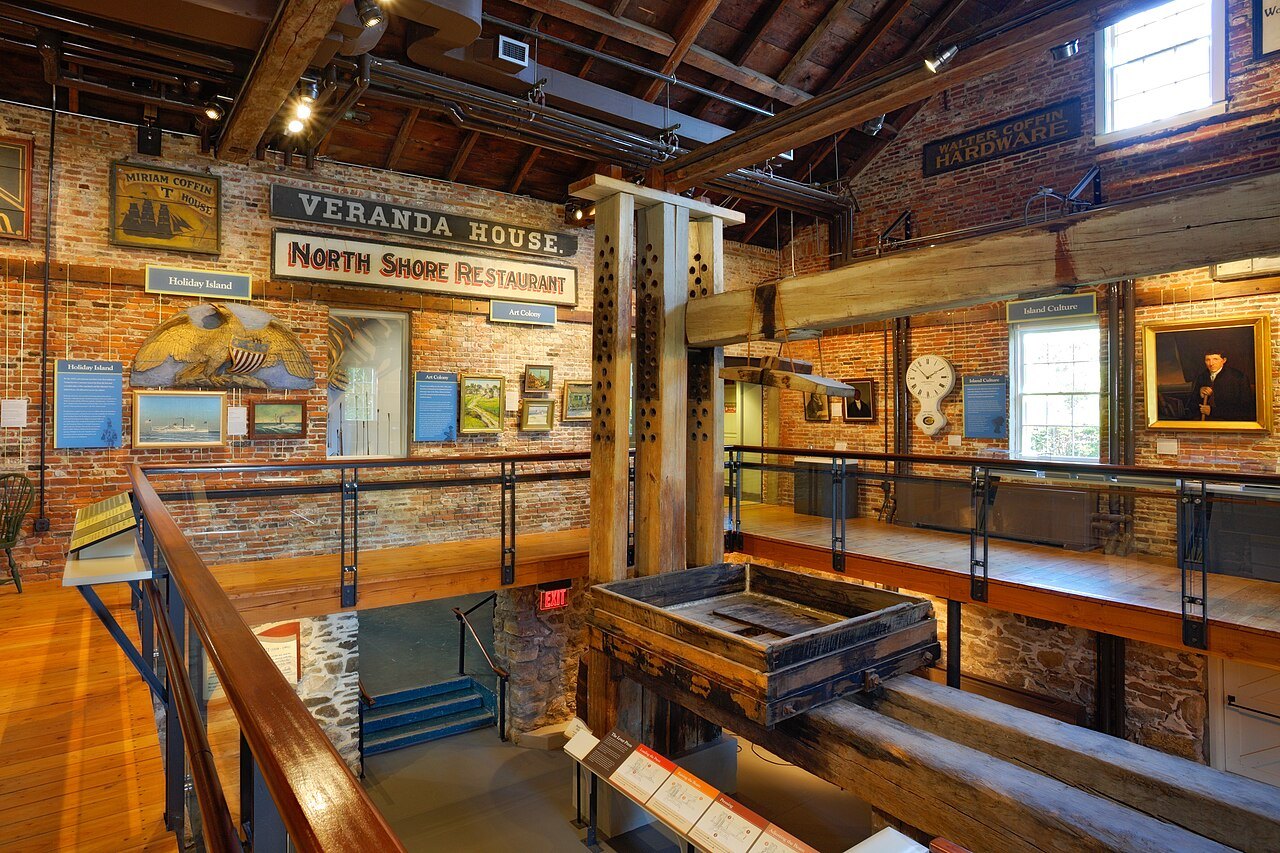
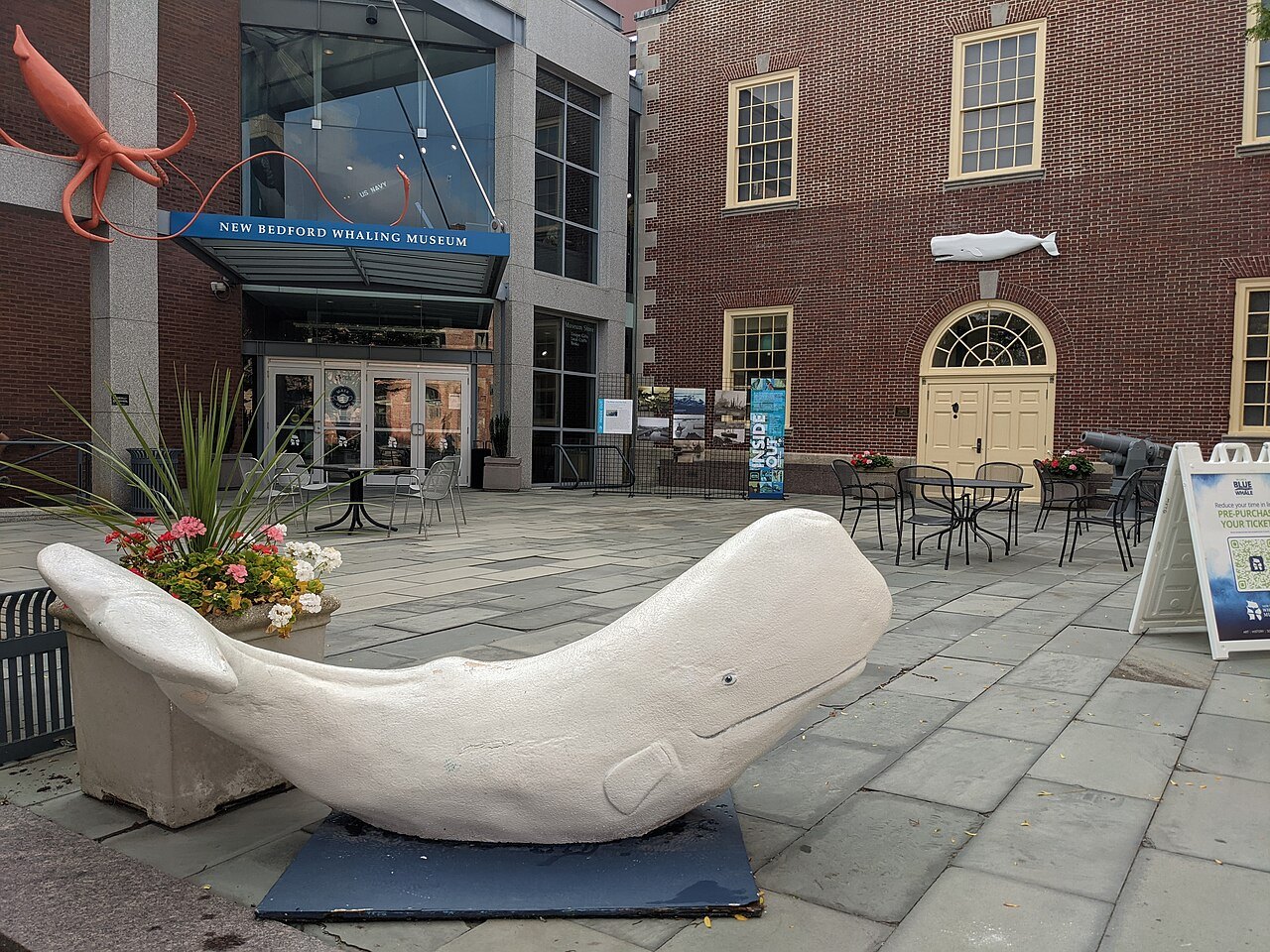
At the top of Johnny Cake Hill stands the New Bedford Whaling Museum, run by the Old Dartmouth Historical Society, founded in 1903. Its collections run to more than 750,000 items, among them some 3,000 pieces of scrimshaw and 2,500 logbooks from whaling ships, both the largest collections of their kind in the world, and fine art by painters who lived or worked in the area, among them Albert Bierstadt, William Bradford and Albert Pinkham Ryder.
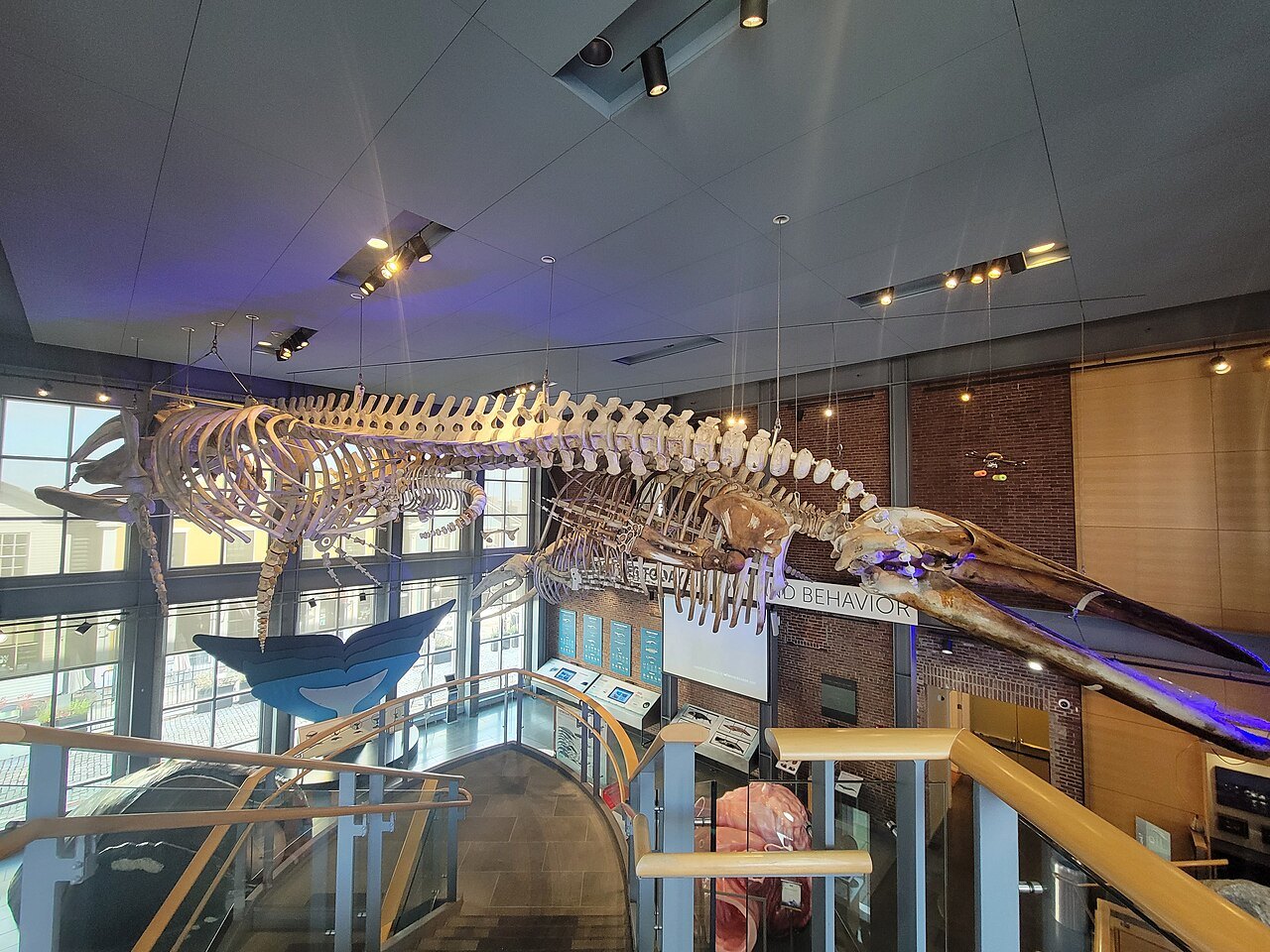
Five complete whale skeletons hang in its halls: a humpback called Quasimodo, the first, acquired in 1936; a juvenile blue whale; a sperm whale acquired in 2002; and a North Atlantic right whale that was pregnant when she died, acquired in 2008. In the Bourne Building, given in 1915 in memory of the whaling merchant Jonathan Bourne Jr., is the Lagoda, a half-size model of his ship, built inside the building in 1916 and the largest model whaling ship in the world.
The Seamen's Bethel
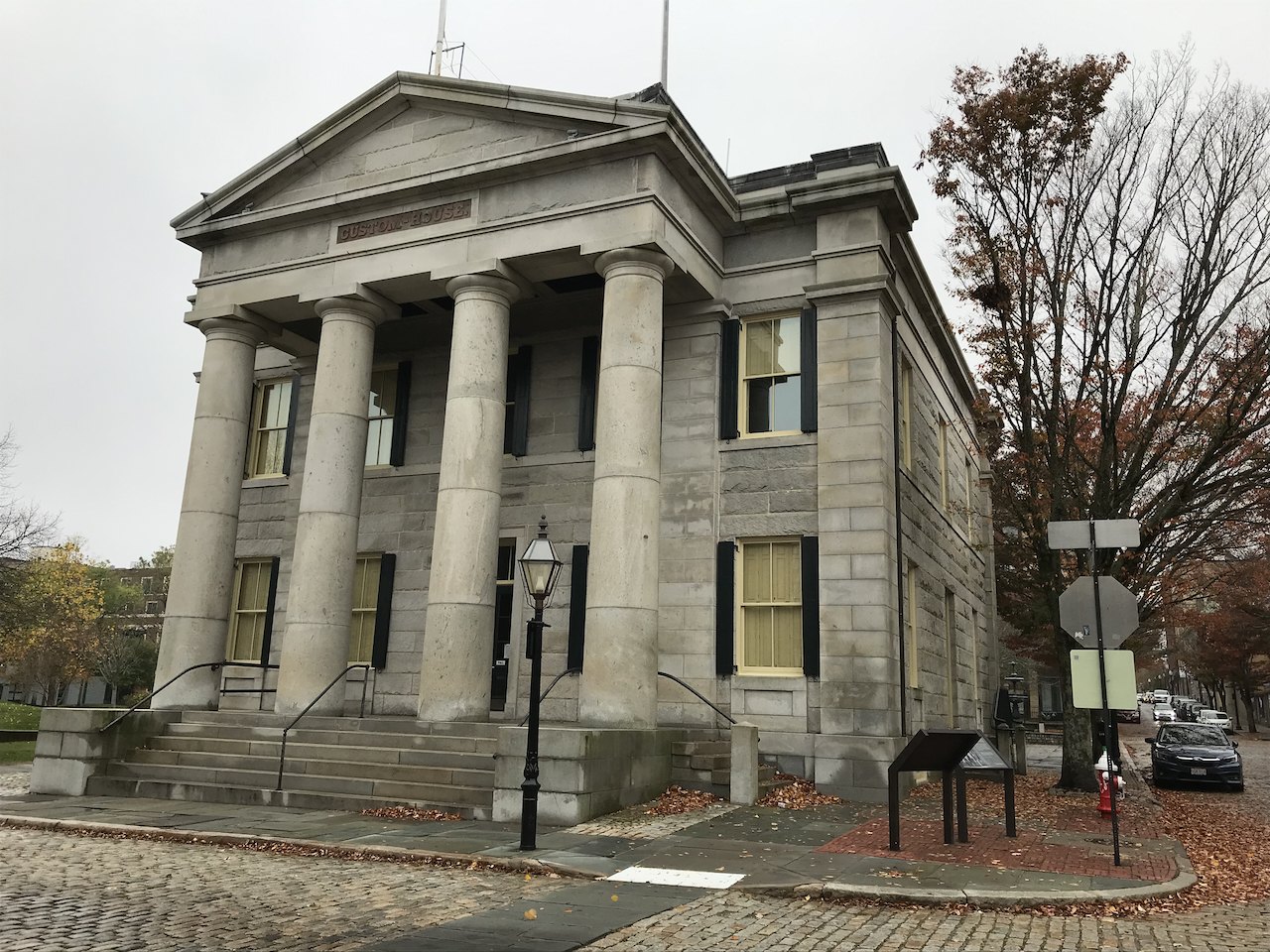
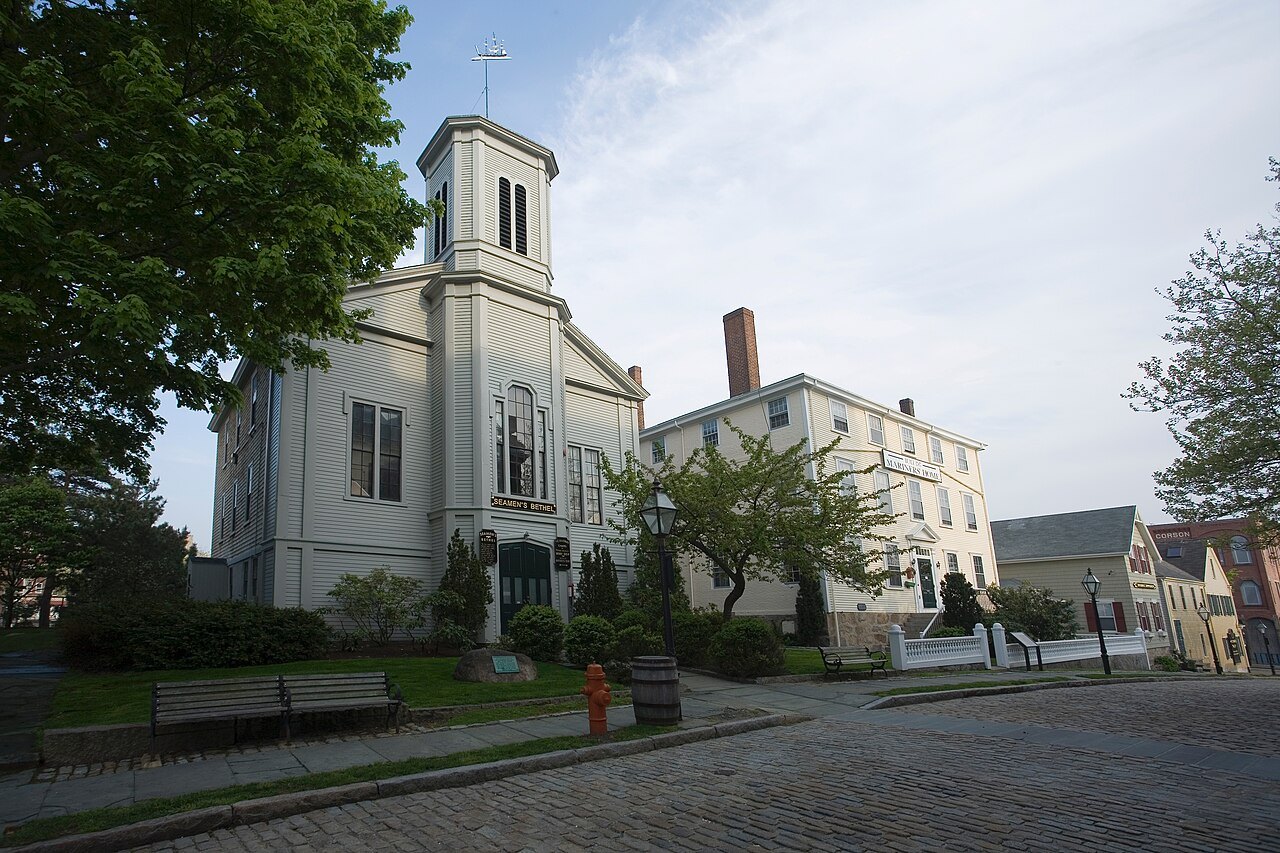
Across the street from the museum is the Seamen's Bethel, completed by the New Bedford Port Society on May 2, 1832. Whalers considered it a tradition to attend a service there before setting out, and the walls are lined with memorial tablets to New Bedford whalers killed at sea, and later to all the area's fishermen lost.
New Bedford is one of the settings of Herman Melville's Moby-Dick, published in 1851, and the whalers' chapel of his book belongs to this hill; the presence of Cape Verdeans in the fleet inspired his character Daggoo. The building was repaired after a fire in 1866. In the summer of 1862 James Henry Gooding, later a soldier and correspondent of the 54th Massachusetts, was married there.
The houses of the whaling merchants
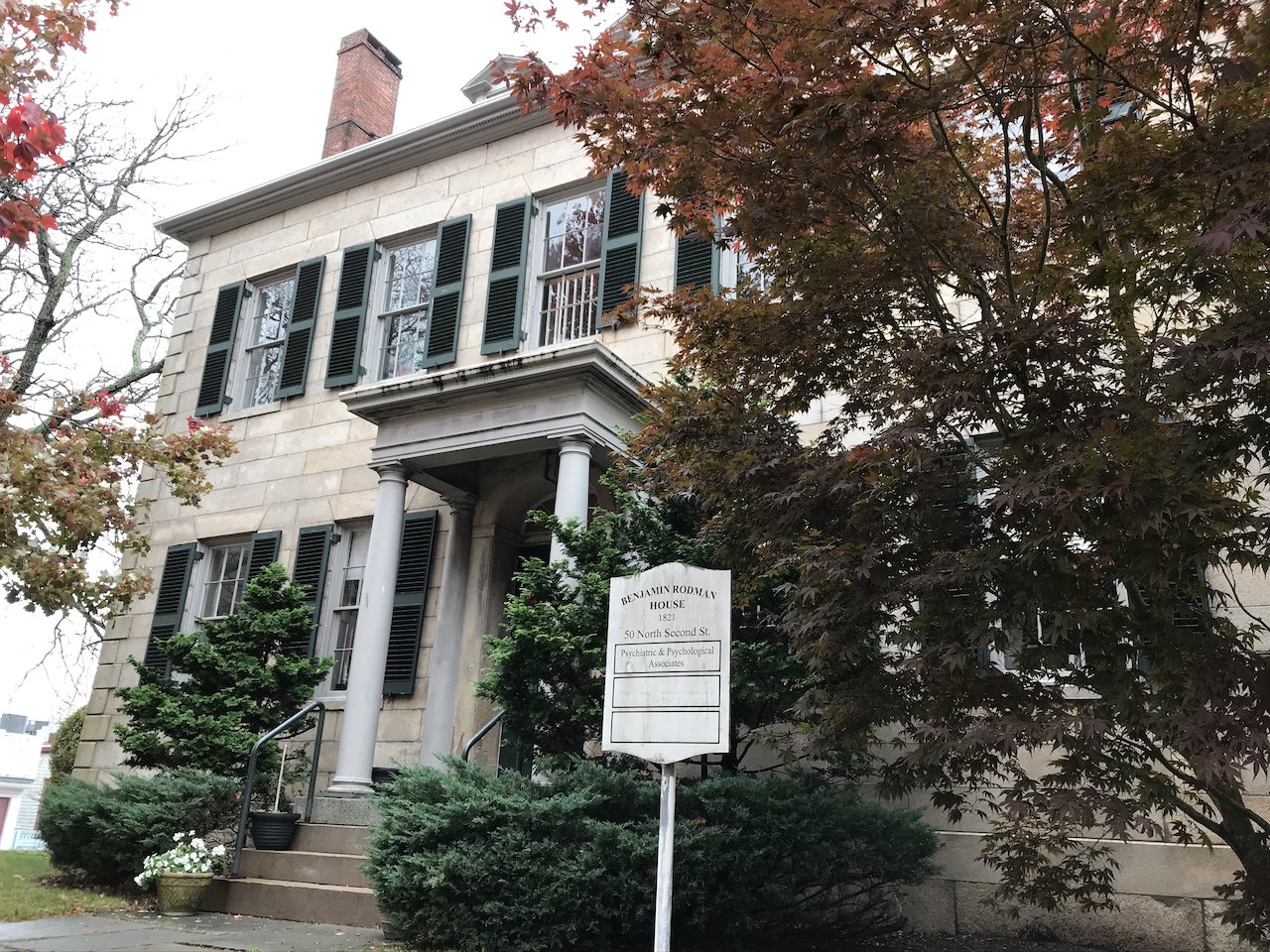
The money of the trade built the houses on the hill above the harbor. The Rotch–Jones–Duff House and Garden Museum is a twenty-eight-room Greek Revival mansion built in 1834 for the whaling merchant William Rotch Jr.; between 1834 and 1981 three prominent families owned it in turn, and it is now kept with its garden as a museum within the park. Its rooms and grounds show the domestic side of the fortunes made on the wharves below.
The park's founding law also set up a formal link with the Iñupiat Heritage Center in the far north of Alaska, to remember the more than two thousand voyages New Bedford ships made to the western Arctic. The schooner Ernestina is also part of the park, alongside the museum, the chapel and the houses.
The museum itself grew from a paper read in January 1903 by Ellis L. Howland, a reporter for the Evening Standard, who lamented the old logbooks that had been ground into wrapping paper. The historical society founded that year had almost seven hundred members by 1904, and its collection has kept growing ever since.
After the whales
The whaling trade began to decline after petroleum was discovered in 1859 and replaced whale oil. New Bedford turned to textiles, which eclipsed whaling by the late nineteenth century; the New Bedford Textile School opened in the 1890s, and the mills prospered until the Depression and closed by the 1940s.
In front of the public library, at the corner of William and Pleasant Streets two blocks west of the park, stands The Whaleman, a monument to the men who went out in the boats.
How to visit
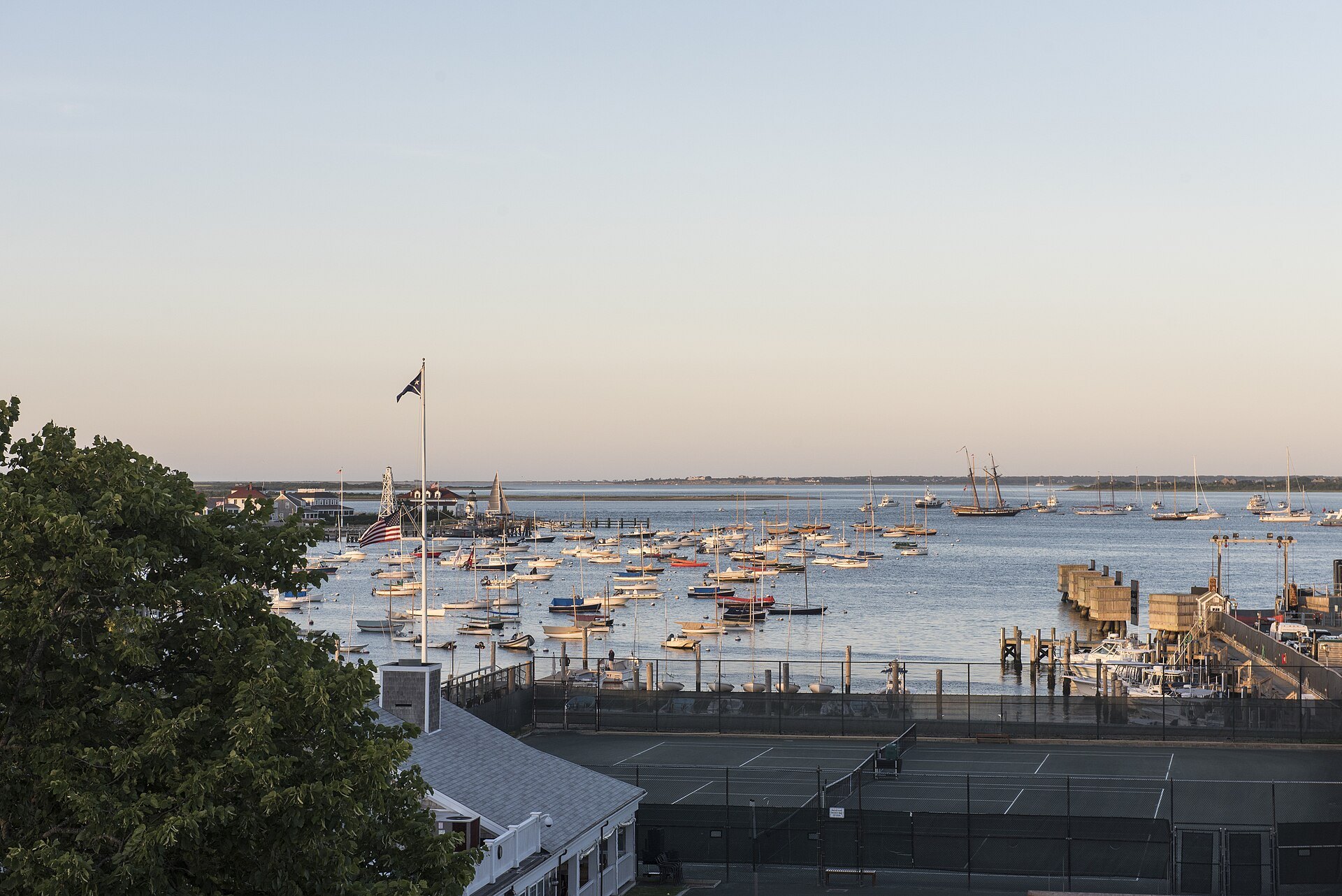
Start at the park's visitor center, then walk up Johnny Cake Hill to the museum and the Bethel opposite, and down the cobbled streets of the historic district toward the waterfront. The museum deserves most of a morning; the Bethel is a short visit. New Bedford is on the South Coast, on the way from Boston toward Cape Cod and the islands, and seasonal ferries to Martha's Vineyard and Nantucket leave from its harbor.
Where to go nextIII
Nearby
- Nearby · South Shore · PlymouthPlimoth Patuxet and the Mayflower IIA living history museum founded in 1947 that recreates Plymouth Colony as it stood in 1627, with a Wampanoag Homesite beside it and the Mayflower II, a full-size reproduction of the Pilgrims' ship, on the town waterfront.Read the page →
- Nearby · The Islands · Dukes CountyMartha's VineyardNoepe in Wampanoag, the land amid the streams: an island of about 96 square miles south of Cape Cod, with the whaling captains' houses of Edgartown, the gingerbread cottages of Oak Bluffs and the clay cliffs of Aquinnah.Read the page →
- Nearby · The Islands · NantucketNantucketAn island about thirty miles south of Cape Cod, once the whaling capital of the world, whose town the Park Service calls the finest surviving New England seaport of the late 1700s and early 1800s.Read the page →