Home · Landmarks · Walden Pond
What you are looking atI
Walden Pond, Concord
Greater Boston · Concord
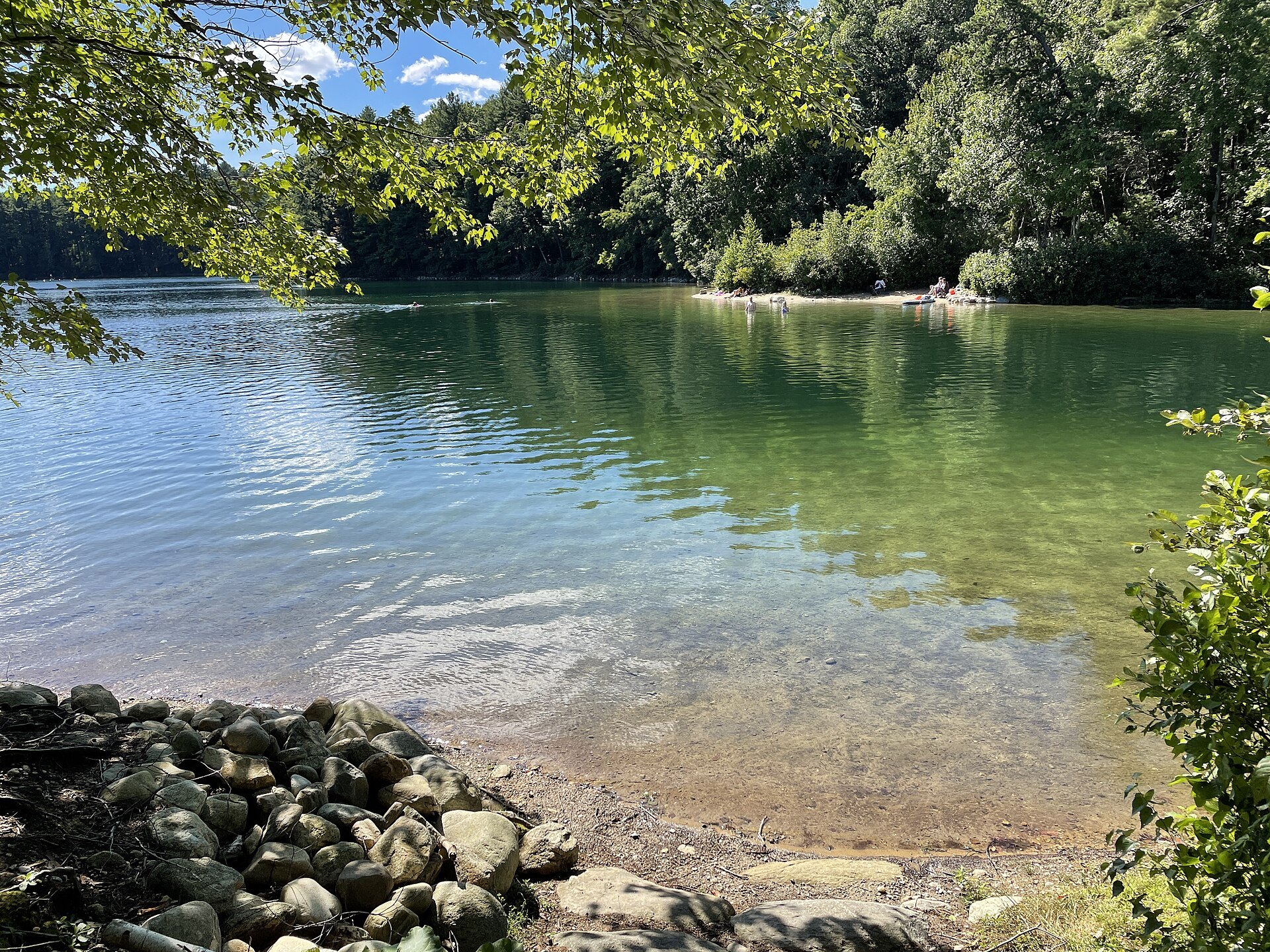
- The pondSome sixty-four acres of clear water in a kettle hole the glaciers left, with no visible inlet.
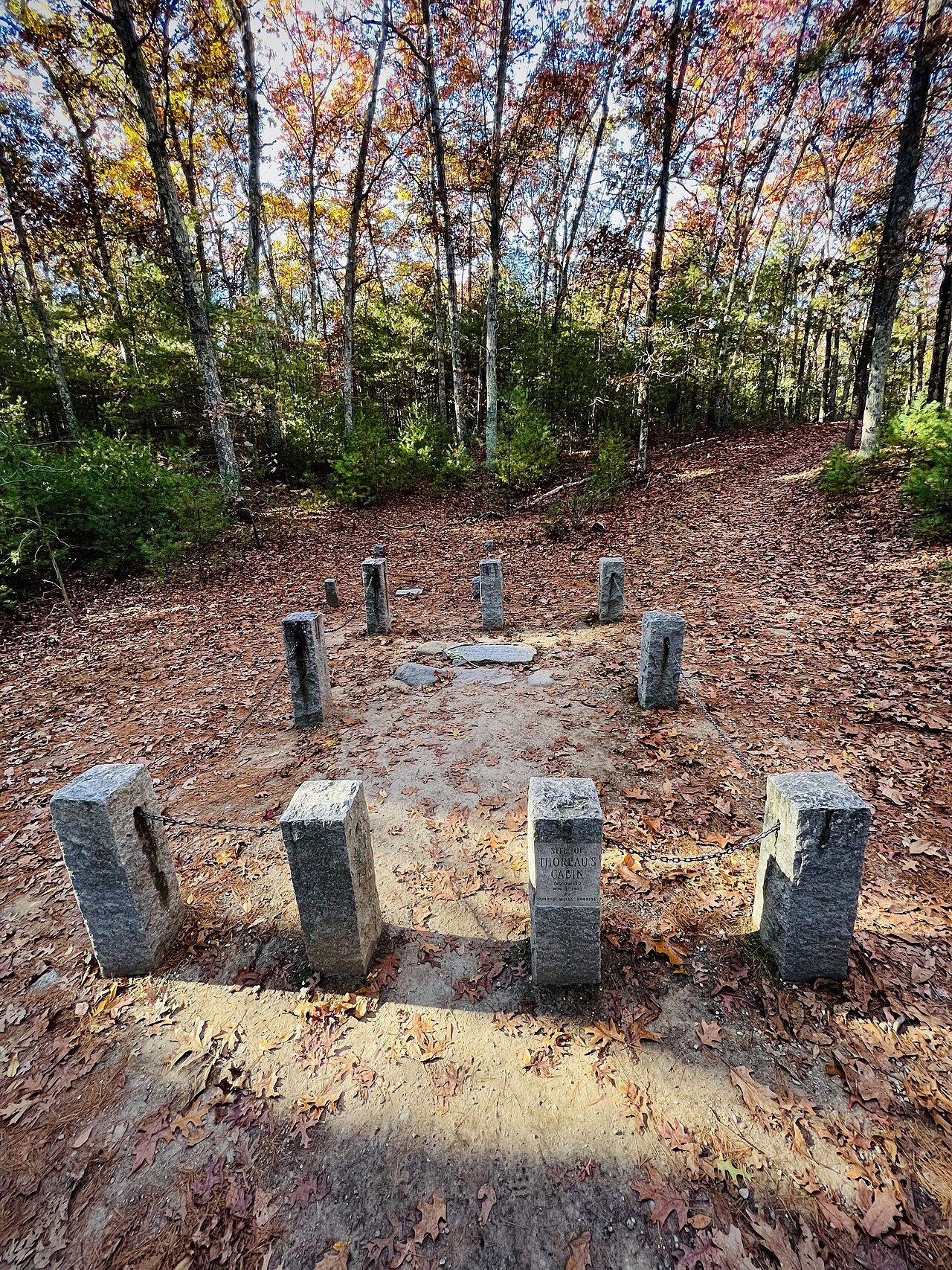
- The cabin siteGranite posts on the north shore mark where Thoreau's one-room house stood.
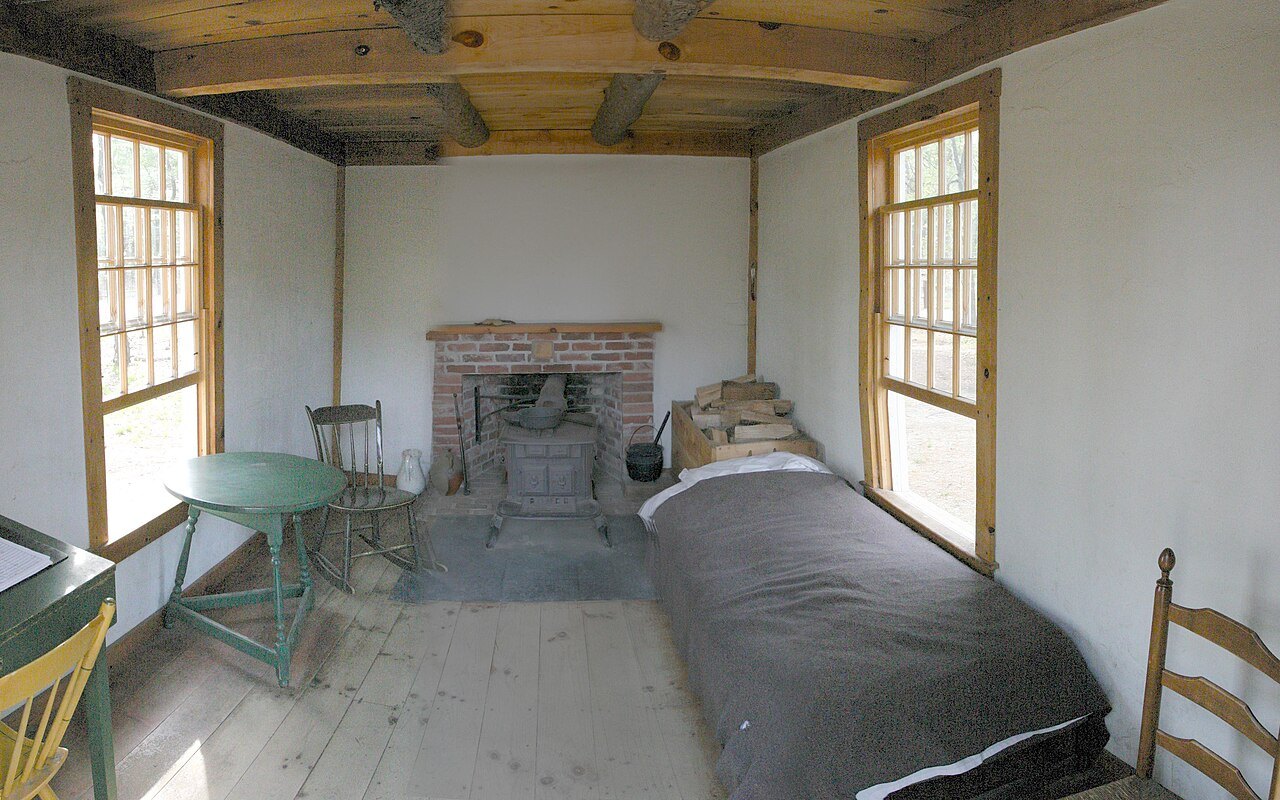
- The cabin replicaA reconstruction of Thoreau's one-room house, there to look at and step into.
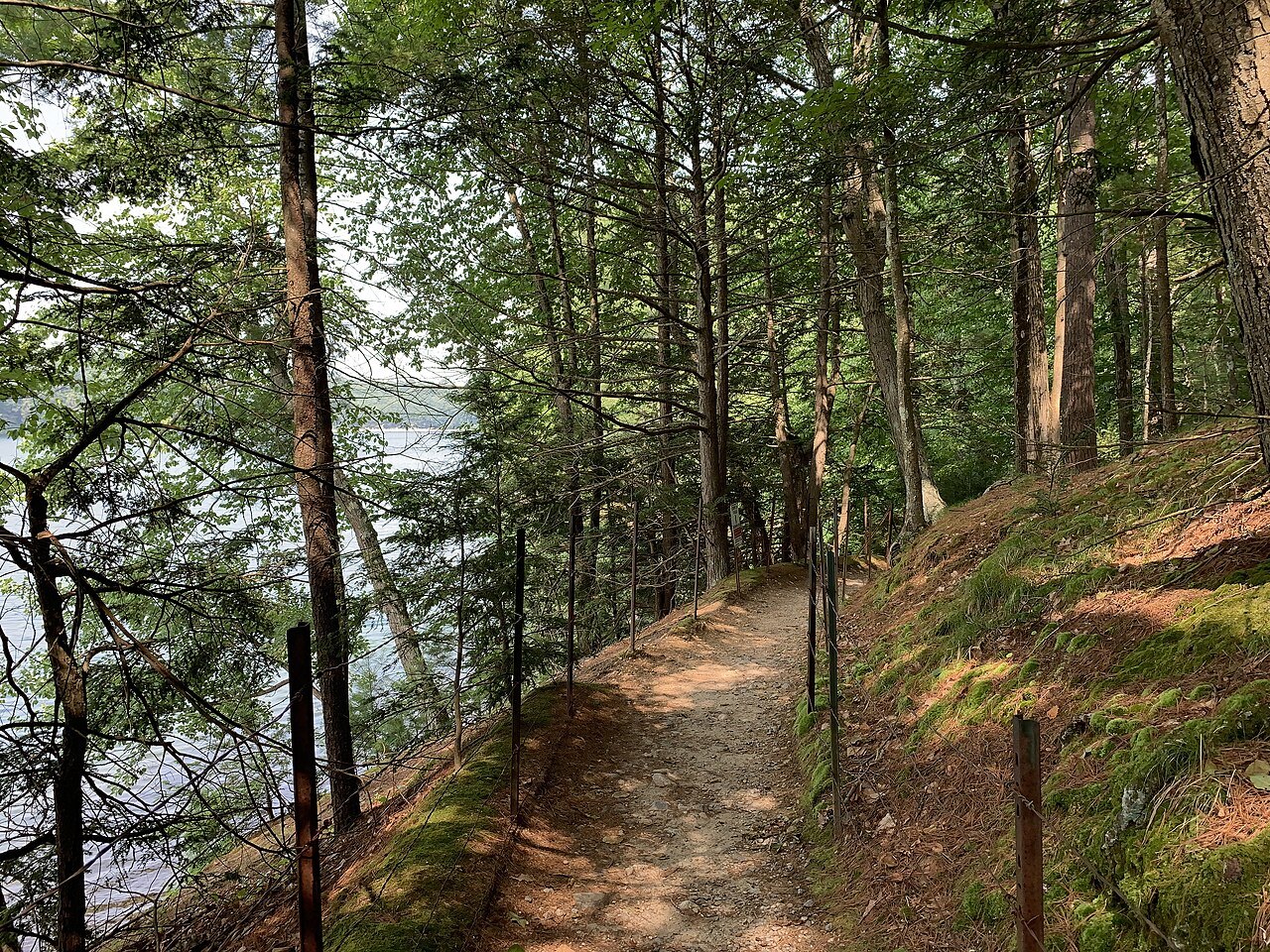
- The shore pathA trail that rings the pond, down steep banks and past small beaches.
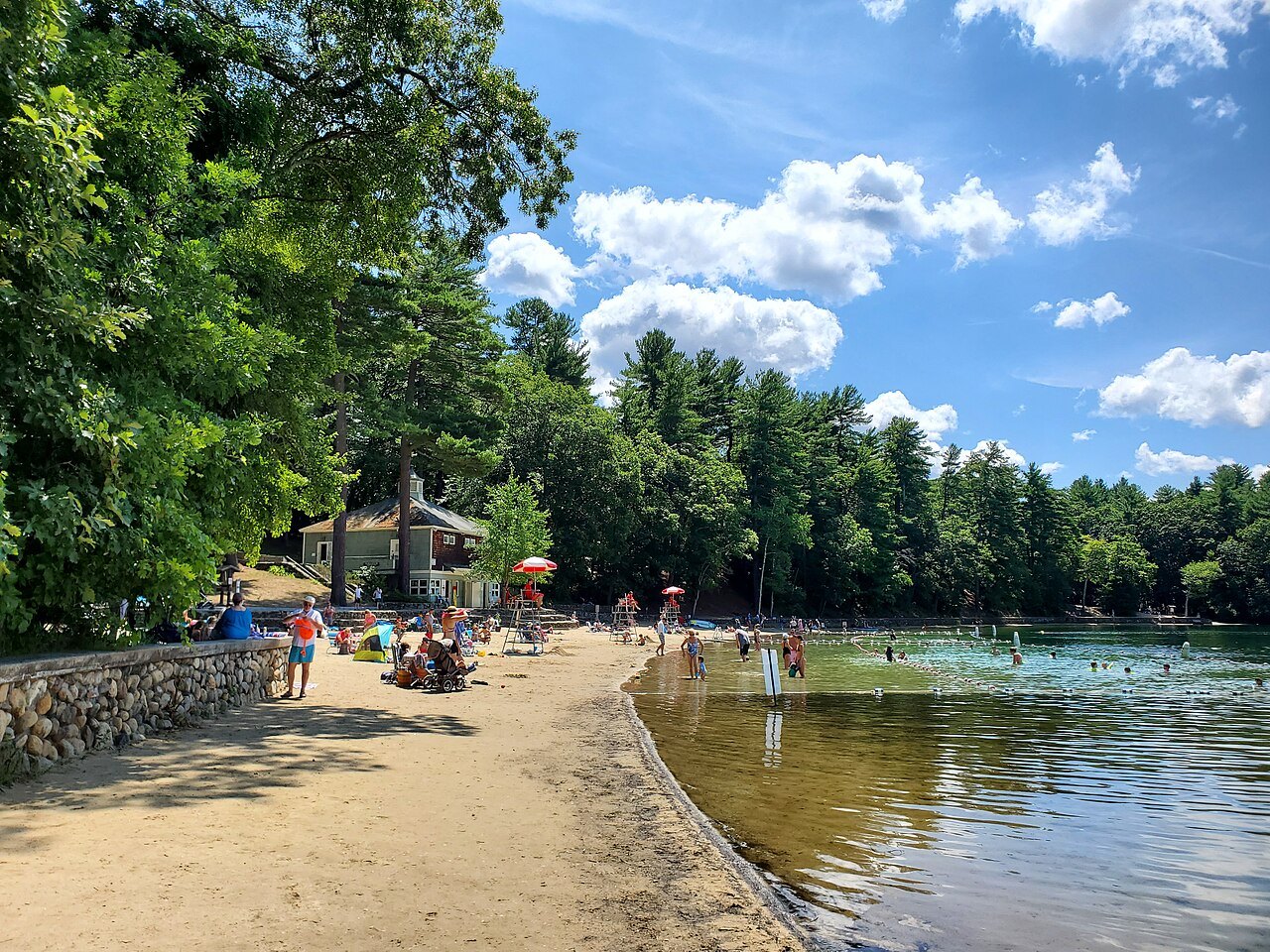
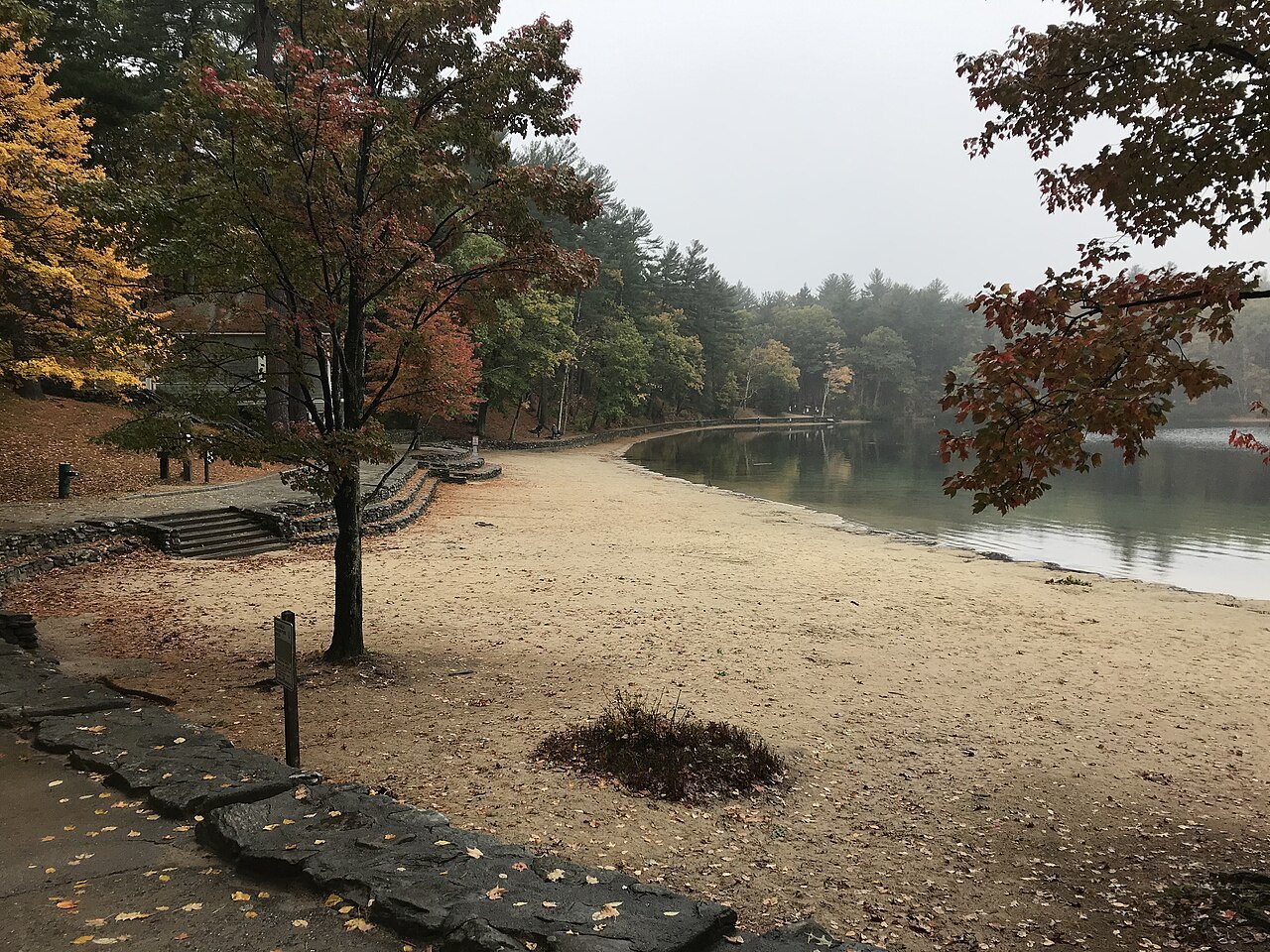
- The main beachThe swimming beach on the southeastern shore, the busiest part in summer.
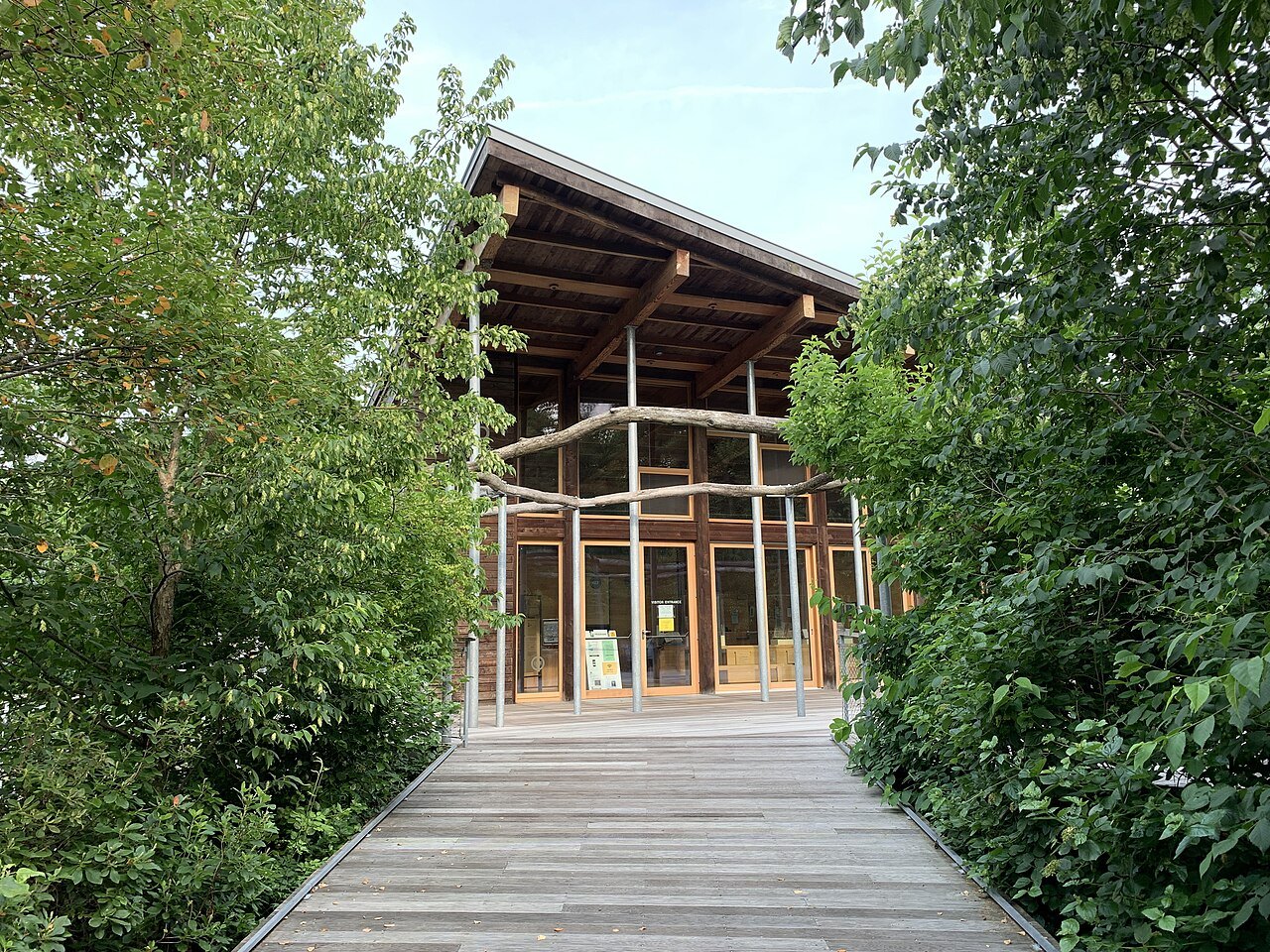
- The visitor centerOpened in 2016, designed by Maryann Thompson to use no fossil fuel.
The place in fullII
Reading the place
Why it matters
Walden Pond is a small, deep pond in the woods on the edge of Concord and Lincoln, famous far beyond its size because of one book. Henry David Thoreau lived in a cabin on its northern shore for two years from the summer of 1845, and his account of that time, Walden; or, Life in the Woods, published in 1854, made the pond one of the best-known bodies of water in American literature.
The pond is protected within Walden Pond State Reservation, 335 acres managed by the state's Department of Conservation and Recreation, and it was designated a National Historic Landmark in 1962 for its association with Thoreau. The National Historic Preservation Act of 1966 secured federal support for its care. It is both a literary pilgrimage and a local swimming place, and on a summer day it is very much the second.
A kettle hole
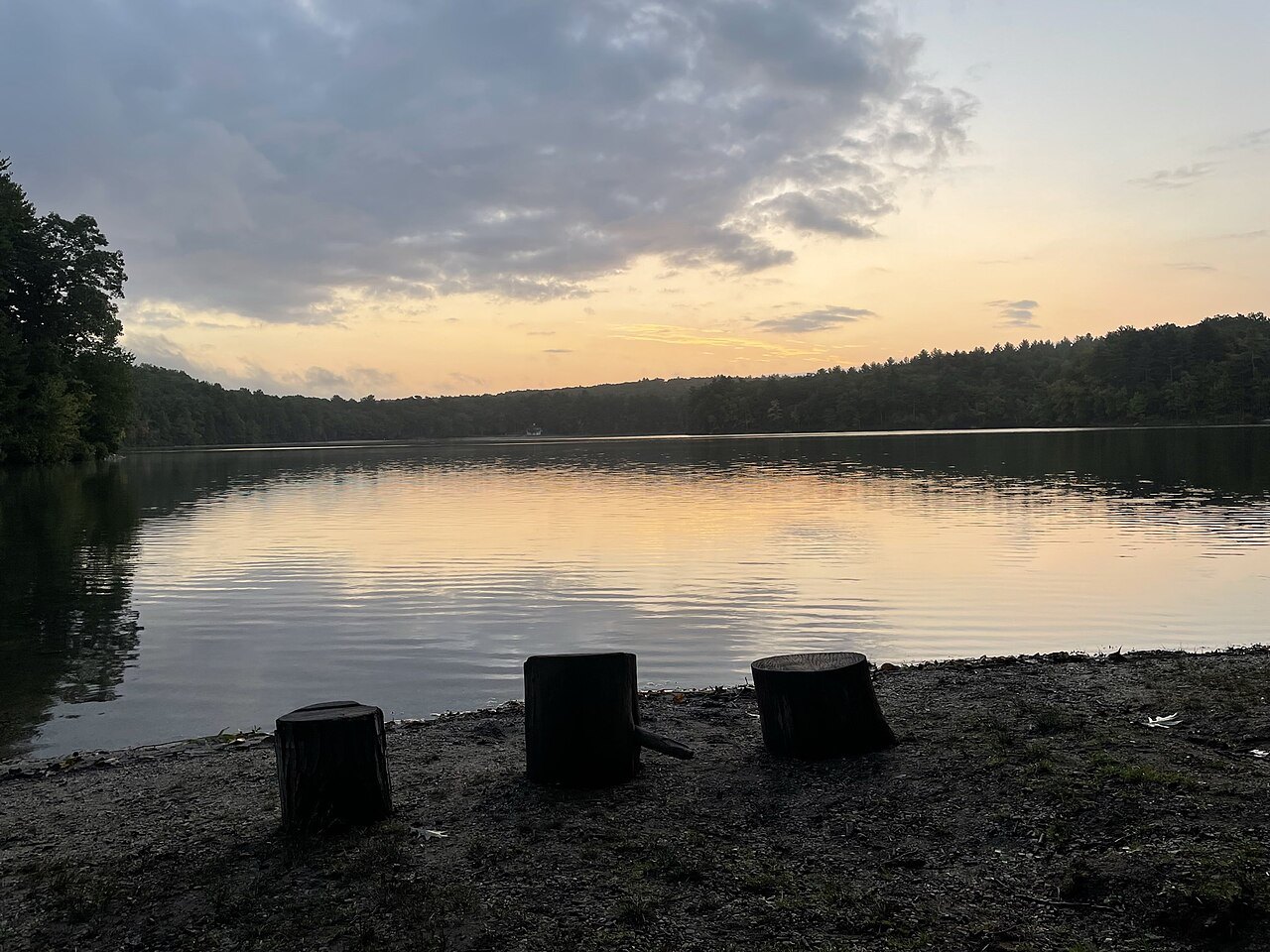
The pond is a good example of a kettle hole, formed when retreating glaciers left a block of ice buried in the ground ten to twelve thousand years ago; as the ice melted it left a deep, steep-sided basin that filled with water. The pond covers some sixty-four acres. It has no visible inlet or outlet, which puzzled Thoreau, who wondered whether an unseen spring fed it from the bottom.
In the chapter of Walden called The Ponds he describes its clarity, color and temperature, its wildlife, the stones of its bed and its mirror-like surface, and he records the local story that the pond was named for a woman who alone survived when a hill sank on the spot. He also tells of an old man who had fished the pond some sixty years before from a clumsy canoe of two pine logs dug out and pinned together, a boat that, as the man said, belonged to the pond. Parts of the shore are beach; elsewhere the banks drop steeply from the trails to the water.
Thoreau's two years
The land at the north end of the pond belonged to Ralph Waldo Emerson, Thoreau's friend and mentor, who let him use it for what he called his experiment in living simply. Thoreau built a one-room house and lived there from 1845 to 1847. The area around the pond was then neglected and heavily used, just outside the town: the earth had been mined, the town dump would later stand across the road, and formerly enslaved people had lived on the common land nearby. Thoreau was inspired by one of them, Zilpah White, who lived alone in a one-room house on Walden Road and made her living spinning flax.
In his first winter there he watched a large gang of men arrive by train and cut ice on the pond for sixteen days, ice that was shipped from Boston to ports as far away as India, and he wrote about it in his journal. The site of his house, a short way north of the water, is marked by a series of granite posts.
Saving the woods
Descendants of Emerson and other families gave the land around the pond to the Commonwealth in 1922. An amusement park at the western end, with swings and an event hall, had burned down in 1902 and was never rebuilt. In 1961 the county commissioners then managing the land began leveling woodland for parking and other improvements; they were sued, and the Superior Court ruled that the deed required the landscape to be preserved.
In 1990 the musician Don Henley started the Walden Woods Project to stop development in the woods around the pond. With the Trust for Public Land and the Commonwealth it permanently protected more than eighty-five acres, including Bear Garden Hill, where Thoreau took walks by moonlight, and in 1995 it helped buy a historic house that became the research center and library of the Thoreau Institute.
What you see
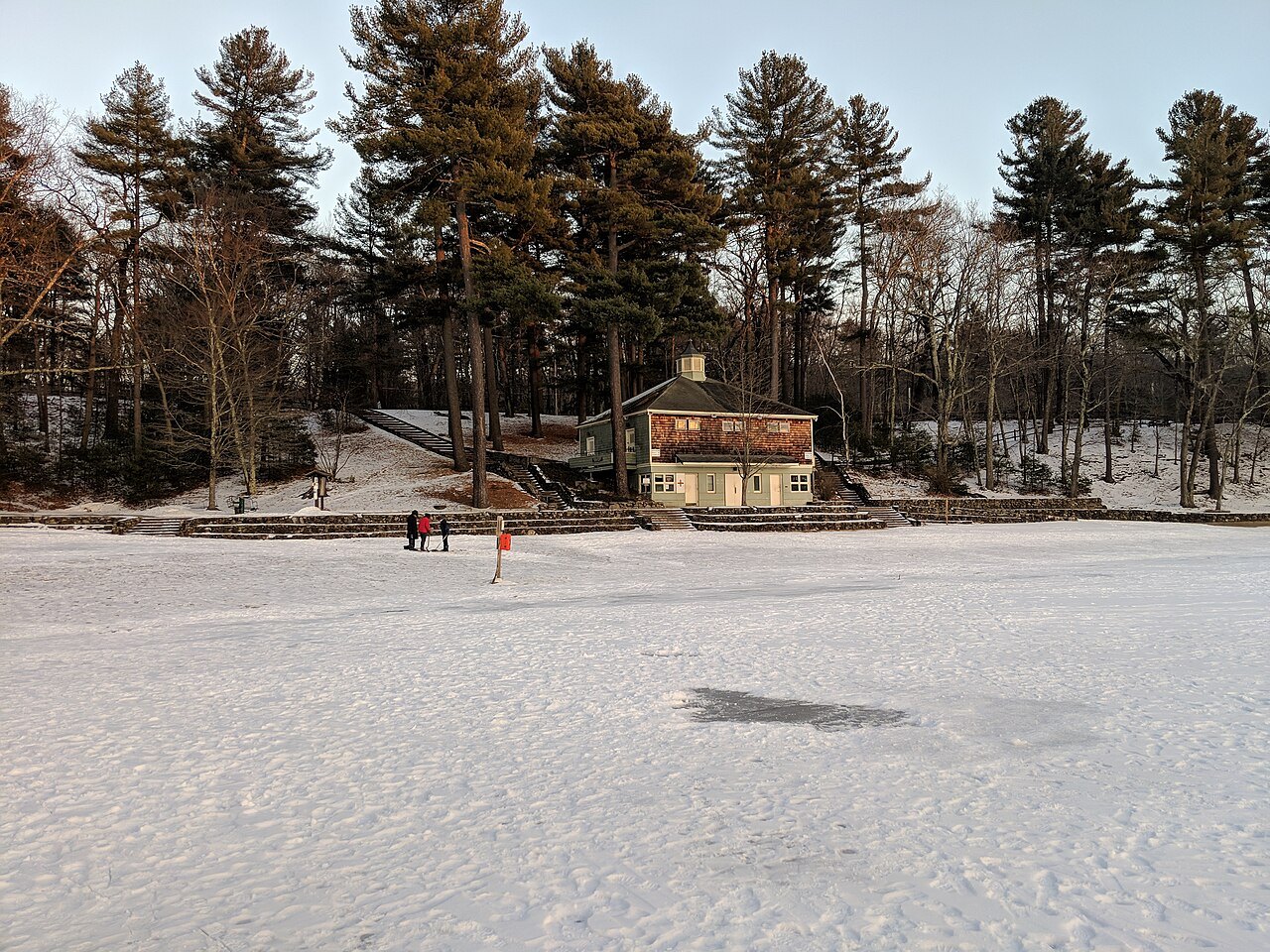
From the parking area across Route 126 a ramped path leads down to the main beach on the southeastern shore, where three buildings stand. From there the trail around the pond runs along the water and up and down the steep banks to the cabin site on the north side; the circuit is an easy walk. A replica of Thoreau's cabin can be seen at the reservation, and the new visitor center, designed by Maryann Thompson and opened in 2016, uses no fossil fuel.
The reservation welcomes visitors all year for day use, with swimming in summer and boating, fishing, birdwatching, walking and picnics in every season; camping is not allowed. The Fitchburg commuter rail line runs past the west side of the pond, and the nearest station is in Concord center, a walk of about a mile and a half. The parking lot was laid in 1977 as a demonstration of porous pavement and still works decades later, through far more freezing and thawing than most places see.
How to visit
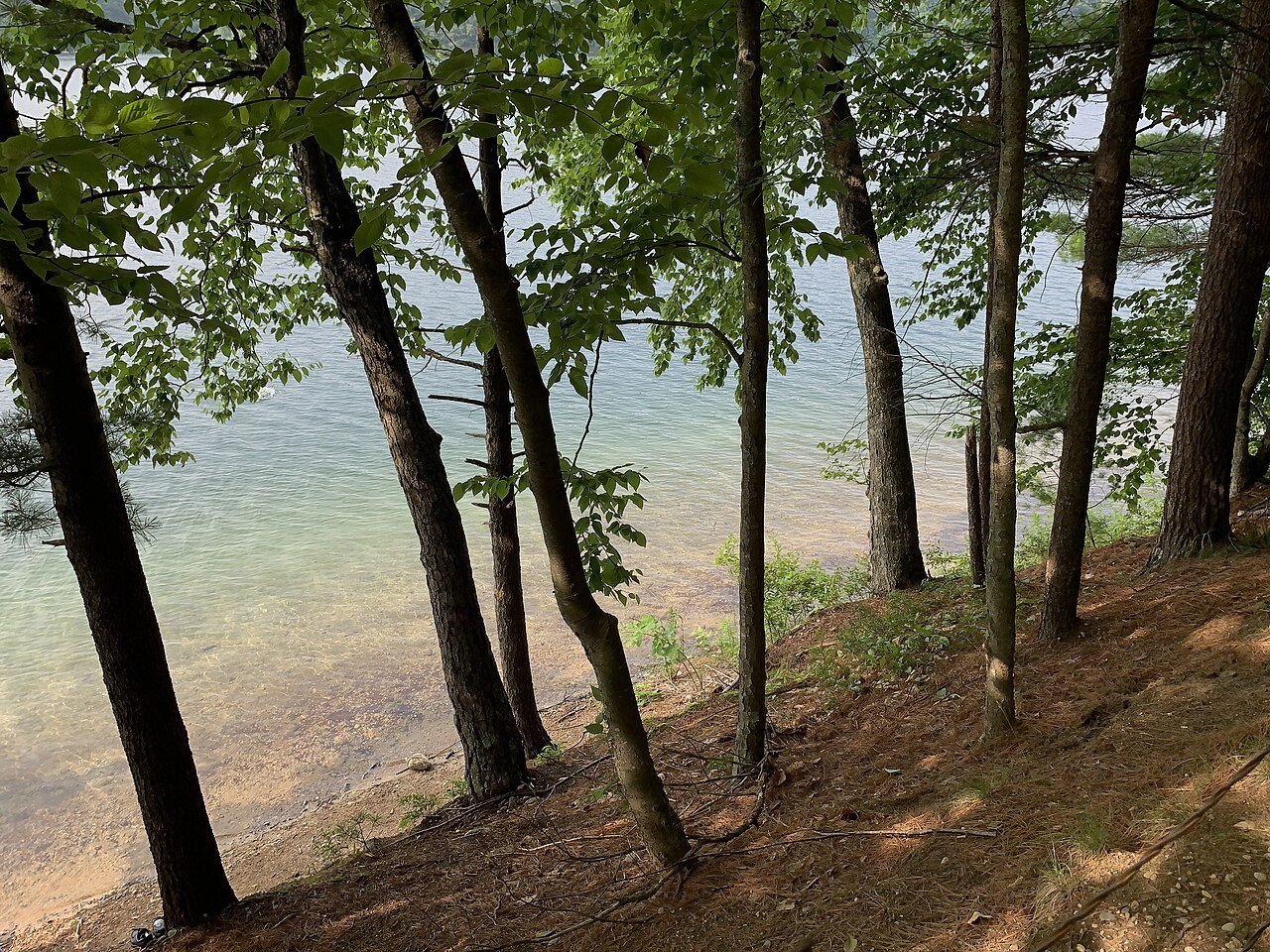
Come early in the day in summer, when the beach is at its busiest; in spring, autumn and winter the pond is quiet and the walk around it is the thing to do. Read The Ponds chapter first, or take the book: standing at the granite posts with the water through the trees makes more sense of it than any sign. Combine the pond with the North Bridge, the Wayside and the Concord houses of Emerson and the Alcotts, all a few minutes away by car.
Where to go nextIII
Nearby
- Nearby · Greater Boston · ConcordLexington, Concord and the Old North BridgeWhere the Revolutionary War began on April 19, 1775: the Battle Green in Lexington, five miles of Battle Road, and the wooden North Bridge in Concord where the militia fired the shot heard round the world.Read the page →
- Nearby · Greater Boston · CambridgeHarvard YardThe oldest part of Harvard, grown around a parcel bought in 1637: a lawn of elms and brick halls behind a fence with twenty-seven gates, with the university's great library and its church facing each other across the middle.Read the page →
- Nearby · Central · SturbridgeOld Sturbridge VillageNew England's largest living museum: a country town of the 1790s to the 1830s on more than two hundred acres, with 59 antique buildings brought from across the region, three water-powered mills and a working farm.Read the page →