Home · Landmarks · Plimoth Patuxet and the Mayflower II
What you are looking atI
Plimoth Patuxet and the Mayflower II
South Shore · Plymouth
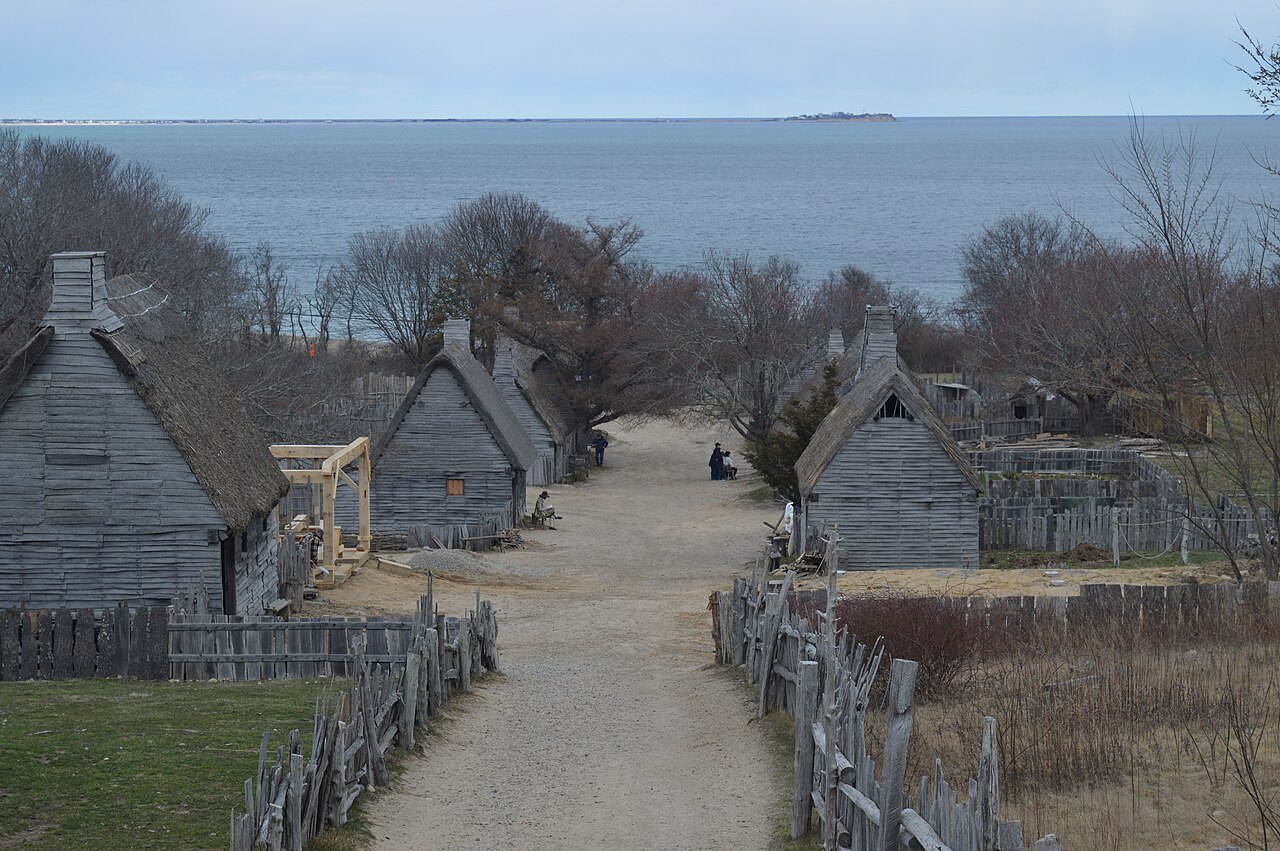
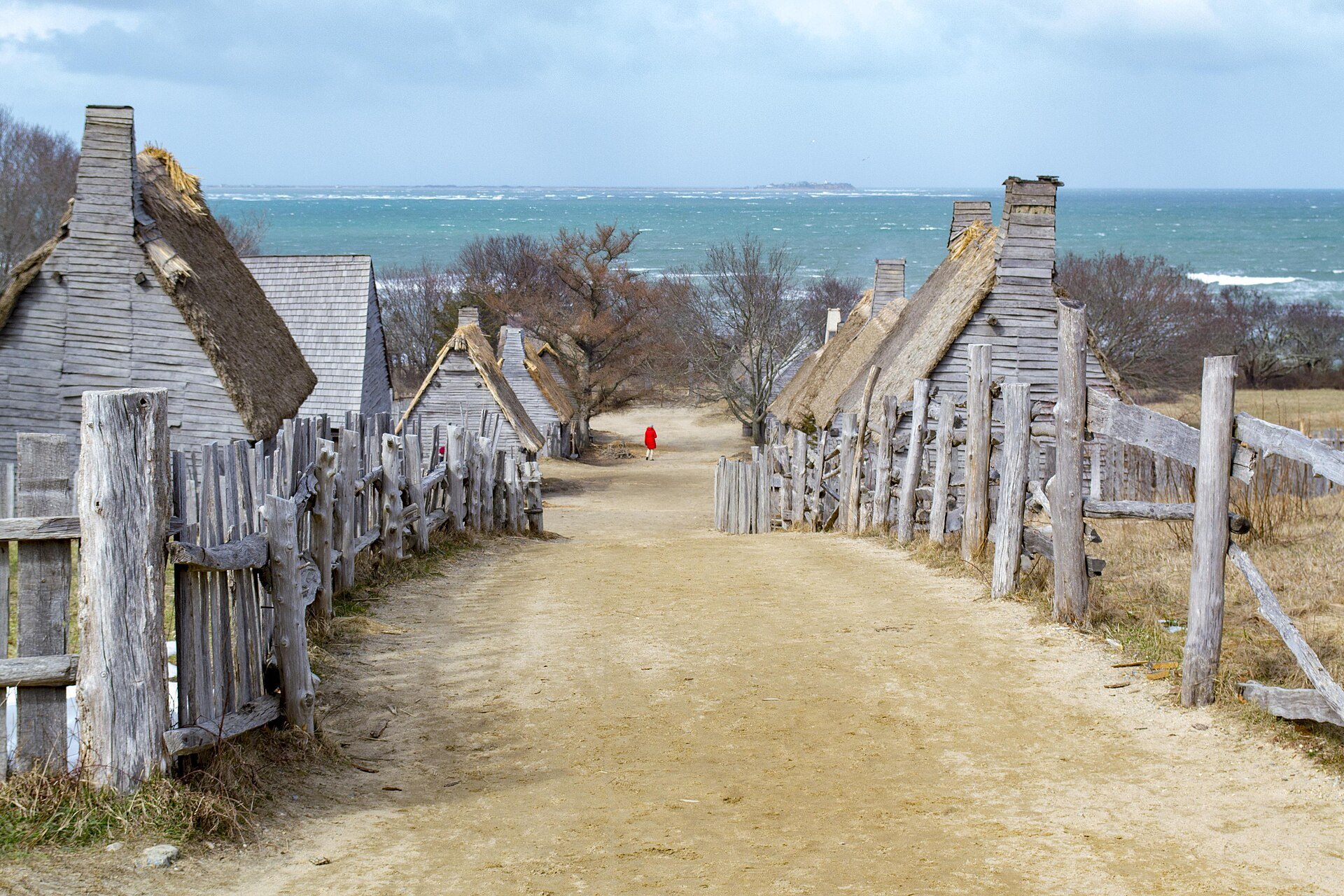
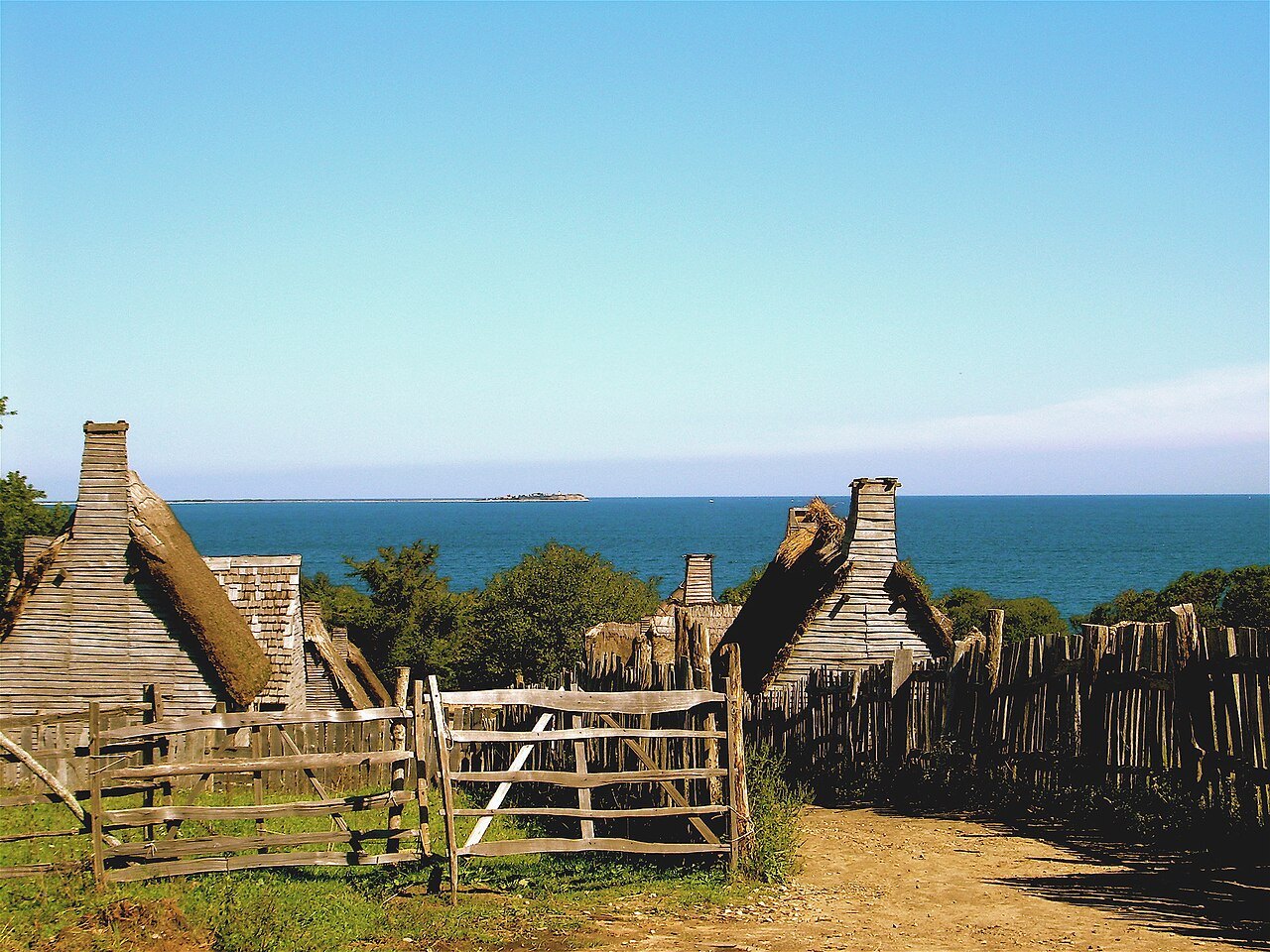
- The English VillageThe colony as it was in 1627, its houses, gardens and fort, with interpreters in period dress.
- The Wampanoag HomesiteNative people of several nations show how the Wampanoag ancestors lived.
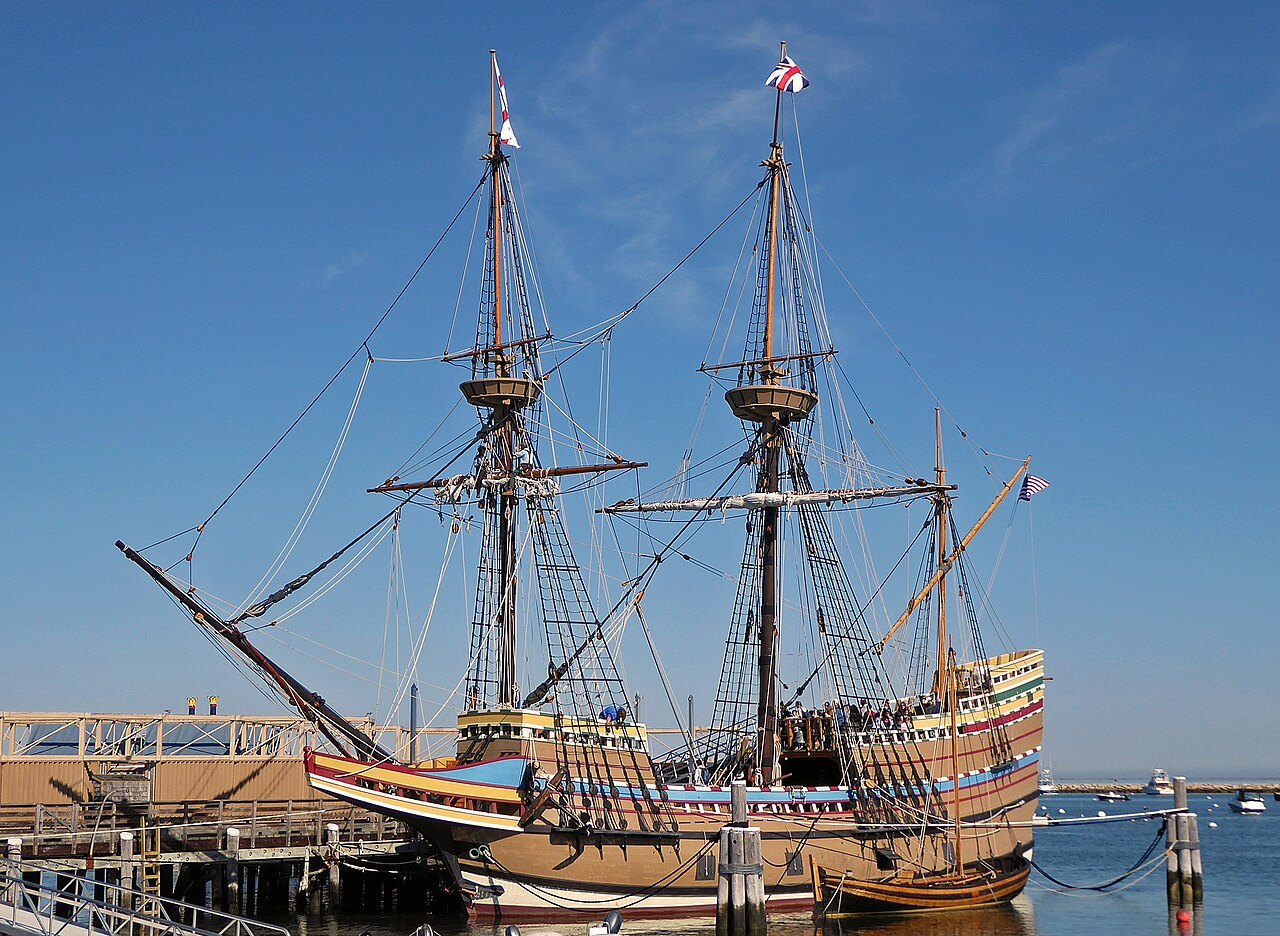
- The Mayflower IIA reproduction of the ship of 1620, built in Devon and sailed across in 1957.
- The Craft CenterWhere much of what the village uses is made by hand.
- Nye BarnHistorical breeds of livestock of the kind the colonists kept.
- The Grist MillThe museum's working mill, added in 2013.
The place in fullII
Reading the place
Why it matters
Plimoth Patuxet is a group of living history museums in Plymouth that recreates the settlement of Plymouth Colony, founded in 1620 by the English colonists who became known as the Pilgrims. It was started in 1947 by Henry Hornblower II, with help from friends, family and business associates, as two English cottages and a fort on the waterfront, and it has grown into the best place in the state to see what the first decade of the colony looked like, and how the Wampanoag, on whose land it stood, lived beside it.
The museum was known for most of its life as Plimoth Plantation. In 2020, as the four hundredth anniversary of the Pilgrims' arrival was marked, it took the name Plimoth Patuxet, after Patuxet, the Wampanoag village on whose site Plymouth was built. It is a not-for-profit museum, and its buildings, clothes and tasks are based on first-hand records, accounts, paintings and artifacts, and on its own research and archaeology.
The colony it recreates
Before the Pilgrims came, the site of Plymouth was Patuxet, a village of the Wampanoag. The colonists, separatists who had broken away from the Church of England, established their settlement there in December 1620 and faced a first winter of hunger and poor shelter. Help came from Samoset and from Tisquantum, called Squanto by the colonists, who was sent by the Wampanoag leader Massasoit as an envoy and adviser; Squanto had himself been kidnapped in 1614 and sold into slavery in Spain.
After a good harvest in the autumn of 1621 the colonists gathered with Squanto, Samoset, Massasoit and some ninety Wampanoag men in the celebration now remembered as the first Thanksgiving. Plymouth remained the capital of Plymouth Colony until it merged with the Massachusetts Bay Colony in 1691. The village the museum recreates is the colony a few years on, in 1627, settled and farming.
The English Village
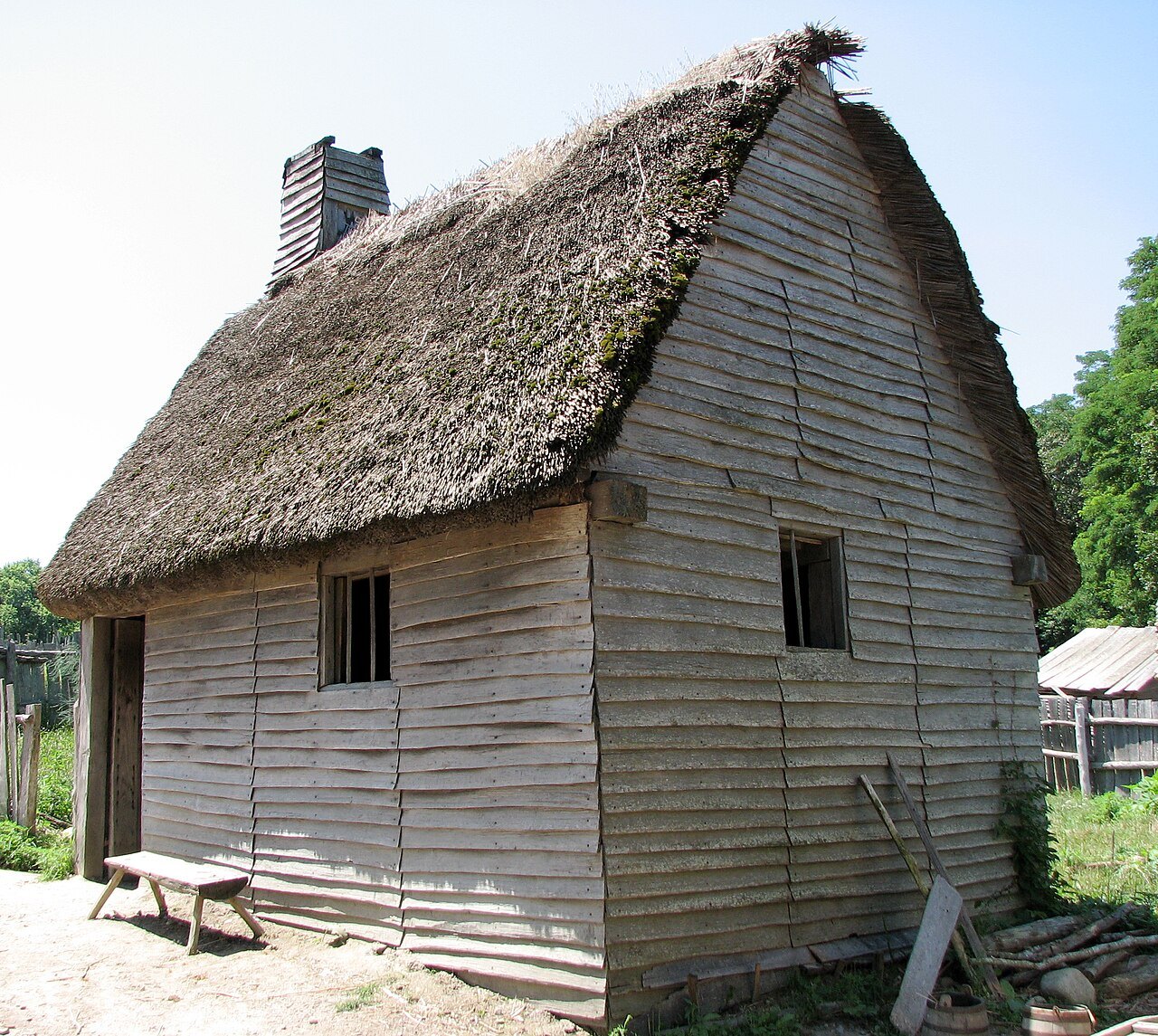
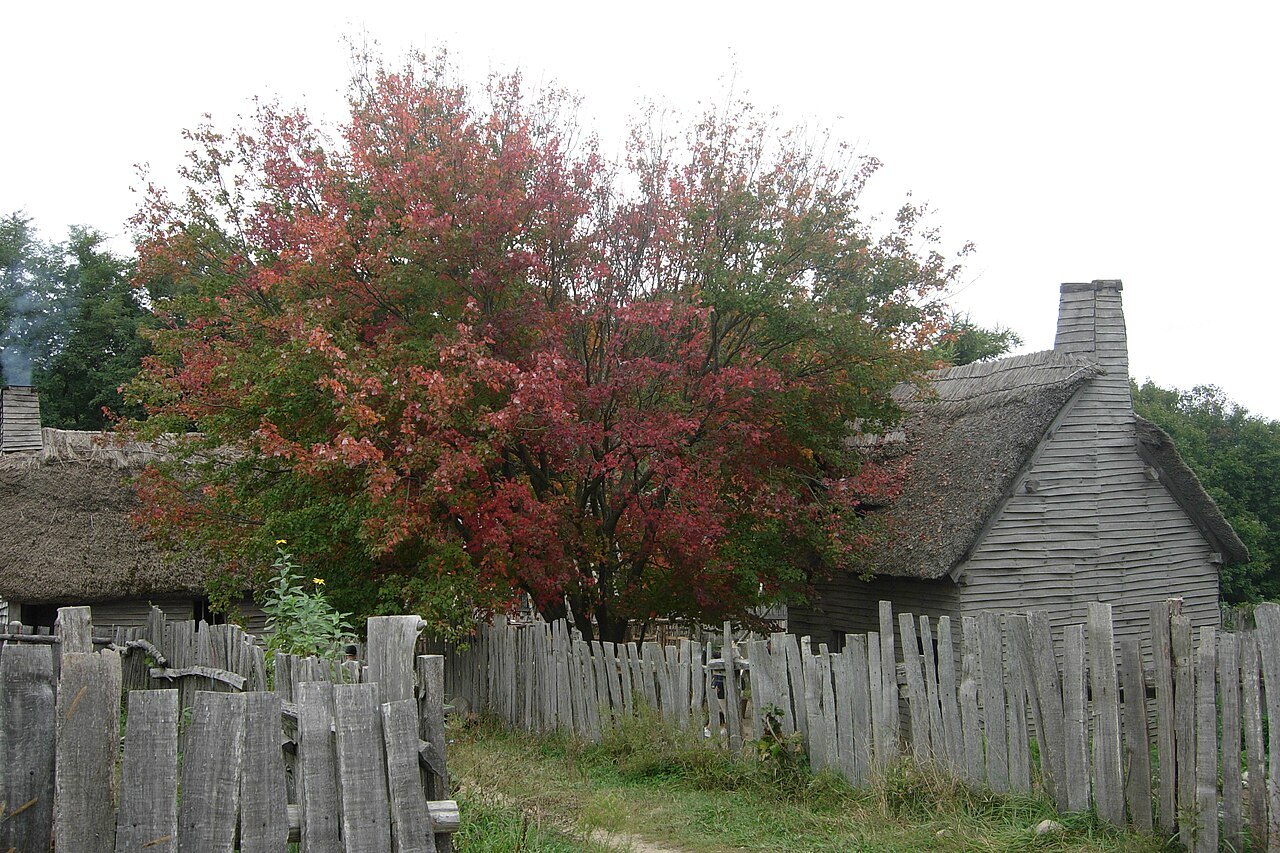
The heart of the museum is the English Village, opened in 1959, a reconstruction of the settlement's houses, gardens and fort. It represents the colony in the year 1627 for most of the season, from early April to late November, showing day-to-day life and the work of each season; in November it usually represents 1621, the year of the first Thanksgiving in the colony.
The village is peopled by trained first-person interpreters who speak, act and dress as colonists of the time. They answer questions in character, talk about their lives and opinions, and go about their tasks, cooking, planting and tending animals. Third-person interpreters in modern dress answer the questions the colonists cannot.
The Wampanoag Homesite
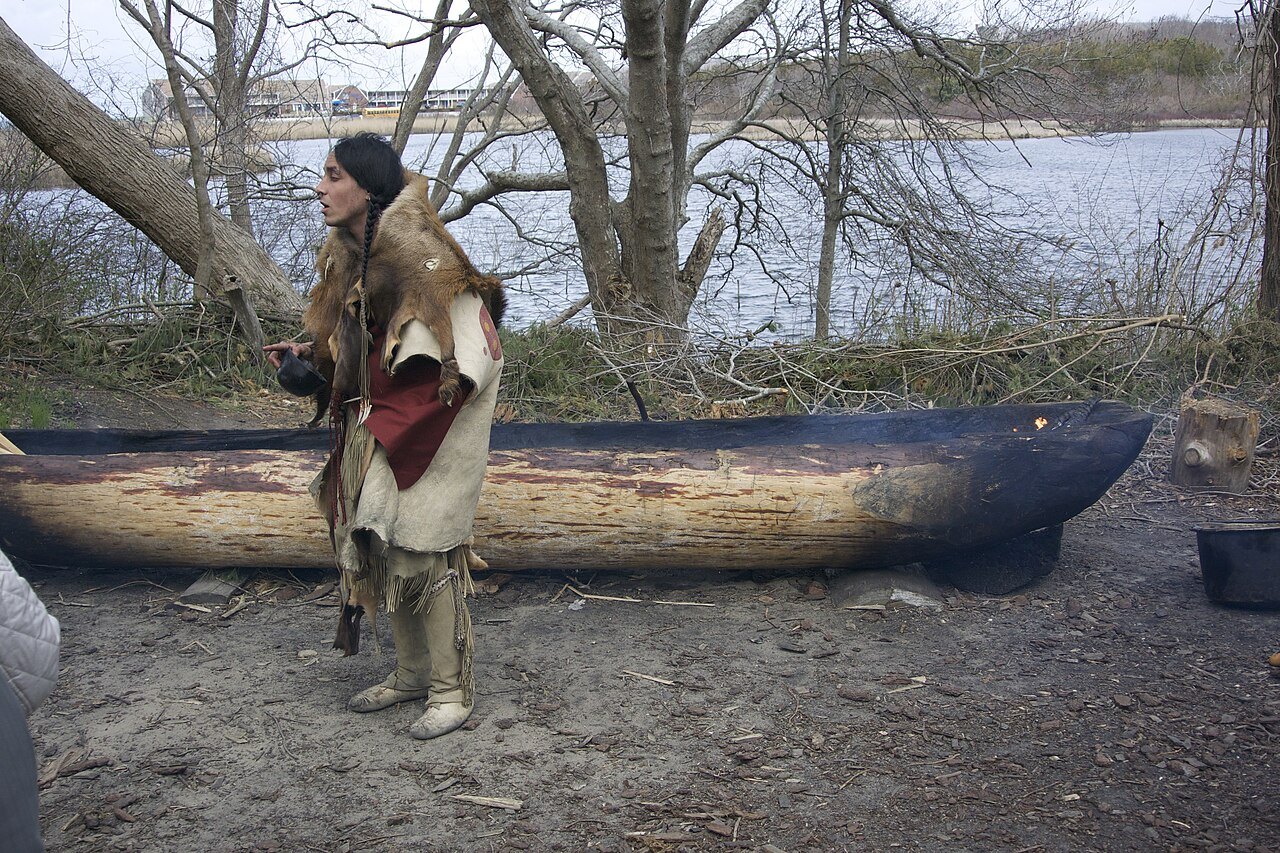
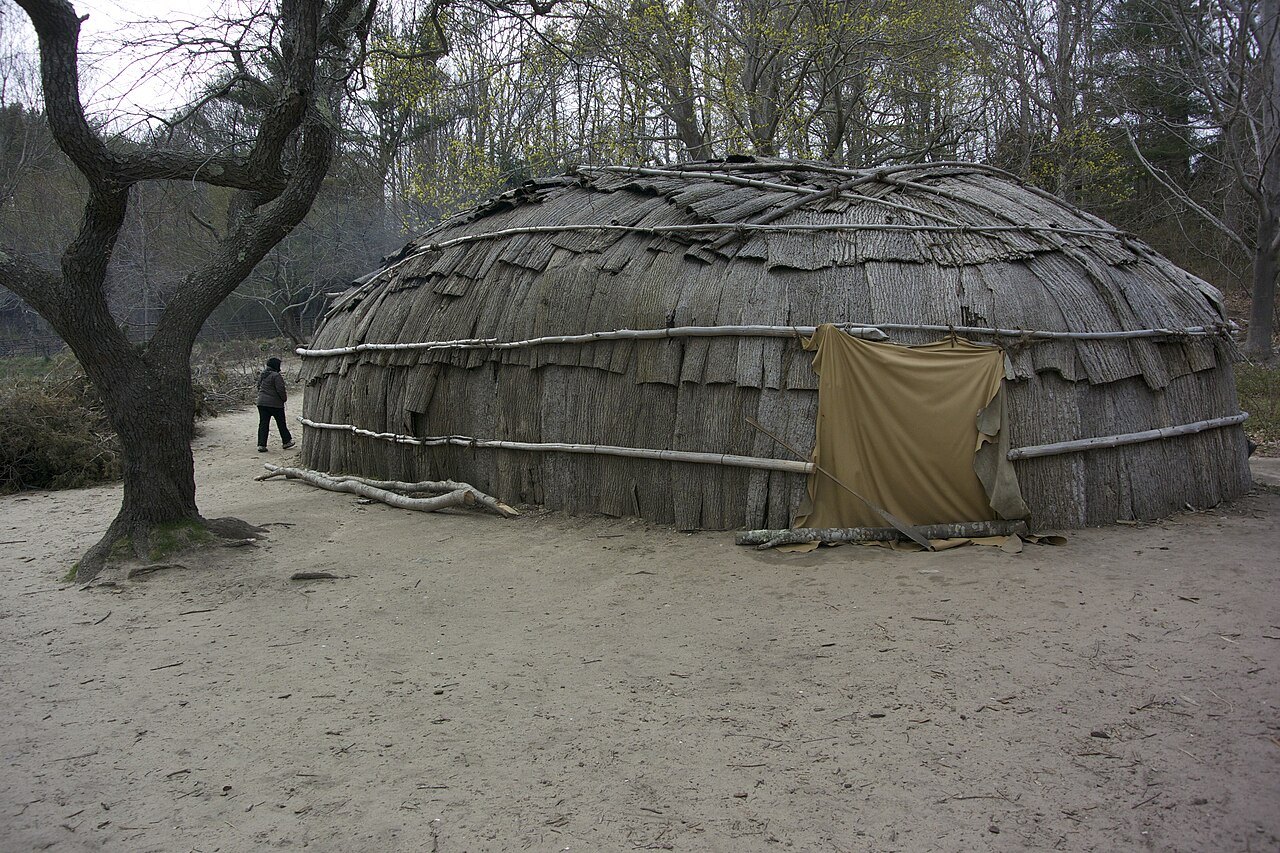
Beside the village is the Wampanoag Homesite, added in 1973, a recreation of a home site where Native people from a variety of nations, in traditional dress, explain and demonstrate how the Wampanoag ancestors lived, beside the reconstructed English houses a short walk away.
The two halves together are the point of the museum: the colony and the people whose land it was, seen on the same afternoon. The renaming in 2020 made the same point, since the word plantation, which once meant a colony, had come to be associated with estates worked by enslaved people.
The Mayflower II
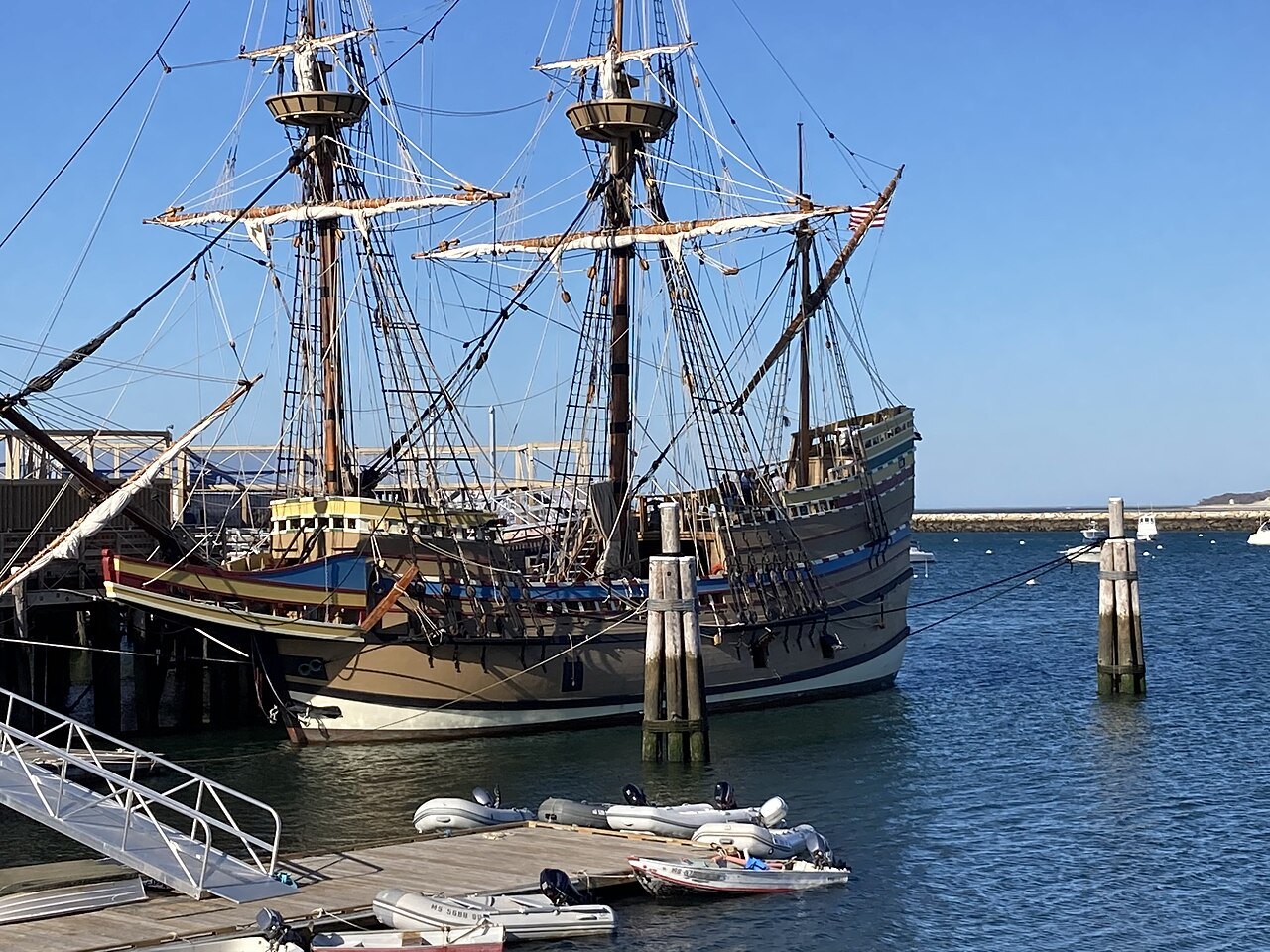
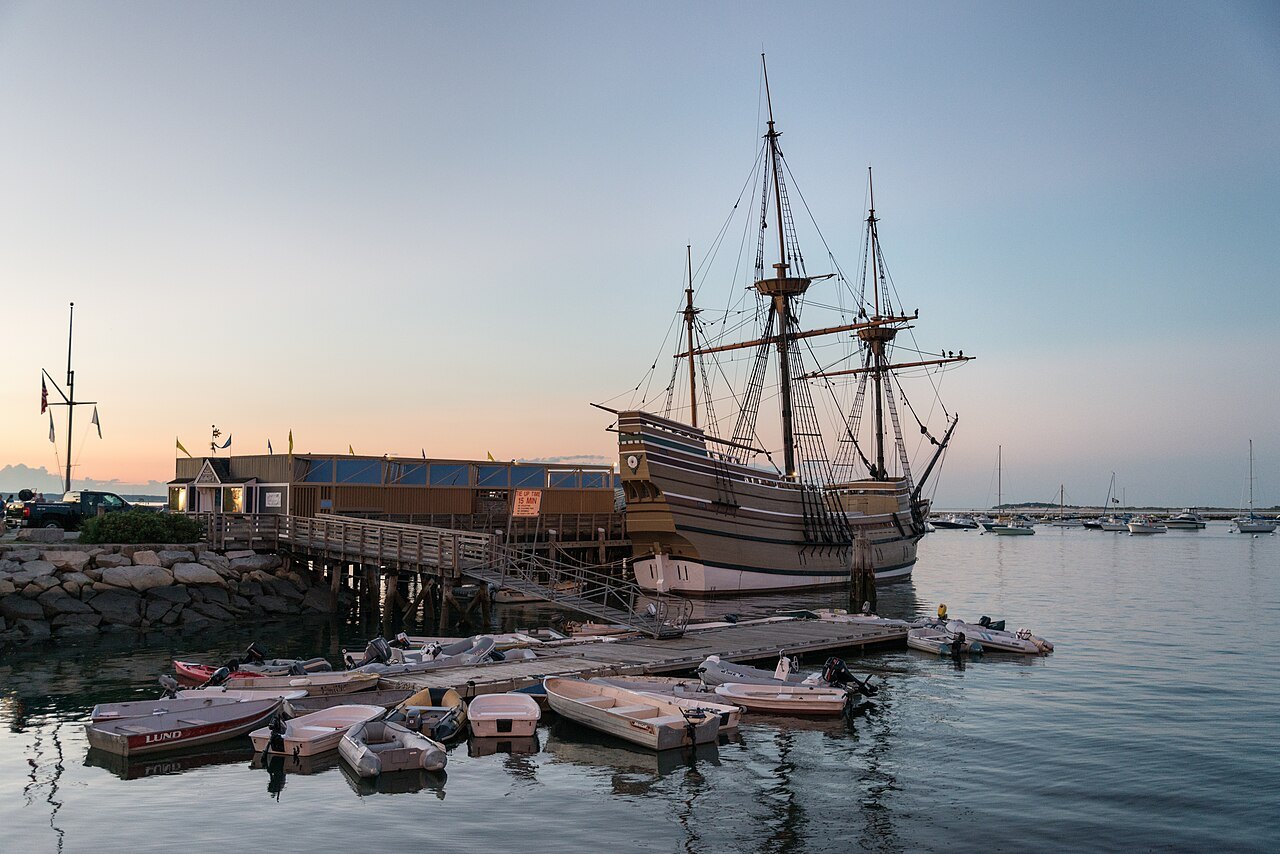
On the Plymouth waterfront, near Plymouth Rock and also in the museum's care, lies the Mayflower II, a reproduction of the seventeenth-century ship that carried the Pilgrims across the Atlantic in 1620. The idea came from the Englishman Warwick Charlton in 1954, as a symbol of the wartime alliance between Britain and the United States. The ship was built at the Upham Shipyard in Brixham in Devon in 1955 and 1956, paid for by private gifts in England and by the museum, to plans held by the museum and by traditional methods.
She sailed from Plymouth in Devon on April 20, 1957, under the command of Alan Villiers, recreating the original voyage, and arrived at Plymouth on June 13. She is considered a faithful reproduction apart from a few details, among them electric lights and a staircase in place of a ladder, with solid oak timbers and tarred hemp rigging, and she is about 106 feet long. She was listed on the National Register of Historic Places in 2020.
Keeping a wooden ship afloat
The ship is seaworthy, and like any wooden ship she needs constant care. In December 2012 she was towed to the Fairhaven Shipyard across Buzzards Bay for inspection and repair, and the work took longer than planned because more damage was found; she returned to her berth on August 7, 2013. In December 2015 she went to a specialist shipyard for a longer restoration, in time for the four hundredth anniversary.
Aboard, museum staff in modern dress explain the ship and the voyage from a third-person view. On her arrival in 1957 she was towed into New York and her captain and crew given a ticker-tape parade.
The rest of the grounds
The museum grounds also include Nye Barn, where historical breeds of livestock are kept, a crafts center where many of the objects used in the village are made, the Hornblower Visitor Center with indoor exhibits and a cinema, the Maxwell and Nye barns of 1994, and the Plimoth Grist Mill, added in 2013. Two houses on the colonial education site were built for the PBS series Colonial House and rebuilt here after filming; the roof of one of them, the Cooke House, burned in a chimney fire in November 2011.
How to visit
The village and the homesite stand on the museum's grounds outside the town center, and the Mayflower II is on the town waterfront, so a visit usually means a short drive between them. Give the village and homesite half a day; the interpreters reward time and questions. The museum's season runs from early April to late November, and it sets its own tickets and hours, so check its site before going. Plymouth Rock, Pilgrim Hall and the rest of the town are a short walk from the ship.
Where to go nextIII
Nearby
- Nearby · South ShorePlymouthAmerica's Hometown, where the Mayflower Pilgrims founded their colony in 1620 on the site of the Wampanoag village of Patuxet: the harbor and its famous rock, the oldest continually operating museum in the country, and the largest town by area in Massachusetts.Read the page →
- Nearby · South Coast · New BedfordNew Bedford, the Whaling CityThe world's preeminent whaling port of the nineteenth century, remembered in a national historical park across thirteen city blocks: the Whaling Museum with its whale skeletons, the Seamen's Bethel of Moby-Dick, and the cobbled streets that ran down to the wharves.Read the page →
- Nearby · Cape Cod · the Outer CapeCape Cod National SeashoreNearly forty miles of Atlantic shore on the outer arm of Cape Cod, set aside on August 7, 1961: high sand cliffs and dunes, kettle ponds and pine woods, and a chain of lighthouses from Nauset to Race Point.Read the page →