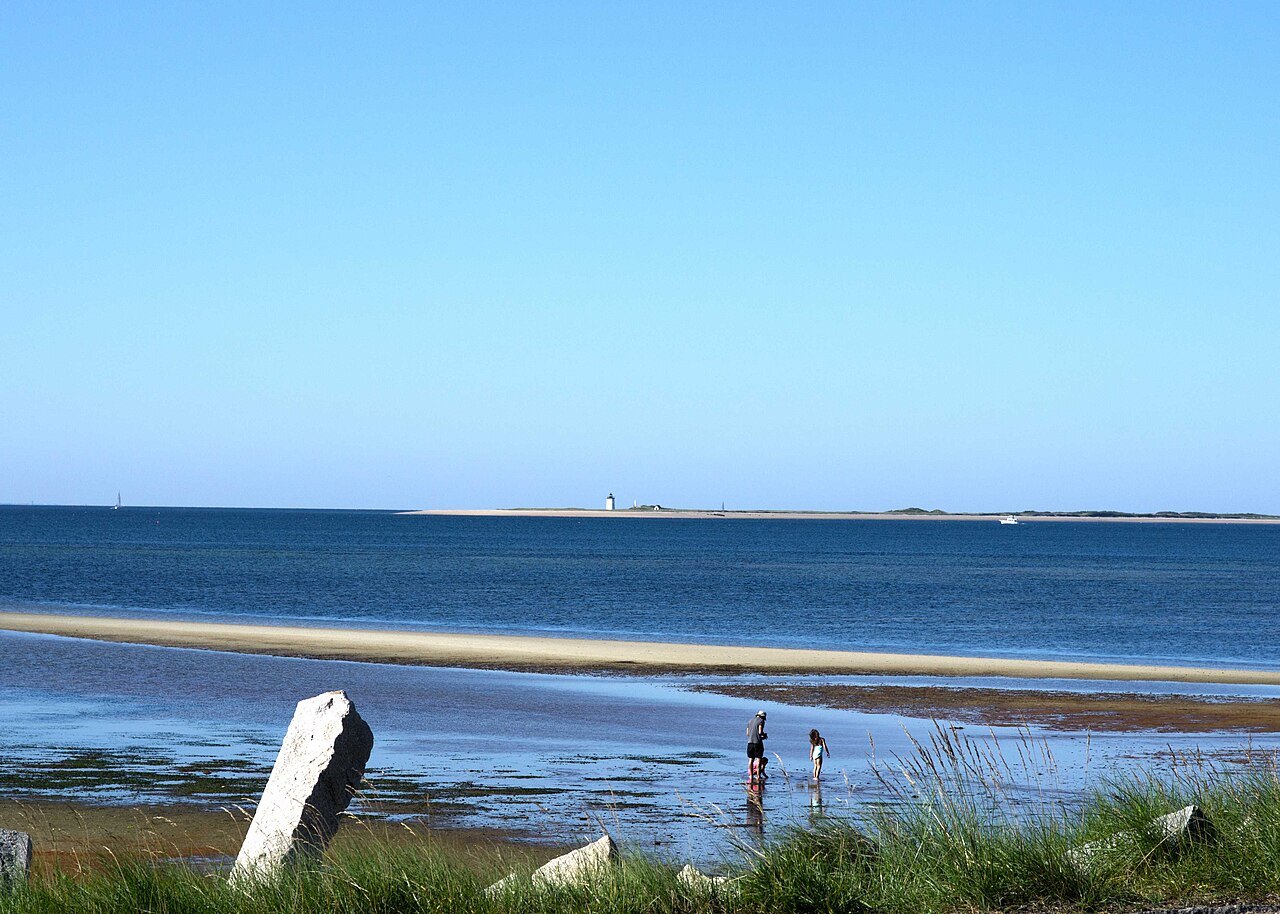
PILGRIMS, HARBORS AND HISTORYI
Did the Pilgrims really land in Provincetown first?
Provincetown's harbor saw the Mayflower before Plymouth did — the story behind the Pilgrims' real first landfall.
The answer in fullII
Read on
Before Plymouth Rock
Most visitors picture Plymouth Rock as the spot where the Pilgrims first set foot in the New World. The fuller story is more interesting: the Mayflower's passengers made their first landfall in Provincetown Harbor in November 1620, weeks before anyone set eyes on Plymouth at all. Provincetown sits at the very tip of Cape Cod, and its history begins before Plymouth's own.
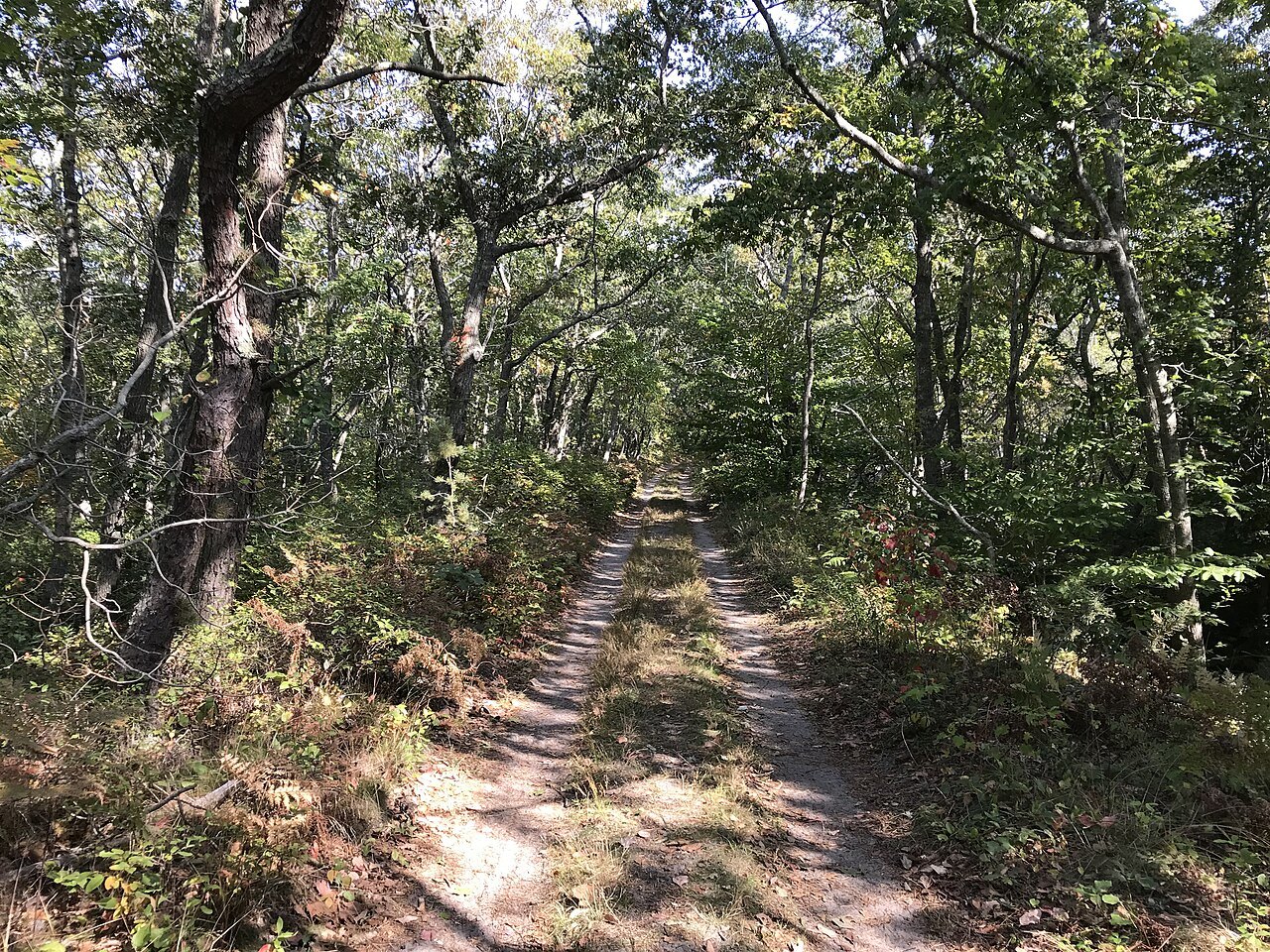
The harbor that drew them was, and still is, exceptional: a naturally deep, protected basin long considered the best on this coast, prized from the start for its fishing grounds as much as its shelter. It was this harbor, not Plymouth's, that gave the Mayflower's exhausted passengers their first calm water after weeks crossing the Atlantic.
A sculpture near the Pilgrim Monument marks the event today, a quiet reminder that the famous landing story most often told about Plymouth actually opens here, in the sheltered curve of water at the very tip of the Cape, long before anyone crossed the bay to settle on the mainland shore.
Today's Provincetown is far smaller than this story might suggest, its year-round population only in the thousands, swelling toward sixty thousand in high summer. Most visitors come for the beaches, the art and the lively season rather than the Pilgrim connection, which remains the oldest layer of a town reinvented many times since.
What happened in the harbor
Once anchored in Provincetown Harbor, the Mayflower's passengers did not go ashore at once to build a settlement. Instead, before anyone stepped onto Cape Cod to stay, they drew up and signed the Mayflower Compact aboard ship, an agreement on rules for governing themselves in a place where no English authority had yet been established.
The Compact mattered because the group had sailed under a patent meant for land further south, and landing instead on Cape Cod left their legal footing uncertain. Settling the question in the harbor, before any colony existed, gave the Pilgrims a working agreement to carry as they searched for a permanent site.
Only after this did the ship continue across the bay to Plymouth, where the colonists eventually chose to build. Provincetown's harbor was the expedition's first anchorage and the true birthplace of the Compact; Plymouth became the place they decided, after further exploring, to call home and raise their settlement.
Why Plymouth gets the credit
If the Pilgrims anchored first at Provincetown, why does Plymouth carry their name in popular memory? Part of the answer lies in what came after: land from today's Pilgrim Lake to Long Point was kept for Plymouth Colony, which leased fishing rights to visiting crews and renamed the area the Province Lands. Compare the two towns' stories at Plymouth.
Provincetown's harbor suited exploring and fishing far better than it suited the kind of settlement the Pilgrims had in mind, so after their first landfall they searched further and settled across the bay instead. Provincetown remained an outpost of Plymouth Colony for generations rather than a town in its own right.
A municipal government over the Province Lands is first recorded in 1714, and the settlement was not incorporated as a township until June 14, 1727, well over a century after the Mayflower had first anchored in its harbor, when it finally took the name Provincetown from the surrounding Province Lands.
The Pilgrim Monument
Above the town rises the Pilgrim Monument, built between 1907 and 1910 specifically to remember the first landfall and the signing of the Compact. It is a granite campanile two hundred fifty-two feet tall, the tallest all-granite structure in the United States, modeled on the Torre del Mangia in Siena.
President Theodore Roosevelt laid the cornerstone on August 20, 1907, and President Taft dedicated the finished monument on August 5, 1910. The monument stands within the Provincetown Historic District, and the Provincetown Museum sits at its base, telling the fuller story of the landing and of the town that grew around it.
Visitors climb the tower for views over the harbor, the Province Lands and Cape Cod Bay beyond. Anyone planning a visit should check directly with the monument's operator about current access to the tower and the museum before arriving, since both can be affected by season and by maintenance.
A town built on fishing, art and welcome
The Pilgrims' brief stop was only the start of Provincetown's story. After the Revolution the town grew quickly as a fishing and whaling center, and many Portuguese sailors, a good number of them from the Azores, were hired onto American ships and settled here; the town still marks that heritage every summer in its Portuguese Festival.
In 1898 the Portland Gale badly damaged the fishing industry, and artists took over many of the emptied buildings. The same year Charles Webster Hawthorne opened the Cape Cod School of Art, said to be the first outdoor school for figure painting, and the experimental Provincetown Players formed soon after, making Provincetown one of the country's great art colonies.
That tradition continues at the Fine Arts Work Center, in the town since 1968, which supports emerging artists and writers through residencies, and at the Provincetown Art Association and Museum, open all year. The public library itself occupies the former Center Methodist Episcopal Church on Commercial Street, a reminder of how often the town's old buildings have found new uses.
A gay presence in Provincetown dates to the early twentieth century, growing alongside the art colony and experimental theater, and by the 1970s the town had a large gay population in summer. The Provincetown Business Guild, formed in 1978, today counts over two hundred member businesses, and the Atlantic House is considered the oldest gay bar in the country.
Seeing the story today
The clearest way to follow the sequence of events is to stand where they happened: the harbor itself, the sculpture near the monument, and the museum at its base together lay out landfall, Compact and departure for Plymouth in order. Commercial Street, running behind the harbor, is the natural route on foot between these points.
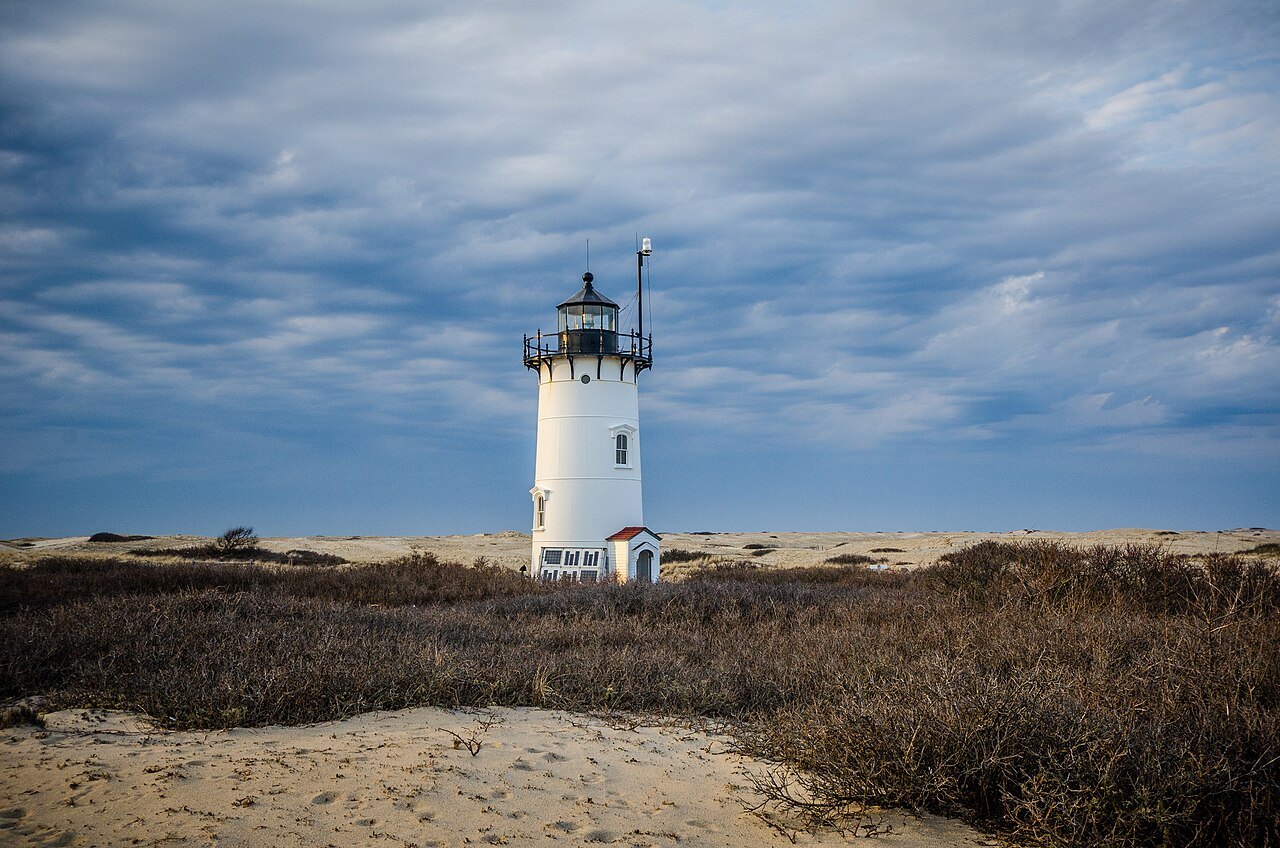
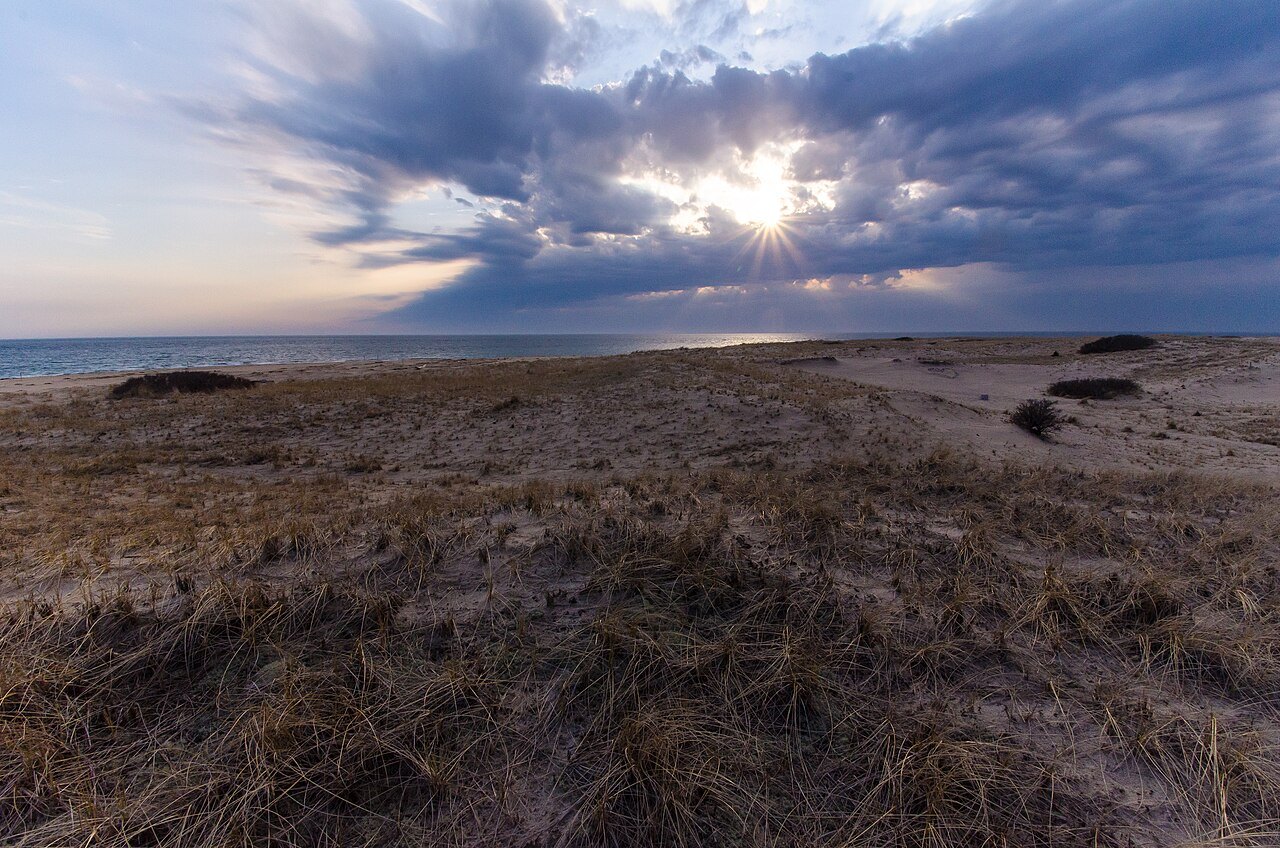
Beyond the town, the Province Lands and the wider Cape Cod National Seashore hold the dunes, ponds and lighthouses at Race Point and Long Point that framed the Pilgrims' first view of the Cape; the seashore's beaches and trails are described further at Cape Cod National Seashore.
Because the seashore and its facilities are managed by the National Park Service, visitors should check with the Park Service directly for current conditions on the beaches, dunes and lighthouse access before planning a day there, particularly in the quieter shoulder seasons when hours and services can vary.
Getting there
Provincetown sits at the end of the road on Cape Cod, and high-speed ferries landing at MacMillan Pier offer an alternative to the long drive down the peninsula; schedules and operators are covered at Ferries & Islands, with wider route planning at Getting Here.
The town itself is best explored on foot or by bicycle: walk Commercial Street end to end, climb the monument for the harbor view, and set aside at least part of a day for the dunes and beaches of the National Seashore beyond the town center.
Summer brings large crowds along with the town's festivals, including Carnival Week and the Portuguese Festival; spring and autumn are quieter seasons for visitors who want to take in the Pilgrim story and the harbor at an easier pace, away from the busiest months' crowds.
Read nextIII
More from the journal
- PlymouthIs Plymouth Rock really where the Pilgrims landed?Plymouth Rock is honored as the Pilgrims' landing place of December 1620, but neither of the colony's own chroniclers mentions it, and the claim was first made in 1741. How the legend began, how the rock was split, moved and rejoined, and what to see in Plymouth when you go.Read the piece →
- Cape Cod National SeashoreHow do the dunes of the Province Lands move?How wind, sand and plant cover keep the Province Lands dunes near Provincetown slowly shifting.Read the piece →
- Plimoth Patuxet and the Mayflower IIWhat is the Wampanoag Homesite at Plimoth Patuxet?How the Wampanoag Homesite at Plimoth Patuxet tells its own history beside the reconstructed English colony.Read the piece →