HOW THE SWAN BOATS WORKI
How do the Swan Boats in the Public Garden work?
A visitor's guide to the Public Garden's pedal-powered Swan Boats, the lagoon they circle, and how to plan a ride.
The answer in fullII
Read on
A boat built around a bird
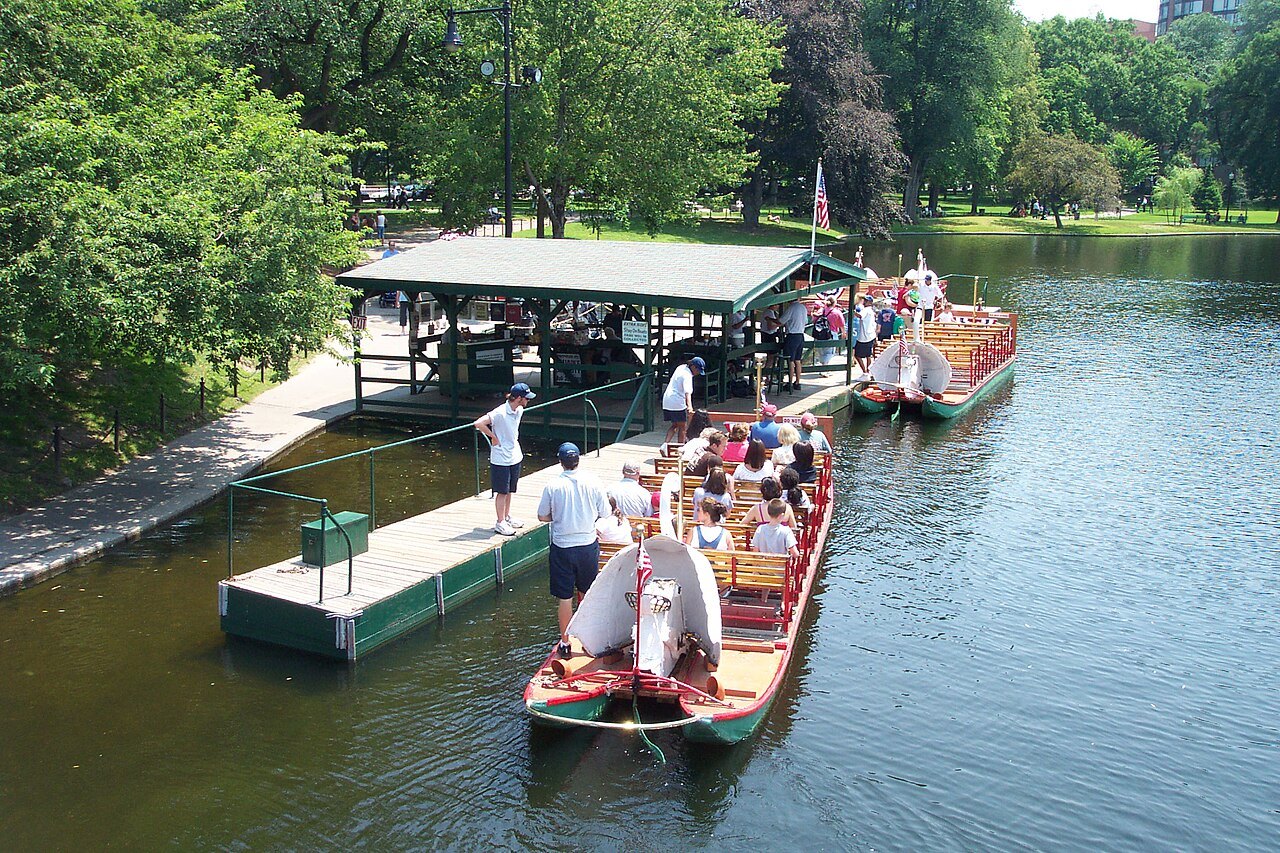
The Swan Boats are the quiet center of a Public Garden visit, pontoon boats that have circled the lagoon below the footbridge since 1877. Each one carries a large wooden swan at the stern, built big enough to screen the person who powers it from view, and the small fleet moves in a slow loop around the water at walking pace, passing beneath the bridge and along the shoreline willows.
The mechanism is simple. An operator sits on a bench at the stern, screened from view by the swan's body, and pedals to push the boat in a slow loop around the lagoon's edge. Because the bench stays hidden, the boat appears from the bank to glide under its own power, with the large white bird seeming to pull it steadily across the water.
Riders board at a landing on the lagoon, and the route stays close to the shoreline on every trip, giving a different angle on the willows, the footbridge, and the island than the paths provide. Because the boats run on a seasonal schedule tied to weather and daylight, visitors should check current days, any wait, and where boarding is taking place directly with the operator before planning time around a ride.
The lagoon and its island
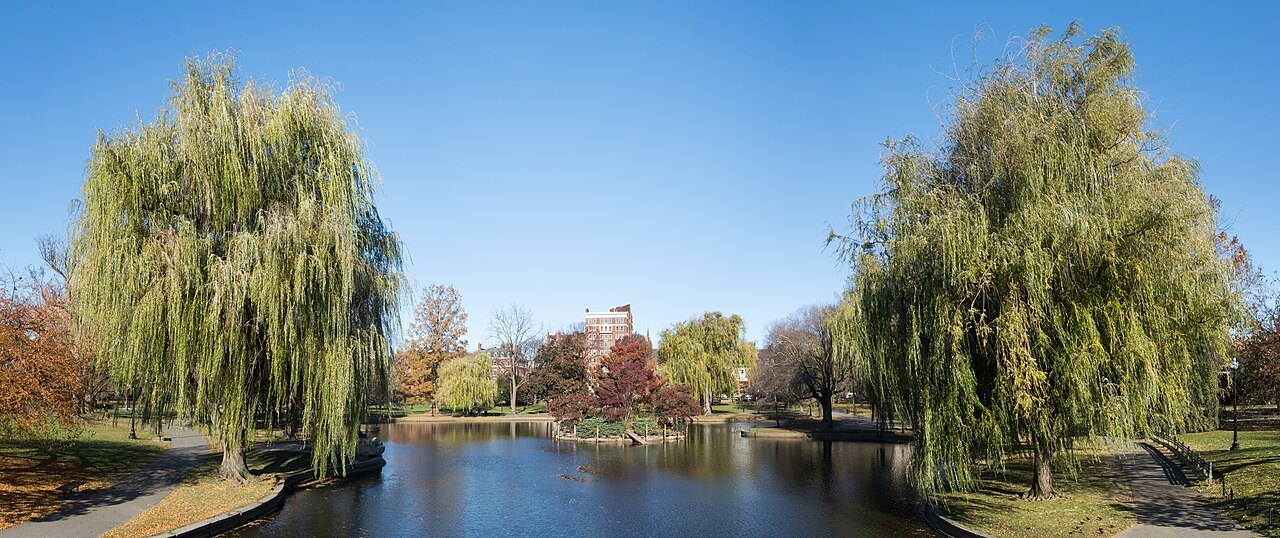
The lagoon is ringed by weeping willows, and nearby paths are lined with European and American elms, horse chestnuts, dawn redwoods, beeches, and ginkgos, so a Swan Boat ride passes beneath a changing mix of foliage, from new leaf in spring to color in fall, with the willows trailing closest to the water's edge the entire way around the loop.
The small island near the lagoon's north side was once a peninsula joined to the shore. The Garden's forester cut it loose because it had become a popular spot for courting couples, leaving it a separate landmass that the Swan Boats pass on their circuit, close enough to see clearly but reachable only by the forester's original decision to isolate it, not by any footpath today.
Across the middle of the lagoon runs a footbridge designed by William G. Preston, opened on June 1, 1867, and once the shortest working suspension bridge in the world. It was converted to a girder bridge in 1921, after decades as a landmark in its own right, and the Swan Boats still glide beneath its arch on every circuit around the water.
What the ride shows
From the water, riders face the equestrian statue of George Washington by Thomas Ball, dated 1869, standing at the Garden's western entrance toward Commonwealth Avenue. It is one of the fixed points of the park's nineteenth-century layout, visible across the lagoon on the stretch of the loop nearest that end of the Garden, framed by the surrounding trees.
Near the gate at Charles and Beacon Streets stand Nancy Schön's bronze ducklings, installed in 1987 and modeled on Robert McCloskey's children's book Make Way for Ducklings. Low to the ground and easy for children to climb on, they sit at the opposite corner of the Garden from the Washington statue, a common stop before or after the boats.
A straight path crosses the Garden between the Charles Street and Arlington Street entrances; every other path in the twenty-four-acre park winds, a layout from the plan approved in 1859. The Swan Boat landing sits inside that plan, reachable on foot from either entrance, with the lagoon itself serving as the park's organizing feature and focal point.
How the Garden came to be
The Public Garden stands on land that was salt marsh at the edge of the Back Bay until the city bought it back from ropemakers in 1824. In 1837 the philanthropist Horace Gray petitioned for its use as a botanical garden, making it the first public garden of its kind in the country, years before the lagoon or the boats existed.
Pressure to sell the land for building went on for two decades, until an 1856 agreement between the city and the Commonwealth, carried by a lopsided vote, barred construction on it for good. The plan finally approved in 1859 was designed by George F. Meacham, with paths and flower beds laid out by the city engineer and city forester.
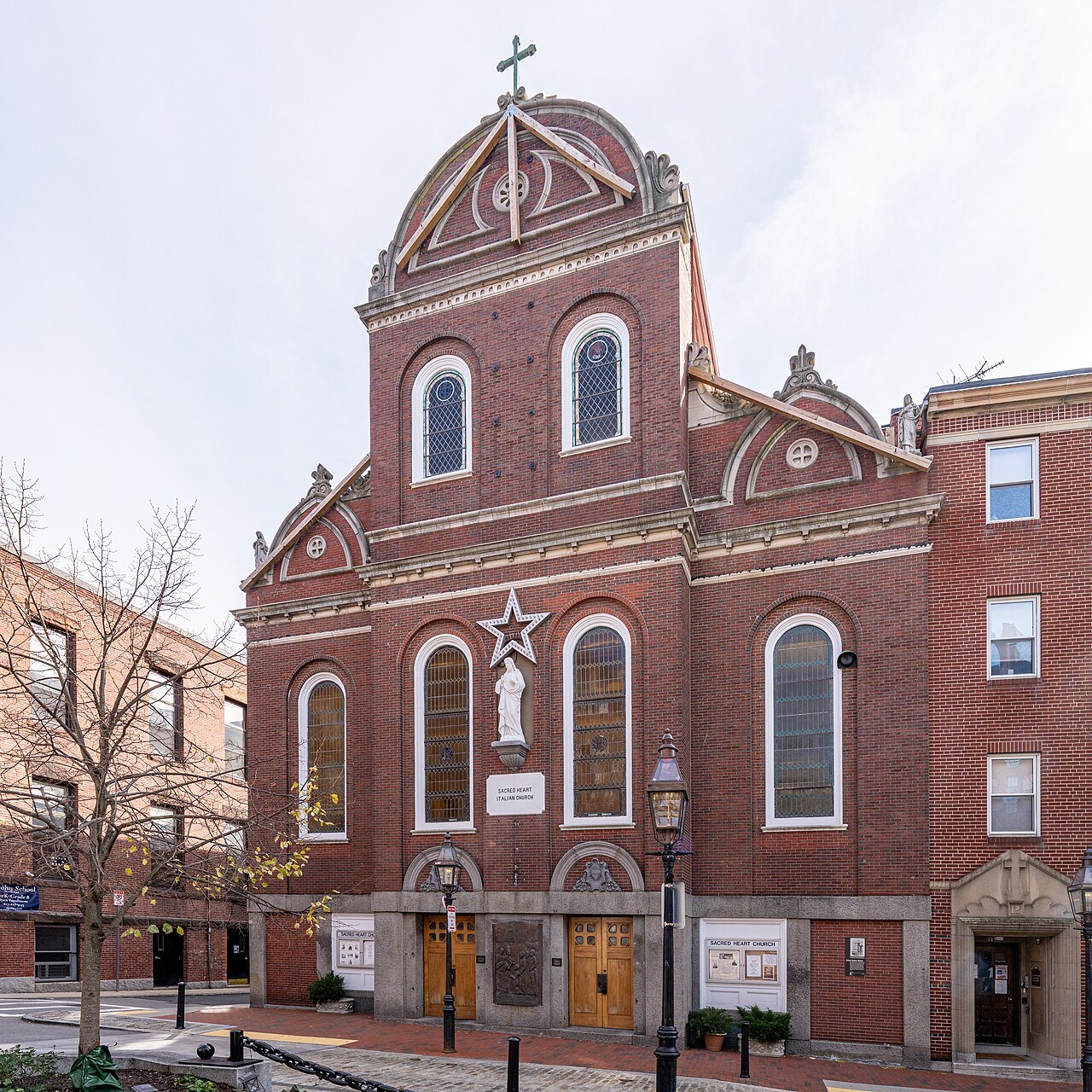
The pond, now the lagoon, was finished in 1859, and the iron fence that still encloses the Garden went up in 1862. The Swan Boats arrived fifteen years later, in 1877, into a park already shaped as a fenced Victorian garden built for strolling, in clear contrast to the open, unfenced ground of the Boston Common next door.
Finding the boats and checking the season
The lagoon sits at the center of the Public Garden, reached most directly from the Charles Street entrance on the Boston Common side or the Arlington Street gate toward Commonwealth Avenue. Both entrances lead into open ground with no ticket required to enter the park itself; only the Swan Boat ride is a paid activity with its own landing.
Because the Swan Boats run on a seasonal schedule tied to weather and daylight, check current days and conditions directly with the operator before planning a visit around them, much as the Common's Frog Pond changes its use by season. Posted signs at the landing, rather than any outside source, are the most reliable guide on a given day.
The walk between the Common and the Garden takes only a few minutes across Charles Street, and many visitors combine the two, starting at the Freedom Trail's visitor center on the Common's Tremont Street side and finishing at the lagoon for a quieter close to the walk. See Freedom Trail for how the route connects the two parks.
Practical notes for a visit
Sitting on the grass is allowed throughout the Common and the Garden except where a posted sign forbids it, so a Swan Boat visit pairs easily with a rest on the lawn before or after. The lagoon remains the Garden's single reliable gathering point, visible from paths on every side of the park at any time of day.
Because the boats draw families, lines can form at the landing without posted times to check in advance; arriving with flexibility and asking the operator directly about the current wait is more useful than guessing from outside. For getting to the Garden from elsewhere in the city, including from Logan Airport, see Getting Around.
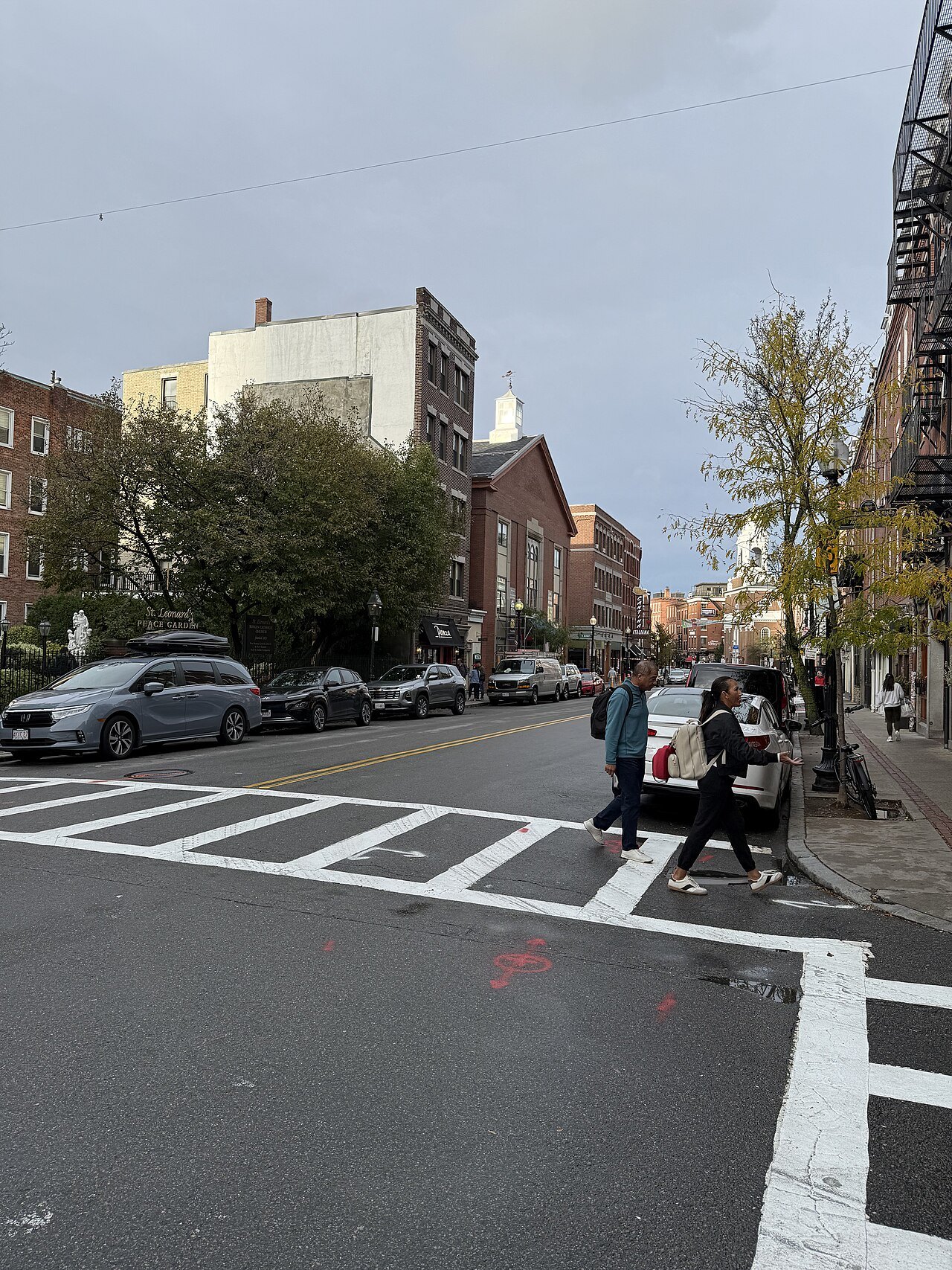
The Swan Boats are a short, unhurried way to see the lagoon, the bridge, the island, and the surrounding statues from the water rather than the paths. They remain one of the few details in Boston that have kept their character since the nineteenth century, even as the city around the Public Garden has changed around them.
Read nextIII
More from the journal
- The Freedom TrailHow long does it take to walk the Freedom Trail?The Freedom Trail is only two and a half miles long, but its sixteen stops can fill a day. How long the walk takes with and without the buildings, where to break it in two, which stops need the most time, and how to get back from Charlestown at the end.Read the piece →
- Getting HereHow do you get from Logan Airport to downtown Boston?Logan sits in East Boston, across the harbor from downtown, so every route into the city crosses the water. The Silver Line bus to South Station, the Blue Line from Airport station, the Logan Express, the boats and the car through the Ted Williams Tunnel, and which suits where you are staying.Read the piece →
- Ferries & IslandsHow do you get to Martha's Vineyard, and do you need a car?Martha's Vineyard has no bridge: you arrive by ferry or small plane. Which harbor to sail from, the one ferry line that takes cars, why most visitors leave the car behind, and how to get round the island by bus, bicycle and on foot.Read the piece →