WHERE TO START AT THE MFAI
Which galleries of the Museum of Fine Arts should a first visit start with?
A first-visit guide to which Museum of Fine Arts galleries to see first, from the rotunda to the Americas wing.
The answer in fullII
Read on
Begin with the rotunda and Sargent's murals
When planning a first visit to the Museum of Fine Arts, climb the grand staircase to the rotunda before turning toward any wing. Between 1916 and 1925 John Singer Sargent painted the murals and reliefs that cover its dome and the colonnades above the stairs, choosing the gods and heroes of Greek myth as his subject. The paintings are part of the building itself, not works hung on its walls, so they reward a visit even if the day is aimed elsewhere.
Sargent's model for Apollo and several other figures was Thomas McKeller, a young Black man whose role the museum now explains alongside the murals. Knowing this adds a layer to standing beneath the rotunda, where the painted figures circle overhead and the colonnade lets visitors walk close to the reliefs at closer range than the ceiling allows.
Because the rotunda sits at the center of Guy Lowell's 1909 building, it works as an orientation point as well as a highlight: corridors lead from it toward the Art of the Americas wing on one side and the museum's Asian and ancient galleries on others, making it a natural place to start before choosing a direction.
For visitors who enter from the Fenway side rather than from Huntington Avenue, the rotunda is still reachable within a few minutes' walk through the central courtyard, making it worth the detour even on a day focused mainly on the Art of the Americas wing or on the Asian and ancient galleries elsewhere in the building.
The Art of the Americas wing
The largest change to the museum in a century came with a master plan by the firm Foster and Partners, whose centerpiece, the Art of the Americas Wing, opened on November 20, 2010. It holds art from North, South and Central America, arranged across several floors, and gives a first visit a clear anchor: a few hours here, paired with the rotunda, make a reasonable half day on their own.
Next to the wing, the glass-roofed Shapiro Family Courtyard serves as the museum's bright central hall, the easiest place to orient before heading into a gallery or to meet someone partway through a visit. The landscape architects Gustafson Guthrie Nichol redesigned the entrances on both Huntington Avenue and the Fenway side along with the gardens around them as part of the same project.
The wing's design won the Harleston Parker Medal from the Boston Society of Architects in 2014, an award for architectural achievement in the city, a sign of how much the addition reshaped the museum's public face. Earlier changes, including the Asiatic Wing's reopening in 1982 and the Calderwood Garden Court in 1997, had already pointed the museum toward more light-filled, climate-controlled galleries.
Asia across several galleries
The MFA holds the largest collection of Japanese art anywhere outside Japan, built from objects gathered in the late nineteenth century by four Bostonians who had lived in Japan: Ernest Fenollosa, Kakuzo Okakura, William Sturgis Bigelow and Edward Sylvester Morse. In 1890 the museum became the first in the United States to give its Japanese collection a curator of its own, and it has kept collecting contemporary Japanese work since.
The Chinese galleries move through nearly every era, from Neolithic tomb objects through imperial ceramics and bronzes to large Buddhist sculpture and contemporary pieces, giving a sense of continuity that few collections outside China attempt. A visitor with limited time might treat Japan and China as a single stop, since the galleries sit near one another.
Outside, the Japanese garden Tenshin-en, designed by Kinsaku Nakane, opened in 1988 and was renovated in 2015; its gate was built by a Massachusetts carpenter using traditional Japanese joinery. It is a quiet stop between galleries rather than a destination on its own, best reached on the way between the Asian collections and the rest of the building.
Egypt, Greece and Rome
The Egyptian galleries hold sculpture, sarcophagi and jewelry spanning roughly from 6500 BCE to 600 CE, much of it gathered through excavations the museum itself took part in. The range alone makes the galleries worth slowing down for, since a single room can move a visitor across thousands of years of a single culture's history.
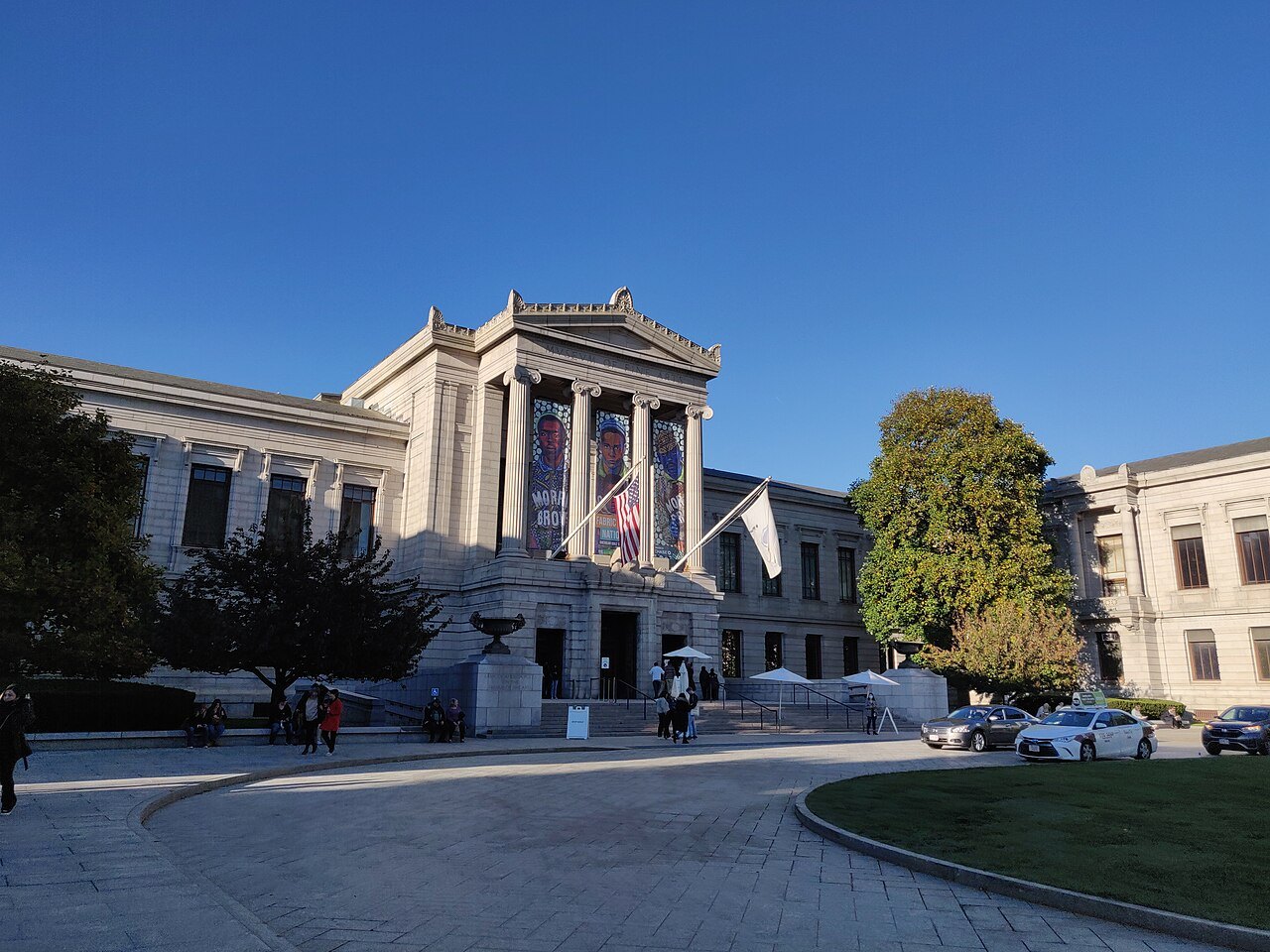
The classical collections of Greece and Rome sit nearby, a natural extension for anyone drawn to the ancient world. Outside the Huntington Avenue entrance, Cyrus Dallin's 1908 bronze Appeal to the Great Spirit, a mounted Native American figure with arms spread, marks the approach and is worth a look before or after the ancient galleries inside.
Because the Egyptian and classical galleries sit on the ground floor near the Huntington Avenue entrance, they make an easy stop on the way in or out of the building, whether as a first stop before climbing to the rotunda or a last one before leaving through the gardens outside.
Building a first-visit plan
The museum is large enough that a first visit works best with a plan rather than a wander. A practical split is the Art of the Americas wing and the rotunda for one half of a day, then one of the Asian or ancient collections for the other, rather than trying to cover every gallery in a single pass.
Both entrances, from Huntington Avenue past the Dallin statue and from the Fenway side, lead into the central courtyard, which doubles as the easiest place to get oriented or to meet someone if a group splits up to see different galleries. For a broader look at the Fenway and nearby museums, see The Landmarks.
Tickets are sold by the museum itself, and a visitor planning a first trip should check its own site for current exhibitions and for whether any gallery or particular entry requires a timed slot before arriving, since special shows can change which rooms are available to general visitors on a given day.
Why the Gardner makes sense next
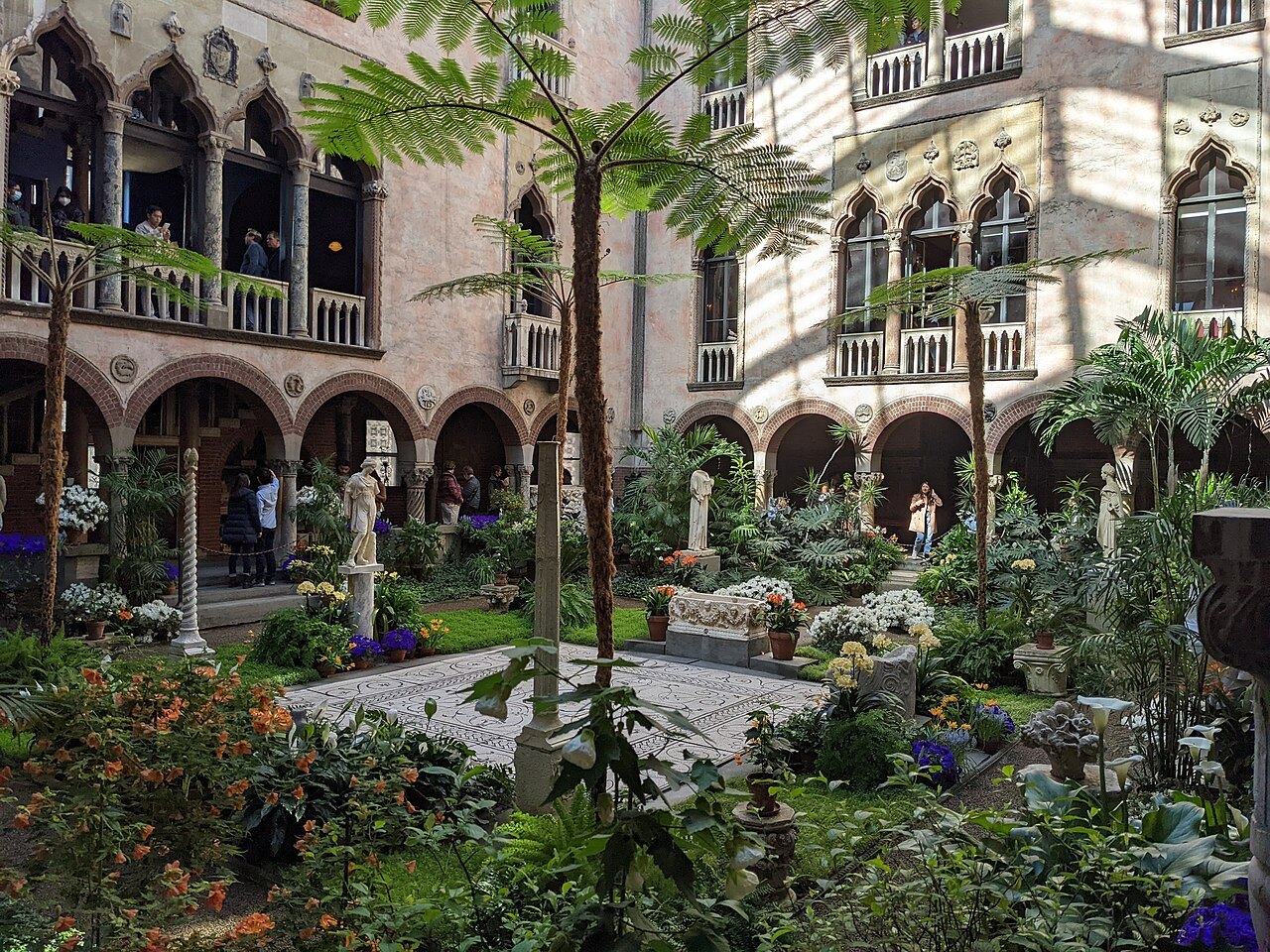
When the museum's trustees chose the Fenway as a new site in 1907, Isabella Stewart Gardner's museum had just opened a few streets away, and the two have stood as neighbors since. They offer different ways of holding art: the MFA rehangs its galleries, adds wings and brings in loans and exhibitions, while the Gardner keeps its rooms exactly as she arranged them under the terms of her will, as described at The Isabella Stewart Gardner Museum.
The walk between them takes only a few minutes, and many visitors treat the two as a single day: the public encyclopedia in the morning, the private house in the afternoon, or the reverse. Seeing both back to back makes the contrast in how each built its collection clearer than either museum alone.
Visitors staying elsewhere in Greater Boston can look at Where to Stay for how the Fenway neighborhood fits into a broader plan of where to base a trip, since the area around both museums works well as a base for a day built mostly around art rather than a quick stop squeezed between other sights.
Read nextIII
More from the journal
- The Isabella Stewart Gardner MuseumWhat was stolen from the Gardner Museum in 1990?The story of the 1990 theft at the Gardner Museum, what was taken, and why the gaps remain unfilled today.Read the piece →
- Getting HereHow do you get from Logan Airport to downtown Boston?Logan sits in East Boston, across the harbor from downtown, so every route into the city crosses the water. The Silver Line bus to South Station, the Blue Line from Airport station, the Logan Express, the boats and the car through the Ted Williams Tunnel, and which suits where you are staying.Read the piece →
- USS Constitution and Bunker HillHow did USS Constitution get the name Old Ironsides?How a War of 1812 victory over Guerriere gave USS Constitution her famous nickname, and how to visit her in Charlestown.Read the piece →