WHY BUNKER HILL MEANS BREED'S HILLI
Why is the Bunker Hill Monument not on Bunker Hill?
The granite obelisk honoring the Battle of Bunker Hill actually stands on Breed's Hill, steps from USS Constitution.
The answer in fullII
Read on
A Name That Outlived the Battle
The Bunker Hill Monument stands on Breed's Hill, not Bunker Hill, a distinction that confuses many visitors who read the name on the obelisk and expect the ground underfoot to match it. The battle fought on June 17, 1775, during the siege of Boston, took its name from the hill the colonial troops had been ordered to fortify, even though the fighting that day happened mostly on the lower rise beside it.
Bunker Hill itself rises nearby, taller and farther from the harbor, and it was the position colonial officers had been told to occupy and defend. Breed's Hill, a sixty-two-foot glacial drumlin in the south of the Charlestown peninsula, sat closer to the water and to the British guns across the harbor, which made it the more exposed ground once troops began digging in there overnight.
Exactly why the colonial command ended up fortifying Breed's Hill instead of Bunker Hill is a question worth putting to the National Park Service rangers who staff both the Navy Yard and the monument; they can walk a visitor through the tactical reasoning in more detail than a plaque allows. What the record agrees on is simpler: the name stuck to the battle, and later to the monument, regardless of which hill carried the earthworks.
What Happened on June 17, 1775
Colonial troops fortified the summit of Breed's Hill overnight, raising a redoubt that looked down on the British-held town and the ships in the harbor. When British regulars crossed the water the next day, they advanced uphill in formal lines against a defense that threw back two full assaults with heavy losses before a third finally carried the redoubt.
The battle was a British victory, but an extremely costly one, with casualties among the regulars far higher than those the colonial side suffered. Among the American dead was General Joseph Warren, the popular leader of the Massachusetts Committee of Safety, whose death on the field became one of the war's early rallying points and shaped how the battle was remembered afterward.
The fight came early in the siege of Boston, months before the Declaration of Independence, and it convinced British commanders that colonial militia could stand and fight in a formal engagement. That lesson, and the scale of British losses for a single hill, is part of why the site was marked with a monument within a generation of the war's end.
Breed's Hill, Not Bunker Hill
Breed's Hill is modest by any measure, a sixty-two-foot rise that would draw no attention if it carried no history. It sits in the south of the Charlestown peninsula, close to the old Charlestown Navy Yard and the water where USS Constitution is now berthed, which is one reason the ship and the monument are so often visited together.
The first monument raised on the hill, in 1794, honored Warren rather than the battle generally, a sign of how quickly his death became the story visitors were meant to remember. It stood on the summit for roughly a generation before the ground itself came up for sale and a new civic effort took shape around saving it.
Visitors who want the fuller tactical account, of why Breed's Hill rather than Bunker Hill became the fortified position, should ask a National Park Service ranger on site; the Park Service has run the monument since 1976 and its staff can point to further reading or give the short version on the spot.
Raising the Obelisk
The ground came up for sale in 1822, and the Bunker Hill Monument Association formed specifically to buy and preserve it rather than see the battlefield redeveloped. The present granite obelisk, designed by Solomon Willard, was begun in 1825, fifty years after the battle it marks and in the same decade the nearby Navy Yard was building warships of its own.
Construction stopped twice for lack of money, a reminder that even a cause this popular took decades to finish through voluntary fundraising. The obelisk was finally dedicated on June 17, 1843, the anniversary of the battle, and at that point it was the largest obelisk in the United States, a distinction that drew visitors on its own account.
William Wetmore Story's statue of Colonel William Prescott, the colonial commander on the hill, stands on the monument's south side, a specific figure amid an otherwise abstract granite shaft. The National Park Service has run the monument since 1976, as part of Boston National Historical Park, alongside the Navy Yard across the water.
Climbing the Monument
Inside the obelisk, a spiral stair of two hundred ninety-four steps winds around a hollow central core, lit only by narrow openings cut into the north face. No elevator is described for the climb, so visitors should plan for a sustained, enclosed stair with no shortcut to the top and back down again.
Four gates stand on the avenue that rings Monument Square, each named for a regiment that fought in the battle, and all four lead up to the base of the obelisk. A circular path runs around the shaft itself, past the Prescott statue and the granite entrance building added in 1902.
Because the Park Service runs the monument as part of Boston National Historical Park, its rangers are the people to ask about what can be climbed or visited on a given day, including any limits on the stair itself. Checking with them before setting out saves a wasted walk up the hill to Monument Square.
Pairing the Monument With the Ship
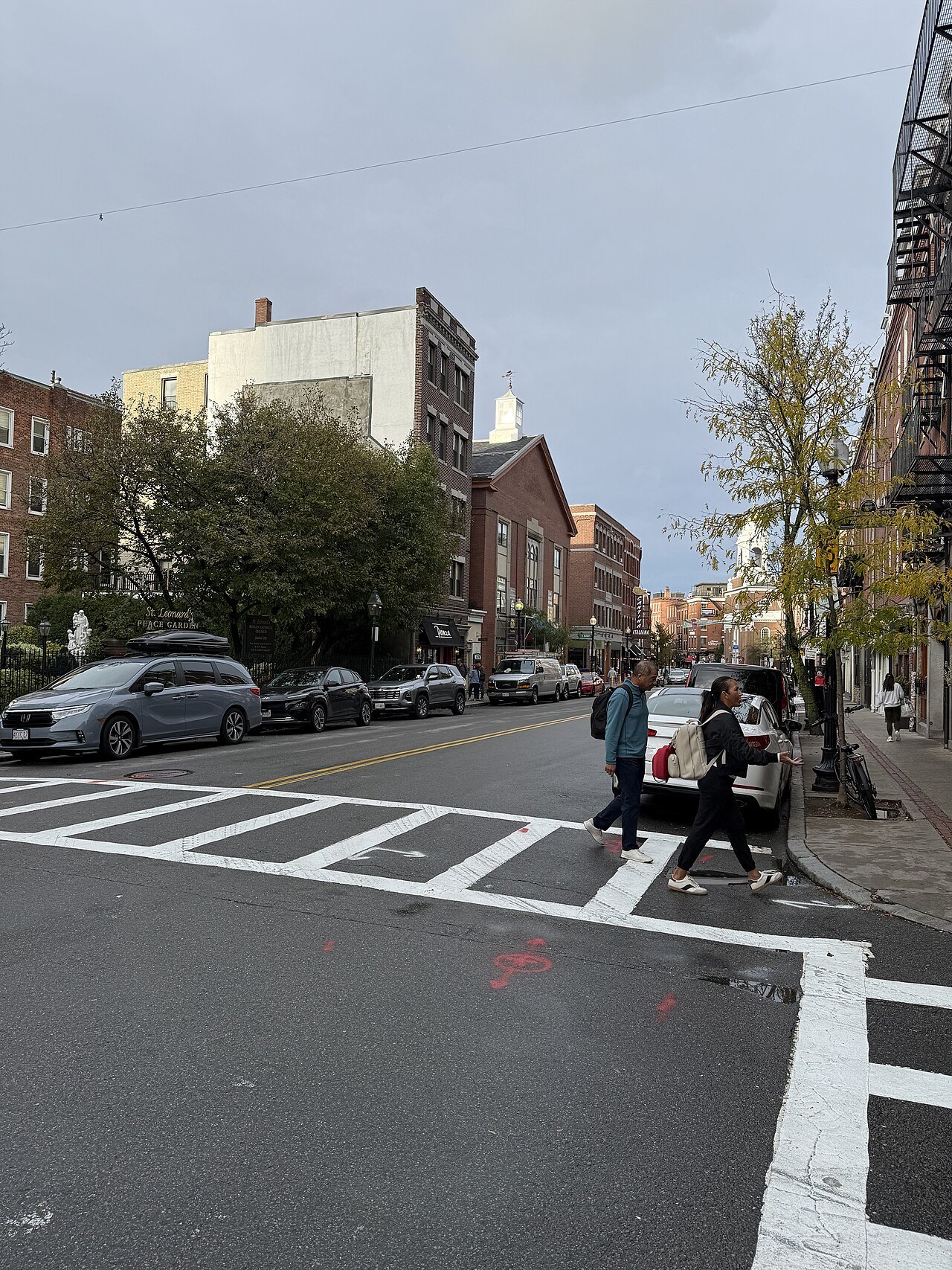
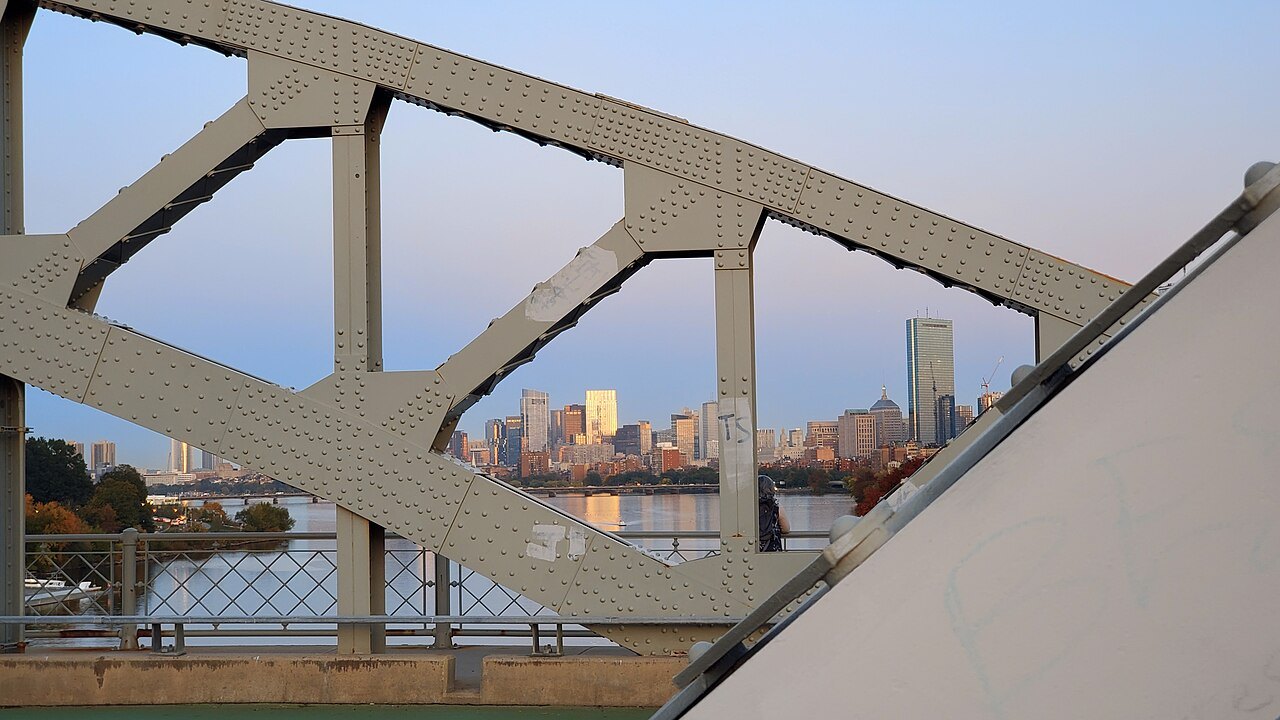
The ship and the monument are the two last stops on the Freedom Trail, reached by walking over the bridge from the North End into Charlestown and a short distance apart once there. Most visitors see USS Constitution first, since her crew give free tours that benefit from unhurried time on the spar and gun decks.
After the ship, the USS Constitution Museum in the yard fills in the history that a deck tour cannot, including the research into who built the ship and under what conditions. From there the walk climbs the streets of Charlestown toward Monument Square, gaining the height that Breed's Hill always held over the harbor below.
The Park Service, which runs both the Navy Yard's historic grounds and the monument, is the operator to check for the day's specifics on tours, the stair and the museum, since all three sit inside Boston National Historical Park. Visitors coming from downtown Boston can plan the whole outing as a single half-day loop.
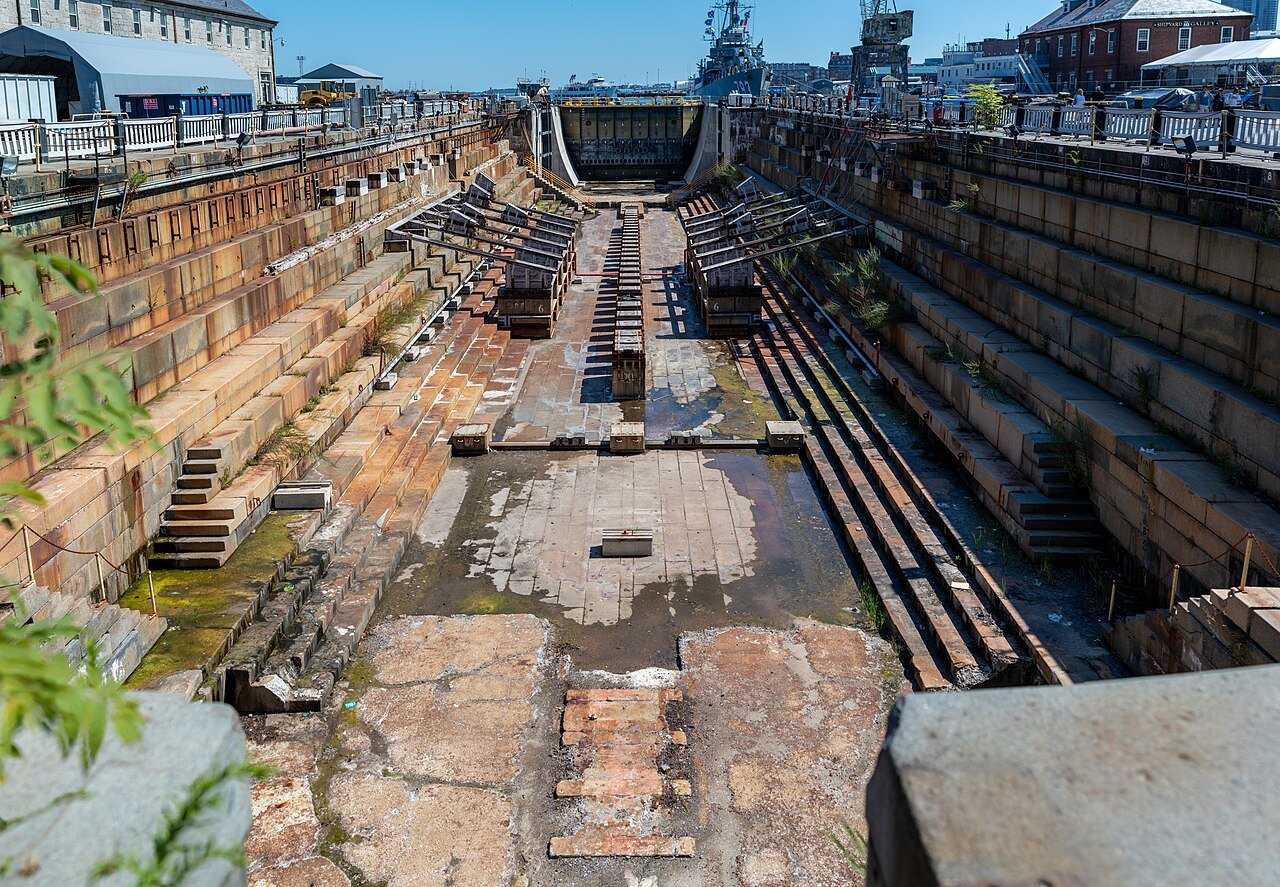
Give the pair at least half a day, longer if the museum or the climb up the obelisk holds particular interest, since neither site rewards rushing. Combined, the ship in the water and the granite shaft on the hill above it tell the story of a young nation defending itself, first with muskets and then with iron-hulled firepower.
Read nextIII
More from the journal
- USS Constitution and Bunker HillHow did USS Constitution get the name Old Ironsides?How a War of 1812 victory over Guerriere gave USS Constitution her famous nickname, and how to visit her in Charlestown.Read the piece →
- The Freedom TrailHow long does it take to walk the Freedom Trail?The Freedom Trail is only two and a half miles long, but its sixteen stops can fill a day. How long the walk takes with and without the buildings, where to break it in two, which stops need the most time, and how to get back from Charlestown at the end.Read the piece →
- Lexington, Concord and the Old North BridgeWhat happens on Patriots' Day in Massachusetts?Patriots' Day marks the first battles of the Revolution on April 19, 1775. On the third Monday in April, Lexington and Concord reenact them at dawn, riders retrace Paul Revere's ride, the Boston Marathon runs from Hopkinton to Boylston Street and the Red Sox play at home. How to see it, and how to plan around it.Read the piece →