Home · Eating & Drinking
The state's ownI
What to order
On the board
- New England clam chowderThe white chowder, made with milk or cream, clams, diced potatoes, salt pork and onions, served with small hexagonal oyster crackers.
- Fried clamsWhole soft-shell clams, the whole-bellies, dipped in milk, floured and deep-fried; the signature dish of the seaside clam shacks.
- The lobster rollLobster meat in a grilled New England hot dog bun, split on top; served warm with butter or cold with mayonnaise.
- The clambakeClams, lobsters and corn cooked together over a fire pit, a meal adapted from Native American tradition.
- Boston baked beansBeans sweetened with molasses and flavored with salt pork, the dish that gave Boston the nickname Beantown; eaten with brown bread.
- Boston cream pieNot a pie but a cake: sponge layers with a custard filling and chocolate on top, credited to the Parker House Hotel in 1856.
- CranberriesGrown in the bogs of the southeast since the first cultivation on Cape Cod around 1816, harvested by flooding the beds.
- The North Shore roast beef sandwichThin-sliced roast beef on a bun, often three-way: mayonnaise, barbecue sauce and white American cheese.
- The FluffernutterPeanut butter and marshmallow creme, a Massachusetts sandwich: Fluff was invented in Somerville and made in Lynn.
In fullII
Eating & Drinking
A cooking of sea and bog
The cooking of New England traces its roots to English cooking and to the Native cuisines of the Wampanoag and their neighbors, from whom the settlers adopted squash, corn, beans, wild turkey, maple syrup, cranberries, cornbread, johnnycakes and Indian pudding. Its favored techniques are stewing, steaming and baking, and it uses cream generously. Since the 1800s Irish, Portuguese and Italian immigrants have added their own dishes.
Coastal Massachusetts is known above all for its clams, its haddock and its cranberries, and formerly for cod, the fish that gave Cape Cod its name and remains a staple. Inland, in the hilly center and west, the table is closer to northern New England: potatoes, maple syrup, wild blueberries and dairy, and apples grown commercially across the state.
Clams, three ways
Clams are the heart of the Massachusetts table. Hard-shell clams, called littlenecks, cherrystones or quahogs according to size, go into chowder or are eaten steamed or raw. Soft-shell clams, the steamers, are steamed or fried. New England clam chowder, the white chowder, is made with milk or cream, clams, diced potatoes, salt pork and onions, and served with oyster crackers; early chowders had no milk and were thickened with crackers or stale bread.
Fried clams have been called to New England what barbecue is to the South. In Massachusetts they are made from whole soft-shell clams, the whole-bellies, dipped in milk, floured and deep-fried, and eaten at the seaside clam shacks, or in a clam roll with tartar sauce. Woodman's of Essex, on the North Shore near Cape Ann, began selling fried clams in 1916, and the town holds an annual clam festival.
Lobster and the clambake
American lobster is eaten grilled, steamed or boiled, and above all in the lobster roll: lobster meat in a grilled New England-style hot dog bun, split on top rather than on the side, served warm with butter or cold with mayonnaise, with potato chips or fries alongside. Its invention is disputed across New England, and every coastal town has its opinion.
The great summer feast is the clambake, adapted from Native American tradition: clams, lobsters and corn cooked together over a fire pit, with mussels, fish, sausage and potatoes added in modern versions. On the Cape and the islands, look also for bluefish in summer, smoked, broiled or sauteed.
Boston's own
Boston is Beantown for its baked beans, sweetened with molasses and flavored with salt pork or bacon. The molasses came with the eighteenth-century trade that made Boston a rum exporter, and in colonial New England the beans were baked on Saturday and left in brick ovens overnight so that a hot meal was ready on the Sabbath. Beans and brown bread are still a Saturday night staple in the region.
Boston cream pie is not a pie but a cake of sponge layers with a custard filling. It is most often credited to a French chef at the Parker House Hotel, who is said to have made it for the hotel's opening in 1856; the restaurant there, once the city's premier dining room, still serves. Near Faneuil Hall stands the Union Oyster House, open since 1826, the oldest continuously operating restaurant in the United States. Chocolate chip cookies, the Toll House original, are the official state cookie.
The fishing ports
Commercial cod fishing along Cape Ann goes back to 1623, and Gloucester is still a fishing port: Gorton's of Gloucester, the seafood company, was founded there in 1849 as John Pew and Sons, and the city is also a center for marine research. New Bedford, once the whaling capital, is a fishing port too. In both, the fish on the plate is likely to have come in that morning.
The old Boston table was a seafood table. The menu of Parker's Restaurant in the Parker House in 1865 already offered oysters, fried clams, mackerel, shad, salmon in anchovy sauce, cod in oyster sauce and soft-shell crab, and haddock, cod and the day's catch are still the standard of the harbor towns.
The bogs
Cranberries are a major commercial crop in Massachusetts, the second-largest producer in the United States after Wisconsin; the industry's marketing committee is based in Wareham. The Narragansett may have introduced them to the colonists, and a Plymouth record of 1633 already mentions a cranberry-dyed petticoat. Henry Hall, a veteran of the Revolutionary War, first cultivated them in the Cape Cod town of Dennis around 1816.
The bogs lie across the southeast of the state. In autumn the beds are flooded to harvest, and the ripe berries float in the water, to be corralled into a corner of the bed and pumped out, and in winter the beds are flooded again to protect the vines from the cold. The berry is on every table as sauce, juice and dried fruit.
Other local tastes
Along the North Shore, roast beef sandwich shops serve thin-sliced roast beef on a bun, often three-way with mayonnaise, barbecue sauce and white American cheese on an onion roll, and many pizzerias serve steak tips. Much of the pizza in the region is Greek pizza, with a chewy, bready crust baked in an oiled round pan, often at a House of Pizza.
Marshmallow Fluff was invented in Somerville and made in Lynn, and the Fluffernutter, peanut butter and Fluff, is a Massachusetts sandwich. Fig Newtons are named for the town of Newton, and Necco Wafers came from Cambridge. In New Bedford and Provincetown, with their large Portuguese American communities, look for linguica, chourico, caldo verde, malasadas and Portuguese sweet bread.
Drinking
Massachusetts brews widely. Samuel Adams of the Boston Beer Company is brewed in Boston, and the state played a large part in the craft beer revolution with breweries such as Harpoon, Tree House, Trillium and Jack's Abby. In Boston the North End, the Italian quarter since the great immigrations, holds Italian summer feasts in honor of Catholic saints, and its cafes make a natural stop on the Freedom Trail.
Where to eat what
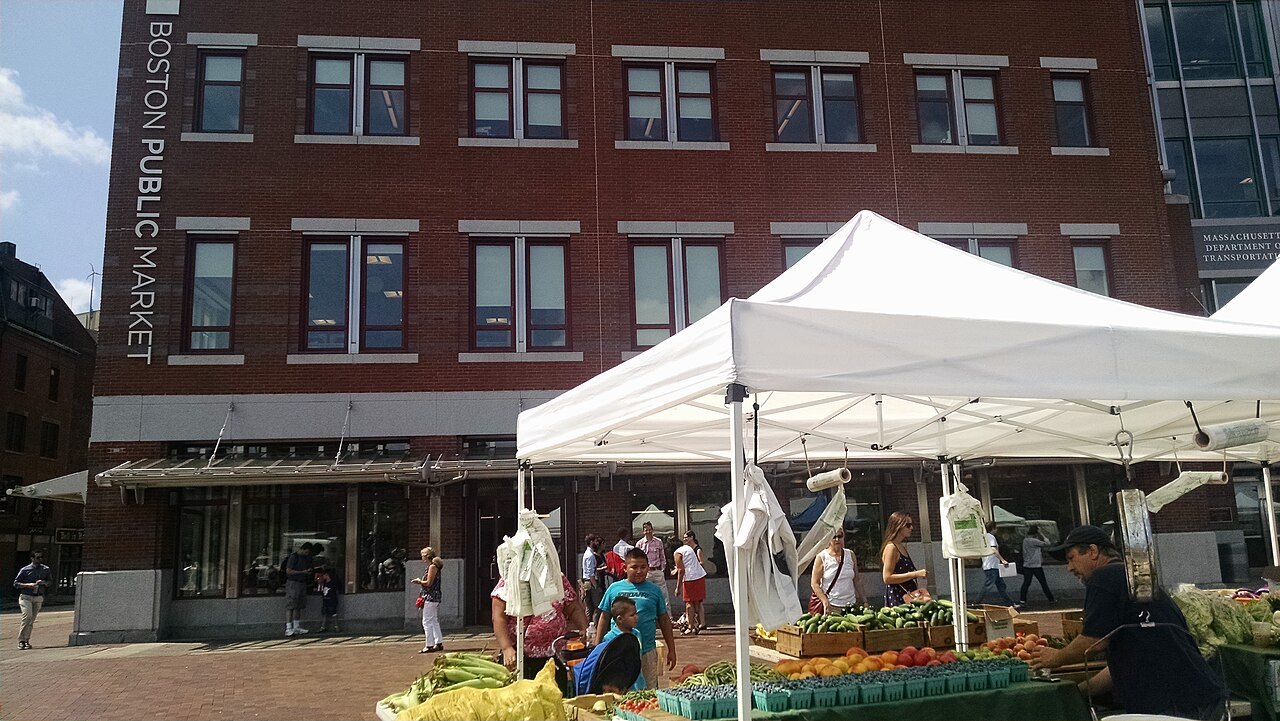
For chowder, fried clams and lobster rolls, go to the coast: the clam shacks of the North Shore and Cape Ann, the harbor towns of the Cape and the islands, and the waterfront in Boston. For baked beans, cream pie and oysters, stay in Boston near Faneuil Hall. For cranberries, drive the bog country around Plymouth in autumn. For apples and maple, head west into the valley and the hills. See Where to Stay for bases in each region.
Seen on the wayIII
More photographs
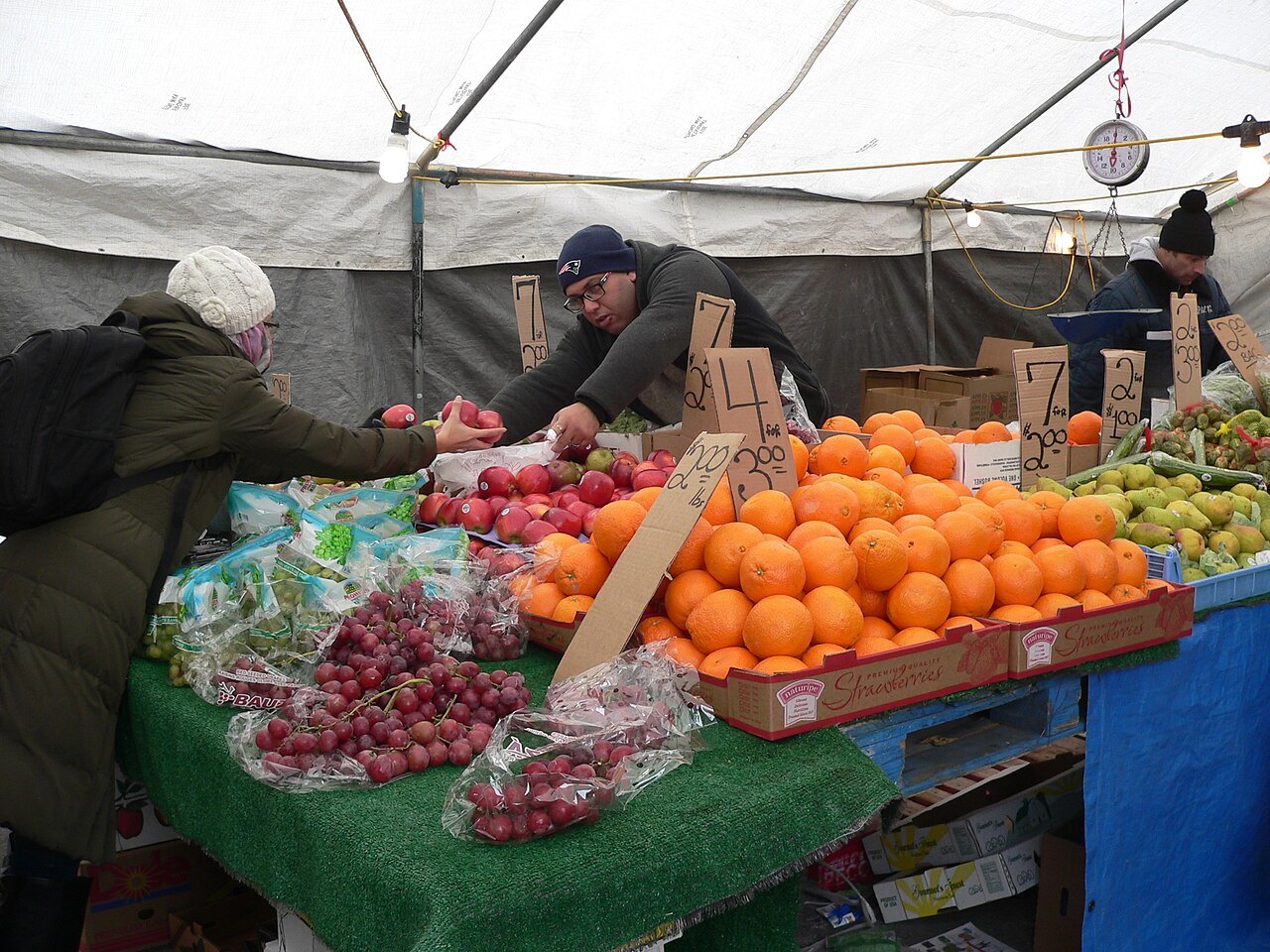
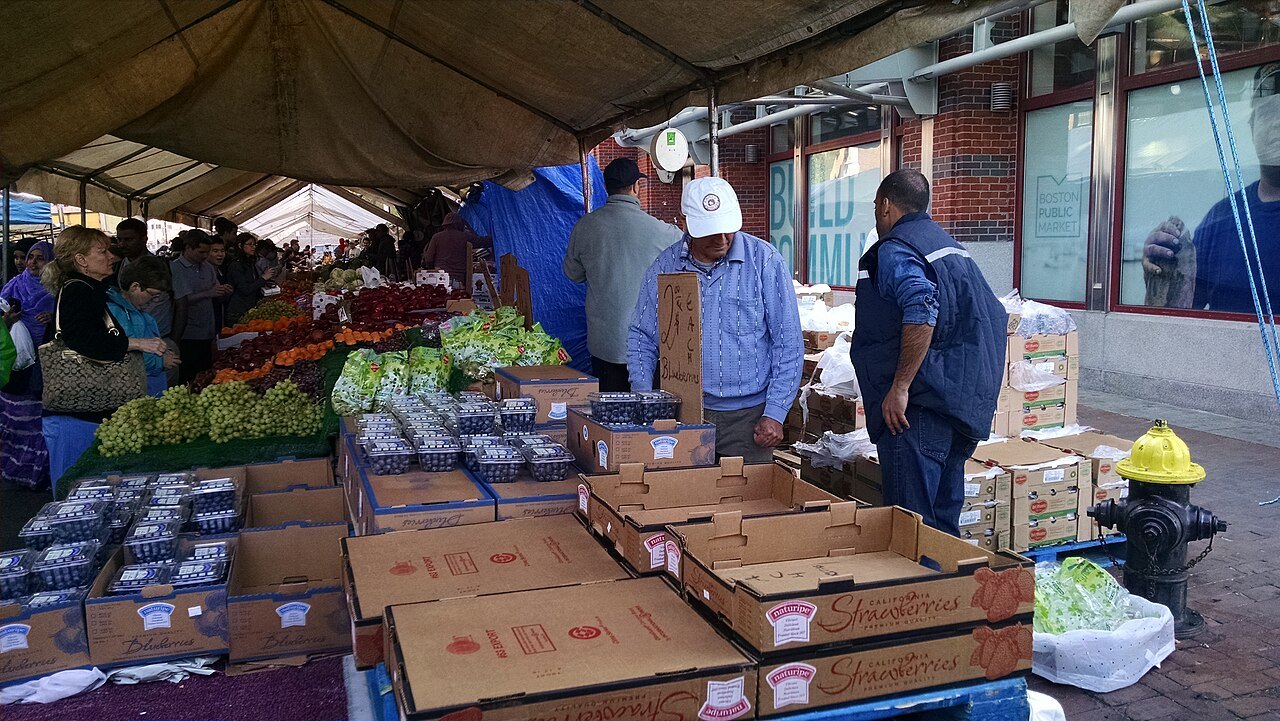
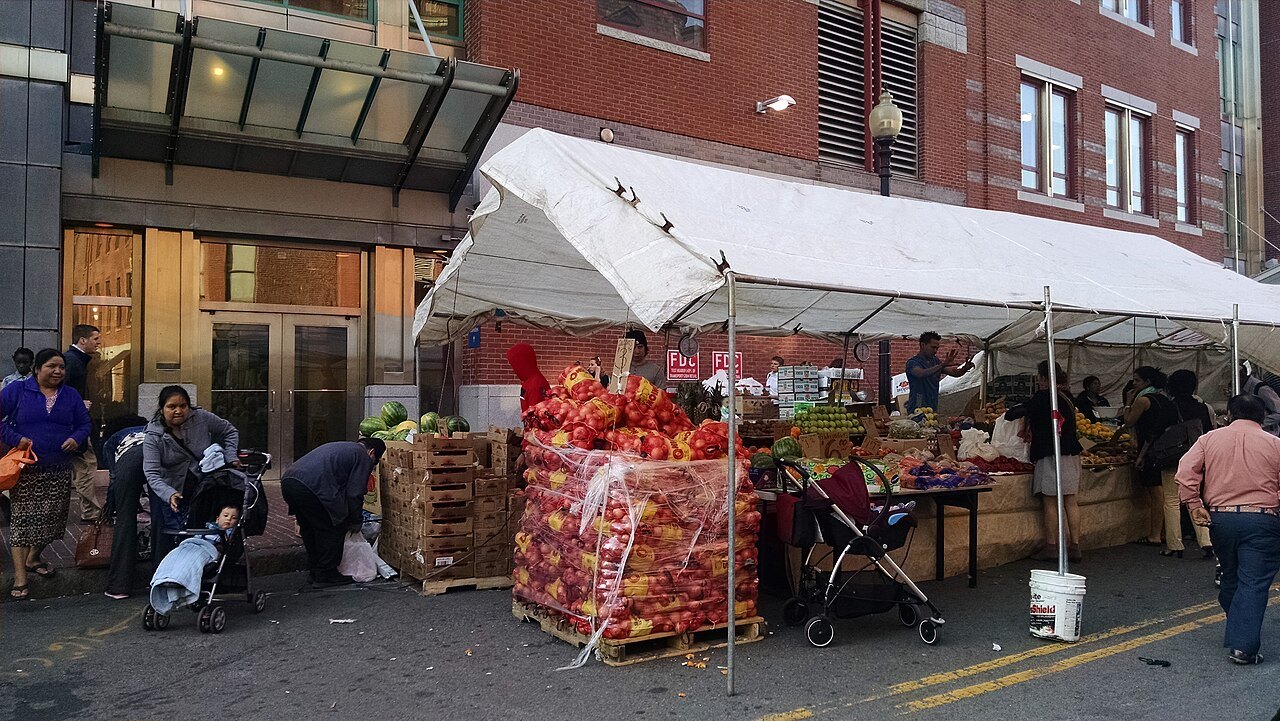
Apples and oranges piled high on a Haymarket cartDaniel Brody, Wikimedia Commons, CC BY-SA 4.0 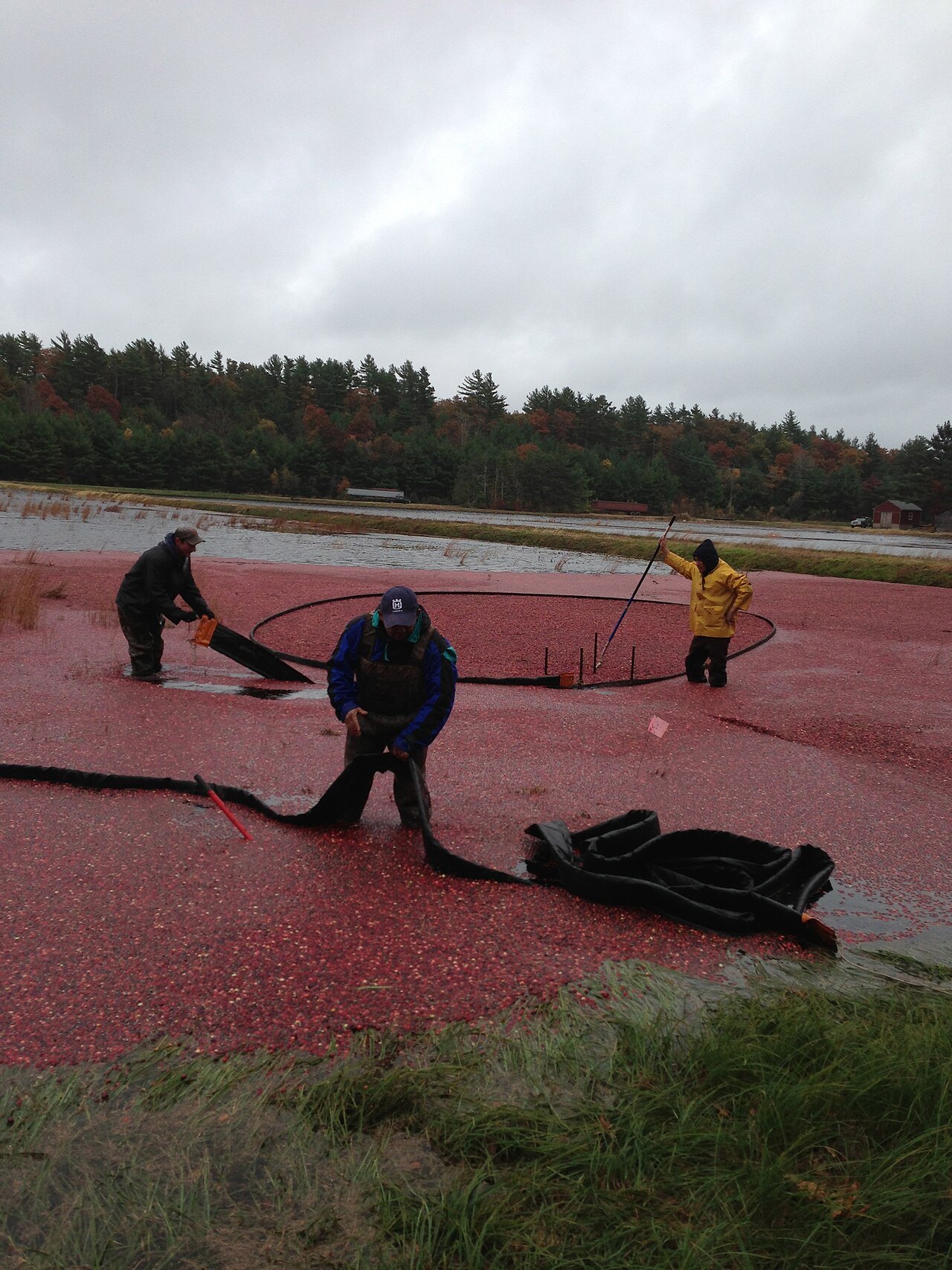
Workers in waders corralling floating cranberries in a flooded bog in MiddleboroHalBrown, Wikimedia Commons, CC BY-SA 3.0 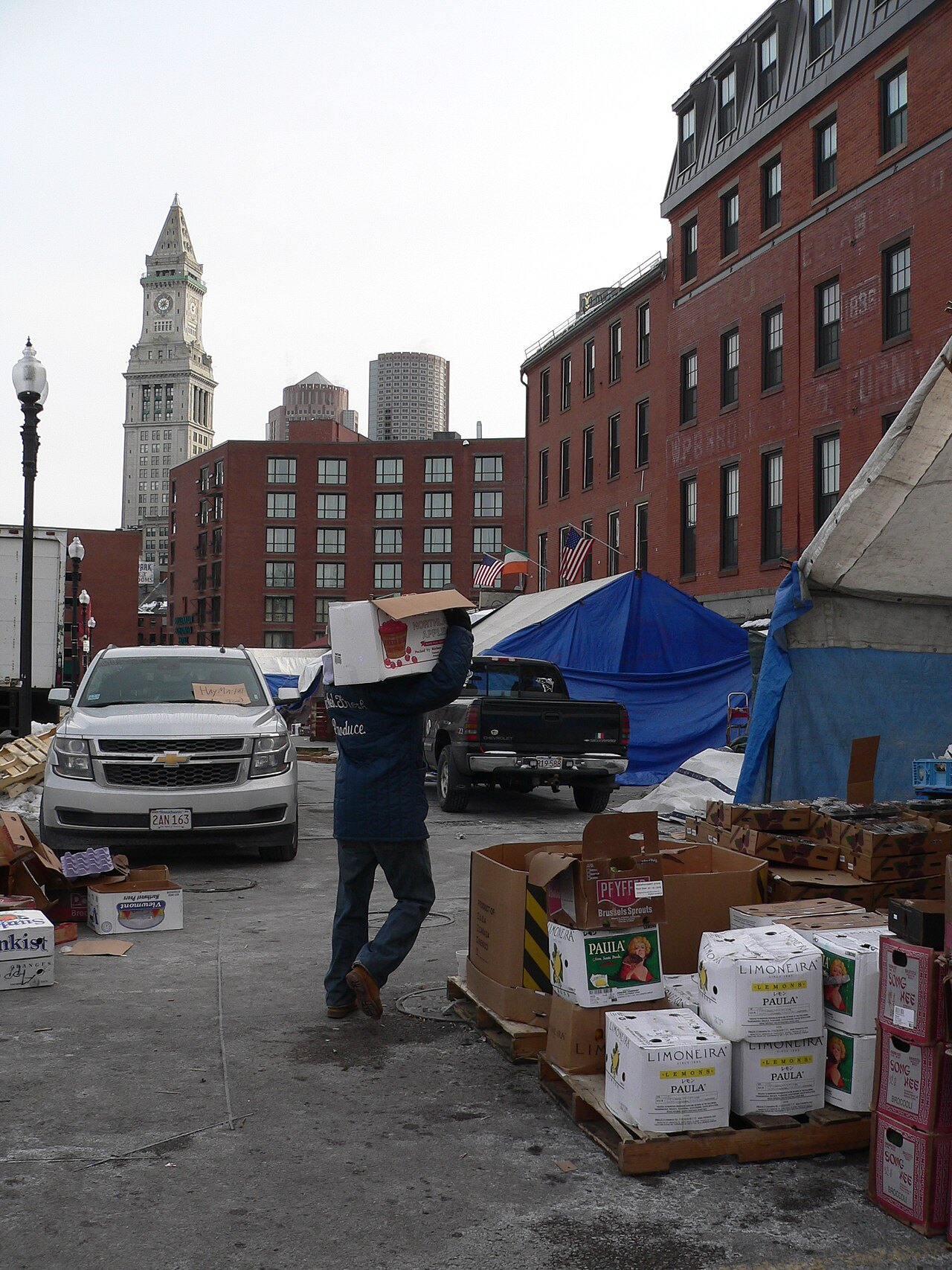
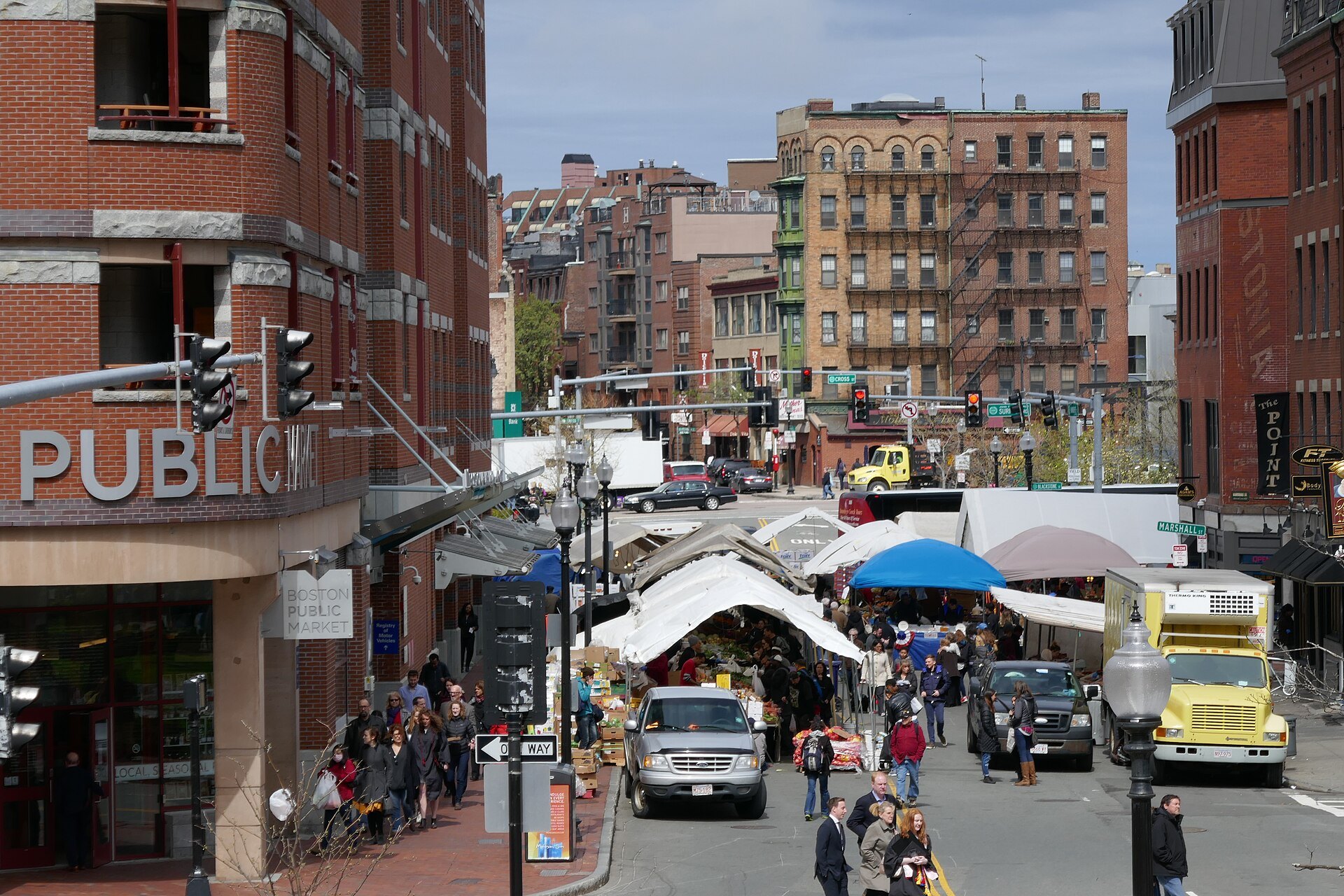
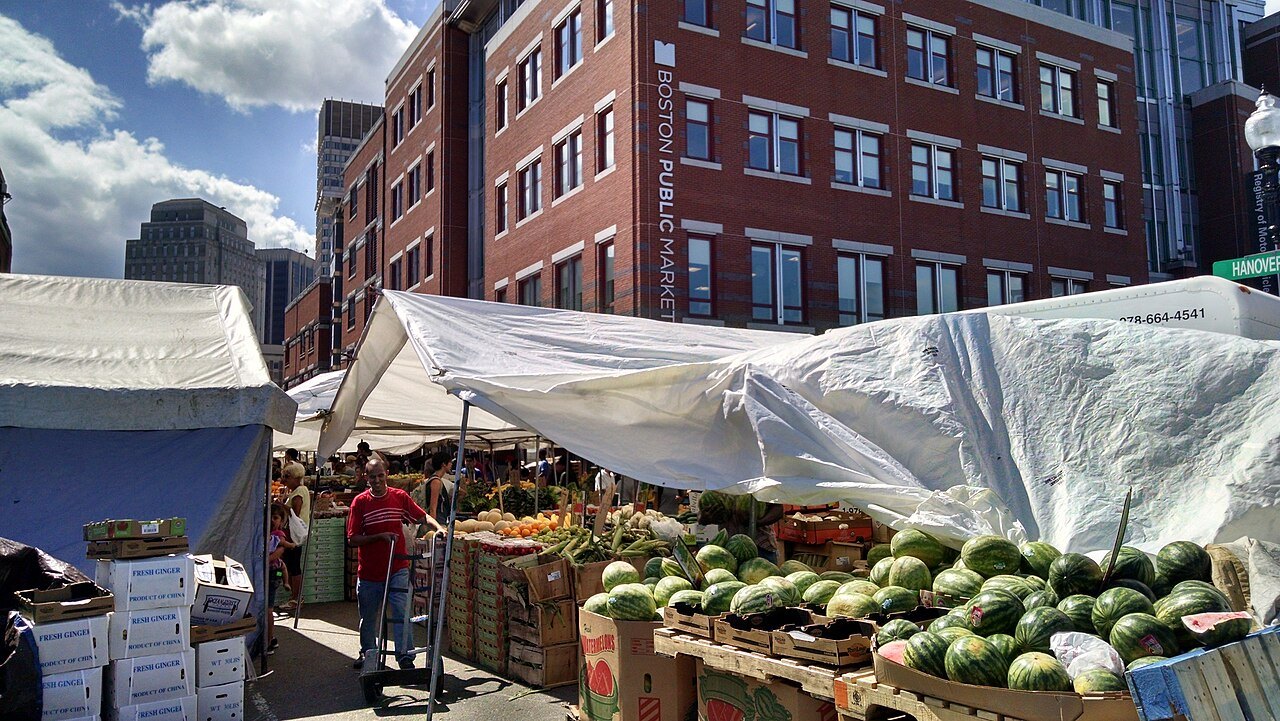
Stalls on Blackstone Street, the Custom House tower beyondDaniel Brody, Wikimedia Commons, CC BY-SA 4.0