A RED FISHING SHACK ON BRADLEY WHARFI
Why is Motif Number 1 the most painted building in America?
A plain red fishing shack on Bradley Wharf in Rockport is called the most often-painted building in America. Why painters chose it, how it got its name, why the one you see is a replica built after the Blizzard of 1978, and how to see it and the rest of Cape Ann's painters' coast.
The answer in fullII
Read on
The short answer
Motif Number 1 is a small red fishing shack on Bradley Wharf in the harbor of Rockport, on Cape Ann, north of Boston. It is known to students of art and art history as the most often-painted building in America. It earned that name because it was the favorite subject of the painters who made Rockport an artists' colony from the late nineteenth century onward: its setting on the wharf, the light on the harbor and its simple shape made it an ideal composition, and it came to stand for New England's maritime life.
The shack you see today is not the original. The first was built in 1884 and destroyed in the Blizzard of 1978; an exact replica was built the same year, and the town keeps it looking as the painters knew it.
A fishing town full of painters
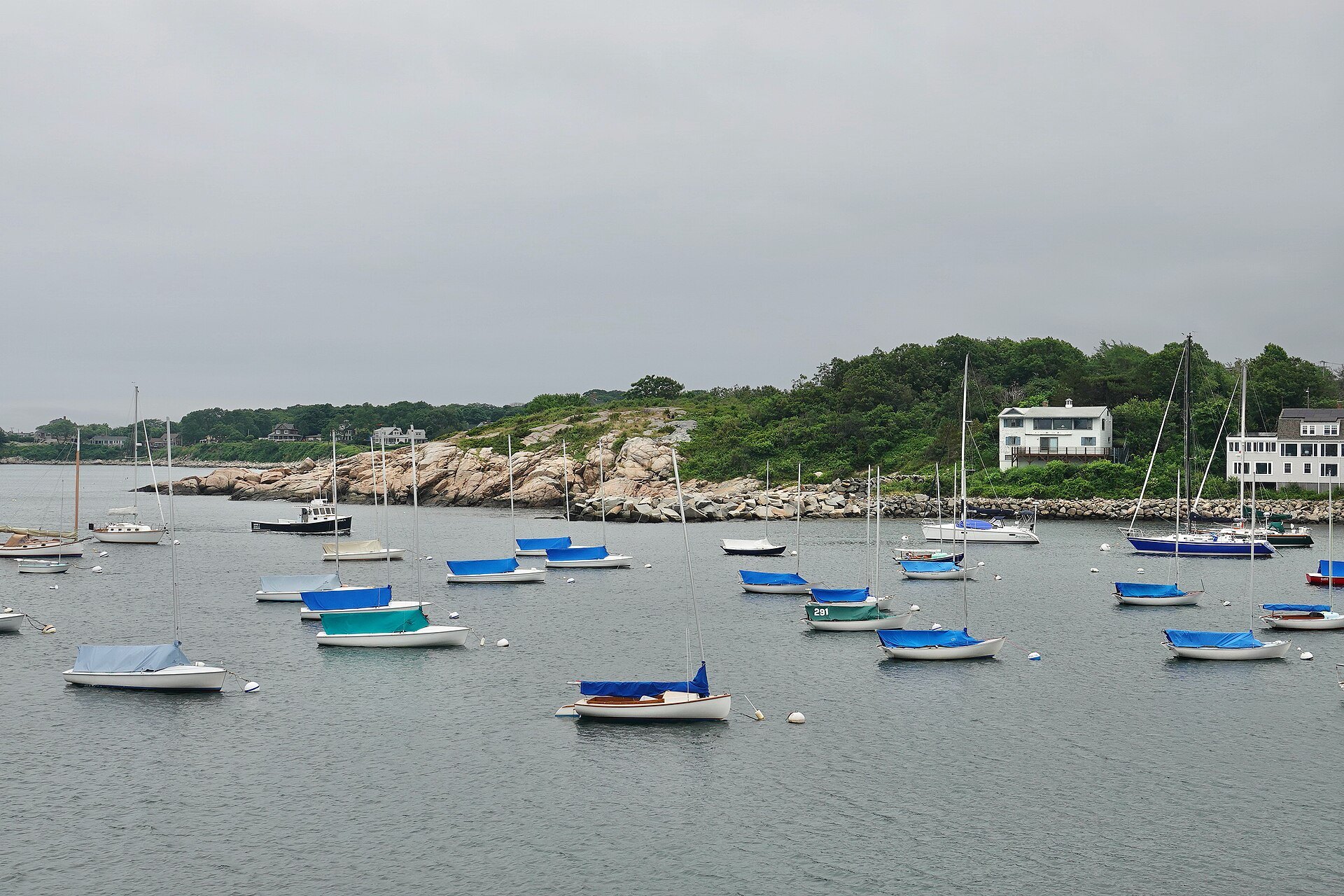
Rockport was a town of fishermen and granite quarries before it was a town of painters. The first settler, a granite cutter named Richard Tarr, lived on the headland in 1680, and by the 1830s Rockport granite was being shipped to towns along the whole east coast. Cape Ann's quarries cut paving blocks for streets across the United States, and a distinctive sloop was developed to carry the stone.
Painters came for the light and the shore. Cape Ann became a thriving center for artists in the nineteenth century. Fitz Henry Lane, who began as a lithographer in Gloucester, developed the style of marine painting known as luminism, and the Rocky Neck Art Colony grew up in Gloucester harbor. Rockport drew American Impressionists as a summer vacation place known for its boulder-strewn beaches and its fishing harbor, and it thrived as an artists' colony even when the granite trade declined in the Depression.
The quarry town
The granite shaped Rockport as much as the sea did. The Rockport Granite Company opened in 1865 and lasted until 1933, and its quarries drew workers from across Europe; Finns brought to Pigeon Cove in the early 1890s to break strikes became some of the most determined fighters for workers' rights. When concrete replaced stone in the Depression, the granite trade declined and the quarries fell quiet.
The town's character stayed unusual in other ways too. Rudyard Kipling's Captains Courageous helped make the town known, and except for a period in the 1930s Rockport was a dry town until 2005, when restaurants were first allowed to serve alcohol.
How the shack got its name
The shack was built in 1884, just as Rockport was becoming both a fishing settlement and a colony of artists. It sat at the end of the wharf with the harbor on either side, its red walls against the water and the sky, and the painters kept coming back to it. The painter Lester Hornby is believed to have been the first to call it Motif Number 1, meaning simply the favorite subject of the town's painters, and the name stuck.
It appears in the work of Aldro Hibbard and of the impressionist Harry Aiken Vincent, who arrived in Rockport around 1916 and helped form the Rockport Art Association. It has been the subject of hundreds of paintings and photographs, and aspiring artists and visitors still come from all over the world to paint it.
A studio, a monument and a parade float
In the 1930s the painter John Buckley used the shack as his studio. He sold it to the town in 1945, which bought it to dedicate it as a monument to the Rockporters who had served in the armed forces, and it has belonged to the town ever since.
The shack's fame was already national by then. In 1933 the town's American Legion post built a 27-foot scale model of Motif Number 1, designed by Aldro Hibbard and Anthony Thieme, as a float for the Legion's parade in Chicago during the World's Fair. Driven there by daylight only, it won first place among two hundred floats, and more than four thousand people turned out to welcome it home.
The Blizzard of 1978
In 1978 the great blizzard that struck the coast destroyed the original shack. The town rebuilt it the same year as an exact replica, so the building on the wharf today dates from 1978, though it looks as the original did.
Rockport has taken pains to preserve its appearance ever since. It found a red paint that looks weather-beaten even when new, and it keeps the area around the shack clear of overhead wires, traffic signs and advertising, so the view a painter sets up to is the view the painters of the 1920s saw.
Seeing it
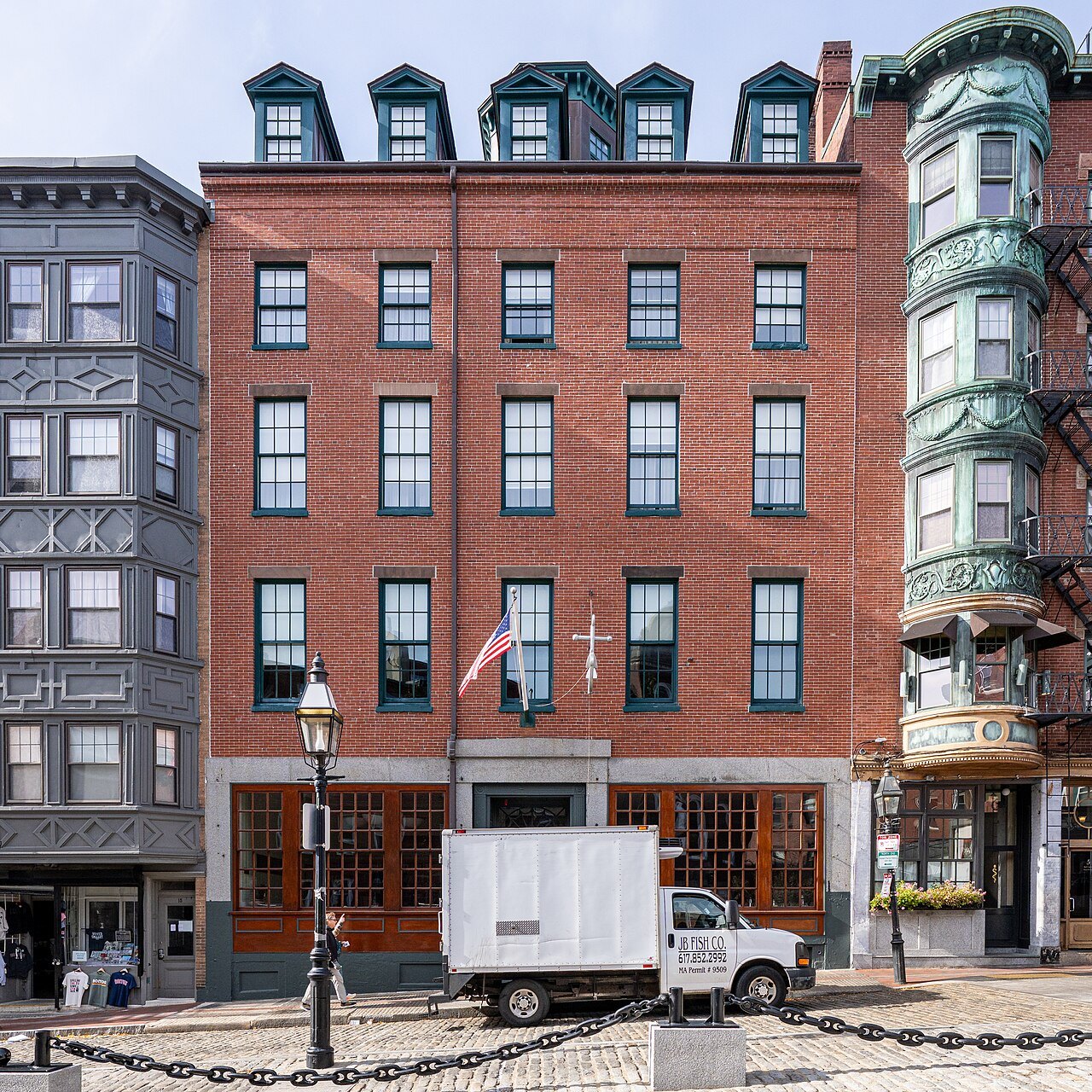
Bradley Wharf is in Rockport's harbor, in the center of the town. Beside the harbor runs Bearskin Neck, a short street of old fishermen's and lobstermen's shacks that are now restaurants, shops and galleries. The shack can be seen from the wharf itself and from across the inner harbor, which is the view most painters chose. Come early in the morning or late in the day for the light that drew them, and out of summer for fewer crowds.
Rockport is at the end of the Newburyport/Rockport commuter rail line from North Station in Boston, and by road it lies on Route 127, the loop round Cape Ann; see Scenic Drives.
The rest of Cape Ann
Make a day of the whole cape. In Gloucester, still a working fishing port, see the Fisherman's Memorial on the harbor and the Cape Ann Museum, which holds the premier collection of Fitz Henry Lane, forty of his paintings and a hundred of his drawings. The Rocky Neck Art Colony on Smith Cove, across the harbor, is called the oldest art colony in the country. North of Rockport, Halibut Point State Park looks over the old quarries to the open sea, and offshore stand the twin lighthouses of Thacher Island.
Today Rockport is a residential and tourist town, still home to a number of lobster fishermen and artists, and many galleries on and around Bearskin Neck sell the work of painters who set up on the same wharf. For more on the wider journey, see the itineraries, and for a base on the North Shore, Salem.
Read nextIII
More from the journal
- The Freedom TrailHow long does it take to walk the Freedom Trail?The Freedom Trail is only two and a half miles long, but its sixteen stops can fill a day. How long the walk takes with and without the buildings, where to break it in two, which stops need the most time, and how to get back from Charlestown at the end.Read the piece →
- Ferries & IslandsHow do you get to Martha's Vineyard, and do you need a car?Martha's Vineyard has no bridge: you arrive by ferry or small plane. Which harbor to sail from, the one ferry line that takes cars, why most visitors leave the car behind, and how to get round the island by bus, bicycle and on foot.Read the piece →
- PlymouthIs Plymouth Rock really where the Pilgrims landed?Plymouth Rock is honored as the Pilgrims' landing place of December 1620, but neither of the colony's own chroniclers mentions it, and the claim was first made in 1741. How the legend began, how the rock was split, moved and rejoined, and what to see in Plymouth when you go.Read the piece →